
Vegan Dildos: Body-Safe, Cruelty-Free Pleasure Products
Explore vegan dildos that are body-safe and cruelty-free. Discover options that prioritize pleasure without compromising ethics.
 Zoe Clarke

Introduction to Vegan Dildos
Vegan dildos are exactly what they sound like — sex toys made without animal products or animal testing. The category exists because a surprising number of traditional toys use animal-derived materials like leather, bone, or glycerin sourced from animal fats. For buyers who already avoid animal products in food, clothing, or cosmetics, the logic extends naturally to what goes inside their bodies.
Here's the thing: the vegan label tells you what a toy doesn't contain, but it doesn't automatically mean the toy is safe. Researching the difference between vegan dildos and regular silicone options can be challenging — most guides gloss over what actually makes a product both vegan and body-safe. A friend was about to buy a suspiciously cheap "vegan" dildo listed as a "silicone blend," which is a red flag for anyone who cares about non-toxic materials.
The good news: most body-safe materials are vegan by default. Medical-grade silicone, borosilicate glass, and stainless steel contain zero animal products. The confusion comes from marketing — brands slap "vegan" on products that are also made with porous plastics, mystery blends, or undisclosed additives. If you're shopping for a vegan dildo, you're really shopping for two things: cruelty-free sourcing and genuinely safe materials.
This matters more for first-time buyers than the industry admits. Beginners often assume "vegan" equals "premium" or "safer," but plenty of cheap vegan toys are still porous junk. The real question isn't whether a dildo is vegan — it's whether the manufacturer will tell you exactly what it's made of. If the material section is vague, the product isn't worth your time, vegan or not.
Vegan dildos also address a specific buyer: someone who wants products that align with broader ethical choices. That's not everyone, and that's fine. But for the subset of buyers who care, the category offers real options that don't compromise on safety or function. You just have to know what to look for beyond the label.
If you're trying to figure out how to charge a vibrator or maintain other rechargeable toys, the same material principles apply — body-safe construction matters for longevity and hygiene, whether the toy is vegan or not.
Quick Verdict
Vegan dildos are body-safe, cruelty-free options made from materials like medical-grade silicone, borosilicate glass, and stainless steel — no animal products, no animal testing, and no sketchy material blends. They're not a niche category anymore; they're just good dildos that happen to meet stricter ethical standards.
The real win here is that vegan dildos overlap almost entirely with what you'd want in a body-safe toy anyway. Medical-grade silicone is non-porous, easy to clean, and hypoallergenic — it's the gold standard whether you care about veganism or not. Glass and metal options offer firm, temperature-responsive alternatives that also happen to be vegan by default.
The catch: not every product labeled "vegan" is automatically body-safe. Some brands use the term loosely, slapping it on TPE or "silicone blend" toys that aren't truly non-porous or non-toxic. The friend who texted me about a suspiciously cheap "vegan" dildo learned this the hard way — the product description was vague, and the material section listed a "silicone blend," which is a red flag for anyone looking for truly body-safe materials.
If you're new to this, start with a straightforward medical-grade silicone dildo from a reputable brand. You'll get the ethical win without sacrificing quality, and you won't overpay for marketing fluff. Vegan dildos aren't more expensive or harder to find — they're just the ones that meet a clearer set of material standards.
For first-time buyers, the vegan label is a useful shortcut: it filters out most of the junk materials and directs you toward options that are safer for your body. But don't treat it as a magic word — always check the material specs, and if a brand won't tell you exactly what's in the toy, skip it.
Key Features of Vegan Dildos
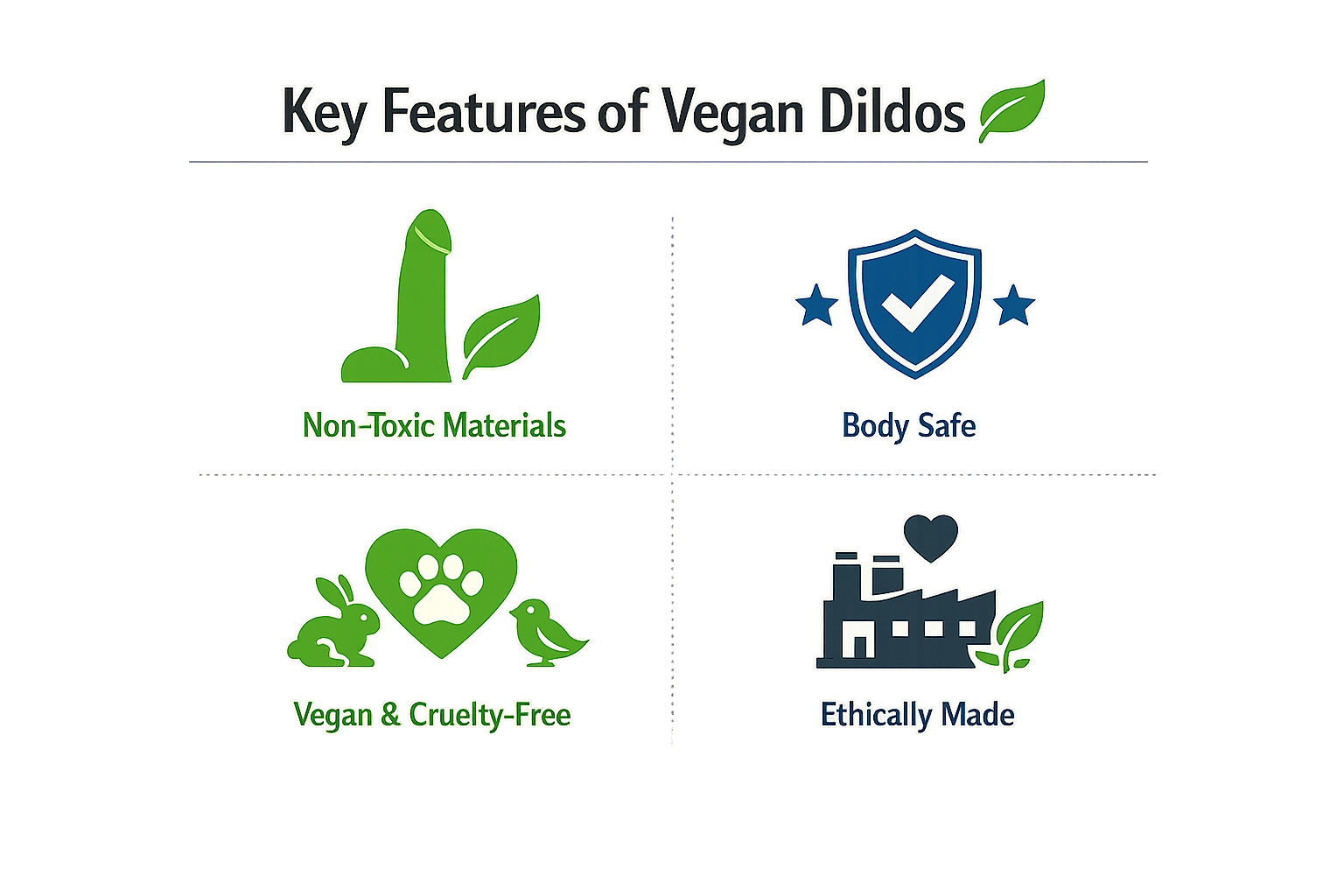
Vegan dildos aren't just about what's not in them — they're about what is. The real difference shows up in materials, manufacturing standards, and the kind of testing that separates a body-safe product from one that's just labeled that way.
Medical-Grade Silicone and Body-Safe Materials
Most vegan dildos use 100% medical-grade silicone — the same stuff approved for baby toys and food containers. It's non-porous, hypoallergenic, and doesn't leach chemicals. Some brands also use body-safe PC-ABS plastic for firmer toys or dual-density designs.
The catch: "silicone blend" is not the same thing. If a product doesn't explicitly say medical-grade or platinum-cured silicone, it's probably mixed with fillers that can harbor bacteria or break down over time. Real vegan dildos state their material certifications up front.
Cruelty-Free Manufacturing
Vegan certification means no animal-derived ingredients — no leather, no beeswax, no glycerin sourced from animal fats. But cruelty-free goes further: it means the product wasn't tested on animals at any stage of development.
Most reputable manufacturers now use independent labs to verify safety without animal testing. They test for chemical composition, durability, and biocompatibility using standardized protocols that don't involve live subjects. Brands that invest in this kind of testing usually say so — loudly.
Independent Testing and Safety Standards
The best vegan dildos go through third-party lab testing to confirm they're free of phthalates, heavy metals, and other toxic materials. Companies like We-Vibe spend millions on product design and independent testing to meet the strictest health and safety standards worldwide.
This isn't just marketing — it's the difference between a toy that's safe for long-term use and one that might degrade or leach chemicals after a few months. If you're looking to understand how manufacturers approach safety across different product categories, how to charge a vibrator covers the design standards that often overlap with material safety.
Real vegan dildos state their material certifications up front — anything less is a gamble.
Durability and Longevity
Medical-grade silicone doesn't just feel better — it lasts. A well-made vegan dildo can handle years of use, repeated sterilization, and temperature play without breaking down. Cheaper materials crack, discolor, or develop a sticky surface over time.
The investment pays off. A $60 vegan dildo that lasts five years costs less per use than a $20 toy you replace every six months.
Pros and Cons of Vegan Dildos
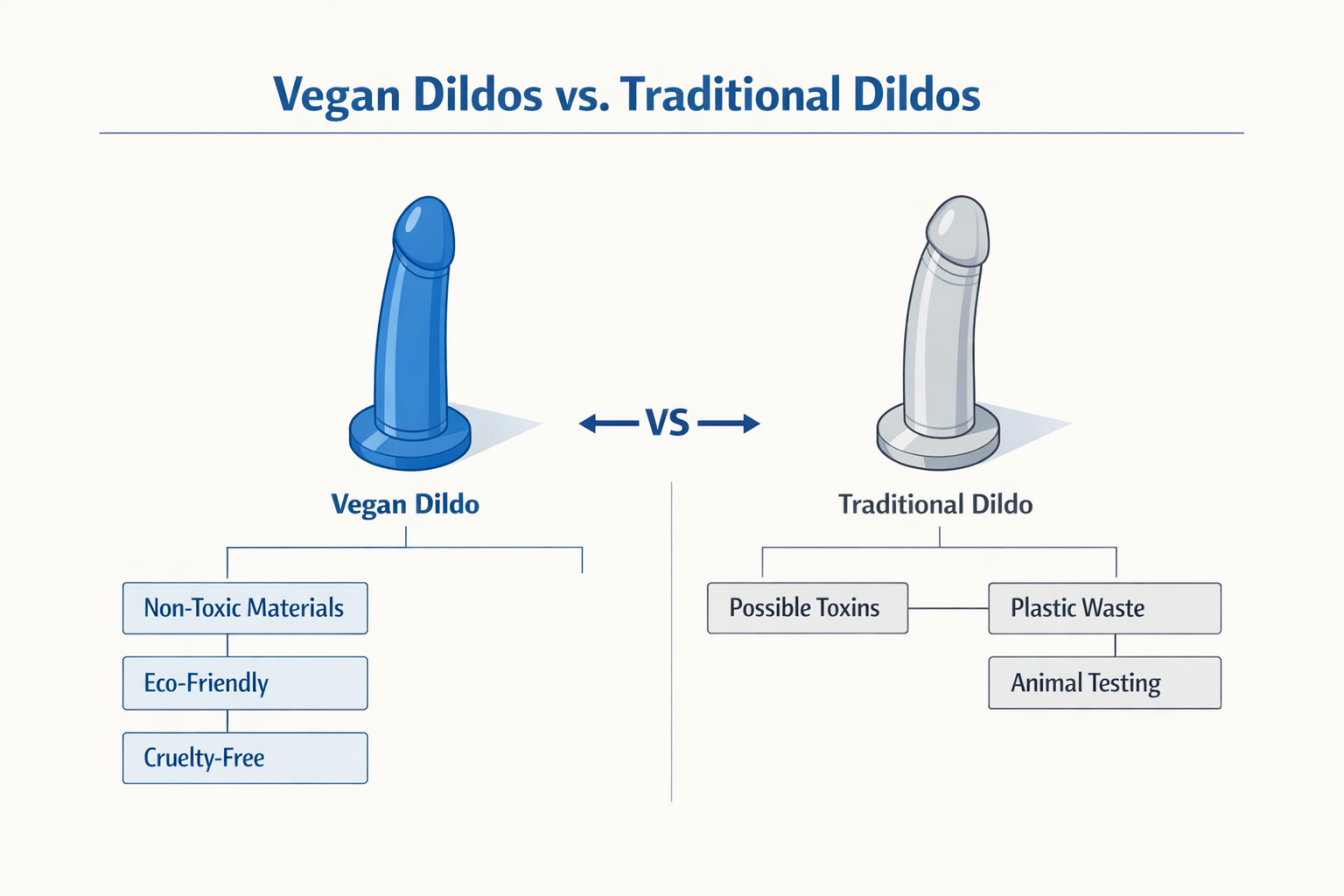
Vegan dildos have real upsides — and a few things that trip people up. Here's what actually matters.
The Good List
Body-safe by default. Most vegan dildos use medical-grade silicone, which means no phthalates, no weird chemicals, and nothing that'll mess with your body. If it's labeled vegan and made from quality silicone, you're looking at one of the safest materials in the category.
Cruelty-free production. No animal testing, no animal-derived ingredients. For people who care about that — and plenty do — it's a clean choice that doesn't require compromise.
Easy to clean. Silicone is non-porous, so bacteria can't hide in it. Soap and water work fine; boiling works even better if the toy has no motor. Store it in the box it came in or a clean pouch, and you're set.
Durable. A well-made silicone dildo lasts years. It won't degrade, crack, or turn weird on you — assuming you treat it right.
The Downsides
Price. Vegan dildos — especially the good ones — cost more than jelly or TPE options. Medical-grade silicone isn't cheap, and ethical manufacturing adds to the bill. Budget picks exist, but expect to pay $30–$60 for something that'll actually last.
Lube compatibility. Silicone-on-silicone is a no-go. If you prefer silicone lube, you'll need to switch to water-based, which some people find less slick or longer-lasting. It's not a dealbreaker, but it's a thing.
Firmness variation. Not all silicone feels the same. Some vegan dildos are soft and flexible; others are firm enough to feel rigid. If you're used to a specific texture, you might need to try a couple before you land on the right one.
Marketing confusion. "Vegan" gets slapped on products that are really just silicone blends or mystery materials. If the listing says "silicone blend" or doesn't specify medical-grade, it's probably not what you think it is. Stick with brands that list their materials clearly.
The cheapest vegan dildo is the one that doesn't fall apart in six months — which means paying a bit more upfront.
What It Comes Down To
Vegan dildos are the right call if you want body-safe, cruelty-free, and built to last. The trade-offs — higher price, lube restrictions, firmness variance — are manageable if you know what you're getting into. If you're deciding between a $15 jelly toy and a $40 silicone one, the silicone wins on safety and longevity every time.
For more on keeping your toys in good shape, check out How to Charge a Vibrator: Cables, Docks & Lights Explained.
Detailed Analysis of Vegan Dildos
Vegan dildos aren't complicated — they're toys made without animal-derived materials and without animal testing. The category mostly breaks into two camps: medical-grade silicone (the dominant material) and glass or metal options that happen to be vegan by default.
Most of what you'll find labeled "vegan" is platinum-cured silicone. The manufacturing process uses a platinum catalyst instead of a tin-based one, which produces a more stable, non-porous material. The silicone itself — a synthetic polymer made from silicon, oxygen, carbon, and hydrogen — doesn't involve animal products at any stage. No beeswax coatings, no leather dyes, no gelatin stabilizers.
What Makes a Dildo Actually Vegan
The vegan claim hinges on three things: the base material, any surface treatments, and the testing process. Silicone passes the first test automatically. Where things get murky is in cheaper "silicone blends" — toys that mix silicone with fillers like mineral oil or elastomers. Those fillers can include animal-derived glycerin or stearates, and most manufacturers won't specify.
Glass and stainless steel are vegan by composition. Borosilicate glass is sand, soda ash, and boric oxide. Medical-grade stainless steel (usually 316L) is an iron-chromium-nickel alloy. Neither involves animal products, and neither requires surface coatings that might.
The testing piece is harder to verify. Most reputable toy manufacturers don't conduct animal testing — it's not required for sex toys the way it is for pharmaceuticals — but they also don't advertise cruelty-free certification because no standardized body certifies sex toys the way Leaping Bunny certifies cosmetics. You're relying on brand reputation and transparency here, not a logo.
Health and Body-Safety Considerations
Vegan doesn't automatically mean body-safe, but the overlap is strong because the materials that pass vegan standards (pure silicone, glass, steel) are also the materials that pass body-safety standards. Medical-grade silicone is non-porous, hypoallergenic, and chemically inert — it won't leach plasticizers or shed microparticles. Glass and steel are even simpler: fully sterilizable, zero porosity, no chemical interaction with lubricants or body fluids.
The health advantage isn't about avoiding animal products — it's about avoiding porous materials that harbor bacteria or release phthalates. Cheaper toys often use TPE (thermoplastic elastomer) or "jelly" rubber, both of which are porous and can contain phthalates as plasticizers. Those materials are sometimes vegan, but they're not body-safe in the way silicone is.
One practical note: silicone requires water-based lube. Silicone-based lubricants can degrade the surface of silicone toys, creating a sticky texture that's harder to clean. Glass and steel work with any lube type, which gives them a slight edge in versatility.
Environmental Impact
Silicone is durable — a well-made silicone dildo can last a decade or more — but it's not biodegradable and it's difficult to recycle. Most municipal recycling programs don't accept silicone because it doesn't break down in standard processing. When a silicone toy reaches end-of-life, it goes to landfill, where it will persist for centuries.
Glass and steel are more environmentally friendly in disposal terms. Both are fully recyclable through standard municipal programs (though you'll want to remove any embedded components like suction cups first). Stainless steel, in particular, has a robust recycling market — it can be melted down and reused indefinitely without losing structural integrity.
The manufacturing footprint is harder to compare directly. Silicone production is energy-intensive and relies on petrochemical feedstocks (derived from fossil fuels). Glass production also requires high heat but uses abundant raw materials (sand). Steel production has a significant carbon footprint, but the material's longevity and recyclability offset some of that impact over the product's lifecycle.
The most sustainable sex toy is the one you don't throw away — durability matters more than material composition when you're looking at long-term environmental impact.
Manufacturing and Sourcing Transparency
Most vegan dildos are manufactured in China, Germany, or the United States. Chinese manufacturing dominates the budget and mid-tier market; German and U.S. production is more common in the premium tier. The country of origin doesn't determine vegan status, but it does correlate with transparency — U.S. and EU manufacturers are more likely to disclose material sourcing and testing protocols because they're subject to stricter consumer protection regulations.
A few brands publish detailed material certifications (ISO 10993 biocompatibility testing, for example, or RoHS compliance for heavy metal limits). Those certifications don't directly address vegan claims, but they indicate a manufacturer that's willing to document its supply chain. If a brand won't tell you where its silicone comes from or what catalyst it uses, the vegan claim is harder to trust.
One thing the research made clear: there's no industry-standard definition of "vegan dildo." Brands self-certify. The more specific a brand gets about material composition and sourcing, the more credible the claim. Vague marketing language ("eco-friendly," "natural," "pure") without backing documentation is a yellow flag.
Who Is It For?
Vegan dildos are built for people who care where their stuff comes from. If you already check ingredient lists on food or avoid leather, this is the same mental model applied to what goes inside your body. The category removes animal-derived additives, binders, and dyes that show up in cheaper toys — stuff most people don't know to look for until they have a reaction.
Ethical Consumers Who Want Transparency
You're the person who reads labels. You want to know what's in the product, how it was made, and whether any part of the supply chain involved animal testing or byproducts. Vegan dildos answer those questions upfront — medical-grade silicone, glass, and stainless steel are the standard materials, and reputable brands will tell you exactly what's in the mix.
This isn't about performative activism. It's about buying products that don't make you second-guess the purchase three months later when you learn what "silicone blend" actually means.
First-Time Buyers Who Want Safe Defaults
If this is your first dildo, vegan options are one of the safest starting points. The materials are non-porous, hypoallergenic, and don't require a chemistry degree to evaluate. You're not navigating jelly, TPE, or mystery blends that might leach chemicals or harbor bacteria.
The price range also works for beginners. You can find body-safe vegan dildos in the $30–$50 range — not the cheapest on the shelf, but not the $150 luxury tier either. That's the sweet spot where you're paying for safety without over-investing in features you don't know if you'll use yet. For more guidance on getting started with rechargeable options, check out how to charge a vibrator to avoid common beginner mistakes with power and compatibility.
People with Sensitivities or Allergies
If you've had reactions to toys in the past — irritation, burning, weird smells that don't wash off — vegan dildos cut out the usual suspects. No animal-derived glycerin, no casein-based additives, no lanolin or beeswax in coatings. Medical-grade silicone is inert, which means it doesn't interact with your body chemistry or trigger immune responses.
Glass and stainless steel are even simpler. They're the fallback when silicone still causes issues, which is rare but not unheard of.
Environmentally Conscious Buyers
Vegan dildos last longer than their cheaper counterparts, which means less waste. Silicone doesn't degrade the way TPE or jelly does — you're not replacing it every year because the surface got tacky or started shedding mystery particles. Glass and metal are functionally indestructible if you don't drop them on tile.
The environmental angle isn't just about the product itself. It's about not contributing to the cycle of disposable toys that end up in landfills because they weren't safe to begin with.
People Who Overthink Purchases
If you're the type to open twelve browser tabs and spiral into decision paralysis, vegan dildos simplify the equation. The material question is answered — it's body-safe. The ethics question is answered — it's cruelty-free. What's left is shape, size, and whether you want texture or smooth.
That's a much shorter list than trying to decode whether "skin-safe PVC" is actually safe or just marketing.
Vegan doesn't mean you're sacrificing feel, function, or variety — it just means the baseline is higher.
Pricing of Vegan Dildos
Vegan dildos live in the same price range as their non-vegan counterparts — because the material is the same. Medical-grade silicone is medical-grade silicone, whether the manufacturer calls it vegan or not. The vegan label doesn't add cost; it just clarifies what wasn't there to begin with.
You'll see vegan dildos priced anywhere from $20 to $150, and the number has nothing to do with animal products. The price reflects size, brand reputation, manufacturing quality, and whether the company invested in proper body-safe certifications. A $25 vegan dildo from a budget brand can be perfectly safe if it's 100% silicone. A $100 vegan dildo from a premium brand is paying for thicker walls, better texture detail, and a warranty that actually works.
What Drives the Price
The biggest cost factor is silicone quality and thickness. Cheap dildos use thin silicone over a rigid core, which keeps the price down but makes the toy feel plasticky. Premium picks use thick, self-supporting silicone that flexes realistically — that's where the extra $40 goes. Brand also matters: established names like Dame charge more because they've built trust, and first-time buyers will pay for that reassurance.
Certifications add cost too, but not as much as you'd think. A company that publishes third-party test results or holds ISO certifications spent money on compliance, and that shows up in the retail price. But the markup is modest — maybe $10 to $20 over an uncertified equivalent. The real red flag is a suspiciously cheap "silicone blend" dildo with no material breakdown. That's not vegan, it's not safe, and the low price is the tell.
Budget vs Premium
For first-time buyers, the $30 to $50 range is the sweet spot. You get verified body-safe silicone, a shape that works, and enough brand accountability that you're not gambling on a mystery material. Premium options ($80+) are worth it if you want dual-density silicone, hand-poured details, or a specific fantasy shape — but they're not safer, just fancier.
The vegan label itself costs nothing. If two identical dildos sit side by side and one says "vegan" on the box, they should cost the same. If the vegan one is pricier, you're paying for marketing, not materials. Skip it and buy the one that lists its silicone grade in the specs.
If you're wondering how long your new purchase will take to charge before first use, this guide breaks down charge times by toy type.
Alternatives to Vegan Dildos
If you're committed to body-safe, ethical products but want to explore beyond the standard vegan dildo category, you've got options. The good news: most of what makes a dildo vegan (medical-grade silicone, glass, stainless steel) also makes it body-safe — so the alternatives list is basically the same materials, different shapes.
Glass and Stainless Steel Toys
Glass and stainless steel are inherently vegan, non-porous, and completely body-safe. They're also temperature-responsive — run them under warm or cold water before use for a totally different sensation. Glass dildos tend to be more affordable than premium silicone and work with any lube type, which is a nice bonus if you're still figuring out what you like.
Stainless steel is heavier, which some people love (the weight adds pressure during use) and some people hate (it's a workout). If you've never tried either material, glass is the easier starting point — lighter, smoother, and less intimidating than a pound of polished steel.
Body-Safe Vibrators
If you're open to adding vibration into the mix, most rechargeable vibrators use the same medical-grade silicone as vegan dildos. Bullet vibrators, wand-style toys, and clitoral vibrators are all typically vegan by default — just check the material listing to confirm it's 100% silicone (not a "blend") and that the manufacturer doesn't use animal-derived dyes or additives.
Vibrators expand your options without compromising ethics. They're also a solid pick if you're still figuring out what kind of stimulation works for you — internal, external, or both. For more guidance on keeping rechargeable toys powered up, check out how to charge a vibrator: cables, docks & lights explained.
Wooden and Stone Toys
Wooden dildos exist, and they're vegan, but they require more care than silicone or glass. You need to make sure the wood is sealed with a body-safe, non-toxic finish (usually medical-grade lacquer or beeswax-free alternatives), and you can't boil them to sterilize. Stone toys (like jade or rose quartz) fall into the same category — beautiful, vegan, but porous unless they're polished to a non-porous finish, which most aren't.
These materials appeal to people who want something artisanal or visually striking, but they're not beginner-friendly. If you're just starting out, stick with silicone, glass, or steel — they're easier to clean, last longer, and don't require a care manual.
Cruelty-Free Lubricants and Accessories
The toy itself is only part of the equation. Most water-based and silicone-based lubricants are vegan, but some contain glycerin derived from animal fat or are tested on animals. Look for brands that explicitly label their products as vegan and cruelty-free — it's not a given, even in the body-safe lube category.
The same goes for toy cleaners, storage bags, and any other accessories. If you're committed to a fully vegan setup, read the fine print on everything that touches your body or your toys.
Final Verdict on Vegan Dildos
Vegan dildos are the real deal if you care about both what goes into your body and what doesn't go into making it. They're body-safe, cruelty-free, and in most cases, made from the same medical-grade silicone that non-vegan options use — the difference is in what didn't happen during production. No animal testing, no animal-derived ingredients, no glycerin or questionable additives that show up in cheaper toys.
The category isn't perfect. You'll pay a bit more upfront, and the selection skews toward brands that care enough to certify their ethics — which means fewer impulse-buy options at big-box retailers. But the trade-off is worth it: you're getting toys that are non-porous, hypoallergenic, and built to last. Most vegan dildos are also easier to clean and less likely to harbor bacteria than porous alternatives, which makes them a smarter long-term investment.
Vegan dildos deliver the same performance as conventional options, minus the ethical compromise — and for most buyers, that's the entire point.
If you're someone who checks ingredient lists on everything else you buy, this is the logical extension of that habit. Vegan dildos aren't a niche anymore — they're what the body-safe category was always supposed to be. The brands doing it right (Blush, Fun Factory, Tantus) have figured out how to make cruelty-free toys that don't feel like a compromise. They're durable, they perform well, and they don't make you choose between pleasure and principles.
For first-time buyers, the vegan label is a useful shortcut: it signals that a brand is paying attention to materials, sourcing, and safety in ways that cheaper manufacturers skip. You're less likely to end up with a mystery "silicone blend" or a toy that smells like a tire factory. And if you're already buying vegan in other parts of your life, this is one of the easier transitions to make — the performance gap between vegan and non-vegan toys is functionally zero.
The bottom line: vegan dildos are body-safe, cruelty-free, and built to the same standards as the best conventional options. They cost a bit more, but they last longer and align with the ethics most buyers already apply to the rest of their purchases. If you care about what's in your toys and how they're made, this is the category to shop. And if you're still figuring out how to charge a vibrator or what features matter most, starting with a vegan option means you're already ahead of the learning curve on materials and safety.
Navigating the world of vegan dildos can be tricky, but understanding these nuances can help you avoid over-buying and ensure you're getting a product that's both cruelty-free and safe for your body.