
Vibration Dildo: Vibrating Dildos vs Regular: Which Delivers Better
Vibrating dildos vs regular dildos compared: discover the key differences in sensation, intensity, and satisfaction to find your perfect match with vibration dildo.
 Zoe Clarke
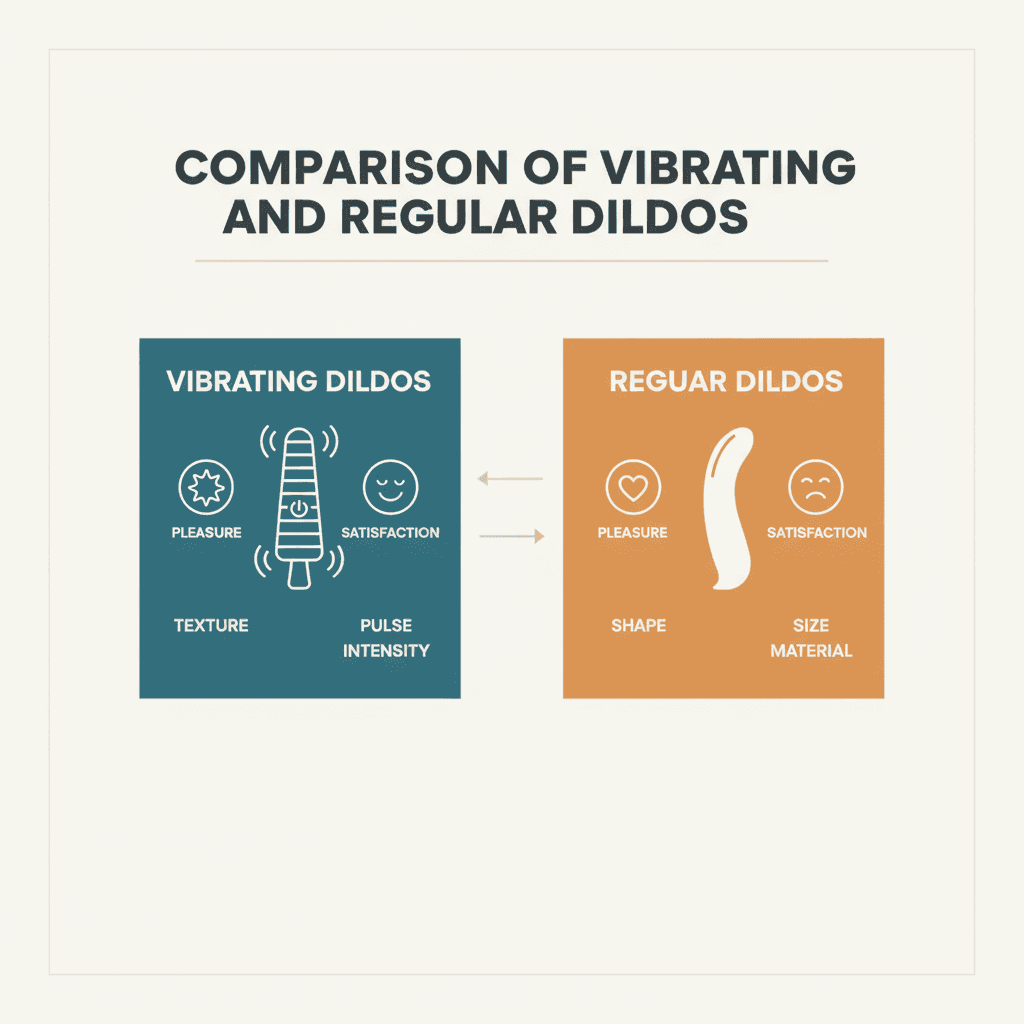
Introduction
The vibrating-versus-regular debate is one of those questions that sounds more complicated than it actually is. A vibrating dildo has a motor; a regular dildo doesn't. That's the entire mechanical difference. Everything else — the shape, the material, the size, the price — varies just as much within each category as it does between them.
What most guides miss is that the motor isn't an upgrade. It's a trade-off. Vibration adds sensation you can't replicate manually, but it also adds weight, noise, charging requirements, and failure points. Regular dildos are simpler, quieter, and never run out of battery mid-session. Neither one is objectively better — they're solving for different things.
This comparison walks through what actually changes when you add a motor: how sensation shifts, what the pricing gap looks like, and which type makes sense for your situation. No fluff, no "journey," just the specs and the verdict. If you're trying to figure out how to charge a vibrator or whether you even want to deal with charging at all, this is the breakdown you need.
Explore the differences in pleasure between vibrating dildos vs regular dildos and find out which one delivers better satisfaction.
Overview of Vibrating Dildos

Vibrating dildos are exactly what they sound like — penetrative toys with a motor inside. The vibration element is the defining difference here, and it's not just a gimmick. For the roughly 80% of vulva-owners who need clitoral stimulation to climax, a vibrating dildo can deliver internal and external sensation at the same time, which is something a regular dildo simply can't do.
Most vibrating dildos come with multiple speed settings and vibration patterns, controlled either by buttons on the toy itself or a remote. Some are rechargeable via USB, others take batteries — rechargeable models are typically the better pick if you're using the toy regularly, since you're not constantly buying new batteries. Waterproof designs are common, which means cleanup is easier and you can use them in the shower if that's your thing.
What Makes Vibrating Dildos Popular
The appeal is pretty straightforward: they do more. A vibrating dildo can stimulate the G-spot internally while the vibrations travel through the toy's material, creating a broader sensation than penetration alone. Some designs — like vibrators built for couples — are shaped to stay in place during partnered sex, adding stimulation for both people without requiring anyone to hold the toy in position.
Vibrating dildos also come in a ridiculous range of shapes and sizes. You've got G-spot vibrators with a curved tip, finger vibrators that slip onto your hand for precise control, and even couples vibrators designed to be worn during intercourse. The variety means you're not locked into one experience — you can pick a toy that matches how you actually want to use it, not just what the marketing says you should want.
The downside? They're more complex than regular dildos. Motors can fail, charging ports can get finicky, and if you forget to charge the thing, it's just an expensive piece of silicone until you plug it in. But for people who want that extra layer of stimulation, the trade-off is usually worth it.
Overview of Regular Dildos
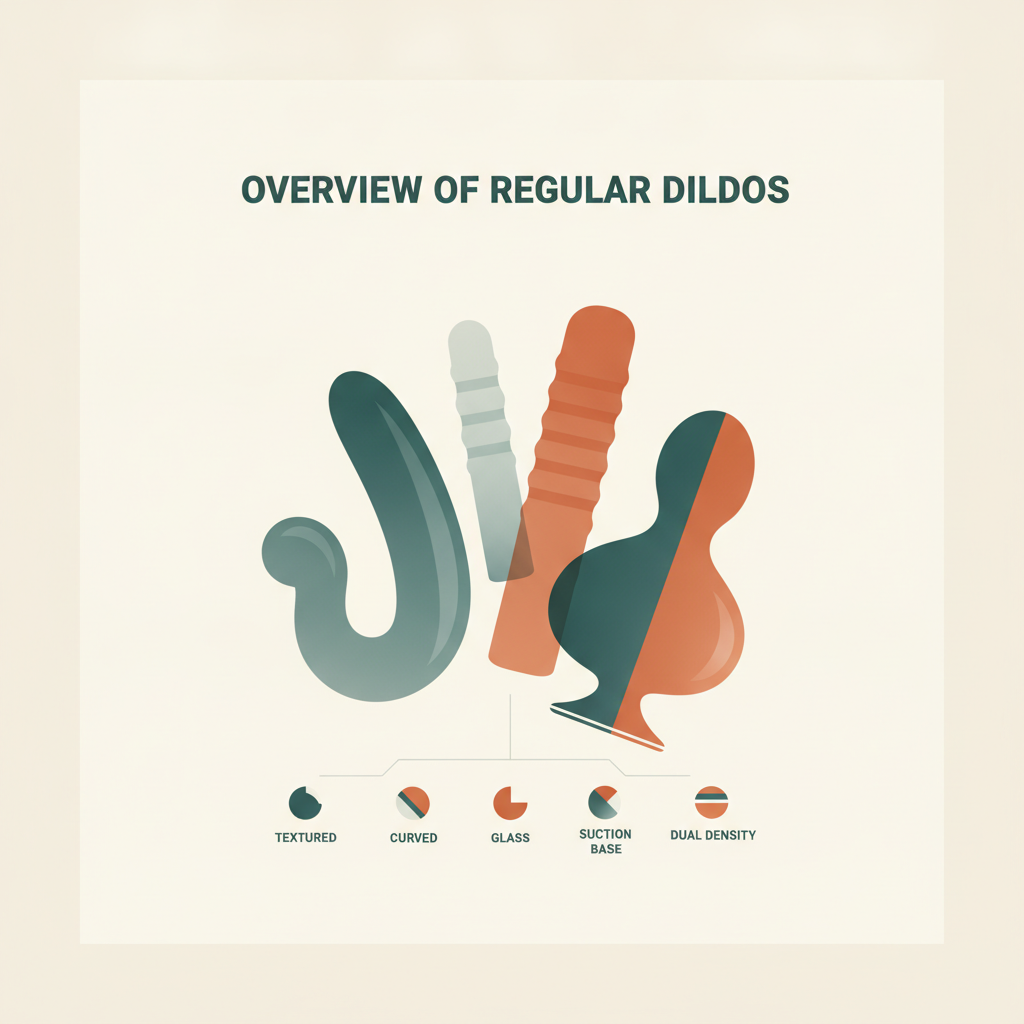
Regular dildos are the ones without motors, batteries, or charging ports. They're what most people picture when they think "dildo" — a shaft, sometimes realistic, sometimes abstract, designed for penetration and nothing else. No buzz, no settings, no tech.
That simplicity is the entire point. A regular dildo does one thing: it fills space and moves however you move it. The sensation comes from shape, size, texture, and your own rhythm. You control the pressure, the angle, the speed — there's no motor doing part of the work for you.
What Makes Regular Dildos Different
The lack of vibration means the design has to do all the heavy lifting. Curve matters more. Girth matters more. Texture — ridges, veins, bumps — matters more because there's no vibration to distract from it. A well-designed regular dildo hits the right internal spots (G-spot, A-spot, prostate) through shape alone.
Materials range from silicone (the safe default) to glass, metal, and even wood. Silicone is body-safe, flexible, and comes in every firmness level from squishy to nearly rigid. Glass and metal are firm, temperature-responsive (warm them up or cool them down), and provide a completely different sensation than anything soft. They're also heavier, which some people prefer — the weight adds to the fullness.
The Appeal: Control and Simplicity
Regular dildos don't need charging. They don't die mid-session. They don't have motors that eventually wear out or settings you'll never use. If you want a toy that works the same way in five years as it does today, regular dildos deliver that.
The other appeal is control. You set the pace. You decide how deep, how fast, how much pressure. There's no vibration pattern doing its own thing — the sensation is entirely manual. For people who find motors distracting or numbing, or who just prefer the feeling of penetration without the buzz, regular dildos are the straightforward answer.
Some people also use regular dildos during partnered sex more easily than vibrating ones. No motor noise, no need to pause and adjust settings, no battery anxiety. You can use it during sex without the logistics that come with a powered toy.
Who Picks Regular Dildos
People who want full control over sensation. People who find vibration overwhelming or numbing. People who prefer internal stimulation over clitoral. People who want a toy that's silent, doesn't need power, and works in the shower, the bath, or anywhere else without planning ahead.
Regular dildos are also the pick for anyone building a collection — they're the reliable workhorses that don't overlap with anything else. You can own ten vibrators and still want a regular dildo for the sessions where you just want penetration and nothing else.
Feature Comparison: Vibrating Dildos vs Regular
The difference between vibrating dildos and regular dildos comes down to one thing: the motor. Regular dildos rely on shape, texture, and your own movement to deliver sensation. Vibrating dildos add powered stimulation to that mix — which sounds like an obvious upgrade, but it changes the whole experience in ways that aren't always better for everyone.
Material and Build
Both types use the same materials — silicone, glass, metal, or body-safe blends. The difference is that vibrating dildos need space for a motor and battery, which usually means a thicker base or a bulkier overall design. Regular dildos can be as slim or as sculptural as the designer wants, because there's no internal hardware to work around.
Silicone is the default for both categories at any decent price point. It's body-safe, easy to clean, and holds detail well. Vibrating models often use a firmer silicone to protect the motor, while regular dildos can go softer or more flexible without structural concerns.
Design and Functionality
Regular dildos are shaped for penetration and nothing else. G-spot curves, realistic veining, dual-density layering — all of it is about how the toy feels when it moves. You control the speed, the angle, the rhythm. It's manual in the most literal sense.
Vibrating dildos add powered stimulation, usually with multiple intensity levels and pattern modes. Most vibrating models offer 4–6 intensity settings and a handful of patterns — pulses, waves, escalations. The motor is typically in the tip or the base, depending on whether the toy is targeting internal or external spots. Some vibrating dildos include remote controls or app connectivity, which regular dildos obviously don't need.
| Feature | Vibrating Dildos | Regular Dildos |
|---|---|---|
| Stimulation type | Motor-driven vibration + manual movement | Manual movement only |
| Intensity control | 4–6 levels, multiple patterns | User-controlled speed and pressure |
| Power source | Rechargeable battery (USB) | None |
| Design flexibility | Limited by motor housing | Unlimited — any shape, any firmness |
| Noise level | Low to moderate hum | Silent |
| Waterproof | Most modern models | Nearly all |
Control and Versatility
Vibrating dildos give you more variables to play with — intensity, pattern, angle, depth. That's appealing if you like options, but it also means more decisions mid-session. Regular dildos are simpler: you move them, they respond. No buttons, no charging, no wondering if the battery is about to die.
Vibrating models are often designed for dual use — penetration plus clitoral or external stimulation. Regular dildos are penetration-focused, though plenty of people use them externally too. The versatility argument cuts both ways: vibrating dildos do more things, but regular dildos do one thing without compromise.
Maintenance and Longevity
Regular dildos last indefinitely if you take care of them. No motor to burn out, no charging port to corrode. Vibrating dildos are rechargeable (most charge via USB), waterproof, and built to last a few years of regular use — but they will eventually stop holding a charge or the motor will weaken. That's not a flaw, it's just the reality of battery-powered devices.
Cleaning is the same for both: mild soap and water, or a toy-safe cleaner. Vibrating models need a little more care around the charging port, but most modern designs are fully waterproof and handle it fine.
Pricing Comparison: Vibrating Dildos vs Regular
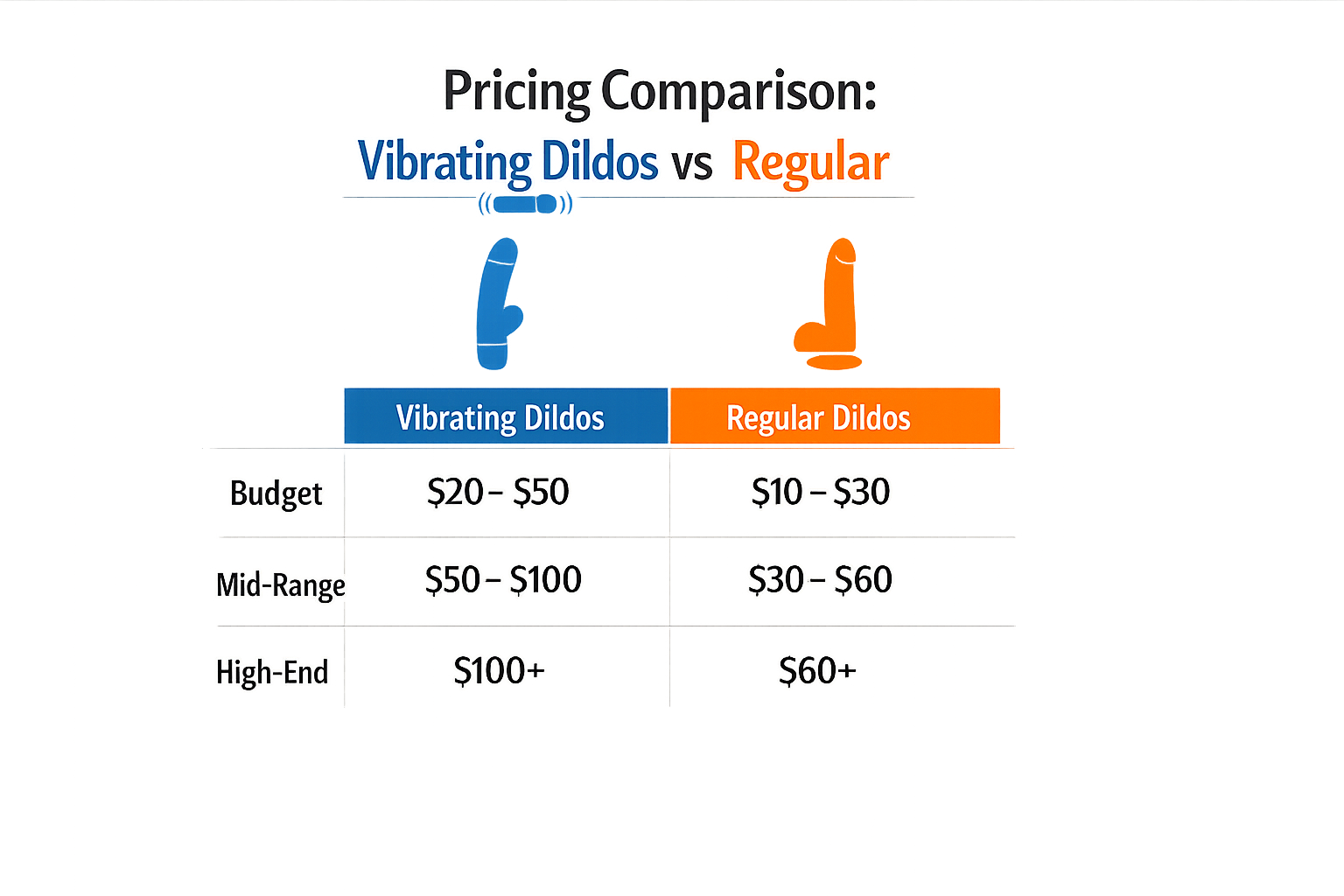
The price gap between vibrating dildos and regular dildos isn't as wide as most first-time buyers assume — but the reasons for the difference matter more than the dollar amount.
Budget Tier: Under $30
Regular dildos own this price bracket. You'll find body-safe silicone options from reputable brands starting around $15–25, and they're legitimately good picks for beginners. The material is what you're paying for here — not bells, not whistles, just a solid dildo that does the job.
Vibrating dildos under $30 exist, but most cut corners on motor quality or material safety. The ones that don't sacrifice those things tend to be bullet-vibe-in-a-sleeve designs — functional, but not the integrated experience you're probably picturing. If your budget is tight and you want vibration, you're better off buying a separate bullet vibrator and a regular dildo than trying to get both in one cheap package.
Mid-Range: $30–$80
This is where vibrating dildos start to make sense. You'll pay $40–70 for a vibrating dildo with a decent motor, multiple speeds, and body-safe silicone. Regular dildos in this range are usually premium materials (platinum-cure silicone, dual-density construction) or specialty shapes (realistic texture, pronounced curves).
The gap narrows here because you're comparing good materials on both sides. A $50 vibrating dildo and a $50 regular dildo are both using quality silicone — the vibrating version just has a motor and battery compartment built in. You're paying about $15–25 extra for the vibration feature, which is reasonable if you know you want it.
| Price Tier | Regular Dildo | Vibrating Dildo | What You Get |
|---|---|---|---|
| Under $30 | $15–25 | $20–30 | Regular: body-safe silicone, solid construction. Vibrating: often compromised motor or material. |
| $30–$80 | $30–60 | $40–70 | Regular: premium silicone, specialty shapes. Vibrating: quality motor, multiple speeds, rechargeable. |
| $80+ | $60–$120 | $80–$150 | Regular: artisan or dual-density. Vibrating: app control, advanced patterns, luxury finish. |
Premium Tier: $80 and Up
Regular dildos at this level are either artisan pieces (hand-poured, custom colors) or dual-density designs that feel closer to real tissue. Vibrating dildos in this range add app connectivity, more powerful motors, and sometimes heating elements or thrusting mechanisms.
The price difference widens again here — a premium regular dildo might top out at $120, while a high-end vibrating dildo can push $150–200. You're paying for engineering complexity, not just materials. Whether that's worth it depends entirely on whether you'll actually use the extra features.
What Drives the Price Gap
Vibrating dildos cost more because they have more parts. A motor, battery, control circuitry, and waterproof seals all add to manufacturing cost. Regular dildos are just molded silicone — simpler to produce, fewer failure points, lower price.
The other factor: regular dildos last longer. No motor means no planned obsolescence. A $40 silicone dildo will outlive a $70 vibrating dildo by years, sometimes decades. If longevity matters to you, that shifts the value calculation.
Pros and Cons of Each Type
Every toy category has trade-offs, and dildos are no exception. Vibrating and regular dildos solve different problems — which means they come with different headaches, too.
Vibrating Dildos: What You Gain and What You Give Up
Pros:
- Faster orgasms. The intense stimulation makes it easier for many women to reach orgasm more quickly, especially when the vibration hits the clitoris or G-spot directly.
- Dual stimulation. Most vibrating dildos combine internal penetration with external clitoral attention — you get both at once, which regular dildos can't deliver.
- Enhanced arousal and satisfaction. Vibrators are associated with increased sexual desire, arousal, and improved sexual function overall.
- Variety. Multiple vibration patterns and intensities mean you can adjust the sensation mid-session without swapping toys.
Cons:
- Battery life. Every vibrating dildo eventually needs a charge, and if you forget, you're left with an expensive paperweight. (Here's how to charge a vibrator if you're not sure.)
- Noise. Cheaper motors buzz loud enough to kill the mood — or alert your housemates.
- Weight and bulk. The motor and battery add heft, which can make longer sessions tiring.
- Complexity. More buttons, more settings, more things that can break. Regular dildos have zero moving parts.
- Price. Vibrating dildos start around $30-40 and climb fast; regular dildos start closer to $15-20.
Regular Dildos: What You Gain and What You Give Up
Pros:
- Simplicity. No batteries, no buttons, no charging station. You use it, wash it, done.
- Durability. Fewer parts mean fewer failure points. A well-made silicone dildo can last a decade.
- Full control over rhythm and pressure. You set the pace and angle — there's no motor dictating the sensation.
- Quieter. The only sound is whatever you're making.
- Lower price floor. You can find a solid body-safe regular dildo for under $20.
Cons:
- No built-in clitoral stimulation. If you need external attention to finish, you'll need a free hand or a second toy.
- Slower build. Without vibration, it takes longer to reach orgasm for most people.
- Less variety in a single session. The sensation is what it is — you can't toggle between three intensities.
- Arm fatigue. You're doing all the work, and that gets tiring during longer sessions.
Regular dildos ask more of you physically, but they also give you total control — no motor fighting your rhythm.
The Real Trade-Off
Vibrating dildos deliver faster, more intense orgasms but require maintenance and cost more. Regular dildos are simpler, cheaper, and last longer, but they demand more effort and won't give you dual stimulation without help. Neither is better across the board — it depends on whether you value convenience or control.
Who Should Choose What?
The real question isn't which type is objectively better — it's which one fits what you're actually trying to do. Most first-time buyers overthink this, or worse, buy both at once and end up with drawer clutter.
If You Want Hands-Free Stimulation
Vibrating dildos win here. The motor does the work, which matters if you're using it during partnered sex, if you have limited hand mobility, or if you just want to lie back and let the toy handle the intensity. Regular dildos require active thrusting — you're the engine, and that's fine for some sessions but exhausting for others.
If You're New to Internal Toys
Start with a regular dildo. Seriously. The vibration adds a layer of sensation that can feel overwhelming when you're still figuring out what angle, depth, and shape work for your body. A basic silicone dildo gives you full control over pace and pressure without the distraction of motor settings. Once you know what you like, adding vibration becomes an upgrade rather than a guessing game.
If You Want G-Spot or Prostate Stimulation
Vibrating dildos with a curved shape are the move. The motor amplifies the pressure on those internal spots in a way that manual thrusting just doesn't replicate. Regular dildos work too, but you'll need to be more deliberate about angle and rhythm — and that's harder to sustain when you're close.
If You're on a Budget
Regular dildos cost less and last longer. No motor means no charging, no battery death, and no "why won't this turn on" panic mid-session. You can get a solid body-safe silicone option for $20-40 that'll outlive most vibrating models. If you're trying to keep it under $50 total, skip the motor and put that money toward better material quality instead.
If You Want Partner Play
Both work, but vibrating dildos add an extra layer of stimulation that benefits both people. The vibration transfers through the toy during penetration, which some partners feel (and some don't — anatomy varies). Regular dildos give you more control over pace without worrying about motor noise or whether the battery's about to die. How to use a vibrator during sex covers the logistics of integrating either type into partnered sessions.
If You Like Flexibility in Your Routine
Regular dildos adapt to more scenarios. You can use them in the shower, the bath, wherever — no charging required. Vibrating dildos need planning: charged battery, dry hands to operate buttons, a surface where motor noise won't be an issue. If your routine is spontaneous or varies a lot, the regular option removes friction (the logistical kind, not the fun kind).
The best first dildo is the one you'll actually use, not the one with the most features.
Understanding personal preferences matters more than specs. Some people need that motor buzz to finish; others find it distracting or numbing. Neither response is wrong — it's just your body telling you what works.
Final Verdict
Here's the thing nobody tells you: there is no universal winner in the vibrating dildos vs regular debate. The right pick depends entirely on what you're chasing — and how much complexity you're willing to tolerate.
If you want hands-free intensity, layered sensation, or the ability to hit internal and external spots at once, vibrating dildos deliver in ways regular dildos simply can't. They're the power tool of the category. But they come with batteries, buttons, and the occasional "why won't this charge" moment that regular dildos never inflict on you.
Regular dildos are the friend who shows up on time, does the job, and never asks you to read a manual. They're reliable, intuitive, and — for a lot of people — exactly enough. No charging anxiety, no motor burnout, no figuring out which of seven patterns actually does anything. Just shape, firmness, and your own rhythm.
Who Gets What
Pick a vibrating dildo if you:
- Want dual stimulation (internal + clitoral) without coordinating two toys
- Like variety — patterns, speeds, the whole menu
- Don't mind the maintenance trade-off (charging, cleaning around seams, occasional motor replacement)
- Are chasing intensity that manual motion alone won't deliver
Pick a regular dildo if you:
- Prefer full control over speed and pressure
- Want zero learning curve and zero battery drama
- Like the meditative, intentional pace of non-powered play
- Are building a starter collection and don't want to over-invest before you know what you like
The Actual Recommendation
If you're new to dildos entirely, start with a regular one. Learn what size, shape, and firmness work for your body before you add vibration to the equation. A $25 silicone dildo will teach you more about your preferences than a $90 vibrating model that sits in a drawer because the curve was wrong.
Once you know what you like, add a vibrating dildo to the rotation — not as a replacement, but as a different tool for a different mood. Most people who stick with toys long-term end up with both, because the best answer to "which is better" is usually "depends on the day."
For a deeper look at how charging and care differ between powered and non-powered toys, check out How to Charge a Vibrator: Cables, Docks & Lights Explained.
The right dildo is the one you'll actually use — and that's almost never the one with the most features.
Vibrating dildos win on versatility and intensity. Regular dildos win on simplicity and reliability. Your call.