
How to Use a Vibrator During Sex: Tips for Couples
Learn how to use a vibrator during sex to enhance pleasure for both partners. Discover practical tips and techniques for a more enjoyable experience.
 Zoe Clarke
Learn how to use a vibrator during sex to enhance pleasure for both partners. Discover tips and techniques for a more enjoyable experience.
Introduction
Vibrators aren't just for solo sessions. Using a vibrator during sex is one of the fastest ways to add new sensation without learning a complicated new position or buying equipment that requires an instruction manual. The idea that toys are a "replacement" for a partner is outdated — most people who use vibrators during partnered sex report it makes the experience better for both people, not just the person holding it.
The mental block is usually bigger than the physical logistics. A lot of couples assume introducing a vibrator means a long conversation, potential hurt feelings, or some kind of performance anxiety. In practice, it's closer to "hey, want to try this?" than a relationship summit. The toy itself is a tool — a clit stimulator that takes thirty seconds to position, or a cock ring that stays put once it's on.
The benefit is straightforward: vibrators stimulate areas that are hard to reach or sustain manually during penetration. For vulva owners, that usually means the clitoris — the primary pleasure center that doesn't always get consistent contact during intercourse. For penis owners, vibration at the base, perineum, or testicles adds a layer most hands-only sex doesn't deliver. Both partners feel the vibration when the toy is in contact, which is why even a small bullet vibrator often works better than a larger toy designed for solo use.
This guide walks through the practical steps — how to pick a toy that works for two people, how to bring it up without making it awkward, and how to position it so it actually enhances what you're already doing instead of getting in the way.
Understanding the Challenges
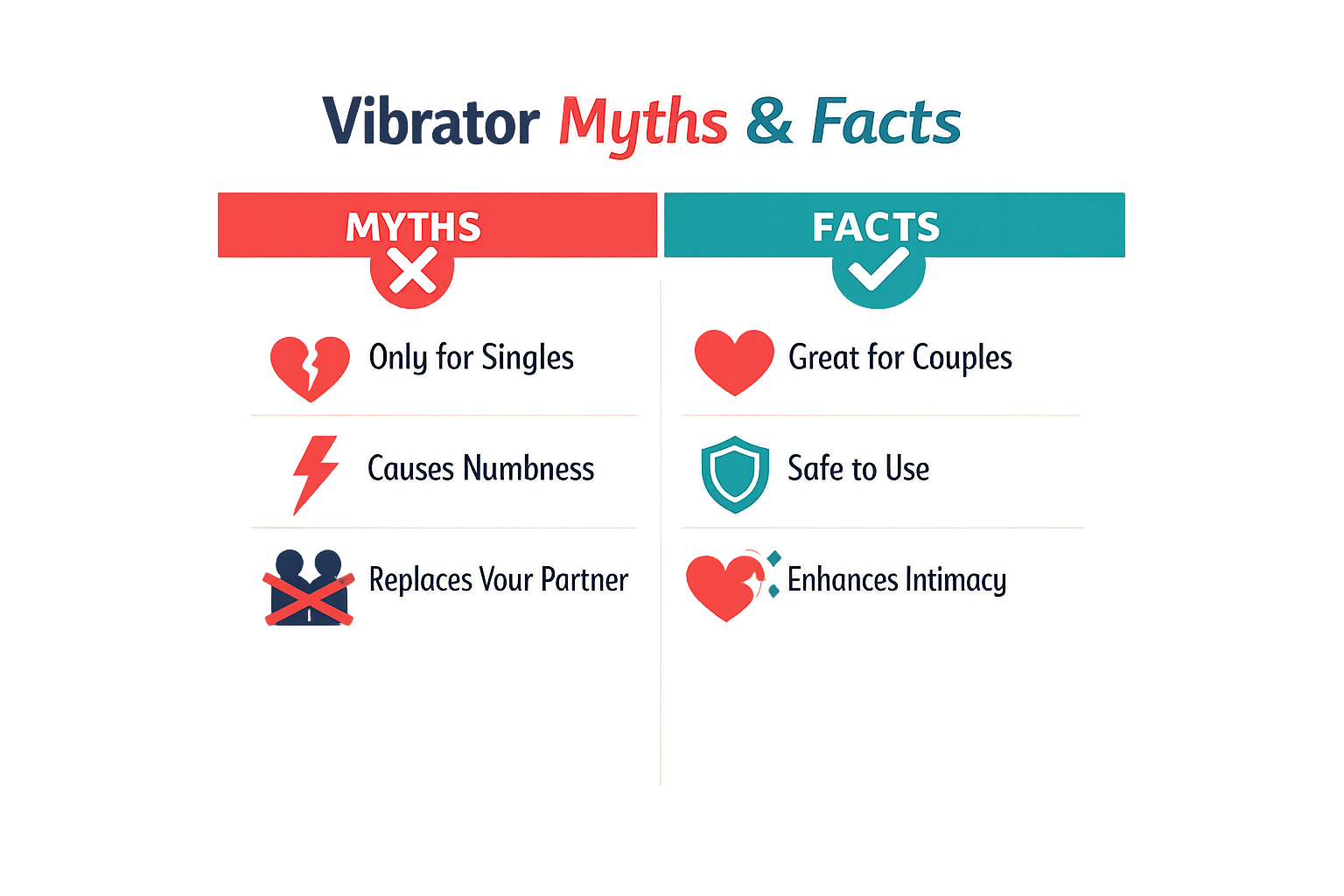
The biggest misconception about bringing a vibrator into partnered sex? That it means something's broken. Most people assume toys only show up when someone's unhappy, bored, or trying to fix a problem — and that assumption kills the conversation before it starts.
Here's what actually happens: one partner worries the other will feel replaced, inadequate, or like they're not enough on their own. The other partner worries about seeming demanding, high-maintenance, or like they're criticizing their partner's technique. Both people sit there wanting the same thing — more pleasure, less pressure — and neither one says it out loud.
The Anatomy Reality Nobody Mentions
Fewer than 20% of vulva-owners can climax solely with vaginal stimulation or intercourse. That's not a failure — it's anatomy. The clitoris has more nerve endings than any other part of the body, and most of those nerve endings live on the outside, not the inside. Penetration alone just doesn't hit the spot for most people with vulvas, and pretending otherwise sets everyone up to feel like they're doing it wrong.
Vibrators aren't a workaround for bad sex. They're a tool that works with how bodies actually respond. If you're interested in learning more about what the clitoris is and how it works, understanding the anatomy makes the whole conversation easier.
The Timing Problem
Most couples wait until they're already frustrated to bring up toys, which means the conversation starts from a place of disappointment instead of curiosity. By the time someone suggests a vibrator, it feels like an accusation — "you're not doing it right" — even when that's not what anyone means.
The better move: talk about it when you're not in bed, not mid-argument, and not right after unsatisfying sex. Bring it up the same way you'd bring up trying a new restaurant — as something you're curious about, not something you need because the current situation is failing.
The Logistics Everyone Skips
Even when both people are on board, most couples don't think through the actual mechanics until they're already naked and fumbling. Where does the vibrator go? Who holds it? What happens if it's too intense, too weak, or just awkward? These aren't dealbreakers — they're just details nobody walked you through ahead of time.
Vibrators come in wildly different shapes for a reason. Some are designed to mimic penetration, others focus entirely on external stimulation, and some do both. A clit sucker works completely differently than a wand or a bullet, and what works solo might not work the same way during partnered sex. Figuring that out in the moment, without a plan, is where most people stall out.
The conversation about toys isn't about what's missing — it's about what's possible.
How to Use a Vibrator During Sex: Steps to Integrate a Vibrator into Your Sex Life
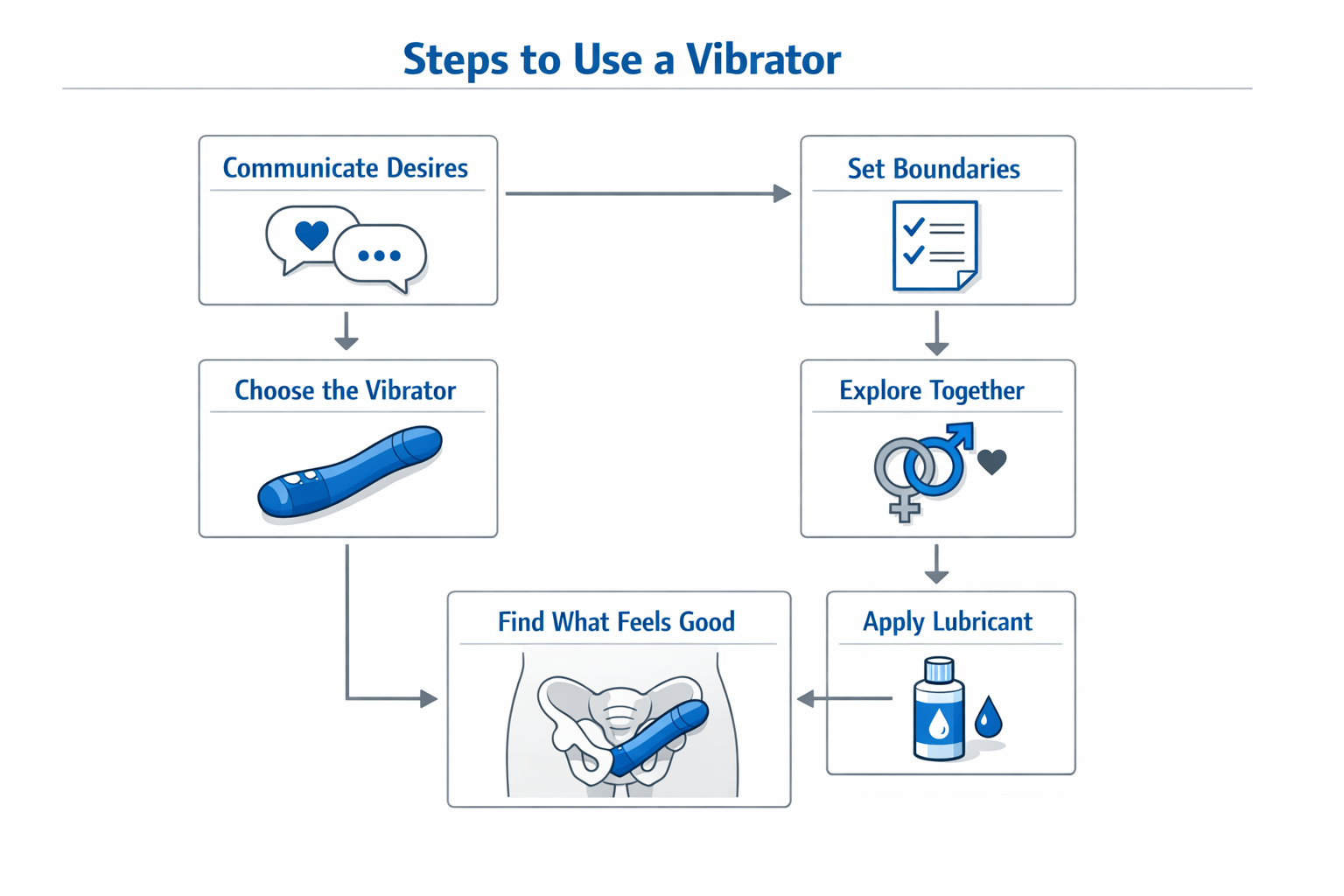
Here's the thing: you don't need a twelve-step plan to bring a vibrator into partnered sex. Most couples overthink this — they treat it like installing a new appliance when it's really just adding a tool that makes things feel better. The steps below are the ones that actually matter, stripped of the fluff.
Talk about it when you're both dressed and not mid-makeout. Frame it as something you want to try together, not a performance review of what's currently happening. Most partners are more open to the idea than you think — the awkwardness usually lives in your head, not theirs.
You need a place where neither of you is worried about interruptions or feeling self-conscious. Your bedroom works. A locked door works better. The goal is to remove the mental static so you can focus on what feels good.
Vibrators and friction don't mix well. Even if you think you don't need it, use a sex toy-safe lubricant. It makes the sensations smoother and keeps things comfortable for both of you. Water-based is the safest bet for most toys.
Turn the vibrator on before it touches anyone's body. Start with the lowest setting and let the receiving partner guide the intensity. What feels good at the beginning might be too much ten minutes in, or vice versa — let them steer.
Vibrators work on more than just the obvious spots. Try the inner thighs, nipples, neck, or anywhere that responds to touch. The clitoris is a common go-to, but don't limit yourself — experimenting with different areas can unlock sensations you didn't expect.
Hand the remote or the toy itself to your partner and let them take charge of the vibrations. It adds an element of anticipation and gives them direct control over pacing and intensity. Some couples find this more engaging than one person doing all the work.
Positioning That Actually Works
Most vibrator-during-sex positions are just regular sex positions with one hand free. Missionary works because the person on top can hold a small vibrator against the clitoris while penetration happens. Doggy-style works because the receiving partner can reach underneath with a bullet vibe. Spooning works because both partners have access to the front of the body.
The trick isn't finding a secret position — it's finding one where someone's hand isn't pinned or cramping. Compact vibrators (bullets, finger vibes, small wands) are easier to maneuver than large ones. If you're using a vibrating cock ring, it stays in place on its own, which solves the logistics problem entirely.
What to Do If It's Not Working
Sometimes the vibrator doesn't land the way you expected. Maybe the angle is off, maybe the setting is too buzzy, maybe it's just not the right moment. That's normal. Stop, adjust, or set it aside and try again later. The goal is more pleasure, not forcing a specific outcome because you committed to using the thing.
If one toy doesn't work, try a different shape or style. A wand might be too broad; a bullet might be too pinpoint. A suction vibrator might hit differently than a traditional buzzing one. The first pick isn't always the right pick, and that's fine.
Tips and Tricks for Best Results
Once you've got the basics down, here's where things get interesting. Most couples stop at "we tried it once" — these tips push you past that into the territory where a vibrator becomes part of your regular rotation, not a novelty.
Start with the dial low and work your way up
Most vibrators have multiple settings, and the temptation is to crank it straight to max. Don't. Start on the lowest setting and gradually increase intensity as you go. This gives both partners time to adjust to the sensation and figure out what actually feels good versus what just feels like a lot. Use the dial or button controls to ramp up slowly — you can always add more power, but you can't dial back overstimulation once it's happened.
Positioning matters more than you think
The angle and placement of the vibrator changes everything. For clitoral stimulation, hold it slightly to the side rather than dead-center if direct contact is too intense. During penetration, try placing a bullet vibe between bodies in missionary, or have the receiving partner hold it against their clit in doggy style. Vibrating cock rings sit at the base of the penis and deliver vibration to both the wearer and their partner — position the vibrating element so it makes contact with the clitoris during thrusting.
Experiment with pulse patterns, not just intensity
Most modern vibrators offer more than steady vibration — they have pulse patterns, waves, and escalating rhythms. These can be more interesting than a single sustained buzz, especially if you're using the toy for an extended session. Try a few patterns mid-session to see what lands. Some people find pulsing more intense than steady vibration at the same power level, so treat it like a separate variable.
Lube makes everything better
This one's non-negotiable. Even if you think you don't need it, a small amount of water-based lube on the vibrator's contact point reduces friction and amplifies sensation. It's especially important if you're using the toy externally for more than a few minutes — skin-on-silicone without lube can start to feel irritating fast.
Don't ignore the rest of the body
Vibrators aren't just for genitals. Run a bullet vibe over nipples, inner thighs, or the back of the neck during foreplay. Use a wand on shoulders or lower back as part of a warm-up. The goal is to integrate the toy into the full experience, not treat it like a single-use tool you pull out at the last minute.
Conclusion
Using a vibrator during sex isn't complicated — it's just another tool in the toolkit, and one that works for most people. The research backs it up: vibrators evoke a stronger sexual response than most other forms of stimulation, and they're effective for both men and women. That's not marketing talk — that's physiology.
The real benefit isn't just the physical response. It's the permission it gives you to experiment, to talk about what actually feels good, and to stop pretending that partnered sex has to look one specific way. Most couples who add a vibrator report that it makes things more fun, not more complicated. The trick is treating it like what it is: a tool, not a test.
Start small, communicate openly, and don't overthink it. If you're still figuring out what works for you solo, our guide to clit stimulators breaks down the different types and what each one does best. Most people find that once they try it, the biggest surprise is that it wasn't a bigger deal in the first place.
The trick is treating it like what it is: a tool, not a test.
The bedroom is yours. Use what works, skip what doesn't, and keep the conversation going. That's the whole game.