
Sex Toy Storage: Essential Tips for Boxes and Bags
Learn what to look for in sex toy storage boxes and bags to keep your collection organized, protected, and discreet. Material, size, and security tips.
 Zoe Clarke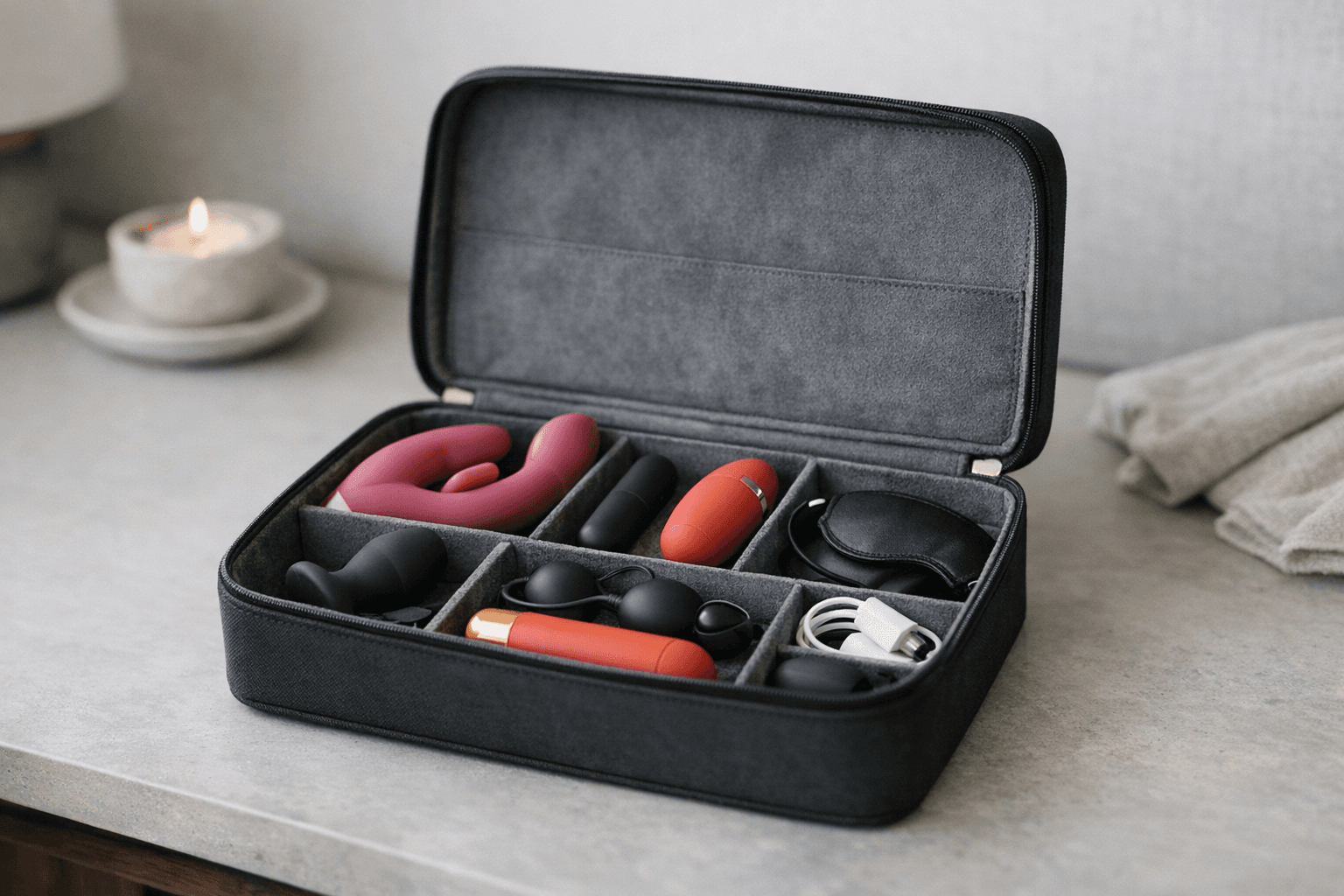
Introduction
Most people buy their first vibrator and toss it in a bedside drawer with the charger cable, a half-empty bottle of lube, and whatever else lives in there. That works until you buy a second toy. Then a third. Then you're pulling out a tangle of silicone, wondering why your favorite rabbit smells like the jelly dildo you bought on a whim, and realizing the cheap one has dust stuck to it that won't come off.
Sex toy storage isn't about being precious with your stuff — it's about not ruining it before you get your money's worth. Silicone toys melt into each other when they touch. Porous materials collect bacteria if they're stored dirty or damp. Motors degrade faster in humid environments. A decent storage system fixes all of that without requiring a dedicated furniture piece or a color-coded filing system.
The good news: you don't need to spend much or overthink it. A few basic boxes or drawstring bags will handle most collections, and the ones that work best are usually the simplest. Here's what actually matters when you're choosing how to store sex toys — and what you can ignore.
The Problem with Storing Sex Toys
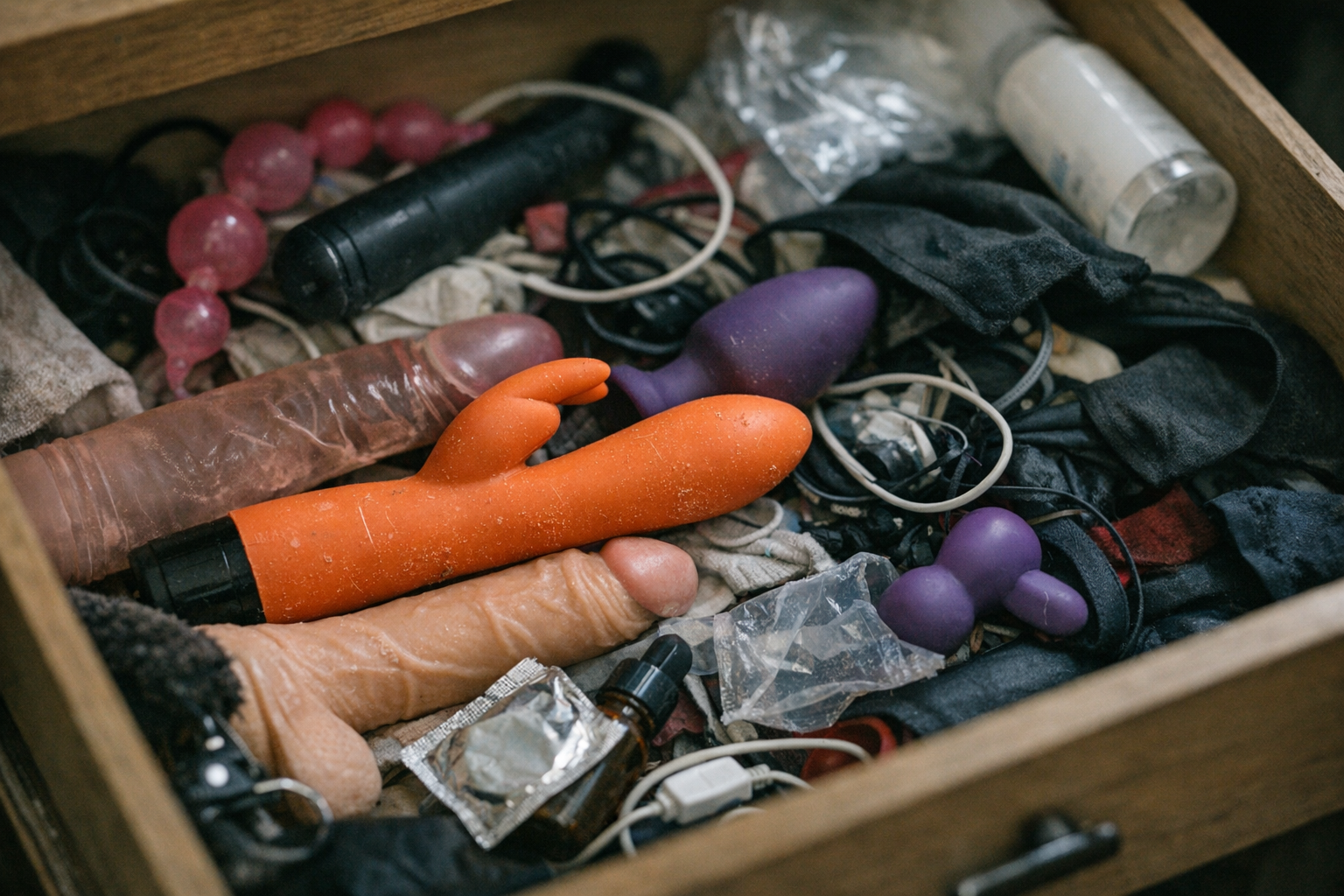
Most people buy their first toy and toss it in a drawer. That works until you buy a second one — then a third — and suddenly you've got a tangle of chargers, a silicone dildo stuck to a jelly toy, and no idea which vibrator goes with which USB cable.
The bigger problem isn't the mess. It's that improper storage damages your toys. Silicone can bond to other silicone or to soft plastics if they touch for weeks at a time. Rechargeable batteries degrade faster when stored at full charge in a hot drawer. Dust and lint stick to everything, and you're stuck rinsing off a toy you thought was clean.
Then there's the privacy issue. A shoebox under the bed works until someone else opens it. A shared bathroom drawer works until it doesn't. Most people don't think about storage until they're scrambling to hide something five seconds before a guest walks in.
What Actually Goes Wrong
The most common storage mistake is assuming all toys are the same. They're not. A hard plastic bullet vibrator can sit loose in a drawer for years. A porous TPE stroker left unwrapped will collect dust, degrade faster, and eventually smell like regret. How to Store Sex Toys: A Material-Aware Storage Checklist breaks down what each material needs, but the short version is this: if it's soft, wrap it.
Charging cables are the second-biggest problem. Most rechargeable toys use proprietary magnetic or pin chargers that look identical but aren't interchangeable. Lose the cable, and you've got a $90 paperweight. People solve this by labeling cables with tape or storing each toy with its charger in a separate pouch — both work, but only if you do it from the start.
The third issue is cross-contamination. Toys that aren't fully dry when you put them away can grow mold or mildew, especially in airtight containers. Toys stored with lube residue attract dust and degrade faster. And if you're storing toys that have touched bodily fluids without a proper clean, you're creating a bacterial petri dish in your nightstand.
The drawer that works for one toy becomes a disaster for five — storage scales badly if you don't plan for it.
Finally, there's the reality that most people don't think about this until it's already a problem. You don't need a storage system when you own one vibrator. You need one when you've accumulated six, half of them are missing chargers, and you can't remember which ones are actually body-safe.
Steps to Choose the Right Storage
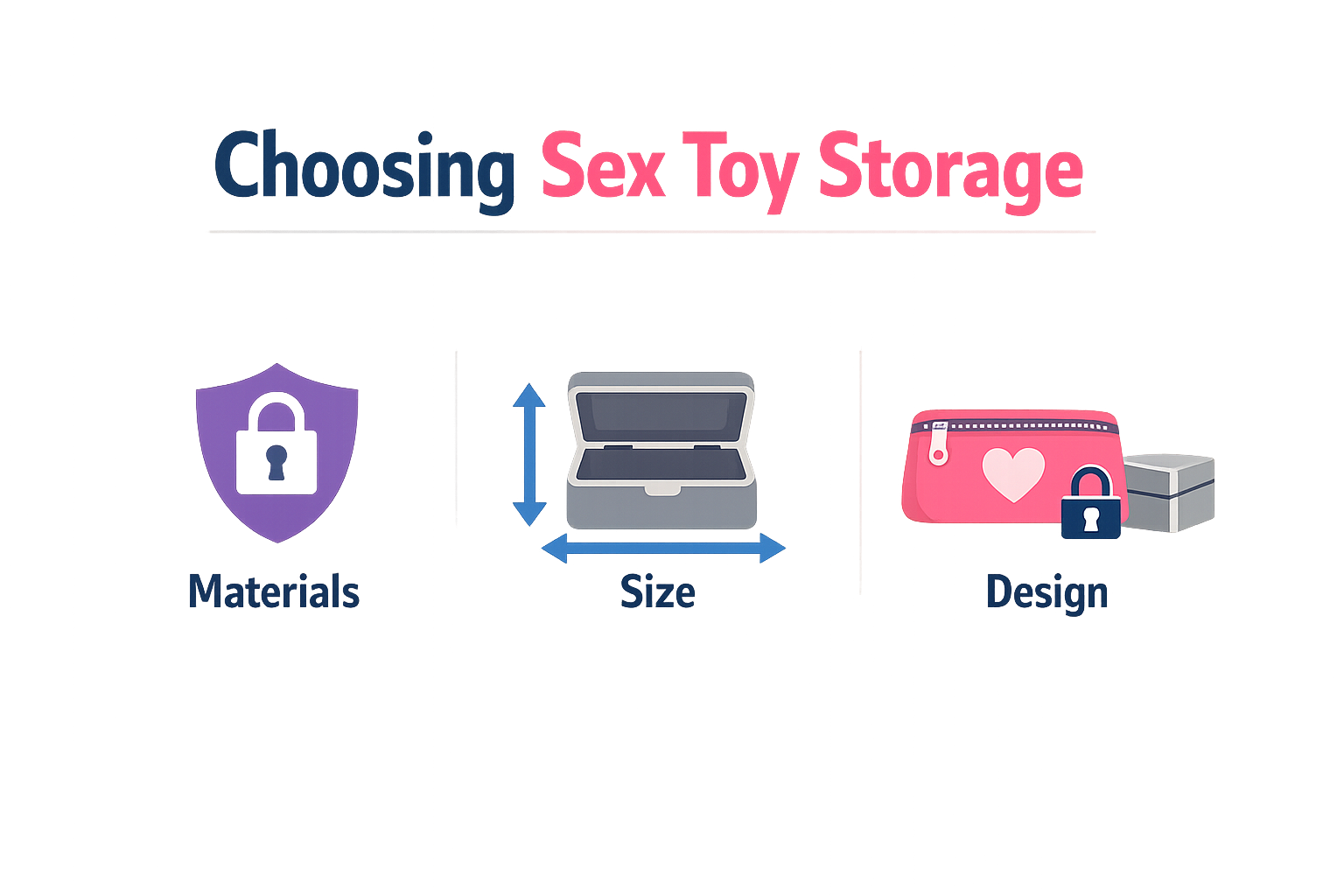
Most people pick storage after they've already bought three toys and realize the bedside drawer isn't cutting it. Here's how to do it right from the start.
Step 1
Assess what you actually own
Count your toys. Measure the longest one. Check the material tags — silicone, glass, metal, TPE, whatever's printed on the box. If you don't know what something's made of, assume it's porous and needs to be kept separate. This inventory tells you whether you need a small pouch or a full storage case.
Step 2
Match storage material to toy material
Silicone toys need breathable fabric bags or hard cases with ventilation — never sealed plastic that traps moisture. Porous materials like TPE or jelly need individual pouches to prevent cross-contamination. Glass and metal can share space, but keep them padded so they don't chip. If your toy came with a dust bag, use it — that's the manufacturer telling you what the material tolerates.
Step 3
Pick a format that fits your space
Three real options: soft pouches (cheap, flexible, good for one or two toys), zippered cases (mid-range, holds a small collection, stackable), or lockable boxes (larger collections, shared living situations, actual security). Don't overbuy. A single zippered case handles most beginner collections; you can add a second one later if you need it.
Step 4
Check for lining and padding
The interior matters more than the exterior. Look for soft fabric lining — satin or microfiber — that won't scratch silicone or snag on seams. Avoid bare plastic interiors; they hold moisture and can react with certain toy materials. Padding between compartments keeps things from banging into each other, which matters for glass and rechargeable toys with delicate charging ports.
Step 5
Test the closure and portability
Zippers should close fully and stay closed when you pick the case up. Velcro is fine for stationary storage but not if you're moving the case around. If you travel with toys or need to move storage between rooms, check that handles are reinforced and the case doesn't look obviously like sex toy storage — plain black or grey beats anything with suggestive branding.
Prioritize What Actually Protects Your Toys
The right storage keeps toys clean, separated by material, and protected from dust. For a detailed breakdown of which materials need which storage conditions, see How to Store Sex Toys: A Material-Aware Storage Checklist.
Most storage mistakes come from buying something that looks nice instead of something that works. A $15 zippered case with fabric lining beats a $40 decorative box with a bare plastic interior every time.
Tips and Tricks for Organizing Your Collection
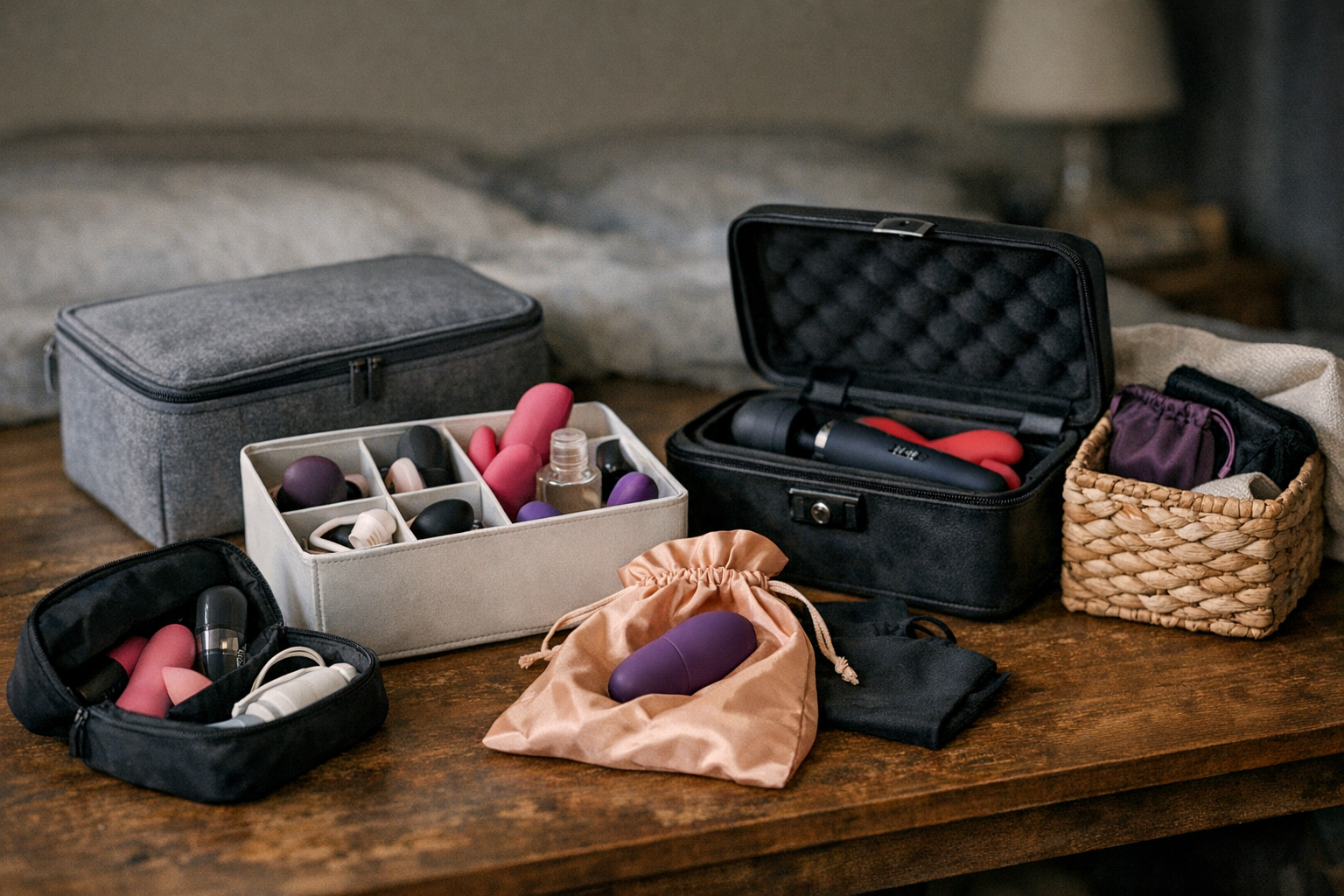
Once you've picked a storage box or bag, the actual organizing part is where most people either nail it or end up with a drawer that looks like a junk drawer had a baby with a makeup bag. Here's what actually works.
Keep Like With Like
Group toys by type or material. Silicone vibrators in one compartment, glass dildos in another, rechargeable bullets together. This isn't about being precious — it's about knowing where things are and avoiding the silicone-on-silicone contact that can degrade toys over time.
If your storage solution has dividers or pouches, use them. If it doesn't, small fabric drawstring bags work fine for separating individual items.
Label What You Can't See
If you're using opaque boxes or stacking multiple containers, a small label on the outside saves you from opening three boxes to find one toy. You don't need to write "DILDOS" in Sharpie — a discreet number system or color-coding works just as well.
For shared living situations, a label that says "craft supplies" or "electronics" is functionally accurate and nobody's going to ask follow-up questions.
Clean Before You Store
This should be obvious, but it's the step people skip when they're in a hurry. A toy that goes into storage dirty comes out of storage worse. Residue attracts dust, degrades materials faster, and makes the whole setup feel less appealing to use later.
Wipe everything down, let it air-dry completely, then store. If you're not sure how to clean a specific material, check How to Store Sex Toys: A Material-Aware Storage Checklist for a breakdown by toy type.
Rotate What You Actually Use
If you've got a rotation of three toys you reach for constantly and twelve that haven't moved in six months, put the regulars in easy-access storage and archive the rest. A small bedside pouch or drawer organizer for daily picks keeps things simple, and the full collection can live in a larger box elsewhere.
This also makes it easier to spot when a toy's past its useful life — if you haven't touched it in a year and it's starting to look or smell off, it's time to toss it.
The best storage system is the one you'll actually maintain — if it's too complicated, you won't use it.
Check Your Storage Every Few Months
Set a reminder to open your storage and do a quick check. Look for:
- Toys that are sticky, discolored, or smell weird (time to replace)
- Batteries that need charging or replacing
- Lube packets or accessories that have expired
- Dust or moisture buildup in the container itself
A five-minute check every quarter keeps your collection in working order and prevents the "I haven't opened this box in two years and now I'm scared" scenario.
Conclusion
Proper sex toy storage isn't about being precious with your collection — it's about making sure the thing you spent money on actually works the next time you reach for it. A silicone toy that melts against a jelly dildo, a vibrator that won't charge because the port got dusty, or a bag that smells like old lube — these are all preventable problems. The right storage box or bag keeps your toys clean, separated, and ready to use without turning into a weird science experiment in the back of your nightstand.
Most people overthink this. You don't need a custom-built armoire or a $200 lockbox unless you genuinely want one. A fabric-lined pouch for each toy, a shallow drawer organizer, or a basic locking case will handle 90% of what most collections need. The key is matching your storage to your actual situation — how many toys you have, what they're made of, and whether you need them out of sight. If you're still building your collection and want more material-specific guidance, How to Store Sex Toys: A Material-Aware Storage Checklist walks through the compatibility issues that most beginner guides skip.
Buy storage that solves the problem you actually have, not the one you think you're supposed to have. Your future self — the one who doesn't have to fish a lint-covered vibrator out of a tangle of charger cables — will thank you.