
How Long Do Vibrators Last and When to Replace Them?
Wondering how long do vibrators last? Discover when to replace your favorite toys, signs of wear, and tips to extend their lifespan.
 Zoe Clarke
Introduction
Your vibrator isn't supposed to last forever — and honestly, most of them don't. The question isn't whether it'll eventually stop working, it's when, and whether you'll catch the signs before it becomes a problem. Most people keep using toys well past their prime because nobody talks about what "worn out" actually looks like.
The average vibrator lasts somewhere between one and five years, but that range is massive for a reason. A $20 bullet you use daily has a very different timeline than a $150 rechargeable you pull out once a month. Build quality, materials, motor type, and how you care for it all play a role — and most first-time buyers have no idea which factors actually matter.
Here's the thing: a vibrator that's past its useful life isn't just less fun, it can be actively unhygienic or unsafe. Degraded silicone harbors bacteria. Weakening motors can overheat. Corroded battery compartments can leak. The good news is that the warning signs are pretty obvious once you know what to look for, and a few simple habits can double the lifespan of most toys. If you're wondering whether your current favorite is still doing its job or whether it's time to move on, you're asking the right question — and this guide will walk you through exactly how to choose the right type of vibrator and when to replace it.
Understanding the Problem: How Long Do Vibrators Last?
Most vibrators last 1–3 years if you treat them like a normal thing you own, not a museum piece. The actual number depends on three factors: what it's made of, how often you use it, and whether you're the kind of person who cleans it properly or just tosses it in a drawer.
Rechargeable vibrators — the ones with built-in lithium batteries — get around 500 charge cycles before the battery starts losing capacity. That's roughly 2–3 years if you're charging once a week. Battery-powered vibrators (the ones that take AA or AAA batteries) can last longer in terms of motor life, but the trade-off is you're constantly buying batteries and the motors are usually cheaper to begin with.
What Actually Kills a Vibrator
The battery dies first in rechargeable toys — it stops holding a charge, or it takes longer to charge and runs out faster. The motor can outlast the battery by years, but once the battery's toast, the toy's done unless you want to crack it open (you don't). Cheaper vibrators skip the battery problem entirely because they burn out the motor first — usually within 6–12 months if you use them regularly.
Material breakdown is the other big one. Silicone toys last the longest because medical-grade silicone doesn't degrade the way jelly, rubber, or TPE does. If your toy is sticky, discolored, or smells weird even after cleaning, the material is breaking down and it's time to replace it. This happens faster with porous materials, which is why most budget picks under $20 don't make it past a year.
Why Some Vibrators Last Longer Than Others
High-quality rechargeable vibrators are designed to last hundreds of charges and multiple years. The difference between a $30 bullet and a $100 rechargeable wand isn't just features — it's the battery quality, the motor durability, and the materials. A well-made toy survives daily use; a cheap one survives occasional use.
How you store it matters too. Tossing a vibrator into a drawer with other toys (especially if they're different materials) can cause chemical reactions that degrade silicone. Satin or cloth storage bags keep toys separated and protected, which extends their life. If you're storing a rechargeable toy for more than a month, charge it to about 50% first — fully drained or fully charged batteries degrade faster in storage.
For a deeper look at how clitoral vibrators work and what makes them tick, check out our guide on clit stimulators and how to choose the right type.
Steps to Determine When to Replace Your Vibrator
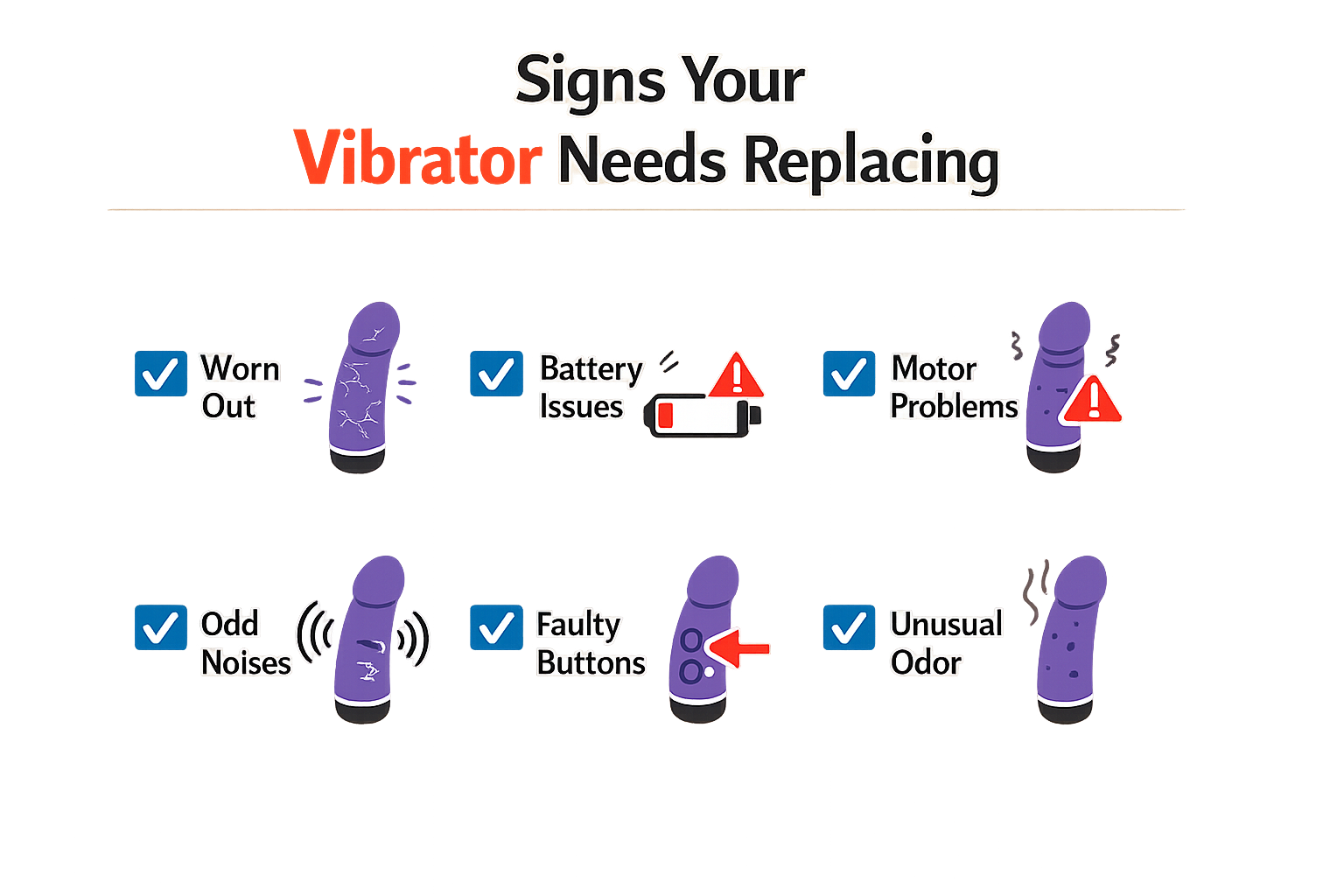
Most vibrators don't announce when they're done — they just get weaker, weirder, or stop working mid-session. Here's how to tell when it's time to retire yours.
Physical Damage or Material Breakdown
Check the surface. If the silicone feels sticky, tacky, or has visible cracks, it's done. That stickiness isn't just annoying — it means the material is breaking down, and broken-down silicone can harbor bacteria no amount of cleaning will fix. Same goes for any toy with visible tears, splits, or rough patches that weren't there when you bought it.
Hard plastic or ABS toys can crack too, especially around seams or charging ports. If you see a crack, toss it — water gets in, bacteria follows, and you don't want either near your body.
Motor Performance Issues
The motor tells you everything. If your vibrator used to have multiple speeds and now they all feel the same, or if it's noticeably weaker than it was six months ago, the motor is dying. Some toys just lose power over time — it's not always dramatic, but if you're cranking it to max and still not getting what you used to get on medium, that's your sign.
Buzzing, rattling, or grinding sounds that weren't there before mean something inside has come loose or worn out. Motors don't heal themselves. If it sounds broken, it is.
Battery and Charging Problems
Rechargeable vibrators that won't hold a charge anymore are finished. If you're charging it fully and it dies after ten minutes, or if it won't charge at all even with a new cable, the battery is cooked. Rechargeable batteries degrade over time — it's physics, not a defect — and most vibrators aren't designed for battery replacement.
If your toy requires disposable batteries and you're burning through them faster than you used to, that's a motor issue, not a battery issue. Either way, it's time.
Step 1
Run a full diagnostic check
Charge or install fresh batteries, then test every speed and pattern. Note any weak spots, dead settings, or strange sounds. If more than one thing feels off, replacement is the safer call.
When to Trust Your Gut
If it doesn't feel right anymore — and you can't pinpoint why — that's enough. Pleasure shouldn't require troubleshooting. If you're spending more time wondering if it's working than actually enjoying it, you've already answered the question.
Some people keep a backup clit stimulator on hand for exactly this reason — when the main one starts acting up, there's no gap in coverage.
Tips and Tricks for Extending Your Vibrator's Life
Most vibrators don't die — they get murdered. The good news is that a little care goes a long way, and none of it requires a chemistry degree.
Clean It After Every Use
This is the one rule that actually matters. Wash your vibrator with mild soap and water (or a toy cleaner) after every session. Residue builds up, bacteria multiplies, and silicone degrades faster when it's sitting in its own mess. If your toy is waterproof, rinse it under the tap. If it's not, use a damp cloth and avoid the battery compartment.
Store It Properly
Toss your vibrator in a drawer with your keys and old receipts, and you're asking for scratches, dust, and mystery grime. Store toys separately — ideally in a fabric pouch or the box they came in. Silicone toys especially hate touching each other; the material can react and degrade over time.
If you've got vibrating panties or other fabric-integrated toys, keep them away from sharp objects and let them air out between uses.
Use the Right Lube
Water-based lube is the safe bet for nearly every toy material. Silicone lube can degrade silicone toys (yes, even the expensive ones), and oil-based options are a disaster for anything porous. When in doubt, check the manufacturer's instructions — most include a lube compatibility chart.
Charge It Before It Dies Completely
Rechargeable batteries last longer when you top them off regularly instead of draining them to zero every time. If your vibrator has been sitting unused for months, give it a charge before you need it — lithium-ion batteries lose capacity when they sit dead for too long.
Unlike many products that burn out after a few months, quality vibrators are designed to last for hundreds of charges and many years of enjoyment.
Don't Overcharge
Leaving your toy plugged in for days won't help. Most modern vibrators have overcharge protection, but it's still a good habit to unplug once the charge light goes solid. Constant trickle charging can shorten battery lifespan over time.
Avoid Extreme Temperatures
Don't leave your vibrator in a hot car, next to a radiator, or in a freezing garage. Heat warps plastic, weakens motors, and kills batteries. Cold isn't great either — lithium-ion batteries especially hate the cold.
Replace Batteries in Non-Rechargeable Toys Promptly
If your toy runs on disposable batteries, swap them out as soon as they die. Leaving dead batteries inside can lead to corrosion, which ruins the battery compartment and sometimes the whole toy.
Check Seals and Charging Ports Regularly
Waterproof toys rely on rubber seals to keep moisture out. Inspect them every few months for cracks, tears, or visible wear. If a seal looks compromised, don't use the toy in water — and consider replacing it soon.
Charging ports can collect lint, dust, and lube residue. Wipe them down gently with a dry cloth before charging to avoid connection issues.
Conclusion
Here's the thing nobody tells you: most vibrators don't die dramatically — they fade. The motor gets weaker, the battery doesn't hold a charge, or the silicone starts feeling weird. If you've been waiting for a clear sign that it's time to replace your toy, you've probably already missed it.
The good list of what actually matters: check your vibrator every few months for cracks, weird smells, or motors that sound like they're struggling. If it's rechargeable and suddenly needs a charge every other day, that's your cue. If it's battery-powered and eating through AAs like it's training for something, same deal. Most toys last 1–3 years with regular use, but cheaper picks might tap out sooner — and that's fine if you knew that going in.
What most sites miss is that replacement isn't about hitting some magic lifespan number. It's about whether the thing still does what you bought it for. A $25 bullet that gives you two solid years and then dies? That's a win. A $150 toy that starts acting weird at month six? That's a problem. The friend who swears by their decade-old Magic Wand isn't wrong, but they're also working with a different build quality than most of what's on the market now.
The deal is this: take care of your toys (clean them, store them right, don't overcharge them), and they'll last longer. But when they're done, they're done. Don't try to nurse a dying motor through one more session — just replace it. Your body deserves better than a vibrator that's half-assing it.
If you're still figuring out what works for you, start with something like a clit sucker — they're beginner-friendly, easy to maintain, and you'll know pretty quickly if it's the right fit. And if you're in the market for a replacement, don't overthink it. Buy the one that matches how you actually use toys, not the one that looks coolest on a shelf.