
Pulsetto Vagus Nerve Stimulator: Does It Enhance Sexual Response?
 Zoe Clarke
Introduction
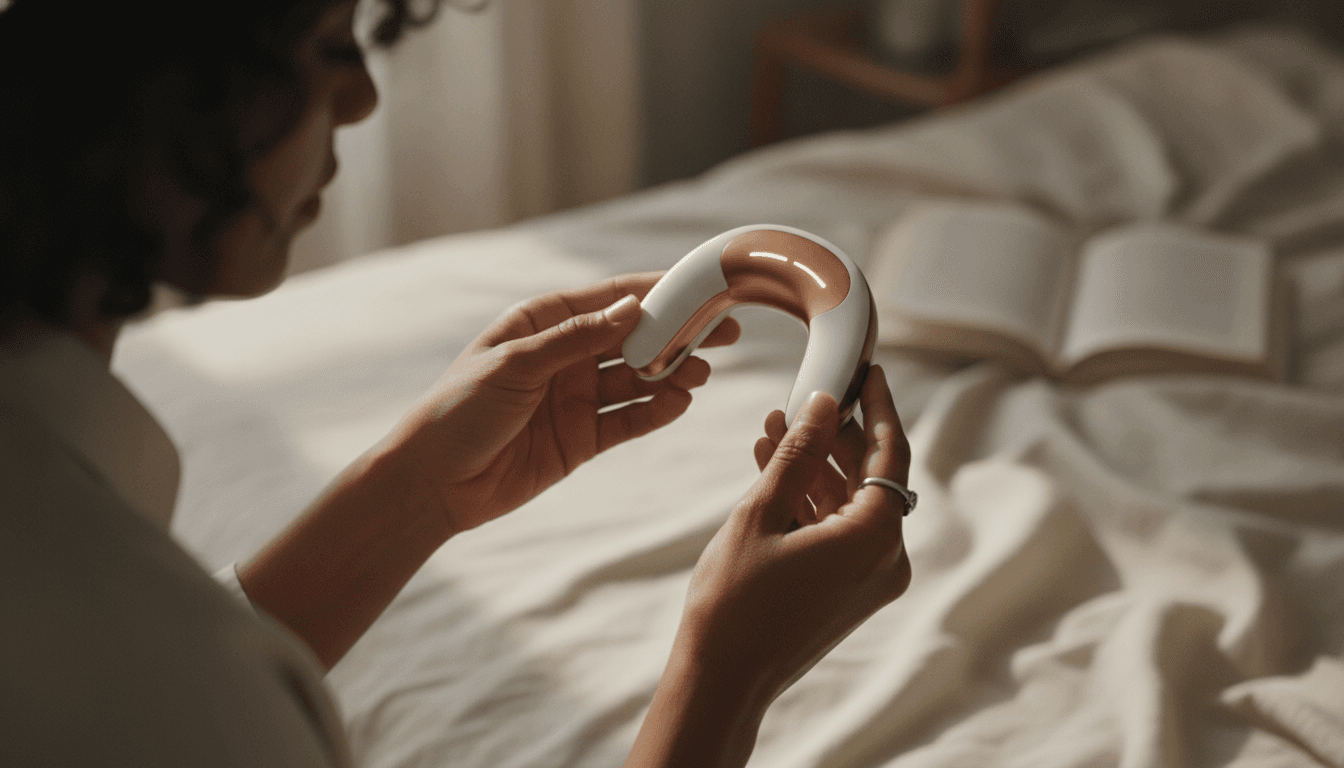
The Pulsetto Vagus Nerve Stimulator is a wearable device that sits on your neck and delivers electrical pulses to the vagus nerve. It's marketed primarily for stress reduction and relaxation — but a growing number of users online claim it improves sexual arousal and response. The question: does a device designed to calm your nervous system actually do anything for your sex life?
The short answer is maybe, but the evidence is thin. Vibratory stimulation applied directly to the genitals has solid research backing: studies show it increases pelvic blood flow, enhances vaginal lubrication, and improves multiple domains of sexual function including desire, arousal, orgasm, and satisfaction. But that's genital vibration — direct mechanical stimulation where it counts. The Pulsetto works on your neck, targeting the vagus nerve with electrical impulses, which is a completely different mechanism.
Here's what we know. The vagus nerve is part of the parasympathetic nervous system — the "rest and digest" side that counterbalances stress. Sexual arousal also requires parasympathetic activation (you can't orgasm if your body thinks you're being chased by a bear). So in theory, calming the nervous system via vagus nerve stimulation could create better conditions for arousal. But theory and clinical proof are not the same thing. If you're shopping for something that will reliably improve sexual response, you want proven methods that work for enhanced pleasure — and right now, the Pulsetto doesn't have that track record.
What the Research Actually Says
The research on vibratory stimulation and sexual function is robust — but it's about genital vibrators, not vagus nerve stimulators. Regular vibrator use has been shown to improve sexual desire, arousal, orgasm, and satisfaction, largely because it increases genital blood flow and enhances vaginal lubrication. Vibratory stimulation applied to the external genitalia stimulates nerve receptors that transmit signals to the spinal cord, causing measurable changes in sexual physiology.
Muscle vibration has also been studied in spinal cord injury patients with erectile dysfunction, where focal vibration to pelvic floor muscles improved erection quality by reducing spasticity and improving muscle synergies. But again — that's direct, localized vibration to the pelvic region, not electrical stimulation of the vagus nerve in the neck.
The Pulsetto's mechanism is fundamentally different. It delivers transcutaneous vagus nerve stimulation (tVNS), which modulates the parasympathetic nervous system. While that can reduce stress and promote relaxation — both of which are helpful for sexual function — there's no published research showing that tVNS devices improve sexual arousal, orgasm quality, or any other measurable sexual outcome.
Quick Verdict
The Pulsetto Vagus Nerve Stimulator is a neck-worn device that uses electrical pulses to stimulate the vagus nerve — a major nerve that connects your brain to most of your organs. It's marketed for stress, sleep, and general wellness, and some people are asking if it does anything for sexual response.
Here's the thing: there is no direct evidence that Pulsetto — or any transcutaneous vagus nerve stimulator — enhances sexual arousal, orgasm, or pleasure. The research on vagus nerve stimulation focuses on cardiovascular health, epilepsy, depression, and inflammation. The one study that touches sexual function looked at reducing spasticity in spinal cord injury patients using vibration therapy on pelvic muscles — not neck-based vagus nerve stimulation.
The theory goes like this: vagus nerve stimulation might improve parasympathetic tone (the "rest and digest" side of your nervous system), and better parasympathetic function could theoretically support arousal. But that's a long chain of maybes. No published study has tested whether stimulating the vagus nerve at the neck improves sexual response in healthy adults or anyone else.
If you're looking for something that actually works for sexual response, you're better off with devices designed for that purpose — vibrators, pelvic floor trainers, or other tools with a real evidence base. Pulsetto might help you relax or sleep better, and relaxation can indirectly support sexual function, but that's not the same as a direct effect.
Bottom line: Pulsetto is a wellness device with potential benefits for stress and autonomic balance, but it's not a sex toy and shouldn't be bought for that reason. If someone tells you it "enhances intimacy," they're speculating, not citing research.
Key Features
The Pulsetto targets the auricular branch of the vagus nerve (ABVN) — the only spot on your body's surface where the vagus nerve sends a peripheral branch you can reach without surgery. The device sits on the cymba conchae, the small ridge inside your ear, and delivers mild electrical pulses to stimulate the nerve. That's the entire mechanical setup: ear placement, electrical signal, vagus nerve activation.
Non-Invasive Vagus Nerve Stimulation
Unlike implanted vagus nerve stimulators (iVNS) that require surgical placement on the cervical vagus nerve in your neck, the Pulsetto is fully external. You clip it to your ear, turn it on, and the electrical stimulation travels through the auricular branch to the nucleus tractus solitarius in your brainstem — the same relay station that surgical devices target. The advantage: no incisions, no device malfunction risk, no infection risk, and you can stop anytime.
Transcutaneous auricular vagus nerve stimulation (ta-VNS) has shown comparable effects to implanted devices for conditions like epilepsy and depression, without the surgical complications. The Pulsetto uses this same principle, delivering stimulation through the skin rather than directly to the nerve.
Electrical Stimulation Parameters
The device uses adjustable intensity settings — typically ranging from low to high — and operates at frequencies designed to activate vagal pathways without causing discomfort. Early animal studies found that high-intensity stimulation (≥30 μA) produced inhibitory effects on pain and stress responses, while low-intensity stimulation (2.5–20 μA) sometimes had facilitatory effects. Human devices like the Pulsetto aim for the higher end of that spectrum to trigger the parasympathetic (calming) response.
Most sessions run 10–20 minutes. The electrical pulse is mild enough that most users describe it as a tingling sensation, not pain.
Autonomic Nervous System Modulation
The vagus nerve is the main highway of your parasympathetic nervous system — the branch that handles rest, digestion, and recovery. Stimulating it shifts your body away from sympathetic (fight-or-flight) dominance and toward parasympathetic (rest-and-digest) tone. That shift affects heart rate variability, blood pressure, inflammation markers, and stress hormone levels.
For sexual response, the parasympathetic system controls arousal mechanisms: blood flow to genital tissue, lubrication, and the relaxation required for orgasm. The theory: if the Pulsetto increases parasympathetic tone, it might improve those downstream effects. The research on sexual response specifically is thin, but the autonomic modulation piece is well-documented for other conditions.
Studies have shown that ta-VNS can increase cardiovagal tone (the vagus nerve's influence on heart rate) and reduce sympathetic activity during controlled breathing tasks, which suggests it has real physiological effects on the autonomic balance.
Portable and User-Controlled
The Pulsetto is small, battery-powered, and designed for home use. You control the intensity, duration, and timing of each session. No prescription required, no clinic visits, no technician. That's the pitch: autonomic modulation you can do while watching TV.
The tradeoff: you're also responsible for figuring out what settings work, how often to use it, and whether it's doing anything at all. The device doesn't come with individualized clinical guidance, and the optimal stimulation parameters for sexual response haven't been established in published research.
Pros and Cons
The Pulsetto Vagus Nerve Stimulator sits in an odd category — it's a wellness device with FDA approval for some uses, but sexual enhancement isn't one of them. That doesn't mean it can't help, but it does mean you're buying it for off-label effects that aren't guaranteed. Here's what actually matters.
What Works in Its Favor
Non-invasive and easy to use. Unlike implanted vagus nerve stimulators, the Pulsetto clips onto your ear. No surgery, no recovery time, no risk of infection or device malfunction. You can use it at home without a prescription.
Backed by real science — for other things. Vagus nerve stimulation has FDA approval for epilepsy and depression, and research shows it can reduce inflammation and improve cardiovascular function. The mechanism is real; the question is whether it translates to sexual response.
May improve autonomic balance. Studies show transcutaneous auricular vagus nerve stimulation (ta-VNS) can increase parasympathetic tone — the "rest and digest" system that also governs arousal and blood flow. If your sexual response is tanked by stress or autonomic dysfunction, this could theoretically help.
Low side-effect profile. The research on ta-VNS consistently reports mild or no side effects. Compare that to pharmaceutical options for sexual dysfunction, which often come with nausea, headaches, or cardiovascular risks.
Where It Falls Short
Zero direct evidence for sexual enhancement. The studies available focus on cardiovascular health, gastrointestinal motility, and inflammation. Not one clinical trial has tested whether vagus nerve stimulation improves libido, arousal, or orgasm. You're extrapolating from adjacent benefits.
Expensive for an experiment. At its current price point, the Pulsetto isn't a casual "let's see what happens" purchase. If you're hoping for better sex and it doesn't deliver, you've spent premium money on a device that might help your digestion instead.
Not a quick fix. Vagus nerve stimulation works by modulating the autonomic nervous system over time. This isn't a plug-in-and-go situation — you'd likely need consistent use over weeks to see any benefit, and even then, the effect on sexual response is speculative.
Requires realistic expectations. If you're dealing with sexual dysfunction rooted in trauma, relationship issues, or anatomical problems, a nerve stimulator on your ear isn't the answer. It's a nervous-system tool, not a magic wand. For a broader look at improving sexual response, How to Make Sex Better: A Complete Guide to Enhanced Pleasure covers the fundamentals.
The Real Trade-Off
The Pulsetto's biggest advantage — that it's non-invasive and backed by science for other conditions — is also its biggest limitation. The vagus nerve influences a lot of systems, but whether stimulating it improves sexual response in practice is still an open question. You're betting on mechanism, not outcomes.
Detailed Analysis
The Pulsetto Vagus Nerve Stimulator uses transcutaneous auricular vagus nerve stimulation (taVNS) — a non-invasive method that delivers electrical pulses through the ear to stimulate the vagus nerve. The vagus nerve is the body's main parasympathetic highway, connecting the brain to most internal organs. When you activate it, you're essentially telling your nervous system to shift out of fight-or-flight mode and into rest-and-digest. That shift is the foundation of the sexual-response claim.
Here's the thing: the vagus nerve doesn't directly control arousal or orgasm. What it does is modulate the autonomic nervous system — the background system that governs heart rate, digestion, inflammation, and stress response. Sexual arousal requires parasympathetic dominance (the calm, relaxed state), and chronic stress or anxiety keeps most people stuck in sympathetic overdrive (the stressed, vigilant state). taVNS is designed to tip the balance back toward parasympathetic.
How the Pulsetto Vagus Nerve Stimulator Works
The device clips onto your ear and delivers low-frequency electrical pulses to the auricular branch of the vagus nerve. Those signals travel to the nucleus tractus solitarius (NTS) in the brainstem, which then projects to the dorsal motor nucleus of the vagus (DMN). From there, the vagus nerve sends efferent signals back out to organs — heart, gut, and others. The result: reduced heart rate, lowered cortisol, increased acetylcholine release, and a general parasympathetic upregulation.
The sexual-response hypothesis is indirect. If you're chronically stressed, your body won't prioritize arousal — blood flow, lubrication, and sensitivity all suffer. By reducing baseline stress and improving autonomic balance, taVNS could theoretically create better conditions for sexual response. But the device itself isn't a sex toy. It's a stress-management tool that might make sex easier to access.
What the Research Actually Says
The research on taVNS is robust for gastrointestinal disorders, postoperative recovery, and inflammation — not sexual function. Studies show that taVNS activates the cholinergic anti-inflammatory pathway, suppresses pro-inflammatory cytokines, and promotes beneficial gut microbiota like Bifidobacterium species. It also enhances gastric motility, reduces visceral pain, and improves outcomes in patients with irritable bowel syndrome and functional dyspepsia.
For sexual response specifically, the evidence is extrapolated, not direct. The autonomic nervous system is involved in arousal, and vagus nerve activity correlates with parasympathetic tone — but no published study has tested taVNS for sexual enhancement in a controlled trial. The claim rests on the plausible mechanism (better parasympathetic tone = better conditions for arousal), not on clinical data showing improved orgasm frequency, sensitivity, or satisfaction.
Practical Limitations
The Pulsetto is not a quick fix. Most taVNS protocols require consistent use over weeks to produce measurable autonomic changes. You're not going to clip it on 20 minutes before sex and feel a difference. The benefit, if it exists, comes from cumulative stress reduction — lower baseline cortisol, better HRV (heart rate variability), improved sleep, and less chronic tension. Those changes might make arousal easier to access, but they won't override other barriers like relationship issues, medication side effects, or medical conditions.
Another thing: the device is designed for general wellness, not sexual optimization. The stimulation parameters (frequency, intensity, duration) are calibrated for stress reduction and inflammation control, not for maximizing parasympathetic arousal in a sexual context. If you're looking for a tool that directly enhances sensation or arousal, a vibrator or other dedicated sex toy is a more direct route.
Who Might Actually Benefit
If you're someone whose sexual response is primarily limited by chronic stress, anxiety, or autonomic dysregulation — and you've already ruled out medical causes — the Pulsetto could be worth trying as part of a broader stress-management routine. Think of it as adjacent to yoga, meditation, or breathwork, not as a replacement for addressing the root issue. If your stress is situational (work deadlines, sleep deprivation, relationship conflict), fixing the stressor is more effective than trying to modulate your nervous system around it.
Who Is It For?
The Pulsetto Vagus Nerve Stimulator isn't marketed for sexual response — it's a cardiovascular and stress-management device that some people are now testing for intimacy. That means the "who is it for" question has two answers: the official one, and the one people are actually using it for.
Officially, Pulsetto targets people dealing with stress, high blood pressure, or autonomic nervous system imbalances. Research shows that transcutaneous auricular vagus nerve stimulation (ta-VNS) can reduce systolic blood pressure and improve heart rate variability — both markers of parasympathetic tone. If you're someone who struggles with chronic stress or cardiovascular issues, that's the primary use case.
But the sexual-response angle? That's speculative. The theory is that better vagal tone improves blood flow, arousal responsiveness, and the body's ability to relax into pleasure. If you already deal with stress-induced arousal difficulties or you're curious about whether autonomic regulation affects your sex life, Pulsetto might be worth experimenting with — but you're testing a hypothesis, not following a proven protocol.
Who Should Skip It
If you're looking for a direct sexual-enhancement device, this isn't it. Pulsetto doesn't stimulate erogenous zones, doesn't increase genital blood flow the way a vibrator or pump does, and doesn't have clinical backing for sexual function. If your goal is better orgasms or stronger arousal, start with toys designed for that — how to make sex better covers the actual tools that work.
Also skip it if you have a pacemaker, implanted defibrillator, or other electrical medical devices — vagus nerve stimulation can interfere with those systems. Pregnant people and anyone with active seizure disorders should also avoid it without medical clearance.
Who Might Benefit
You're a good candidate if you're already managing stress or cardiovascular health and you're curious whether improved autonomic tone translates to better sexual responsiveness. The people most likely to see indirect benefits are those whose arousal difficulties are tied to chronic stress, high sympathetic tone (fight-or-flight dominance), or conditions like PCOS where autonomic imbalance plays a role.
Non-invasive stimulation approaches like ta-VNS may improve long-term health outcomes for people with cardiovascular complications, particularly in conditions like PCOS. If that describes you, Pulsetto might support the broader physiological context that affects arousal — but again, that's a systems-level benefit, not a direct sexual intervention.
Bottom line: Pulsetto is for people who want to experiment with autonomic regulation and are comfortable with the fact that sexual benefits, if they happen, will be indirect and variable. If you need a device that does one thing reliably, this isn't it.
Pricing
The Pulsetto Vagus Nerve Stimulator isn't a sex toy — it's a wellness device marketed for stress relief and sleep improvement. That means the price reflects the medical-adjacent category, not the budget-friendly picks most first-time buyers expect.
Pulsetto typically retails around $269 for the base unit, which includes the neck-worn device, charging cable, and app access. Some retailers offer bundles or subscription tiers that unlock additional guided programs, but the core functionality — the electrical pulses themselves — works out of the box.
For context: that's more than most bullet vibrators, more than most entry-level rabbit vibes, and in the same price range as premium air-pulse toys like the Womanizer Premium. The difference is those products are designed specifically for sexual response. Pulsetto is designed for vagus nerve modulation, and any sexual benefit is secondary.
There's no clinical data showing that vagus nerve stimulation improves sexual arousal or orgasm in the way that genital vibratory stimulation does. Studies on vibratory devices applied to the genitals show measurable improvements in desire, arousal, lubrication, and orgasm — but those studies used vibrators applied directly to the vulva or clitoris, not electrical pulses delivered to the neck.
If you're shopping for something that enhances sexual response and you're working with a $269 budget, you have better-supported options. A quality clitoral vibrator, a rabbit vibe, or even a combination of a bullet and a dildo will deliver results that are actually documented in peer-reviewed research.
That said, if you're already interested in Pulsetto for stress or sleep and you're curious whether it might have a secondary benefit for arousal, the price isn't out of line for what the device does in its primary category. Just don't buy it only for sexual enhancement — that's not what it's built for, and the evidence isn't there yet.
Alternatives
The Pulsetto Vagus Nerve Stimulator sits in a category that barely existed two years ago — non-invasive nerve stimulation for general wellness. If you're curious whether it's the right tool for sexual response, here's what else exists in the same space, and what's actually different.
Transcutaneous Auricular Vagus Nerve Stimulation (ta-VNS) Devices
Pulsetto is one brand in a small but growing field of ta-VNS devices — wearables that deliver electrical pulses to the vagus nerve via the outer ear. The category includes devices like Nurosym and Xen by Neuvana, which use similar placement (ear clip or earbud-style electrodes) and similar electrical parameters. The main differences come down to form factor, app interface, and FDA clearance status.
Most ta-VNS devices are marketed for stress reduction, sleep improvement, or cardiovascular health — not sexual response. The research backing vagus nerve stimulation for blood pressure and heart rate variability is stronger than the research for arousal or orgasm, so if you're shopping specifically for sexual enhancement, the evidence base is thin across the entire category. That said, the autonomic nervous system plays a role in sexual function, so the mechanism isn't absurd — it's just not proven at scale.
Implantable Vagus Nerve Stimulators
Implantable VNS — the kind that requires surgery to place electrodes on the vagus nerve in the neck — is FDA-approved for epilepsy, treatment-resistant depression, and migraines. It's far more invasive than Pulsetto, and it's not prescribed for sexual function. The evidence for implantable VNS improving cardiovascular outcomes and autonomic tone is stronger than for ta-VNS, but the surgical risks (infection, hoarseness, device malfunction) make it a non-starter unless you're treating a serious medical condition.
If you're considering Pulsetto for sexual response, implantable VNS is not a comparable alternative — it's a different tier of intervention entirely.
Mindfulness and Breathwork Apps
If the goal is to downregulate stress and improve parasympathetic tone (which Pulsetto claims to do via vagus nerve stimulation), apps like Headspace, Calm, or Insight Timer offer guided breathwork and meditation that targets the same autonomic pathways — no device required. Slow, paced breathing activates the vagus nerve naturally, and the research backing breathwork for stress reduction is more robust than the research for ta-VNS.
The trade-off: breathwork requires active participation. You can't clip on an app and go about your day. But if you're skeptical about spending $300 on a device with limited sexual-enhancement data, starting with a free or low-cost breathwork practice is a reasonable first step.
Pelvic Floor Physical Therapy
For sexual response specifically — arousal, orgasm, pelvic sensation — pelvic floor physical therapy has a stronger evidence base than any vagus nerve stimulation device. A trained pelvic floor PT can assess muscle tone, teach relaxation or strengthening exercises, and address pain or dysfunction that interferes with sexual function. It's not a wearable, and it's not passive, but it's one of the few interventions with real clinical backing for sexual health.
If you're dealing with pain, difficulty with arousal, or post-surgical changes, pelvic floor PT is a better first move than a vagus nerve stimulator. If you're just curious about optimization and you don't have a specific dysfunction, Pulsetto might be worth a try — but PT is the higher-confidence option.
Vibrators and Direct Stimulation Tools
This one's obvious, but worth stating: if the goal is sexual response, a vibrator delivers direct, localized stimulation to the clitoris or other erogenous zones. The mechanism is straightforward, the evidence is overwhelming, and the price range ($20–$200) overlaps with Pulsetto's tier. A vagus nerve stimulator is not a sex toy — it's a wellness device that might improve autonomic tone, which might indirectly support arousal. A vibrator just does the thing.
If you're shopping for sexual enhancement and you don't already own a quality clitoral vibrator, start there. Pulsetto is an interesting add-on for people who already have the basics covered and want to experiment with autonomic regulation. It's not a replacement for direct stimulation.
Final Comparison
| Option | Mechanism | Evidence for Sexual Response | Price Range |
|---|---|---|---|
| Pulsetto (ta-VNS) | Electrical stimulation of vagus nerve via ear | Indirect, limited | $300 |
| Other ta-VNS devices (Nurosym, Xen) | Same mechanism, different form factor | Indirect, limited | $250–$400 |
| Implantable VNS | Surgical electrode on cervical vagus nerve | Not studied for sexual function | $10,000+ (medical procedure) |
| Breathwork apps | Vagal activation via paced breathing | Indirect, moderate evidence for stress reduction | Free–$70/year |
| Pelvic floor PT | Muscle training, pain management, functional assessment | Strong evidence for sexual dysfunction | $100–$300 per session |
| Vibrators | Direct clitoral or vulvar stimulation | Strong evidence | $20–$200 |
The short version: Pulsetto is interesting if you're already comfortable with the basics of sexual wellness and you want to experiment with autonomic regulation. If you're looking for a proven intervention, pelvic floor PT and vibrators have better data. If you're curious about vagus nerve stimulation but not committed to the price, start with breathwork.
Final Verdict
The Pulsetto Vagus Nerve Stimulator isn't a sex toy — and that's the first thing you need to understand before deciding whether it belongs in your bedroom. It's a wellness device designed to reduce stress and improve autonomic nervous system regulation. The sexual response improvements some users report? Those are indirect: better baseline stress levels, improved circulation, reduced pelvic floor tension. Not a magic button.
Here's the deal: if you're looking for a device that directly enhances arousal or orgasm, this isn't it. A $40 clitoral vibrator will do more for your sexual response in five minutes than the Pulsetto will in five weeks. But if you're dealing with stress-related sexual dysfunction — the kind where anxiety kills your libido before you even get started — the Pulsetto might address the upstream problem. Vibratory stimulation has been shown to improve pelvic circulation and reduce muscle tension, which can translate to better sexual function over time. But it's a long game, not a quick fix.
The research on vibratory stimulation for sexual health is real, but most of it focuses on direct genital application or pelvic floor rehabilitation — not neck-based vagus nerve stimulation. The Pulsetto's mechanism is different: it's targeting the parasympathetic nervous system to improve overall stress regulation, which can improve sexual response if stress is your primary blocker. If your issue is physical (low sensation, difficulty with arousal, anatomical challenges), this device won't address it.
Who Should Buy It
The Pulsetto makes sense for two groups:
- People whose sexual dysfunction is clearly stress-linked: performance anxiety, chronic stress killing your libido, tension making sex uncomfortable.
- People already interested in vagus nerve stimulation for other reasons (sleep, anxiety, general wellness) who are curious whether it might also improve their sex life as a secondary benefit.
If you're in either group, the Pulsetto is worth trying — but set your expectations correctly. This is not a vibrator. It's not going to deliver the kind of immediate, obvious sexual response that a toy designed for that purpose will. What it might do is reduce the background stress and tension that's preventing you from enjoying sex in the first place.
Who Should Skip It
Skip the Pulsetto if:
- You're looking for a device that directly stimulates arousal or orgasm. Buy a vibrator instead.
- Your sexual challenges are primarily physical (low sensation, difficulty with penetration, anatomical issues). This won't address those.
- You're not willing to commit to consistent use over several weeks. The benefits — if they show up — are cumulative, not immediate.
The Pulsetto is a niche device. It's not the first thing you buy when you're trying to improve your sexual response, and it's not a replacement for toys designed specifically for sexual pleasure. But for the right person — someone dealing with stress-related dysfunction and willing to take a long-term approach — it's a legitimate tool. Just don't expect it to work like a vibrator, because it doesn't.
Discover if the Pulsetto Vagus Nerve Stimulator really enhances sexual response and what to know before trying it.
Table of Contents
- Introduction — Introduce the Pulsetto Vagus Nerve Stimulator and its claimed effects on sexual response.
- Quick Verdict — Summarize the main findings and recommendations regarding the Pulsetto Vagus Nerve Stimulator.
- Key Features — Highlight the main features of the Pulsetto Vagus Nerve Stimulator that may influence sexual response.
- Pros and Cons — Discuss the advantages and disadvantages of using the Pulsetto Vagus Nerve Stimulator for sexual enhancement.
- Detailed Analysis — Provide an in-depth look at how the Pulsetto Vagus Nerve Stimulator works and its potential effects on sexual response.
- Who Is It For? — Identify the target audience for the Pulsetto Vagus Nerve Stimulator and who may benefit most from it.
- Pricing — Outline the cost of the Pulsetto Vagus Nerve Stimulator and any available options.
- Alternatives — Introduce similar products or methods that enhance sexual response, comparing them to the Pulsetto.
- Final Verdict — Wrap up the review with a conclusive opinion on the efficacy of the Pulsetto Vagus Nerve Stimulator for sexual enhancement.
- Table of Contents