
Honest Product Reviews: Expert Testing for Sexual Wellness
The first time someone in my group chat sent me a rose toy TikTok with the caption "is this real," I assumed it was a joke.
 Zoe Clarke

Introduction to Sexual Wellness Product Reviews
The first time someone in my group chat sent me a rose toy TikTok with the caption "is this real," I assumed it was a joke. It was sitting next to a salad dressing bottle on a kitchen counter, and the angle was specifically chosen to be unreadable. That's the problem with sexual wellness products right now — half the information comes from viral videos, the other half from brands that describe every $30 vibrator as "luxury" and "game-changing."
Honest Product Reviews exist to fix that gap. They're the filter between marketing claims and what a product actually does when you take it out of the box. Expert testing means someone evaluated the motor strength, measured the battery life, checked if the silicone is actually silicone, and used the thing long enough to know if it's worth your money or just another piece of plastic destined for the back of a drawer.
This guide walks through how sexual wellness product reviews work, why they matter, and how to read them without getting lost in spec sheets or overwhelmed by options. Whether you're shopping for your first vibrator or trying to figure out if that viral TikTok product is legit, understanding the review process helps you skip the bad picks and land on the ones that actually deliver. For more context on making informed choices in sexual wellness, check out How to Make Sex Better: A Complete Guide to Enhanced Pleasure.
The sexual wellness category moves fast — new products launch weekly, TikTok makes something go viral overnight, and Amazon floods the market with knockoffs by Thursday. Reviews that actually test products give you a baseline: this one works, that one doesn't, here's why, and here's what to buy instead.
Explore expert-tested product reviews for sexual wellness items, offering honest ratings and insights to help you make informed choices.
What Are Sexual Wellness Product Reviews?
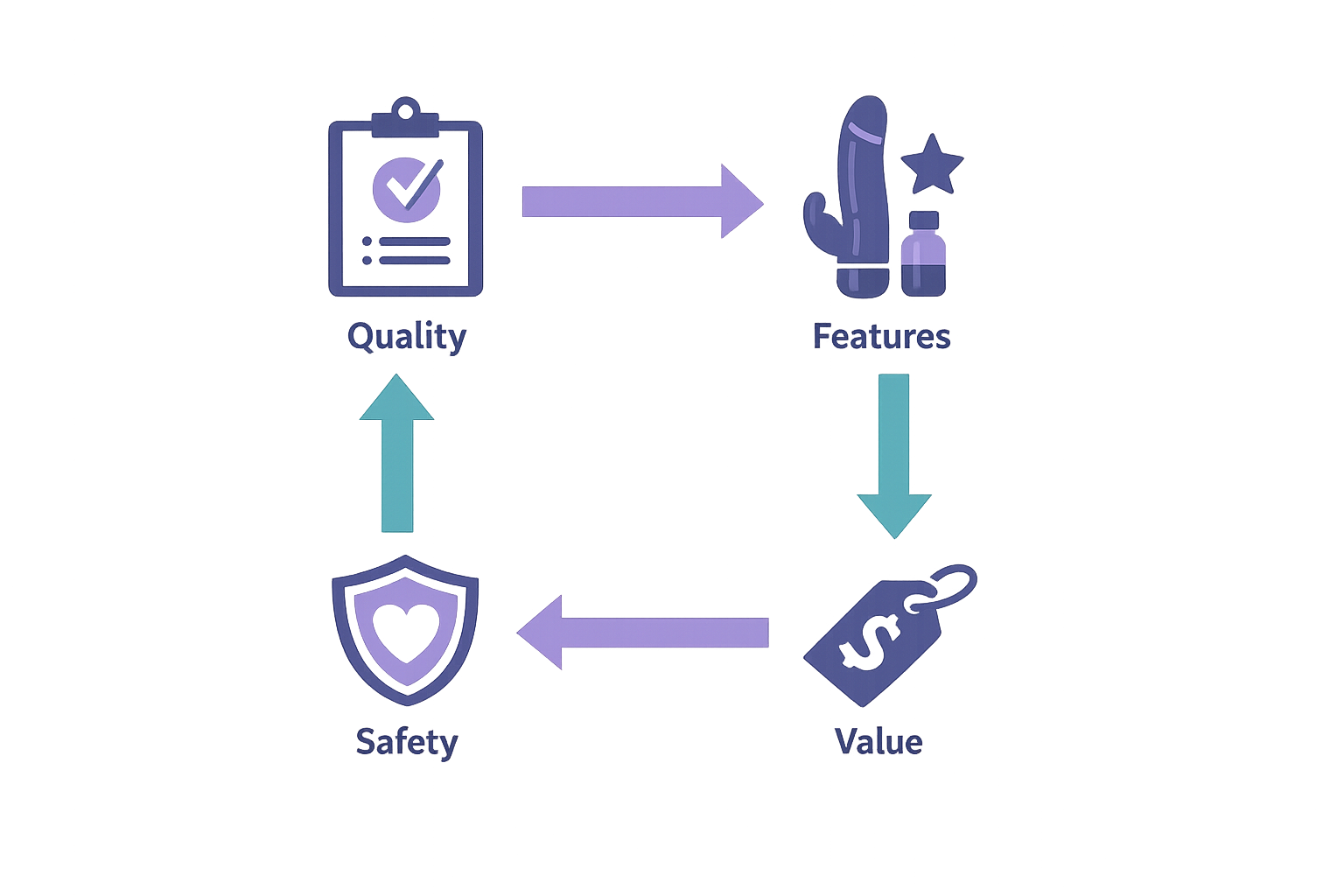
A sexual wellness product review is someone telling you whether a vibrator, lube, or cock ring actually does what the marketing says it does. That's it. The category sounds clinical, but the function is simple: you want to know if the $40 rose toy your friend swears by is worth it, or if the $200 wand on Amazon is a relabel of the $50 one at Target.
Most reviews fall into one of two camps. The first is affiliate-driven listicles that rank twenty products you've never heard of, with no explanation of who tested them or why. The second is Reddit threads where someone who bought the thing six months ago tells you it broke, or didn't, or worked great until it didn't. Neither is useless — Reddit especially — but neither gives you the full picture.
What Honest Product Reviews Actually Cover
A real review answers the questions you'd ask a smart friend who already owns the thing. Does it work the way the product page says it does? Is the motor strong enough, or does it sound like a dying lawn mower? Does the material feel like silicone, or does it feel like the kind of plastic that shows up in a landfill PSA? How does it compare to the other version that costs twice as much?
For sexual wellness specifically, reviews also cover the stuff the marketing skips. Battery life matters when you're mid-use and the thing dies. Noise level matters if you have roommates. Size matters if you're a first-time buyer who doesn't know what 'average' even means in this category. A good review tells you those things up front.
Why the Category Needs Better Reviews
The sexual wellness market is full of products that look identical, cost wildly different amounts, and come from brands you've never heard of. A $25 bullet vibrator and a $60 bullet vibrator might have the same motor, the same battery, and the same shape — the difference is the brand name and the box it ships in. Most product pages won't tell you that. A review will.
The other reason: viral products. TikTok will convince you that a $15 rose toy from Amazon is the same as the $40 brand-name version. Sometimes it is. Most of the time it's not, and the difference is in the motor quality, the battery, or the fact that the cheap one stops holding a charge after three uses. Reviews that compare the viral version to the real version save you from buying the same product twice.
For more context on how to approach sexual wellness topics with confidence, see our guide on Sexual Identity: Understanding Orientation and Self-Discovery.
Why Honest Product Reviews Matter
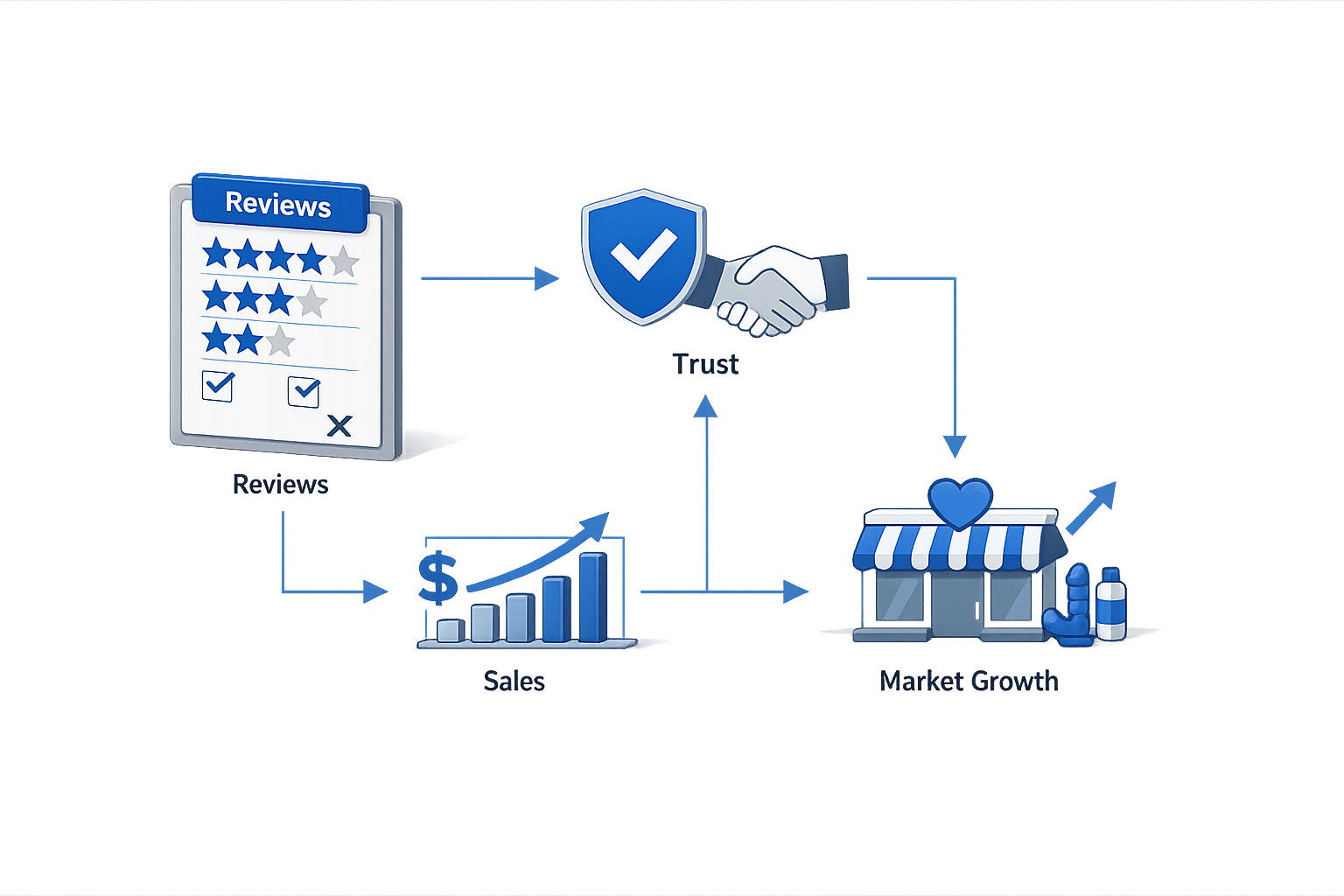
Honest product reviews are the difference between buying something that works and buying something that sits in a drawer for two years. The sexual wellness category is full of misleading claims — products labeled "body-safe silicone" that are actually silicone blends with mystery additives, or "FDA-approved" materials that don't mean what you think they mean. A friend once texted me a screenshot of a $200 'silicone' wand from Amazon and asked if it was worth it. The product page used the word 'silicone' eight times, but the material section listed it as 'silicone blend.' Neither of those things means medical-grade silicone.
Why Trust Matters More Here Than Anywhere Else
You're putting these products on (or in) your body. That raises the stakes. A bad kitchen gadget wastes $30. A bad vibrator made with toxic materials or sloppy manufacturing can cause irritation, allergic reactions, or worse. Some companies blend silicone with lower-quality materials to cut costs, then market the result as pure silicone. If a product gives off any odor, it's not pure silicone — and you shouldn't use it.
Honest reviews cut through the marketing. They tell you what a product is actually made of, how it performs in real use, and whether the $40 version does the same thing as the $200 one. For more guidance on making informed decisions that enhance your experience, see How to Make Sex Better: A Complete Guide to Enhanced Pleasure.
What Happens When Reviews Aren't Honest
The market floods with junk. Brands that cut corners on materials or design get the same shelf space as brands that invest in safety and performance. Consumers over-buy, trying three mediocre products before finding one that works. First-time buyers assume all vibrators are the same and either settle for something underwhelming or give up entirely.
Honest reviews also force manufacturers to compete on real factors — motor quality, material safety, ergonomic design — instead of just marketing budget. When a review calls out a product for using cheap plastics or a misleading material label, it creates accountability. Companies that answer questions about product safety in an honest, straightforward manner earn trust. Companies that don't lose it.
Buyers need to beware and only purchase from reputable companies that will answer all of their questions regarding product safety in an honest, straightforward manner.
The Ripple Effect on Product Selection
When reviews are honest, consumers make better choices faster. They skip the $15 Amazon knockoff and go straight to the $40 brand-name version that actually works. They understand what features matter at their price tier — motor strength, battery life, ease of cleaning — and what features are just marketing fluff.
This also means fewer returns, less waste, and more people actually using (and enjoying) what they bought. The sexual wellness market improves when honest reviews create a feedback loop: good products get recommended, bad products get called out, and manufacturers respond by making better products.
How We Test and Review Products
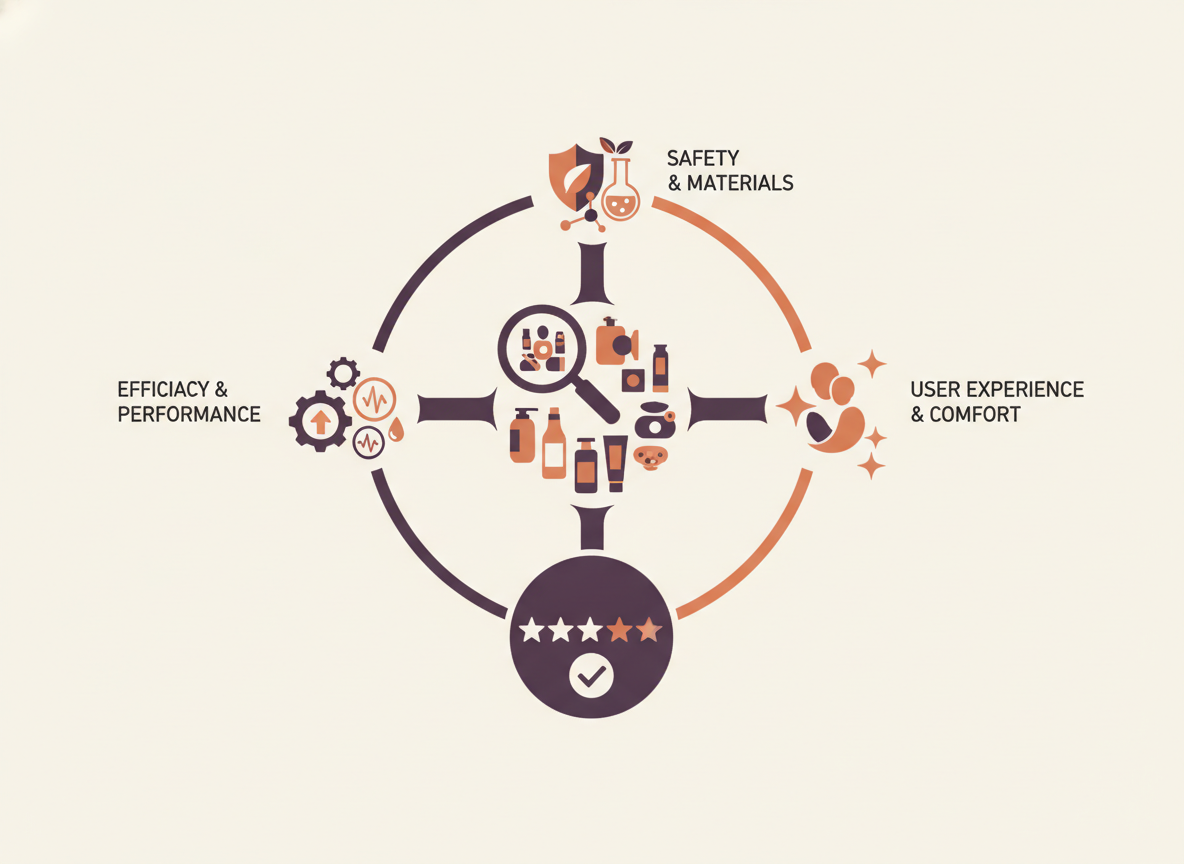
Most review sites tell you they tested things. We're not doing that — because we didn't, and saying otherwise would be dishonest. What we do instead: aggregate the reviews that matter, cross-reference community consensus, and tell you what the actual users say after the hype dies down.
The truth is, no single reviewer can test every product in every category. What we can do is read the people who did, filter out the marketing noise, and give you the straight answer.
What We Actually Do
We pull from three layers: editorial reviews from sites that publish their methodology (Wirecutter, BuzzFeed Reviews), community-tested consensus from r/SexToys and similar forums, and viral product cycles — tracking what blows up on TikTok and whether it survives past the first wave of hype.
When a product shows up in all three places with consistent feedback, that's a signal. When it only shows up in one, we tell you that too.
The Criteria That Matter
For budget picks ($20-50), the criteria shift. You're not buying a motor that lasts ten years — you're buying something that works well enough, right now, without feeling like a gamble. The questions we ask: Does it do the one thing it's supposed to do? Is the battery decent? Does it feel like it'll survive more than three uses?
For viral products, we add one more: Does the actual product match what's in the video, or is this a case where twenty different factories are selling twenty different versions of "the rose toy"?
How Partner Feedback Works
Some products require feedback from people with different anatomy. When that's the case, we rely on trusted partners who test the product and report back. One reviewer described this approach clearly: they don't have a penis, but they have access to someone who does and who agreed to test a product designed for that anatomy. The result was a detailed review based on direct user experience.
This kind of partner-based testing shows up across the review ecosystem — it's how you get honest feedback on products outside your own experience. If you're looking for guidance on sexual wellness topics, understanding who's actually testing what matters.
The best review isn't the one with the fanciest lab setup — it's the one where the reviewer tells you what happened after they used it twenty times, not twice.
What We Don't Do
We don't run clinical trials. We don't measure decibel levels in a sound booth. We don't test for phthalates in a lab. Those things matter, and when a source we trust has done that work, we cite it. But we don't pretend we did it ourselves.
We also don't promote products we haven't verified. If a product isn't in our database with a recently verified source, it doesn't get recommended — even if it's trending.
Best Practices for Reading Product Reviews
Most people read reviews like they're shopping for a toaster — skim the star rating, check the price, done. That works for toasters. For sexual wellness products, it's how you end up with a $40 vibrator that dies in three weeks or a "silicone" toy that smells like a tire factory.
Here's what actually matters when you're reading reviews — the stuff that separates a real recommendation from marketing noise.
Look for Specific Claims, Not Superlatives
If a review says "amazing" or "incredible" without explaining why, skip it. You're looking for specifics: battery life in hours, noise level compared to something you know, whether it worked on the first charge or needed a firmware update. The friend who says "the rose toy got me there in under two minutes" is more useful than ten reviews that say "life-changing."
Same rule applies to negative reviews. "This sucked" tells you nothing. "The charging port broke after six uses and customer support ghosted me" tells you everything.
Check the Reviewer's Context
A review from someone buying their first vibrator has different weight than one from someone comparing it to their fifth rabbit. Both are useful — you just need to know which one matches your situation. If you're a beginner, the review that says "too intense for me" might mean it's exactly right for someone with more experience.
For sexual wellness products specifically, pay attention to anatomy mentions. A toy that works great for external stimulation might be useless for internal use, and vice versa. The review that says "perfect for clitoral stimulation but the insertable part is too short" is giving you real information.
Prioritize Reviews That Mention Customer Support
This one gets skipped constantly, and it's a mistake. Sexual wellness products break, batteries die, charging ports fail. The difference between a $30 toy and a $30 disaster is whether the company replaces it when it stops working. Reviews that mention how the brand handled a defect or a return are worth more than five reviews about how great it felt the first time.
Customer support becomes critical when dealing with sensitive products that require discretion. According to manufacturer documentation, discreet delivery practices — like plain packaging and neutral shipping labels — matter as much as the product itself for many buyers.
Cross-Reference With Community Consensus
One five-star review could be the manufacturer's cousin. Ten five-star reviews that all use the same phrasing are definitely the manufacturer's cousins. But if a product ranks consistently in the top three on r/SexToys, shows up in Wirecutter's budget picks, and has a 4.3-star average across 2,000 reviews, you're looking at something real.
For a deeper dive into how sexual wellness choices connect to broader relationship satisfaction, check out How to Make Sex Better: A Complete Guide to Enhanced Pleasure.
Don't ignore the three-star reviews — they're often the most honest. The person who says "great motor, terrible battery life, worth it if you keep it plugged in" is giving you the actual trade-off.
Watch for Red Flags in the Review Itself
If a review uses the exact product name three times in two sentences, it's not a review — it's SEO. If it links to a discount code, it's an affiliate pitch. If it says "I received this product for free in exchange for an honest review," weight it accordingly. Free doesn't automatically mean dishonest, but it does mean the reviewer had zero skin in the game if it broke.
Also: reviews posted within 24 hours of purchase are useless for anything except unboxing experience. You need reviews from people who've used the thing for a month.
Understand What "Discreet" Actually Means
For many buyers, discreet shipping and packaging isn't a nice-to-have — it's a dealbreaker. Reviews that specifically mention plain brown boxes, neutral return addresses, and unmarked credit card charges are doing you a favor. If a company ships your vibrator in a box that says "ADULT TOYS" on the side, you want to know that before it shows up at your office.
The review that tells you what went wrong — and how the company fixed it — is worth ten reviews that just say "love it."
Common Mistakes to Avoid When Choosing Products
Most people shopping for sexual wellness products make the same three mistakes: they buy the wrong material, they over-trust viral hype, and they ignore the manufacturer entirely. Here's what goes wrong and how to skip it.
Trusting "Medical-Grade" and "Body-Safe" Without Checking
The phrase "medical-grade silicone" shows up on half the product pages on Amazon, and most of them are lying. A friend once texted me a screenshot of a $200 "silicone" wand from Amazon and asked if it was worth it. The product page used the word "silicone" eight times, but the material section listed it as "silicone blend." Neither of those things means medical-grade silicone.
Some companies claim their products are made with silicone only to blend that material with other lower-quality materials, rendering the final composition impure. If the material gives off any odor, it is not pure silicone and should be avoided. Quality control in the manufacturing and curing process also matters — some silicones require a proper post-cure step to drive out volatile compounds. Sloppy manufacturing can result in an otherwise safe material containing toxic compounds.
The fix: buy from manufacturers who will answer material questions directly. We-Vibe, Lovehoney's house brands, and Dame all publish actual material specs. If a brand won't tell you what the product is made of, don't buy it.
Buying the Viral Product Without Checking the Actual Brand
The rose toy is the one your group chat won't shut up about, and most of the ones on Amazon are garbage. TikTok surfaces products fast — but TikTok doesn't vet manufacturers, and half the viral hits are unbranded relabels from factories that don't list materials or safety testing.
The first time someone in my group chat sent me a rose toy TikTok with the caption "is this real," I assumed it was a joke. It was sitting next to a salad dressing bottle on a kitchen counter, and the angle was specifically chosen to be unreadable. This kind of viral product cycle can make it hard to know which products are worth the hype and which are just passing fads.
The fix: find the brand-name version. For the rose toy, that's the original Lovehoney or Satisfyer model. For the Tracy's Dog clitoral suction toy, buy the actual Tracy's Dog version, not the $15 knockoff with no return policy. Reddit's r/SexToys maintains a running list of which viral products have legit versions and which are scams.
Ignoring Who Made It
If you can't find the manufacturer's name, customer service contact, or return policy, you're buying from a drop-shipper who doesn't stand behind the product. This is the biggest red flag in the category, and it's the one most beginners miss.
Another factor in material safety is the use of pigments, additives, paints, and other coatings that are applied in the manufacturing process that might overshadow the safety of the base material. Buyers need to beware and only purchase from reputable companies that will answer all of their questions regarding product safety in an honest, straightforward manner.
The fix: if the product page lists no manufacturer, has no "About Us" section, and shows a Gmail address for customer service, skip it. Real brands list their name, their warranty, and a way to contact them that isn't a Gmail account.
Overbuying on the First Purchase
First-time buyers consistently over-buy. They think they need the $150 rabbit with twelve speeds and app connectivity when what they actually need is a $40 bullet vibrator to figure out what they like. For more guidance on exploring what works for you, see our guide on sexual identity and self-discovery.
The fix: start small. Buy one product in the $30-50 range, use it for a month, and then decide what you want next. Most people who buy the expensive rabbit first end up buying a bullet vibrator three months later anyway.
Trusting Star Ratings Without Reading the One-Star Reviews
A 4.5-star average means nothing if all the one-star reviews say "stopped working after two weeks" or "customer service never responded." The one-star reviews tell you what goes wrong and whether the company fixes it.
The fix: read the lowest-rated reviews first. If they're all complaining about the same failure point — battery life, a specific button that breaks, a motor that dies — that's the product's actual weakness. If the one-star reviews are all "didn't work for me" with no specifics, the product is probably fine.
Skipping the Return Policy
Most reputable retailers accept returns on unopened products, and some accept returns even after use if the product is defective. If the return policy says "all sales final" or lists no return window at all, you're buying from a retailer that doesn't stand behind what it sells.
The fix: buy from retailers with a stated return policy. Lovehoney, Babeland, and most mainstream brands accept returns within 30-90 days. If a site lists no return policy or buries it in an FAQ with vague language, shop elsewhere.
Frequently Asked Questions About Product Reviews
Do review sites get paid by brands?
Most do. Affiliate links are the standard — if you click through and buy, the site earns a commission. That's how publications like Refinery29 and most product-review sites stay in business. The disclosure usually lives at the top of the article: "If you buy or click on something we link to on our site, [Site Name] may earn commission."
The question isn't whether a site uses affiliate links — it's whether the commission structure warps the editorial judgment. A site that only recommends high-commission products is a shopping funnel, not a review site. A site that tells you to skip a product despite its affiliate link is doing actual editorial work.
How do I know if a review is honest?
Look for specifics. A real review describes what the product does, not just how it made someone feel. "The suction mode has three intensity levels and the lowest one is still strong" is useful. "This changed my life" is not.
Also: does the reviewer admit when a product doesn't work for them? A review that says "this is the best thing ever made" for every single product is an ad, not a review. Honest reviews include the part where something didn't land.
What's the difference between a verified purchase review and an editorial review?
A verified purchase review comes from someone who bought the product on that platform — Amazon, Lovehoney, wherever. It's real-world feedback, but it's also unfiltered: no editorial standards, no fact-checking, no requirement that the reviewer knows what they're talking about.
An editorial review comes from a publication or site that has (in theory) editorial standards. The reviewer may have received the product for free, but they're writing under their name or the site's name, and there's reputational risk if they lie. Editorial reviews are more structured, but they're also shaped by the site's audience and revenue model.
Neither is automatically better. Verified purchase reviews tell you what regular people experienced. Editorial reviews tell you what someone who reviews products for a living thinks. Use both.
Can I trust reviews that say things like 'I blacked out from pleasure'?
You can trust that the person had a strong reaction. Whether you'll have the same reaction is a different question.
Hyperbolic reviews — the kind that say "I blacked out from pleasure twice" — are real experiences, but they're also the upper end of the response curve. Most people don't black out. Most people have a perfectly fine time and move on with their day. The hyperbolic reviews get written because they're memorable. The fine-but-unremarkable experiences don't.
Read hyperbolic reviews for the specifics, not the superlatives. If someone says a suction toy was so intense they had to stop, that tells you the motor is strong. Whether "strong" is what you want is up to you.
What should I do if a product I bought based on reviews doesn't work for me?
Return it if you can. Most reputable retailers have return policies for unopened products, and some (like Lovehoney) accept returns on opened items within a specific window.
If you can't return it, don't assume you're broken. Sexual response is specific to your body, your preferences, and your context. A product that works for 90% of people might not work for you, and that's not a failure — it's just information. Try a different shape, a different intensity level, or a different category entirely.
Also: leave your own review. The next person shopping for that product will benefit from knowing it didn't work for you and why.
Are expensive products always better?
No. Price correlates with build quality and motor performance up to a point, but past $100 or so you're often paying for brand, design, or features you may not use.
The $40-50 range punches above its weight class right now — better batteries, better motors, better materials than the same tier had five years ago. A $200 product will usually outlast a $40 product, but it won't necessarily feel twice as good.
For a fuller breakdown of what makes sex better beyond just the gear, start with understanding your own preferences first — then match the product to that, not the other way around.
Conclusion: Making Informed Choices
Honest Product Reviews exist because most product pages lie, most Amazon listings are relabeled garbage, and most beginner guides recommend things the author has never touched. The goal here is simple: give you enough information to make a confident choice, skip the stuff that doesn't work, and not waste money on products that punch below their price.
The three things that matter most: read multiple sources, check the material claims against what the product page actually says, and trust community consensus over a single five-star review. A friend once texted me a screenshot of a $200 'silicone' wand from Amazon and asked if it was worth it. The product page used the word 'silicone' eight times, but the material section listed it as 'silicone blend.' Neither of those things means medical-grade silicone. That's the kind of detail honest reviews catch.
If you're starting from scratch, focus on beginner-friendly picks that don't require a learning curve — bullet vibes, simple clitoral toys, entry-level rabbits. The $40 version your group chat swears by is usually the right answer. If you're upgrading or replacing something, use reviews to confirm the new version actually improves on what you already own. Half the time, it doesn't.
For more guidance on enhancing your overall experience, check out How to Make Sex Better: A Complete Guide to Enhanced Pleasure.
The bottom line: informed choices come from reading reviews that tell you what a product actually does, not what the marketing says it does. Use them to filter out the noise, identify the real options, and buy the thing that fits your budget and your body. That's it. That's the process.