
Safe Sex Education for Teens: What Works for Women's Pleasure
Explore safe sex education for teens and discover what truly enhances women's pleasure. Evidence-based guidance for comprehensive sexual health.
 Zoe Clarke

Explore safe sex education for teens and discover what truly enhances women's pleasure in this comprehensive guide.
Introduction to Safe Sex Education for Teens
Here's the thing nobody tells you: most sex education programs treat pleasure like a dirty word. They'll talk about condoms, maybe mention the clitoris in passing, and call it a day. But if we're being honest, teens who understand their own bodies — what feels good, what doesn't, how anatomy actually works — are better equipped to make informed decisions about sex.
The stats are real. Nearly 50% of STI cases in the U.S. happen to people between 15 and 24. That's not because teens are reckless — it's because most of them are working with incomplete information. Your group chat might be full of confident takes, but research shows that teens consistently overestimate how much they actually know about sexual health.
This guide covers what safe sex education for teens should include, why it matters for women's pleasure specifically, and how to implement it in a way that doesn't feel like a lecture from 1987. We're talking about anatomy basics (the clitoris has more nerve endings than the penis — that's not optional information), contraception that actually works, choosing products that are body-safe, and how to talk about all of it without making anyone want to crawl under a desk.
The goal here is simple: give teens the information they need to make decisions that protect their health and respect their bodies. That includes understanding pleasure — because knowing what feels good is part of knowing what consent looks like, what's normal, and when something's wrong.
What is Safe Sex Education?
Safe sex education is teaching that covers how to reduce the risk of sexually transmitted infections (STIs) and unintended pregnancy during sexual activity. For teens, it includes information about contraception, barrier methods like condoms, consent, communication with partners, and understanding how infections spread.
Most programs also cover anatomy basics — what's actually happening during sex, how bodies respond, and what safer practices look like in real scenarios. The definition varies depending on who's teaching it. Some programs frame abstinence as the only truly safe option, while comprehensive programs treat abstinence as one choice among several risk-reduction strategies.
What Safe Sex Education Covers for Teens
A solid program includes STI prevention methods (condoms, dental dams, regular testing), contraception options (pills, IUDs, emergency contraception), and consent education. It also addresses communication skills — how to talk about boundaries, how to check in with a partner, and when to say no.
Many programs now include pleasure education, particularly for young women. This means teaching that sexual activity should feel good and consensual for everyone involved, not just something that happens to you. It covers clitoral anatomy, arousal, and the fact that most women don't orgasm from penetration alone — information that's often missing from traditional sex ed.
The Abstinence vs. Comprehensive Debate
Abstinence-only programs teach that avoiding all sexual contact is the only safe approach. Comprehensive programs teach abstinence as one option while also covering contraception, STI prevention, and how to reduce risk if teens choose to be sexually active.
The research consistently shows comprehensive programs delay first sexual activity just as effectively as abstinence-only programs, but they also result in higher contraception use and lower STI rates when teens do become sexually active. Abstinence-only programs often leave teens without practical knowledge when they need it.
For more foundational information on sexual health topics, see our guide on choosing a dildo which covers anatomy basics that many sex ed programs skip.
Why Safe Sex Education Matters for Teens
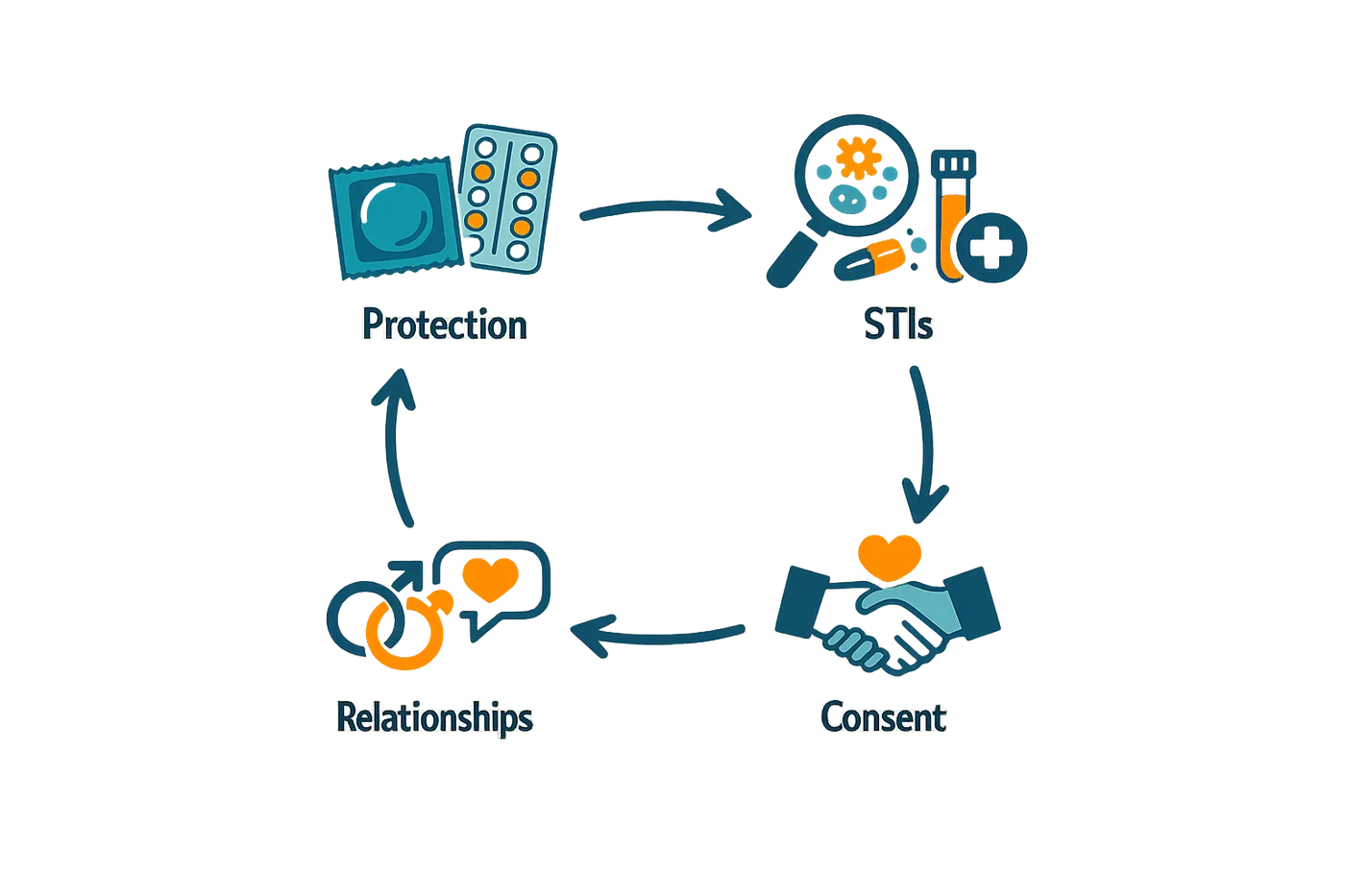
The argument for comprehensive sex education isn't theoretical — it's measurable. Teens who receive accurate, evidence-based sex education have fewer unintended pregnancies, lower STI rates, and are less likely to engage in risky sexual behavior like having sex under the influence. The outcomes aren't subtle.
The Real-World Impact
32% of U.S. high school students surveyed in 2023 had ever had sexual intercourse. That's not a small population, and pretending they don't exist doesn't make them safer. What does make them safer is giving them the information they need before they need it — not after.
Sex education doesn't encourage teens to have sex. The research shows the opposite: comprehensive programs often delay the age of first intercourse. What they do is prepare teens to make informed decisions when they do become sexually active, which most eventually will.
What Happens Without It
Without structured education, teens fill the gaps with whatever's available: friends who don't know more than they do, internet searches that land on unreliable sources, or porn that teaches nothing about consent, communication, or how bodies actually work. The result is a generation learning by trial and error in situations where the stakes are high.
The alternative isn't abstinence-only programs, which have been shown repeatedly to fail at reducing teen pregnancy or STI rates. The alternative is giving teens the tools to protect themselves and their partners — condoms, consent frameworks, anatomy education, and honest conversations about what safe sex actually looks like.
The goal isn't to control teen behavior. The goal is to make sure they have the information to make safer choices when they do make them.
Why Pleasure Belongs in the Conversation
Most sex education focuses exclusively on risk — pregnancy, STIs, assault. That's necessary, but incomplete. Teens who understand that sex should feel good, that consent is ongoing, and that communication improves the experience are more likely to advocate for themselves in sexual situations. Pleasure isn't frivolous — it's part of the safety conversation.
When we teach teens that their bodies deserve respect, that they're allowed to say no, and that good sex involves mutual enjoyment, we're teaching consent and agency in a way that abstinence-only frameworks never will.
How to Implement Safe Sex Education for Teens

Most parents freeze when their kid asks where babies come from — and then spend the next decade avoiding the follow-up questions. Here's the thing: safe sex education for teens doesn't start when they're teens. It starts the first time they're curious, and it continues in age-appropriate layers until they're equipped to make real decisions.
The goal isn't one big talk. It's a hundred small ones that build trust, correct misinformation, and make you the person they come to when they're confused — not TikTok, not their friend who swears pulling out works, not Reddit.
Start Early and Keep It Age-Appropriate
You don't need to explain contraception to a six-year-old, but you do need to answer their questions honestly when they ask. Parents should start talking to children about their bodies and sex at an age-appropriate level when they first ask where babies come from. That early groundwork — naming body parts correctly, explaining boundaries, normalizing curiosity — makes the later conversations about consent, pleasure, and protection feel like a natural continuation instead of an ambush.
By the time they're teens, the foundation is already there. You're not introducing the topic; you're adding detail.
Be the Askable Parent
Teens won't ask questions if they think you'll freak out, lecture them, or assume they're already having sex. The single most effective thing you can do is signal that you're open to the conversation — and that you can handle it without judgment.
This means checking your own reaction when they bring up something you weren't expecting. It means not assuming that asking about birth control means they're sexually active. It means treating their questions like they're worth answering, not like they're evidence of moral failure.
Give Accurate, Reliable Information
Teens are already getting information — from school, from friends, from the internet. Most of it is incomplete, some of it is wrong, and almost none of it aligns with your values unless you're the one providing it. An open dialogue with your teen about sex and sexuality will ensure that they receive accurate, reliable information, as well as messages consistent with your personal values.
That means talking about contraception methods that actually work, not just abstinence. It means explaining what consent looks like in practice, not just in theory. It means discussing pleasure, anatomy, and the mechanics of sex in a way that's honest — because if you don't, someone else will, and their version will be worse.
For practical guidance on related topics like anatomy and body-safe materials, see Choosing a Dildo: Materials, Sizes, and What Actually Matters.
Use Gender-Neutral Language When Appropriate
Not every teen is straight, and not every conversation about sex applies only to cisgender, heterosexual relationships. Using gender-neutral language — "partner" instead of "boyfriend," "people" instead of "girls and boys" — signals that your advice applies to everyone, and that you're not assuming anything about who they are or who they're attracted to.
This isn't about being politically correct. It's about making sure your kid hears the information as relevant to them, regardless of their identity or orientation.
Don't Wait for Them to Ask
If you're waiting for your teen to bring up sex, you'll be waiting a long time. Most teens assume their parents don't want to talk about it, so they don't ask. You have to initiate — not in a forced, sit-down-we-need-to-talk way, but in small moments that feel natural.
Bring it up when a topic comes up in a show you're watching together. Mention it when you're driving and they're a captive audience. Use news stories, health class assignments, or questions from younger siblings as openings. The more normal you make it, the more likely they are to keep the conversation going.
The goal isn't one big talk. It's a hundred small ones that build trust and make you the person they come to when they're confused.
Address Myths Directly
Teens believe a lot of things that aren't true: that you can't get pregnant the first time, that pulling out is effective, that oral sex doesn't count, that you can tell if someone has an STI by looking. If you don't correct these myths, they'll act on them.
Ask what they've heard. Don't assume they know the basics. When they repeat something wrong, correct it without making them feel stupid for believing it in the first place.
Best Practices for Safe Sex Education
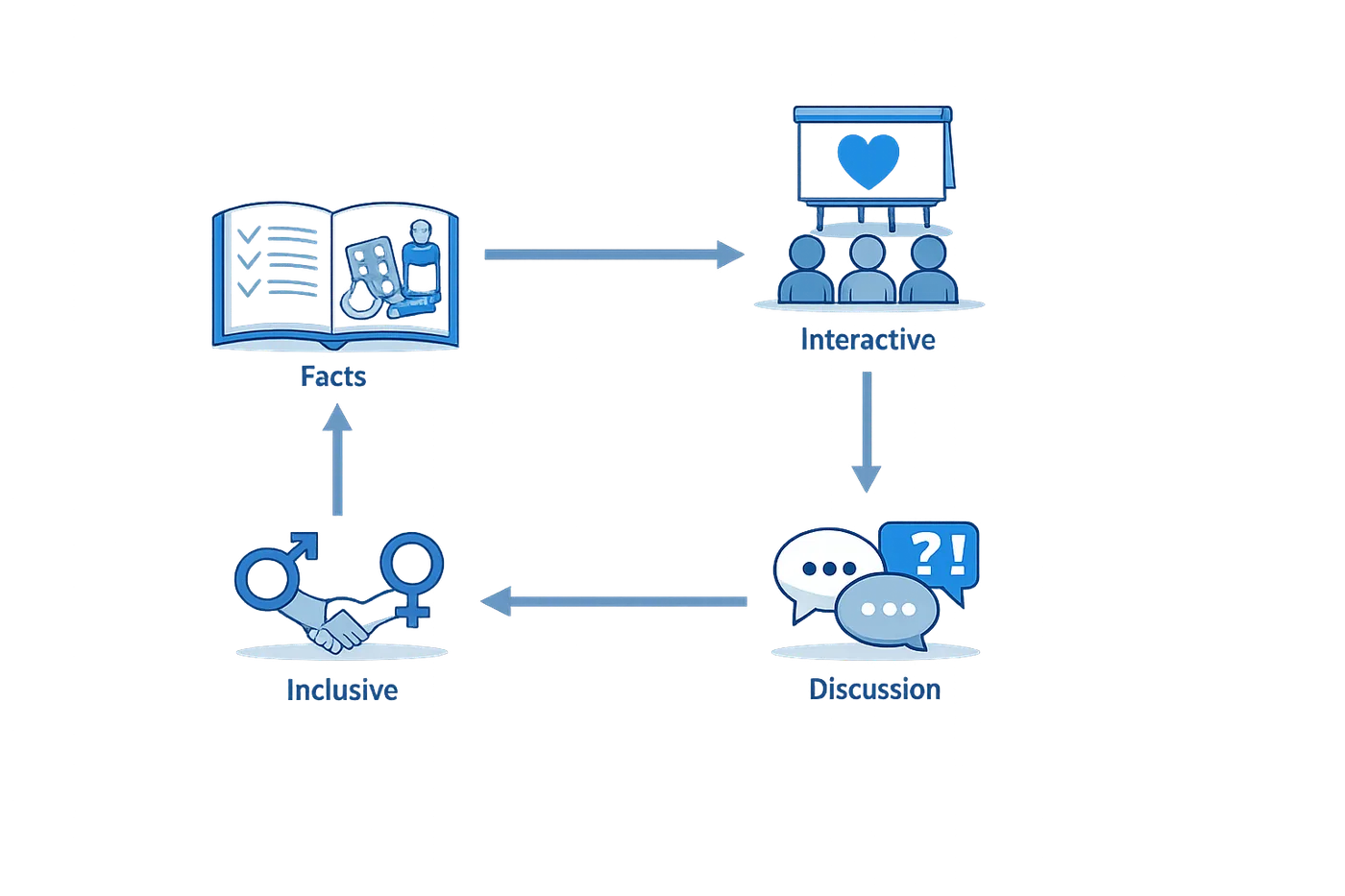
The best safe sex education for teens doesn't feel like a lecture — it feels like the conversation you wish someone had with you before things got confusing. Most programs fail because they treat sex ed like a liability checklist instead of a skill teens actually need to navigate real situations.
Here's what works: clear information, no shame, and practical tools they can use the day they need them.
Start with Barrier Methods First
Condoms are the baseline. They prevent both pregnancy and STI transmission, which makes them the single most important tool in any safe sex conversation. Teens need to know how to use them correctly — not just that they exist.
Dental dams and internal condoms also belong in the conversation, even if they're less common. Teens who know multiple barrier options are better equipped to protect themselves in different scenarios.
Make Communication a Core Skill
Safe sex isn't just about condoms — it's about the ability to talk before, during, and after. Teens need language for consent, boundaries, and what to do when something doesn't feel right.
Practice scenarios help. Role-playing how to say "I want to use a condom" or "I'm not ready for this" makes those conversations less awkward when they happen for real. The more teens rehearse these moments, the less likely they are to freeze when it matters.
Address Pleasure Alongside Safety
Most sex ed programs treat pleasure like a dirty word, which is why teens tune out. If the only message is "don't do it," they stop listening the moment they decide they want to.
Safe sex education works better when it acknowledges that sex can be enjoyable and that safety enhances rather than diminishes that experience. Condoms don't ruin sex — they make it possible to relax and focus on what feels good instead of worrying about consequences.
Teach Practical Hygiene and Toy Safety
Teens exploring solo or partnered play need to know the basics: clean hands, proper toy cleaning, and why sharing toys without barriers is a risk. These aren't advanced topics — they're foundational.
Normalize Regular STI Testing
Testing isn't something you do when you think something is wrong — it's part of staying informed about your own health. Teens need to know that most STIs have no symptoms, that testing is routine, and that results are confidential.
Framing testing as a normal part of sexual health (like going to the dentist) removes the stigma. It also reinforces that safe sex includes knowing your status and communicating it with partners.
Limit Partner Count as a Risk-Reduction Strategy
More partners means more exposure to potential infections. That's not a moral judgment — it's a statistical reality. Teens who understand this can make informed choices about their own risk tolerance.
This doesn't mean abstinence-only messaging. It means explaining that fewer partners and consistent barrier use together create the lowest-risk environment.
Provide Access to Resources, Not Just Information
Knowing what to do is useless if teens can't access the tools. Programs that work provide free condoms, clear information on where to get tested, and resources for confidential healthcare.
Teens also need to know what to do if a condom breaks, where to get emergency contraception, and how to recognize signs of an STI. The goal is to make them competent, not scared.
Common Mistakes in Safe Sex Education
Most safe sex education programs fail in predictable ways — and the biggest one is pretending that avoiding the conversation is somehow safer than having it. Parents who would rather bury their heads in the sand than talk to their kids about sex aren't protecting anyone; they're just outsourcing the conversation to TikTok and Reddit, which is a gamble nobody should take.
The other major mistake is treating "safe sex" like it's one thing. It's not. Safe sex education that stops at condom demonstrations misses the point entirely — teens need to understand consent, communication, what pleasure actually looks like, and how to recognize when something feels wrong. The programs that work don't just hand out pamphlets; they create space for real questions and honest answers.
Assuming Abstinence-Only Messaging Works
Abstinence-only programs have one job — to delay sexual activity — and the data shows they don't even do that reliably. What they do accomplish is leaving teens without the information they need when they do become sexually active, which most of them will. The idea that "the only safe sex is no sex" might be technically true, but it's also useless as a teaching tool because it doesn't prepare anyone for the reality of navigating sexual relationships.
Comprehensive programs that include information about contraception, STI prevention, and communication consistently outperform abstinence-only approaches in every measurable outcome. Teens who receive comprehensive education delay first intercourse just as long — sometimes longer — and when they do have sex, they're more likely to use protection and communicate with partners.
Skipping the Conversation About Pleasure
Here's what most programs miss entirely: pleasure. Safe sex education that treats sex as purely a health risk — something to manage, avoid, or protect against — sets teens up to associate sex with fear rather than agency. Teaching about pleasure, especially women's pleasure and anatomy, isn't frivolous; it's foundational to understanding consent, recognizing what feels good versus what feels wrong, and building the confidence to communicate during sexual experiences.
When pleasure is left out, the implicit message is that sex is something that happens to you, not something you actively participate in and have the right to enjoy. That's a dangerous framework, and it's one reason why so many young women struggle to advocate for themselves in sexual situations.
Failing to Discuss Consent as an Ongoing Conversation
Consent gets reduced to a checkbox in too many programs — a yes-or-no question asked once at the beginning. Real consent is ongoing, specific, and revocable. Teens need to understand that consent isn't just about avoiding assault; it's about building a culture where both people feel empowered to say what they want, what they don't want, and when something needs to stop.
The programs that do this well use role-playing, scenario-based discussions, and peer-led conversations. They make it clear that consent applies to every act, that it can be withdrawn at any time, and that pressure — even subtle pressure — invalidates it. This isn't complicated, but it does require more than a single lecture.
Ignoring the Role of Communication Skills
Safe sex education often assumes that once teens have the facts, they'll automatically know how to use them. That's not how it works. Knowing that condoms prevent STIs is one thing; being able to navigate a conversation with a partner about using one is another. Teens need practice with the actual language of sexual communication — how to ask for what they want, how to say no, how to check in with a partner, and how to handle it when someone pushes back.
This is where peer-led programs and interactive workshops make a difference. Teens learn best from practicing the conversations they'll actually have, not from reading a script in a textbook.
Frequently Asked Questions about Safe Sex Education for Teens
What exactly counts as "safe sex"?
Here's the thing most programs won't say outright: the only risk-free sex is no sex. All forms of sexual contact carry some level of risk — STIs, pregnancy, emotional fallout. What we call "safer sex" is really harm reduction: condoms, dental dams, regular testing, communication about boundaries. The goal isn't zero risk (that's abstinence), it's informed risk management.
At what age should safe sex education start?
Most experts say earlier than you think — age-appropriate education can start in elementary school with body autonomy and consent concepts. By middle school, teens should understand anatomy, reproduction basics, and what healthy relationships look like. By high school, they need the practical stuff: how contraception works, where to get tested, what consent sounds like in real conversations. The friend who waits until a teen is "ready" usually waits too long — research shows teens often aren't fully informed about sex and STIs even when they claim to know everything.
Does teaching about contraception encourage teens to have sex?
No. Decades of research show comprehensive sex education doesn't increase sexual activity — it delays first intercourse and increases contraceptive use when teens do become sexually active. The version that skips contraception (abstinence-only programs) correlates with higher teen pregnancy and STI rates. Teaching someone how a condom works doesn't make them have sex any more than teaching them how a seatbelt works makes them crash a car.
What if my teen's school only offers abstinence-only education?
Fill the gaps yourself or find community resources that will. Planned Parenthood, local health departments, and some youth organizations offer comprehensive programs. Online resources exist, but quality varies wildly — stick to medical organizations and public health sites. If you're a parent navigating this, the awkward conversation is better than the alternative. If you're a teen stuck with inadequate education, cervical anatomy basics and similar guides can help you understand your own body when school programs won't.
How do you talk about pleasure without making it weird?
You acknowledge that sex isn't just about disease prevention — it's also about connection, pleasure, and figuring out what you want. Most programs treat pleasure like it doesn't exist, which makes teens think something's wrong with them for wanting it. The real conversation includes: consent makes everything better, communication is part of good sex, you're allowed to stop anytime, and what feels good varies wildly between people. It's not weird to say that out loud — what's weird is pretending teens don't already know sex is supposed to feel good.
What about LGBTQ+ topics in safe sex education?
Comprehensive programs include them; inadequate programs skip them entirely. Queer teens need information about their actual sexual practices — not just heterosexual intercourse. That means talking about dental dams, same-sex STI transmission, gender-affirming care, and the reality that not everyone's body or identity fits the binary examples in outdated textbooks. Leaving queer teens out of the curriculum doesn't make them go away; it just makes them less safe.
Should parents or schools handle safe sex education?
Both, ideally. Schools provide baseline information and reduce disparities (not every parent is equipped or willing). Parents provide values context and ongoing conversation. The version where everyone assumes someone else is handling it leads to teens learning from porn, TikTok, or the friend who's confidently wrong about everything. The best outcomes happen when teens get consistent, accurate information from multiple trusted sources.
How do you address online misinformation about sex?
Directly and repeatedly. Teens encounter wild claims online — from ineffective contraception myths to anatomy misinformation that would make a doctor weep. The counter-strategy is media literacy: teach teens to check sources, recognize when something sounds too good (or too scary) to be true, and default to medical organizations over influencers. You can't block every bad TikTok, but you can build critical thinking skills that help teens sort fact from viral nonsense.
Conclusion: The Path to Effective Safe Sex Education
Safe sex education for teens isn't a one-and-done conversation — it's an ongoing process that adapts as teens grow, ask questions, and navigate real-world situations. The programs that work best are the ones that treat teens like people who can handle nuance, not kids who need everything sanitized. Comprehensive education that covers consent, pleasure, anatomy, contraception, and STI prevention gives teens the tools they actually need, not just the abstinence-only talking points that research shows don't work.
The stakes are real. Teens who receive accurate, shame-free education are more likely to delay sexual activity, use protection consistently when they do become sexually active, and communicate openly with partners. They're also less likely to experience unintended pregnancies or contract STIs — outcomes that matter for their immediate health and long-term well-being. When we skip the pleasure conversation or treat female anatomy like a footnote, we're not protecting anyone. We're just leaving gaps that get filled by unreliable sources.
Parents, educators, and communities all play a role here. Schools need curricula that go beyond fear-based messaging. Parents need to create space for honest conversations, even when they're uncomfortable. And teens need access to resources that answer their questions without judgment — whether that's a trusted adult, a comprehensive health class, or reliable online information. The goal isn't to encourage early sexual activity; it's to make sure that when teens do make decisions about their bodies, they're informed, safe, and empowered.
If you're looking for practical guidance on topics that often get glossed over in traditional sex ed — like choosing a dildo or understanding what actually matters in sexual health products — resources that treat these conversations as normal and necessary can fill in the gaps. Teens deserve education that's as real as the decisions they'll eventually make.
The programs that work best are the ones that treat teens like people who can handle nuance, not kids who need everything sanitized.
Safe sex education works when it's honest, comprehensive, and rooted in evidence. It's not about pushing an agenda — it's about giving teens the information they need to make choices that protect their health and respect their autonomy. That's the path forward, and it's one worth committing to.