
Sex Toy Cleaner: What Works and What Damages Silicone
Learn what sex toy cleaner works best and what can damage silicone. Keep your toys safe and clean with expert-tested tips for proper toy care.
 Zoe Clarke

Introduction
Your sex toys need to be cleaned after every use. Not sometimes — every time. The problem is that most people either skip it entirely, or they reach for whatever soap is nearby and hope for the best. That's how you end up with a $70 vibrator that starts flaking after three months, or worse, an infection that could've been avoided with thirty seconds of warm water.
The stakes are higher than most beginner guides admit. You can get STIs and other infections from dirty toys, even if you're only using them solo. Bacteria from one session doesn't just disappear — it multiplies, especially if the toy sits unwashed in a drawer collecting dust and pet hair.
Here's the thing nobody tells you upfront: not all sex toy cleaner is created equal, and some of the stuff marketed specifically for toys can actually ruin them. Silicone toys — the gold standard for body-safe materials — react badly to certain soaps, alcohols, and yes, even some "specialty" cleaners. If you've ever had a toy go sticky, chalky, or start peeling, there's a good chance the cleaner was the culprit.
This guide covers what actually works, what damages silicone, and how to keep your toys safe without turning cleanup into a chemistry experiment. If you're new to toys in general, check out our guide to clit stimulators for a primer on material types and what to look for when buying.
The Problem with Cleaning Silicone Sex Toys
Most people clean their toys wrong, and the mistake isn't what you'd think. It's not that they skip cleaning — it's that they use products that actively damage the silicone. Alcohol wipes, hand sanitizer, dish soap with fragrance, acetone-based nail polish remover — all of these show up in well-meaning cleaning routines, and all of them can wreck a perfectly good vibrator.
What Actually Damages Silicone
Silicone is durable, but it's not invincible. The Lelo manual is explicit: never use cleansers containing alcohol, petrol, or acetone. These solvents break down the material over time, making the surface tacky, discolored, or brittle. The same goes for heavily scented soaps — the fragrance compounds and additives can leave residue that degrades the silicone or irritates your skin on the next use.
Another common mistake: mixing silicone toys with silicone lube. The liquid silicone in the lube tries to bond with the solid silicone in the toy, and the result is surface degradation — flaking, peeling, or a permanent sticky film. It won't turn your toy into a science experiment, but it will ruin the finish. Dame's sex educator Lisa Finn puts it plainly: "It could make a cock-ring snap or make the beautiful, plush outside of your vibrator start flaking."
The Dishwasher Myth
People ask about the dishwasher constantly, and the answer is: you don't need it. The toys that are dishwasher-safe — medical-grade silicone, stainless steel, glass — are already easy enough to clean with hot water and mild soap. Boiling works for non-motorized toys if you want to sanitize them for sharing, but for solo use, warm water and unscented soap is sufficient. The dishwasher adds heat, detergent residue, and the risk of your roommate opening the door mid-cycle.
The toys safe enough for the dishwasher don't need the dishwasher — they're already simple to clean by hand.
What Happens When You Skip Cleaning
Even if you're the only person using a toy, leaving it unwashed invites bacteria, dust, pet hair, and whatever else is floating around your bedroom. Your own bacteria won't hurt you in most cases, but when it sits on a toy for days, it mixes with environmental contaminants. And if you leave bodily fluids on a toy for three days, you're not putting that back in your body without a thorough scrub first — at least, you shouldn't be.
Infections and STIs can spread from unclean toys, especially if you're sharing them. Non-porous toys (silicone, steel, glass) can be sanitized between partners, but only if you clean them properly. Porous toys — anything made of jelly, TPE, or low-grade rubber — can't be fully sanitized at all, which is why most educators recommend avoiding them entirely.
Solution Steps for Cleaning Silicone Sex Toys
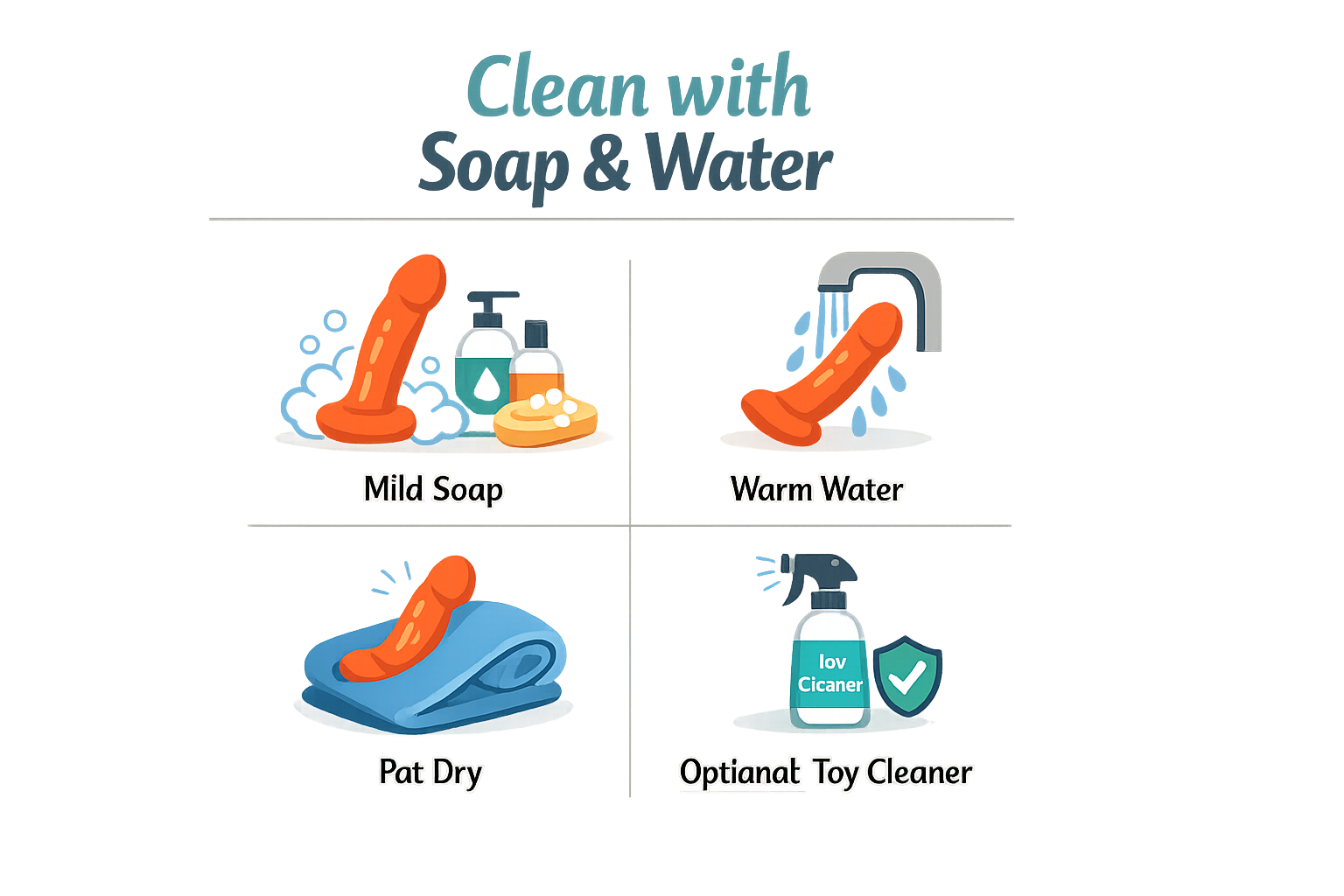
Cleaning silicone toys is straightforward — you just need to know what actually works and what's overkill. Most people either under-clean (quick rinse, done) or over-clean (bleach? really?). Here's the right middle ground.
The Basic Cleaning Method That Works Every Time
Warm water and unscented soap is the baseline. Not hand soap with fragrance, not dish soap with degreaser — unscented liquid soap, the kind you'd use on your face. Wet the toy, lather it, scrub the entire surface (including any textured bits or seams), and rinse until the water runs clear. That's it. This method works for 90% of toy cleaning situations.
If your toy has a motor, don't submerge it unless it's explicitly waterproof. Check the box or the manual — if it says "splash-proof" or "water-resistant," that means wipe it down with a damp soapy cloth, not dunk it in the sink.
Step 1
Rinse immediately after use
Don't let anything dry on the surface. Rinse your toy under warm running water right after you're done — this prevents lube, bodily fluids, or anything else from setting into the silicone's texture.
Step 2
Apply unscented soap
Use a small amount of unscented liquid soap. Lather it across the entire toy, paying attention to any ridges, seams, or textured areas where residue likes to hide.
Step 3
Scrub and rinse thoroughly
Use your hands (or a soft cloth if the toy has intricate details) to scrub the surface. Rinse under warm water until no soap residue remains — silicone can trap soap if you don't rinse long enough.
Step 4
Dry completely before storing
Pat the toy dry with a clean towel or let it air-dry on a clean surface. Don't store a damp toy — moisture trapped in storage creates a breeding ground for bacteria.
When to Use a Dedicated Sex Toy Cleaner
Dedicated sex toy cleaners are convenient, not mandatory. They're formulated to be body-safe and won't leave residue, but they don't clean better than soap and water — they just make the process faster. If you're cleaning clit suckers with air chambers or toys with hard-to-reach crevices, a spray cleaner can get into spots a cloth can't reach.
Most spray cleaners work the same way: spray the toy, let it sit for 10–30 seconds, then rinse or wipe it off. Some are no-rinse formulas, but I still rinse anyway — I don't trust "no-rinse" when it's going on my body next time.
What About Boiling or Dishwasher Cleaning?
Boiling works for 100% silicone toys with no motor — submerge the toy in boiling water for 3–5 minutes, then let it cool. This kills bacteria and is useful if you're sharing a toy between partners (even with a condom, boiling is the safest reset).
Don't boil anything with a battery, motor, or electronic component. And don't boil toys that are only "silicone-coated" or have metal/plastic inserts — the heat can warp or damage them.
The dishwasher is theoretically an option for motorless silicone toys, but it's overkill and risky. Dishwasher detergent is harsher than body-safe soap, and the heat cycle can sometimes warp softer silicones. Stick to boiling if you want heat sterilization.
The One Thing Most People Skip: Drying Time
This is where people mess up. You can't just rinse a toy and toss it back in the drawer while it's still damp. Moisture trapped against silicone (or inside a storage pouch) creates a perfect environment for mold or bacterial growth.
After rinsing, either pat the toy completely dry with a clean towel or leave it out on a clean surface to air-dry for 20–30 minutes. If your toy came with a storage pouch, only put it back in the pouch once it's bone-dry.
Tips and Tricks for Maintaining Your Silicone Toys
Cleaning is half the job — storage is the other half most people skip. If you're tossing a freshly washed toy into a drawer with your hairbrush and old chargers, you're setting yourself up for a layer of dust and pet hair that defeats the entire cleaning routine.
Store Toys in Cloth or Satin Bags
The best storage option is a cloth or satin bag — dust and hair stick to the bag instead of the toy. If you don't have one, a clean sock works. Avoid plastic bags for porous toys (anything that isn't silicone, glass, or stainless steel) because plastic traps heat and can cause materials to break down faster. Non-porous silicone toys are fine in plastic, but cloth is still better.
Keep Toys Away from Heat and Sunlight
Direct sunlight and extreme heat degrade silicone over time. Store toys in a drawer or cabinet away from windows and radiators. Don't leave them in a hot car or near a space heater — the material can warp or become tacky.
Store Toys Separately
Don't pile toys on top of each other, especially if they're different materials. Some plastics react with silicone and can cause surface degradation. If you're storing multiple toys in the same space, keep them in individual bags or separated by fabric.
You can still get infections and STDs from unclean toys — washing your hands after doesn't count if the toy itself is dirty.
Use the Right Lube Every Time
Silicone lube will ruin silicone toys. The liquid silicone in the lube tries to liquefy the toy's surface, which can cause flaking, tackiness, or structural damage like a cock ring snapping. Water-based lube is safe with everything. Oil-based lubes are fine with silicone but will degrade latex and certain rubbers.
If you're not sure what your toy is made of, check the manual or look it up online. Most reputable brands list materials on their product pages.
Don't Skip Cleaning Between Uses
Even if you're the only one using a toy, bacteria from your body plus dust and environmental debris can build up. Dried fluids left on a toy for days aren't something you want reintroduced to your body. Wash before and after every use — it's the easiest way to avoid infections and keep your toys in good condition.
For a deeper dive into hands-free options that still require the same care, check out Butterfly Vibrators: Hands-Free Clitoral Stimulation Guide.
Conclusion
Cleaning your silicone sex toys isn't complicated — warm water and mild soap handle most situations, and a dedicated sex toy cleaner works when you need something faster. The real trick is knowing what not to use: silicone lube degrades silicone toys, harsh soaps leave residue, and alcohol wipes can dry out the material over time.
Most people overthink this. You don't need a specialized routine or expensive products. You need consistency — clean your toys after every use, store them in a breathable bag, and skip the dishwasher unless you're trying to sterilize between partners. If you treat your toys like the body-safe gear they are, they'll last years.
The biggest mistake first-time buyers make is assuming all toys clean the same way. They don't. Porous materials trap bacteria no matter how hard you scrub, which is why we recommend sticking with non-porous options like silicone from the start. If you're already using silicone toys, you're halfway there — just keep them away from silicone lube and you're good.
Clean toys are safe toys. It's not about being precious with your gear; it's about not introducing unnecessary risk into something that's supposed to feel good. Stick to the basics, and your collection will take care of itself.