
Choosing a Dildo: Materials, Sizes, and What Actually Matters
Honest guide to choosing a dildo that works for your body. We cover materials, sizes, shapes, and the features that actually matter—no fluff.
 Zoe Clarke

Introduction
Choosing a dildo shouldn't feel harder than buying a toaster, but most guides treat it that way — fifty options, overwhelming spec comparisons, and no actual recommendation. Here's the thing: most first-time buyers overthink it, and most experienced users will tell you the same thing — your first pick probably won't be your favorite, and that's fine. The goal isn't to nail it on the first try; the goal is to figure out what matters to your body without spending a fortune or ending up with something that sits in a drawer.
This guide covers the features that actually matter when choosing a dildo — materials, sizes, shapes, and the stuff most sites skip. We're not here to sell you on a specific product or pretend there's one perfect option for everyone. We're here to walk you through what beginners get wrong, what experienced users wish they'd known, and how to make a decision that works for your body and your budget.
If you've already decided you want one and just need the how-to, we have a separate first-time guide to using a dildo that walks through the mechanics. This guide is about choosing the right one in the first place — the materials, the sizes, the shapes, and the features that actually change how it feels and how you use it.
Explore our comprehensive guide to choosing the perfect dildo for your needs, covering types, materials, and best practices.
What is a Dildo?
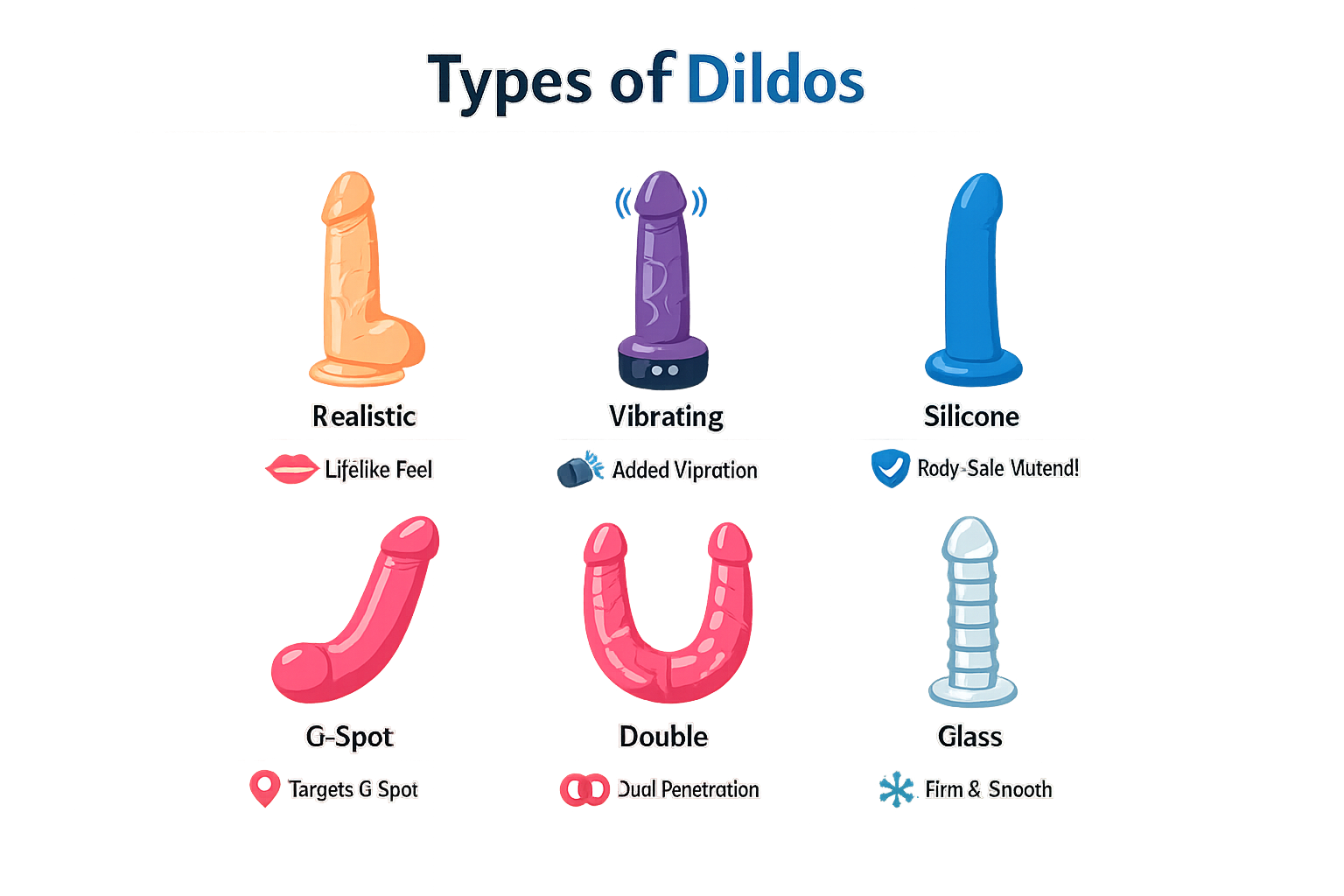
A dildo is a penetrative sex toy designed for internal stimulation — that's the baseline definition. It doesn't vibrate (that's a vibrator), and it doesn't need batteries. Most are shaped for vaginal or anal use, though the category includes everything from hyper-realistic models to abstract shapes that don't look like anything in particular.
The design range is wide. Some have curved tips for G-spot or P-spot targeting. Others are straight, textured, or feature a flared base for harness compatibility and backdoor safety. Non-phallic designs — like the ombre-gradient models with smooth curves — appeal to couples who want something that doesn't mimic anatomy. Realistic versions replicate veins, texture, and shape for users who prefer that aesthetic.
Materials and What They Mean
Material matters more than most first-time buyers realize. Silicone is the default recommendation — it's body-safe, non-porous, and easy to clean. Platinum-cured silicone is the upgrade tier, especially for people with sensitive skin. Liquid silicone takes it further: it's softer than standard silicone, which translates to a more flexible, sensual feel during use.
Other materials exist — glass, metal, TPE — but silicone dominates the category for good reason. It holds up to boiling, bleach solutions, and dishwasher cycles without degrading. If you're shopping for your first dildo, start with silicone and skip the mystery materials sold on Amazon for $12.
Size, Shape, and Function
Size specs are straightforward: total length, insertable length, and diameter (or width at the widest point). A 7.75-inch total length with 7 inches insertable and 1.4 inches in diameter is considered slim — comfortable for beginners or anyone who doesn't want girth. Wider models (2+ inches in diameter) deliver more stretch and fullness.
Shape determines function. Curved tips target internal zones like the G-spot or prostate. Straight shafts work for users who prefer consistent pressure without angle changes. Textured surfaces — ribs, ridges, or nubs — add sensation, though smooth finishes are easier to clean and often more comfortable for extended use.
Suction cup bases are a feature worth noting. They stick to smooth surfaces (shower walls, floors, headboards), which opens up hands-free positioning. The flared base also makes the toy harness-compatible and safe for anal play — anything without a flare can get lost, and that's a trip to the ER nobody wants.
Why Dildos Matter
Dildos get treated like novelty items in a lot of mainstream conversations — the punchline to a joke or something you buy as a gag gift. That framing misses the actual point. A dildo is a tool for pleasure, and for a lot of people, it's the tool that works when other options don't. It's not about replacing a partner or making a statement. It's about having a reliable way to figure out what feels good on your own terms.
Why People Use Dildos
The reasons are straightforward. Some people want penetration without a partner. Some want to explore their anatomy — what angles work, what depth feels right, what kind of stimulation they actually respond to. Others use them with a partner to add variety or to hit spots that are hard to reach otherwise. The how to use a dildo guide walks through the mechanics, but the why is simpler: it's a way to take control of your own experience.
Dildos also matter because they're one of the few toy categories that work for almost every body. Curved tips target G-spots and P-spots. Flexible shafts adapt to different positions. Suction-cup bases stick to surfaces for hands-free use or fit into harnesses for partnered play. The design options exist because bodies are different, and what works for one person won't work for another.
What Most Guides Get Wrong
Most buying guides treat dildos like a luxury purchase — something you research for weeks, compare specs on, and agonize over. That's backward. The first dildo you buy probably won't be the last one you buy, and that's fine. You're learning what your body responds to, and that takes trial and error. The goal isn't to find the perfect dildo on the first try. The goal is to find one that's safe, body-compatible, and gets you started.
The other thing guides get wrong is overcomplicating materials and features. Silicone is the safe default — it's non-porous, easy to clean, and works with water-based lube. Beyond that, size and shape matter more than brand or price. A $25 silicone dildo with a shape that matches your anatomy will outperform a $75 one that doesn't.
The Real Benefit
The real reason dildos matter is autonomy. You don't need to negotiate with anyone, explain what you want, or wait for the right moment. You figure out what works, at your own pace, without pressure. That knowledge transfers — when you know what kind of stimulation you respond to, you can communicate it to a partner or replicate it on your own. It's not complicated. It's just useful.
How to Choose a Dildo
The first dildo most people buy is either too big or too realistic-looking, and both are fixable mistakes. The real question isn't "what's the best dildo" — it's what works for your body, your experience level, and what you're actually trying to do with it.
Start with Size, Not Fantasy
Most beginners overestimate what they want. A slim, beginner-friendly option is easier to work with than something girthy that sits in a drawer because it's intimidating. If you're new to penetration or haven't used toys before, start smaller than you think you need — you can always size up later.
Length matters less than girth. A dildo that's too wide is uncomfortable; one that's too long just means you don't use the full shaft. For most people, 4–6 inches of insertable length and a diameter under 1.5 inches is the sweet spot for a first pick.
Shape Dictates What It Does
A straight shaft is versatile — it works for vaginal or anal play and doesn't lock you into one sensation. Curved tips are designed for targeting specific spots: the G-spot internally or the P-spot for prostate play. If you're buying specifically for G-spot stimulation, look for a pronounced upward curve. If you're not sure what you're after yet, skip the specialty shapes.
Textured shafts (ribbed, beaded, rippled) add sensation, but they're polarizing — some people love them, others find them distracting. For a first dildo, smooth is the safer bet. You can always add texture later once you know what you respond to.
Material Is the One Thing You Can't Compromise On
Silicone is the gold standard — body-safe, non-porous, easy to clean, and it holds up forever. It's worth paying a little more for. TPR and TPE (thermoplastic rubber and elastomer) are softer and cheaper, but they're porous, which means they can harbor bacteria even after cleaning. If you're going budget, TPR is fine for external play or short-term use, but silicone is the long-term investment.
Glass and stainless steel are also body-safe and non-porous. They're firmer than silicone (no give at all), which some people love for targeted pressure. They're also temperature-responsive — you can warm them or cool them before use. If you like firm, precise sensation, they're worth considering. If you want something with more flex, stick with silicone.
Base Matters More Than You Think
A flared base isn't just for strap-on compatibility — it's a safety feature for anal play. Anything going near your butt needs a base wide enough that it can't get lost. If you're planning to use the dildo anally, this is non-negotiable.
Suction cup bases are useful if you want hands-free play. They stick to flat surfaces (shower walls, floors, chairs) and let you control depth and angle without holding the toy. For more on how to use suction cup options, see How to Use a Suction Cup Dildo: A Beginner's Guide.
Don't Overbuy on Your First Pick
The dildo that works for you now might not be the one you want in six months. Your preferences will shift as you figure out what sensations you respond to, and that's normal. Start with something versatile and body-safe, and don't treat it like a forever purchase. You're allowed to try something, decide it's not your thing, and move on.
Best Practices for Using Dildos
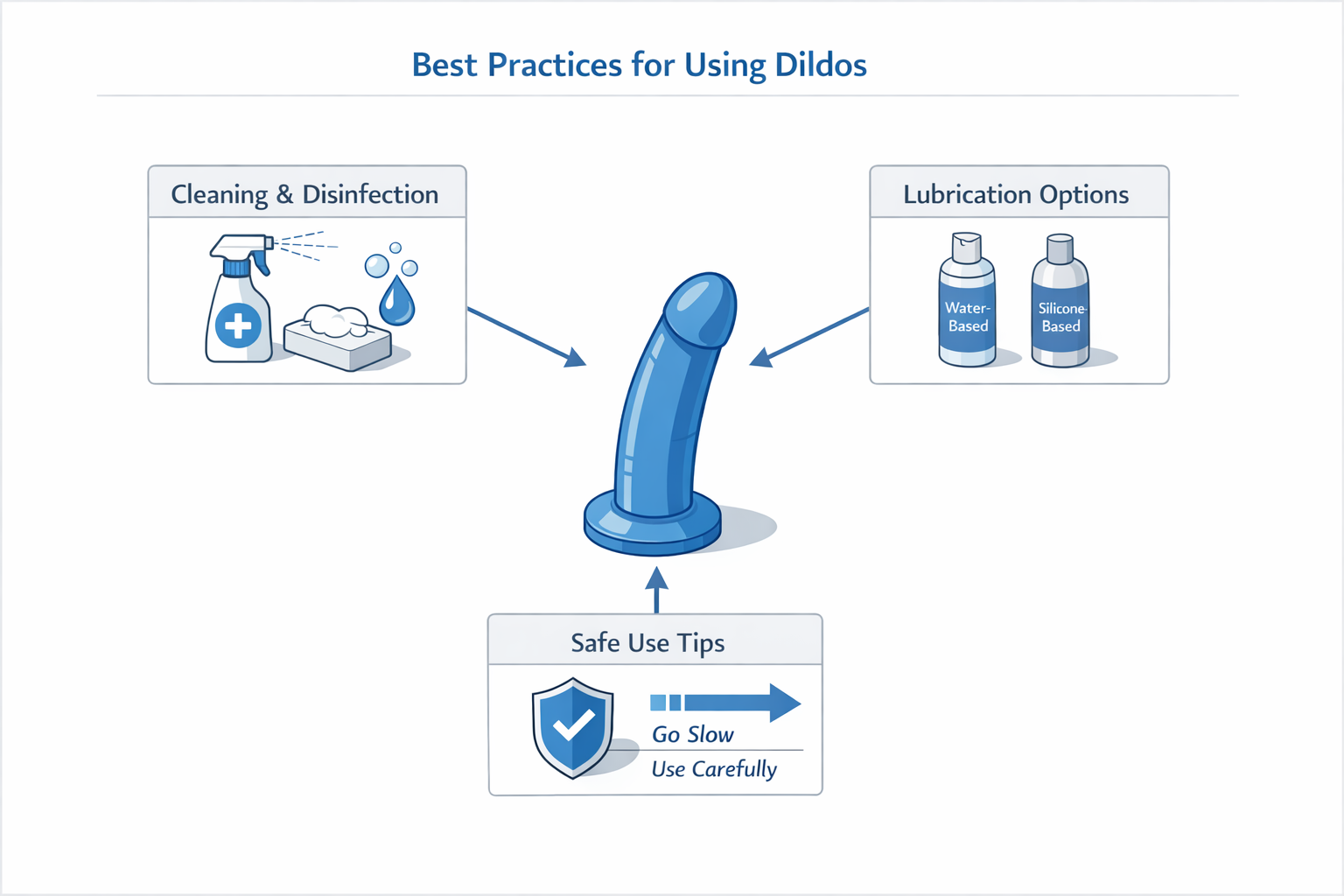
Most people overthink the mechanics and underthink the hygiene. Here's what actually matters when you're using a dildo — the stuff that keeps things safe, comfortable, and worth repeating.
Start With Clean Toys Every Time
This isn't optional. Clean your dildo after every single use — bacteria builds up fast, and infections from dirty toys are more common than most people think.
Use unscented, mild soap and warm water. Scented soaps mess with your body's pH balance and can cause irritation you don't need. If your toy is waterproof, rinse it thoroughly under running water. If it's not, wipe it down carefully with a damp cloth and soap, then wipe again with clean water.
If you're sharing a toy or switching between body parts, put a condom on it and change the condom between uses. This prevents bacteria transfer and keeps cleanup simpler.
Lube Isn't Optional — It's Part of the Process
Even if you think you don't need it, use lube. Silicone toys work best with water-based lube — silicone lube can degrade silicone toys over time, and that's a fix you can't undo.
Apply lube generously to both the toy and yourself. If it starts to dry out mid-session, add more. There's no such thing as too much lube — there's only "not enough" and "about right."
Use the Base Features That Are Already There
Most dildos come with a suction cup base or a flared base. The suction cup sticks to any flat, smooth surface — shower walls, floors, headboards. It's not a gimmick; it's one of the most useful features on a dildo because it frees up your hands and lets you control depth and angle without holding the toy.
The flared base also makes the toy safe for anal use. If a toy doesn't have a flared base, don't use it anally — full stop. You don't want to end up in an ER explaining why you need help retrieving something.
If your dildo fits a strap-on harness, that's another way to use it hands-free, either solo or with a partner. For more on how suction cups work in practice, see How to Use a Suction Cup Dildo: A Beginner's Guide.
Go Slow When You're Trying Something New
If it's your first time with a particular size, shape, or texture, start slower than you think you need to. Let your body adjust. Rushing this part is how people end up sore or turned off from something that would've worked fine with a little patience.
Curved tips are designed to hit internal spots like the G-spot or P-spot. Angle the curve toward the front of your body and adjust pressure until you find what feels right. Not everyone responds to the same angle or depth, so treat this like calibration, not a checklist.
Store It Properly Between Uses
Once your toy is clean and dry, store it somewhere clean and dry. Don't toss it in a drawer with other toys unless they're each in their own pouch or case — some materials react badly when they touch each other, especially if one is silicone and the other isn't.
If your toy came with a storage bag, use it. If it didn't, a clean sock or small drawstring bag works fine. The goal is to keep dust, lint, and other debris off the surface so it's ready to go next time without needing a pre-use wash.
Common Mistakes to Avoid When Choosing and Using Dildos
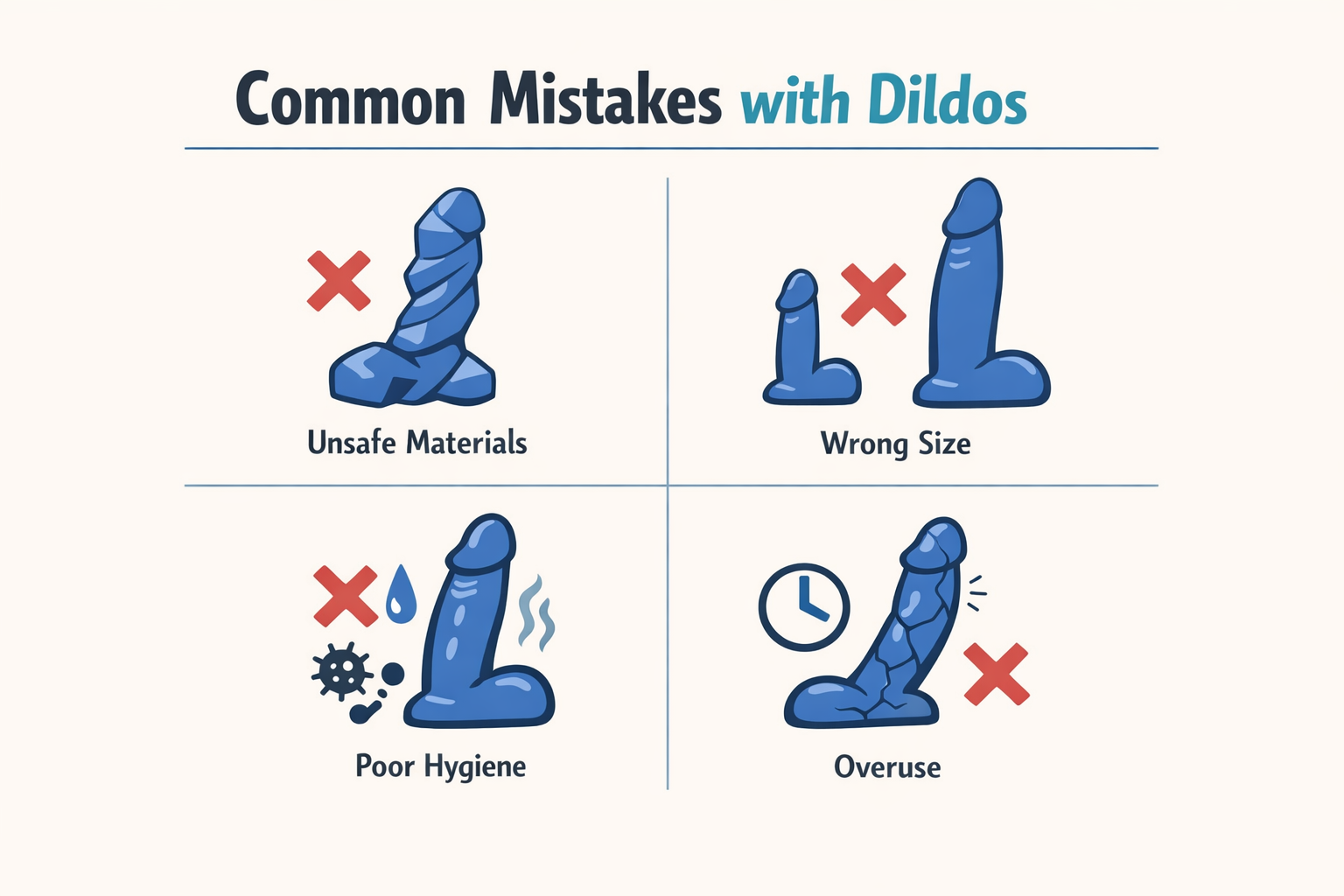
Most dildo mistakes happen before you even take it out of the box. People buy the wrong size, skip the material research, or assume expensive automatically means better. Here's what actually goes wrong — and how to avoid it.
Buying Based on Looks Alone
The prettiest dildo in the photo isn't always the one that works for your body. Realistic veining, wild colors, and elaborate shapes look great on a product page, but they don't tell you anything about firmness, texture, or whether the angle will actually hit the right spot.
Pick based on what you need it to do, not what it looks like on your nightstand.
Going Too Big Too Fast
This is the number-one regret in every beginner forum. Bigger looks more impressive, but if you're new to penetration or haven't used a dildo in a while, an oversized toy just sits in a drawer because it's uncomfortable.
Start smaller than you think you need. You can always size up — you can't make a too-large dildo smaller.
Skipping the Material Check
Not all materials are body-safe, and some that claim to be still cause irritation or break down fast. Jelly, rubber, and anything labeled "for novelty use only" should be a hard pass.
Stick to silicone, glass, or stainless steel unless you know exactly what you're buying and why.
Sharing Toys Without Protection
Dildos aren't meant to be shared between partners without a barrier. Even if you clean it thoroughly, some materials are porous and can harbor bacteria. If you're using the same toy with multiple people, put a condom on it every time — or keep separate toys for each person.
This isn't paranoia; it's basic infection prevention.
Ignoring the Base
If you're using a dildo for anal play, the base matters more than any other feature. A flared base keeps the toy from getting pulled in too far — and yes, that happens more often than you'd think.
If you're not sure whether your toy is designed for anal use, check our guide to suction cup dildos — many of them include proper bases.
Using the Wrong Lube
Silicone lube breaks down silicone toys. Oil-based lube degrades some rubbers and makes latex condoms useless. If you're not paying attention to what goes with what, you'll either ruin the toy or end up with irritation.
Water-based lube works with everything. When in doubt, use that.
Skipping Warm-Up
Jumping straight to penetration — especially with a firm or textured dildo — is a fast way to make the whole experience uncomfortable. Your body needs time to relax and self-lubricate (or absorb added lube). Rushing it just makes everything harder.
Take a few minutes. It's not wasted time; it's the part that makes the rest work.
Not Cleaning It Right Away
Leaving a toy unwashed after use gives bacteria time to multiply, and some materials stain or start to smell if you wait too long. Rinsing it off immediately takes thirty seconds and prevents problems you don't want to deal with later.
If the toy is dishwasher-safe, even better — but at minimum, wash it with soap and warm water before it goes back in the drawer.
Assuming Expensive Means Better
A higher price tag usually means better materials, but it doesn't guarantee the shape or firmness will work for you. Plenty of budget-friendly dildos perform just as well as premium ones if they're made from body-safe materials and designed with actual anatomy in mind.
Don't overspend on your first one. Get something solid in the mid-range, figure out what you like, and upgrade from there if you want to.
FAQ About Dildos
What size dildo should I start with?
Start with something closer to average — around 5–6 inches insertable length and 1.25–1.5 inches in diameter. Most beginners think they need to go smaller, but anything under 4 inches feels more like a finger than a toy, and anything under 1 inch in girth doesn't give you enough feedback to know what you actually like. The real issue isn't length — it's girth. Go slow on diameter, and you'll be fine.
What's the best material for a dildo?
Silicone. It's body-safe, easy to clean, doesn't harbor bacteria, and lasts years if you treat it right. Glass and stainless steel are also body-safe and great if you want something firm or temperature-responsive, but they're less forgiving for beginners. Skip anything labeled "jelly," "PVC," or "rubber" — those materials are porous, can't be fully sterilized, and often contain phthalates.
Can I use a dildo anally?
Only if it has a flared base. Anything without a wide, solid base can get lost, and that's an ER visit you don't want. Most dildos are designed for vaginal use and don't have the base you need for anal safety. If you're shopping for anal, look for toys explicitly labeled for that — they'll have the right base shape and usually a tapered tip.
How do I know if a dildo is too big?
If you can't get it in comfortably with plenty of lube and some patience, it's too big. Forcing it is how you end up sore or injured. Start smaller, work up gradually, and remember that what looks good in a photo might not match what your body can handle — especially on diameter. When in doubt, measure the circumference of something you know works (like your fingers) and compare it to the toy's specs.
Do I need lube with a silicone dildo?
Yes. Even if you think you don't. Silicone toys have more drag than you expect, and going in dry or under-lubed is uncomfortable at best and painful at worst. Use water-based lube with silicone toys — silicone lube can degrade the material. Reapply as needed; lube dries out faster than you think.
What's the difference between a realistic and non-realistic dildo?
Realistic dildos have veins, a defined head, and sometimes balls — they're shaped to look like a penis. Non-realistic dildos skip all that and focus on shape, curve, or texture that's designed for sensation rather than appearance. Neither is "better" — it's purely preference. Some people find realistic details distracting or unnecessary; others like the visual or the specific fit a realistic shape provides.
How do I clean my dildo?
For silicone, glass, or stainless steel: wash with warm water and mild soap after every use, or boil for 3–5 minutes if it's non-motorized. For anything with a motor or battery, wipe it down with a toy cleaner or soapy water, but don't submerge it. Let it air-dry completely before storing. For a full breakdown of material-specific care, check out How to Clean a Dildo: Material-Specific Care Tips.
Can I share a dildo with a partner?
Yes, but only if you clean it thoroughly between uses or use a condom. Even body-safe materials can transfer bacteria or fluids. If you're switching between vaginal and anal use, or between partners, either sterilize it (boil or bleach solution for non-porous toys) or cover it with a fresh condom each time.
How long do dildos last?
Silicone dildos can last 5–10 years or longer if you store them properly and don't use silicone lube on them. Glass and steel are basically indestructible unless you drop them on tile. Cheaper materials like TPE or jelly break down faster — expect 1–2 years max, and replace them if they start to feel sticky, smell weird, or change texture.
What if I don't like the dildo I bought?
Most retailers don't accept returns on sex toys for hygiene reasons, so you're stuck with it. That's why starting with a mid-priced, mid-sized, body-safe option is smarter than gambling on something expensive or extreme. If you're unsure, go with a simple silicone dildo in a standard size — it's the lowest-risk first buy, and even if it's not your forever favorite, it's versatile enough to stay in rotation.
Conclusion
Choosing a dildo shouldn't feel harder than it is. You're picking a shape, a material, and a size that works for your body — not solving a physics problem. Most of the anxiety comes from marketing that makes every feature sound critical when it's not.
Here's what actually matters: body-safe material (silicone, glass, or stainless steel), a size that makes sense for where you're starting, and a shape that matches what you're trying to do. Everything else — texture, color, whether it has a suction cup — is preference, not necessity.
If you're still not sure where to start, go smaller and simpler than you think you need. The friend in your group chat who swears by the eight-inch realistic one? She didn't start there. Nobody does. A basic silicone dildo in the 4–6 inch range will tell you more about what you actually like than any amount of research.
Once you know what works, you can get weird with it — and this category gets very weird very fast. But for now, pick one, use lube, and skip the overthinking. For step-by-step guidance on your first time, check out How to Use a Dildo: A First-Time Guide.
The right dildo is the one you'll actually use, not the one that checks every box on a comparison chart.