
How to Clean a Dildo: Material-Specific Care Tips
Learn how to clean a dildo safely based on its material. From silicone to glass, get easy care tips to keep your toys hygienic and long-lasting.
 Zoe Clarke
Learn how to clean a dildo based on its material. Keep your toys safe and hygienic with these easy tips.
Introduction
Most people buy a dildo and figure cleaning is obvious — rinse it off, maybe hit it with soap, done. That works until you realize silicone has different rules than glass, and porous materials are a whole different problem. The truth is, how you clean a dildo depends entirely on what it's made of, and getting it wrong can either wreck the toy or leave you at risk for infections.
You can get infections from dirty toys even if you're the only one using them. Bacteria from your body can hang out on the surface, and if you leave a toy unwashed for a few days, other stuff from the air — dust, pet hair, whatever's floating around — gets introduced. It's not a high-risk situation, but it's also not hard to avoid.
The other issue most first-time buyers don't know: some materials are porous, which means they trap bacteria no matter how well you scrub them. Others can be fully sanitized by boiling or using diluted rubbing alcohol. If you're sharing a toy or switching between body parts, the cleaning method changes again. For more basics on anatomy and how different toys work with your body, check out our guide on what is a clit and how it works.
This guide breaks down the cleaning process by material type — what works, what doesn't, and what will damage your toy if you try it. If you've been guessing at this part, here's the actual answer.
Problem Statement
Most people clean their dildos wrong — not because they're lazy, but because nobody tells them the difference between materials matters. You'd never wash a cast-iron pan the same way you wash a silicone spatula, but somehow we're supposed to treat all sex toys like they're the same thing.
The most common mistake is the one-size-fits-all approach: soap, water, done. That works fine for non-porous silicone, but it's not enough for porous materials like jelly rubber or TPE, and it's overkill (or worse, damaging) for certain finishes on glass or metal. The second-most-common mistake is skipping cleaning entirely when you're the only one using the toy. Here's the thing: even if it's your own bacteria, leaving a toy unwashed means you're inviting dust, pet hair, and whatever else is floating around your bedroom to settle into the grooves. And if you get cum on a toy and leave it out for three days, do you really want to put that dried residue back into your body?
Another issue: people assume antibacterial soap is required, or that boiling is always safe, or that you can toss anything waterproof into the dishwasher. None of that is universally true. Battery-operated toys can't be submerged. Certain materials degrade when exposed to high heat. And antibacterial soap doesn't matter as much as the actual scrubbing motion — it's the mechanics of using soap and rubbing the toy that dislodges bacteria, not the soap's marketing claims.
The real problem is that most cleaning advice treats dildos like a single category when they're actually five or six different material families, each with its own care requirements. If you don't know what your dildo is made of, you can't clean it correctly — and most packaging doesn't make that easy to figure out.
Solution Steps: Cleaning Dildos by Material
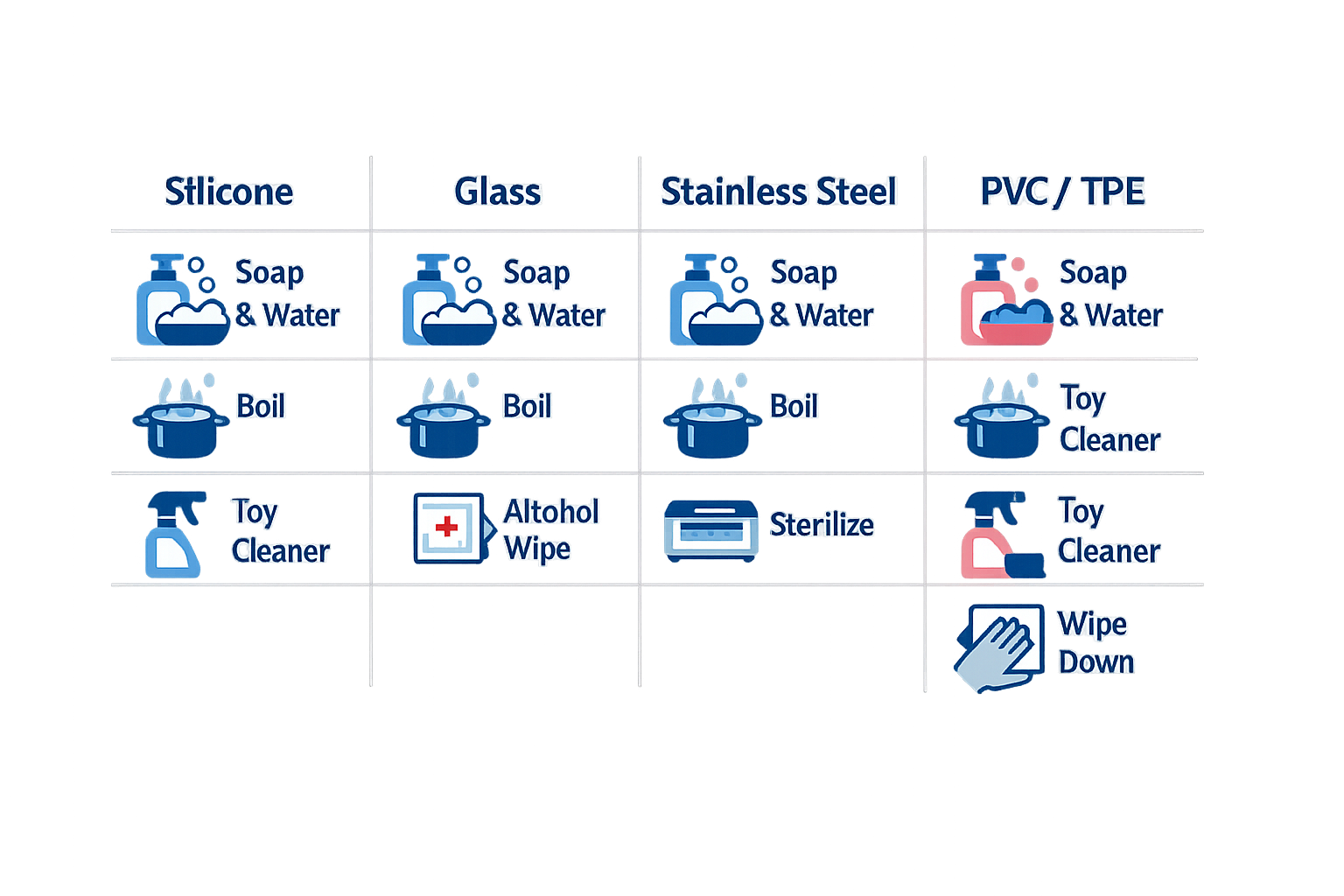
The cleaning method that works for one dildo can wreck another. Here's how to clean a dildo based on what it's actually made of.
Silicone Dildos
Silicone is the easiest material to clean — it's non-porous, which means bacteria can't hide inside the material itself.
Step 1
Wash with warm water and mild soap
Rinse the dildo under warm water, then wash with antibacterial soap or a water-based toy cleaner. Scrub all surfaces, paying attention to any textured areas or ridges where fluids might collect.
Step 2
Rinse thoroughly
Rinse with clean hot water to remove all soap residue. Soap left on the toy can cause irritation during your next use.
Step 3
Dry completely
Pat dry with a lint-free cloth or towel. Let it air-dry fully before storing — moisture trapped in storage creates a breeding ground for bacteria.
For deeper sanitization (if you're sharing the toy or want a more thorough clean), you can boil non-motorized silicone dildos for 3–5 minutes. Some sources also mention wiping down with diluted rubbing alcohol, but rinse super thoroughly afterward.
Glass and Stainless Steel Dildos
Glass and metal are also non-porous, which makes them some of the lowest-maintenance toys you can own.
Step 1
Wash with soap and water
Use warm water and mild soap, just like silicone. Glass and steel won't react to most cleaners, so you have more flexibility here.
Step 2
Sanitize if needed
You can boil glass and steel toys for 3–5 minutes, run them through the dishwasher (top rack, no detergent), or wipe them down with rubbing alcohol.
Step 3
Dry and inspect
Dry with a lint-free cloth. For glass, check for chips or cracks every time you clean it — damaged glass toys are unsafe to use.
Porous Materials (TPE, Jelly, Rubber)
These materials can't be fully sanitized because they're porous — bacteria can live inside the material even after washing. If you own a toy made from TPE, jelly rubber, or other soft porous materials, here's the deal: clean them, but know they won't ever be truly sterile.
Step 1
Wash gently with soap and water
Use warm water and mild soap. Avoid harsh scrubbing — porous materials can tear or degrade more easily than silicone or glass.
Step 2
Use a condom for safer use
If you're sharing the toy or using it anally and then vaginally, put a condom on it. Porous toys can harbor bacteria even after cleaning, and a condom is the only reliable barrier.
Step 3
Replace regularly
Porous toys don't last as long as non-porous ones. If the material starts to smell, feel sticky, or look discolored, throw it out.
Motorized or Battery-Powered Dildos
If your dildo has a motor, you can't boil it or submerge it unless the manufacturer explicitly says it's waterproof.
Step 1
Check the waterproof rating
If it's fully waterproof, you can rinse it under running water. If it's only splash-proof, keep water away from the battery compartment or charging port.
Step 2
Wipe down with a damp cloth
For non-waterproof toys, use a damp cloth with mild soap to clean the surface. Don't submerge or run it under the tap.
Step 3
Dry carefully
Pat dry with a lint-free cloth, and make sure no moisture gets into the motor or battery area.
Tips and Tricks for Maintaining Your Dildos
Cleaning is half the job — storage is the other half. Most people get this wrong, and it's why toys get sticky, dusty, or just plain gross faster than they should.
Store Them Separately
Don't toss all your toys in one drawer. Silicone toys touching each other can react and degrade the material over time. If your toy came with a dust bag, use it — it's not decorative, it's functional. No bag? A clean sock or a small pouch works fine.
Keep Them Out of Direct Sunlight
Heat and UV light degrade materials faster than you think. Don't leave toys on a windowsill, in a hot car, or anywhere that gets direct sun for hours. Room temperature, out of light — that's the goal.
Skip the Alcohol-Based Cleaners
Some people assume rubbing alcohol is the nuclear option for cleaning. It's not. Pure alcohol can dry out and crack certain materials, especially softer silicones. Stick to warm water and mild soap, or a toy cleaner specifically designed for the job.
Check for Damage Before and After Use
Run your fingers over the surface before you use it. Any nicks, tears, or rough spots? That's a breeding ground for bacteria, and it's not safe to use. If a toy is damaged, replace it — don't try to patch it or keep using it anyway.
Dry Thoroughly Before Storing
This one's obvious but easy to skip when you're in a hurry. Water left on a toy, especially in crevices or textured areas, can grow mold or mildew. Pat it dry with a clean towel, let it air-dry for a few minutes, then put it away.
Conclusion
Cleaning your dildo isn't complicated — it's just one of those things that matters more than most people think. The material determines the method, and once you know what you're working with, the whole process takes less time than scrolling TikTok.
Silicone, glass, and stainless steel can handle boiling or a dishwasher run. TPE, jelly, and anything with a motor gets warm water and mild soap. Store everything clean and dry, keep porous toys to yourself, and don't mix silicone lube with silicone toys. That's it.
The reality is simple: an unclean toy can still carry bacteria, and while the risk of infection is low, it's not zero. A quick rinse after every use and a proper wash before storage keeps things safe and extends the life of the toy. If you're still figuring out what works for your body, check out our guide to clit stimulators — because once you find the right toy, you'll want to keep it in good shape.
Clean your stuff. It's not a big deal, but it is the deal.
Related reading
Hitachi Magic Wand Charger Guide: Plus and Rechargeable Power Cords