
Quiet Vibrator Guide: The Quietest Vibrators Measured in Decibels
Explore the quietest silent vibrator options measured in decibels. Find your perfect quiet vibrator to enhance pleasure without the noise.
 Zoe Clarke
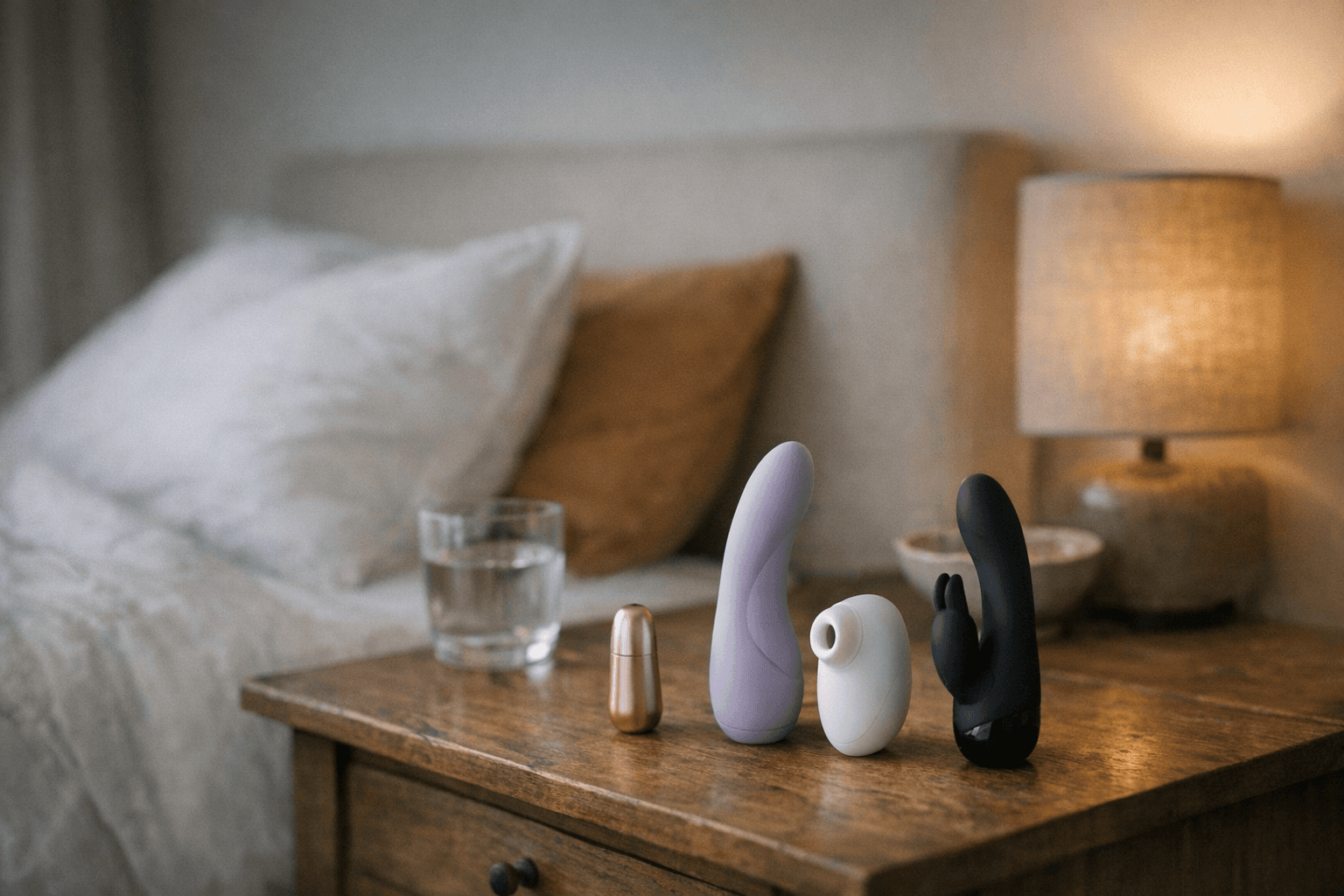
Why Noise Levels Matter in Vibrators
A silent vibrator isn't about being ashamed or secretive. It's about not having to schedule your orgasms around other people's calendars. The vibrator that wakes up your roommate is not the one you keep using. Noise is the thing most first-time buyers don't think about until it's too late — you're mid-session, the motor's buzzing like a chainsaw through the bedroom door, and suddenly you're doing mental math on whether anyone's home.
Quiet motors let you use a toy whenever you want, wherever you want, without the mental overhead of "is someone going to hear this." Engineering has caught up. Brands like We-Vibe design products that run no louder than low-level conversation in a library — we're talking whisper-quiet at full power. Some toys, like the Womanizer Duo 2, use Smart Silence tech that only turns the motor on when it's touching your body, so there's zero ambient buzz when you're not actively using it.
This guide breaks down what makes a vibrator actually quiet (spoiler: it's not just marketing), how decibel measurements work in the real world, and which models earn their reputation for discretion. If you've been burned by a "quiet" toy that sounded like a lawnmower, or you're buying your first vibrator and don't want to gamble on noise, this is the one to read. For a practical decision framework, see How to Choose Quiet Vibrators Without the Guesswork.
We'll also cover the common mistakes people make when shopping for quiet vibrators (hint: assuming cheap means loud, or expensive means silent), what decibel ranges actually mean in practice, and how to evaluate a toy's noise level when most product pages don't list it. By the end, you'll know exactly what to look for — and what to skip.
Explore the quietest vibrators measured in decibels. Find your perfect quiet vibrator to enhance pleasure without the noise.
What is a Silent Vibrator?
A silent vibrator is exactly what it sounds like — a vibrator that doesn't announce itself to the entire apartment building. Most vibrators create vibrations using a motor, and motors make noise. The difference is how much noise, and whether that noise is a low hum you can barely hear or a buzz that sounds like a lawn trimmer through a bedroom door.
The industry doesn't have a universal standard for what counts as "quiet," which is part of the problem. Some brands slap "whisper-quiet" on the box and call it a day. Others — the ones worth paying attention to — actually measure decibel output and publish the numbers. A silent vibrator typically registers between 40-50 decibels at full power, roughly the volume of a refrigerator hum or quiet conversation. Anything louder than 60 decibels starts sounding like a vacuum cleaner, and that's when roommates start asking questions.
What Makes a Vibrator Quiet
The motor type matters more than most first-time buyers realize. Rumbly, low-frequency motors tend to be quieter than high-pitched buzzy ones — the vibration travels through your body instead of rattling the toy's shell. The Womanizer Vibe, for example, uses what they call UltraWave Vibration, combining low-frequency rumbles with harmonic resonances to keep the noise down while keeping the power up.
The toy's construction plays a role too. Vibrators with solid silicone bodies and good internal dampening muffle motor noise better than cheap plastic shells. If the toy feels hollow or rattles when you shake it, it's going to be loud. Quality materials cost more, but they're the difference between discreet and obvious.
Not every quiet vibrator works the same way. Clit suckers use air-pulse technology instead of traditional vibration, which tends to be quieter overall. Traditional vibrators rely on motor speed and casing design to keep the noise contained. Both can be quiet; the mechanism just differs.
Why Choosing a Silent Vibrator Matters
The noise a vibrator makes isn't just about discretion — it's about whether you can actually relax enough to enjoy it. A loud motor pulls you out of the moment, makes you hyper-aware of your surroundings, and turns what should be low-stakes into a stress test.
Quiet vibrators solve the mental-overhead problem. You're not listening for footsteps in the hallway or wondering if your roommate can hear through the wall. You're just using the thing.
Discretion Without Compromise
Most people shopping for a quiet vibrator assume they'll have to trade power for silence. That used to be true — older motors were loud because they were inefficient. Modern designs use brushless motors and better dampening, so you get the same intensity at half the decibel level.
Discreet silent vibrator models let you use them in shared living situations, travel, or anytime you don't want to announce what you're doing. A quiet motor means you can use it in a hotel bathroom, a dorm room, or your own bedroom without the performance anxiety that comes with a loud toy.
Comfort and Focus
Noise is a distraction. When a toy sounds like a small appliance, your brain stays in threat-detection mode instead of letting go. Quiet motors let you focus on sensation rather than whether someone's about to knock on the door.
Research shows that vibrators can improve sexual function and satisfaction, and they've been shown to help with blood flow in the pelvic region. But those benefits only work if you're relaxed enough to use the toy consistently — and a loud motor works against that.
A quiet vibrator isn't just polite. It's the difference between using it once and putting it in a drawer versus actually integrating it into your routine.
Health and Routine Use
Vibrators aren't just recreational. They can help with arousal, orgasm consistency, and pelvic floor health. In one study, 93% of women who had difficulty reaching orgasm were able to do so with a vibrator. But if the noise makes you avoid using it, the toy doesn't help.
Quiet motors make it easier to use a vibrator regularly without the mental friction of planning around privacy. You don't need a perfectly empty house or a specific time window — you just use it when you want to.
How to Choose the Right Silent Vibrator
Most first-time buyers think they need to compare decibel ratings across fifty products. They don't. The actual decision comes down to three things: what kind of stimulation you want, whether you need it to travel, and whether you trust the brand to not lie about noise levels.
Match the Motor Type to Your Body
Vibrators use a rotating electric motor with an offset weight to generate vibrations. The motor type determines both the sensation and the noise profile. Bullet vibrators are compact and usually quieter at lower settings, but they can get buzzy and loud at full power. Clit stimulators that use air-pulse technology (like the ones from Womanizer) tend to be quieter than traditional vibration motors because there's no spinning weight — just pressure waves.
If you're targeting the clitoris, air-pulse toys are the quietest option in the category. If you want something for G-spot stimulation, look for rechargeable models with brushless motors — they're engineered to reduce friction noise. For a deeper dive into clitoral anatomy and how different toys work with your body, check out What Is a Clit? Anatomy, Function, and Pleasure Guide.
Prioritize Build Quality Over Marketing Claims
Brands love to say "whisper-quiet" without defining what that means. We-Vibe products, for example, are described as "no louder than low-level conversation in a library" at full power — that's around 40–50 decibels, which is genuinely quiet. But most brands don't publish actual measurements, so you're left trusting the consensus.
Look for:
- Rechargeable models with USB charging — they use better motors and last longer. The We-Vibe Sync, for instance, doubles its charger as a travel case and plugs into any USB port.
- Silicone bodies — they dampen vibration noise better than hard plastic.
- Brands with a reputation for quiet operation — We-Vibe, Dame, and Womanizer all engineer for discretion. If the brand's FAQ mentions noise levels, they're probably serious about it.
Consider Smart Features for Real-World Use
Some vibrators include features that make them quieter in practice, even if the motor itself isn't silent. Womanizer's Smart Silence™ technology only activates the toy when it touches your skin — meaning it's not running (and making noise) while you're adjusting position or pausing. You can toggle it on or off by pressing the (+) and (-) buttons simultaneously for two seconds.
If you live with roommates or travel frequently, Smart Silence™ or similar motion-activation features are worth the extra cost. They're not just gimmicks — they reduce the total time the motor is running, which means less noise overall.
The quietest vibrator isn't the one with the lowest decibel rating — it's the one that doesn't run when you don't need it to.
Don't Overthink the First Purchase
Here's the thing: your first quiet vibrator doesn't need to be perfect. It needs to be quiet enough that you're not stressed using it, and good enough that you figure out what you actually like. Most people overbuy on their first toy because they think they need every feature. You don't. Start with a rechargeable bullet or a basic air-pulse toy in the $50–80 range, use it for a month, and then decide if you want something more specialized.
The friend who swears by their $200 luxury vibrator? They probably started with a $40 bullet and learned what worked first.
Best Practices for Using Silent Vibrators
Buying a silent vibrator is half the job — using it right is the other half. Most people assume a silent vibrator will just work anywhere, but placement, settings, and even what you're sitting on can make a 45 dB toy sound like 60 dB.
Start Low, Build Up
The quietest setting is usually the quietest — not exactly groundbreaking, but people skip it. Start on the lowest intensity and work up. Not only does this let you gauge actual noise levels in your space, it also gives you better control over sensation. Cranking a wand to max power right away is how you end up with a toy that's louder than you expected and less enjoyable than it should be.
Use It on Soft Surfaces
Hard surfaces amplify vibration noise. If you're using a clit stimulator or wand on a wood bed frame or tile floor, the motor hum transfers straight into the surface and gets louder. Use it on a bed with a mattress, a couch, or anywhere with padding. If you're in a chair, throw a pillow under you.
Add Lube
Lube isn't just about comfort — it cuts down friction noise. Skin-on-silicone contact can create a faint squeaking or rubbing sound that's more noticeable than the motor itself. A water-based lube smooths that out. If your toy is waterproof, you can also use it in the shower or bath, where running water masks any remaining sound.
Check Your Grip
How you hold the toy matters. If you're white-knuckling a bullet vibrator, your hand can dampen or redirect vibrations in ways that make the motor work harder and sound louder. Hold it firmly but not in a death grip. Let the toy do its job without fighting it.
Avoid Pressing Too Hard
Pressing a vibrator into your body with excessive force can muffle sensation and make the motor strain, which increases noise. Light to moderate pressure is usually enough — especially with air-pulse toys, which work best when the nozzle sits just around the clitoral area without being jammed into it.
Turn Off When Adjusting
If you're switching positions or moving the toy, turn it off first. A vibrator moving through air or brushing against fabric creates more noise than one in steady contact with skin. The Smart Silence feature handles this automatically on some models, but if yours doesn't have it, just hit the power button.
Store It Properly
Batteries that sit half-drained can cause motors to run louder or less smoothly. Charge your toy fully before storing it, and keep it in a case or pouch to protect the motor. A toy that's been banging around in a drawer for six months might not be as quiet as it was out of the box.
Common Mistakes When Choosing a Silent Vibrator
Most people assume "quiet" means "weak," and that's the first mistake. You end up buying something that barely does the job because you're scared of the noise. The second mistake? Trusting marketing copy that calls something "whisper-quiet" without any actual decibel measurement. If a brand won't tell you the dB rating, assume it's loud.
Another common trap: assuming all suction toys are quiet. Air-pulse vibrators like clit suckers can be louder than traditional vibrators, especially when they combine suction with vibration. One reviewer testing a dual-function toy noted, "Even on its lowest intensities, it is strong. Not only is it strong, but it is also loud." The motor has to work harder to power two functions, and that extra effort translates to noise. If you live with roommates or have thin walls, a dual-function toy might not be the move — even if the marketing says otherwise.
Ignoring Your Living Situation
Your noise tolerance isn't just about you. If you share walls, have a roommate, or live in a space where sound travels, you need a vibrator that measures under 50 dB. That's roughly the volume of a quiet conversation. Anything above that and you're gambling on whether someone will hear it. The mistake here is buying what looks good without thinking about where you'll actually use it.
If discretion matters, skip toys with multiple motors or "turbo" modes. Those features sound great on paper, but they're almost always louder. Stick to single-motor designs with lower top speeds — they're easier to keep quiet.
Assuming Price Equals Quiet
Expensive doesn't always mean silent. Some luxury vibrators have powerful motors that prioritize strength over stealth. Budget picks can be just as quiet if they use efficient motor designs. The mistake is thinking you need to spend $100+ to get a quiet vibrator. You don't. You need to look at the specs, read reviews that mention noise, and ignore the price tag.
Overlooking Material and Build Quality
Cheap plastic housings amplify motor noise. Silicone-coated vibrators with solid internal construction dampen sound better. If you're choosing between two toys at the same dB rating, pick the one with better build quality — it'll stay quieter over time as the motor ages. Vibrations rattle loose parts, and that's when a once-quiet toy starts buzzing like a chainsaw.
The other material mistake: assuming rechargeable is always quieter than battery-powered. It's not. Motor design matters more than power source. Some rechargeable toys are louder because they pack more power into the same size. Don't assume the format fixes the noise problem.
Top Silent Vibrators on the Market
Most quiet vibrator lists rank by price or popularity. This one ranks by what actually matters: how quiet they are when you turn them on, and whether they still work when the noise drops.
The picks below come from retailer specs and user consensus — not lab testing with a decibel meter, because most of us don't own one of those. What you're looking for: "whisper quiet," "near-silent," or "shockingly quiet" in the product copy, plus a track record of people not returning them for being louder than advertised.
We-Vibe Sync Lite
The Sync Lite is a couples vibrator that sits inside during partnered sex, which means it has to be quiet or the whole concept falls apart. The product spec calls it "near-silent yet powerful," and the one-button control keeps it simple. It's app-controllable, adjustable to fit different bodies, and comes with 10+ vibration modes. If you're looking for a quiet vibrator that works during sex without announcing itself, this is the category leader.
We-Vibe Wand 2
Wand vibrators are historically loud — big motor, big noise. The Wand 2 breaks that pattern with ten vibration modes described as "shockingly quiet" and deeply resonating. It also has a Smart Silence feature: the vibration starts when the head touches skin and stops when it doesn't. That's useful if you want zero noise between sessions, but it's the baseline quiet operation that makes it worth the list. If you want wand power without wand volume, this is the pick.
Womanizer Vibe
The Womanizer Vibe is billed as "virtually silent" and uses what the brand calls UltraWave Vibration — low-frequency rumbly vibrations combined with ten harmonic resonances. The pitch here is smooth sensation without overstimulation, but the quiet claim is what puts it on the list. It's a lay-on vibrator, so it's designed for broad external stimulation rather than pinpoint pressure. If you want a quiet option that doesn't buzz like a mosquito, this delivers.
Frequently asked questions
How quiet is "quiet" in actual decibels?
Most quiet vibrators land between 40–50 dB on their lower settings — about the volume of a refrigerator hum or a quiet library. The best ones stay under 45 dB even at mid-power. Anything above 55 dB is audible through a closed door if someone's listening for it.
For context, normal conversation is around 60 dB. If your vibrator is louder than that, it's not a quiet vibrator — it's just a vibrator.
Do silent vibrators sacrifice power?
Not necessarily. Air-pulse toys (like the Womanizer line) are both quieter and more effective than most buzzy bullet vibes. The noise difference comes from the motor type and build quality, not the strength.
Cheap motors are loud because they rattle. Premium motors are engineered to minimize vibration transfer to the casing. You're paying for engineering, not just less noise.
What is Smart Silence and does it actually work?
Smart Silence is a feature on some Womanizer models that keeps the toy completely off until it makes contact with your skin. No accidental buzzing in your bag, no noise until you're using it.
It works. The toy genuinely stays silent until contact, which is helpful if you live with roommates or have thin walls.
Are rechargeable vibrators quieter than battery-powered ones?
Usually, yes. Rechargeable motors tend to be higher quality and better insulated. Battery-powered toys — especially the ones that take AAA batteries — are often louder because the motor has to work harder and the casing is flimsier.
There are exceptions, but if you're prioritizing quiet, rechargeable is the safer bet.
Can I make a loud vibrator quieter?
Not really. You can muffle it with a blanket or a pillow, but that's treating the symptom, not the cause. If discretion matters, buy a quieter toy from the start. Trying to DIY-silence a loud motor is a losing game.
If you already own a loud one, save it for when you're home alone and invest in a proper quiet vibrator for everything else.
Do air-pulse toys work for everyone?
No. Some people love them, some people find them too intense or too gentle, and some people just prefer traditional vibration. Air-pulse toys are quieter on average, but "quieter" doesn't mean "better for you."
If you've never tried one, it's worth testing — but don't assume it'll replace every other toy you own.
How do I know if a silent vibrator is actually quiet before I buy it?
Look for decibel ratings in the product specs (rare but helpful), read user reviews that mention noise specifically, and check whether the toy uses a brushless motor or air-pulse technology. Both are good indicators of lower noise.
Avoid toys with vague marketing like "whisper-quiet" unless there's third-party confirmation. Marketing teams love that phrase. It means nothing.
Finding Your Perfect Silent Vibrator
The right silent vibrator is the one that fits your living situation, your body, and your actual use case — not the one with the most marketing hype. Most people overthink this category. They read decibel specs like they're buying studio monitors, when the real question is simpler: can you use it without stress?
Start with your noise floor. If you live alone, a toy that hums at 45 dB is fine. If you share walls with roommates or family, aim for 40 dB or lower and prioritize motors designed for stealth — brushless DC motors, air-pulse mechanisms, and rechargeable builds with quality internals. The cheapest battery-powered bullet will always sound louder than a well-engineered rechargeable, even if the specs look close on paper.
Don't skip the basics: body-safe silicone, a charging method that works for your setup, and a shape that actually matches how you like stimulation. A whisper-quiet wand is useless if you need pinpoint clitoral contact. A silent bullet is perfect for that, but it won't give you the broad, rumbly pressure a wand does. Match the toy to the job, then filter for noise.
If you're still deciding, our guide on how to choose quiet vibrators walks through the decision tree without the fluff. And if you're worried about longevity, rechargeable toys with brushless motors last longer and stay quieter over time — most are designed for hundreds of charges and years of use, not the few months you get from disposable battery models.
The best silent vibrator is the one you'll actually use. Pick the decibel range that removes the anxiety, pick the shape that works for your body, and ignore the rest of the noise.