
Quiet Vibrator Guide: The Quietest Vibrators Measured in Decibels
Find the best quiet vibrator for discreet pleasure. We measured the quietest vibrators in decibels so you can choose with confidence.
 Zoe Clarke
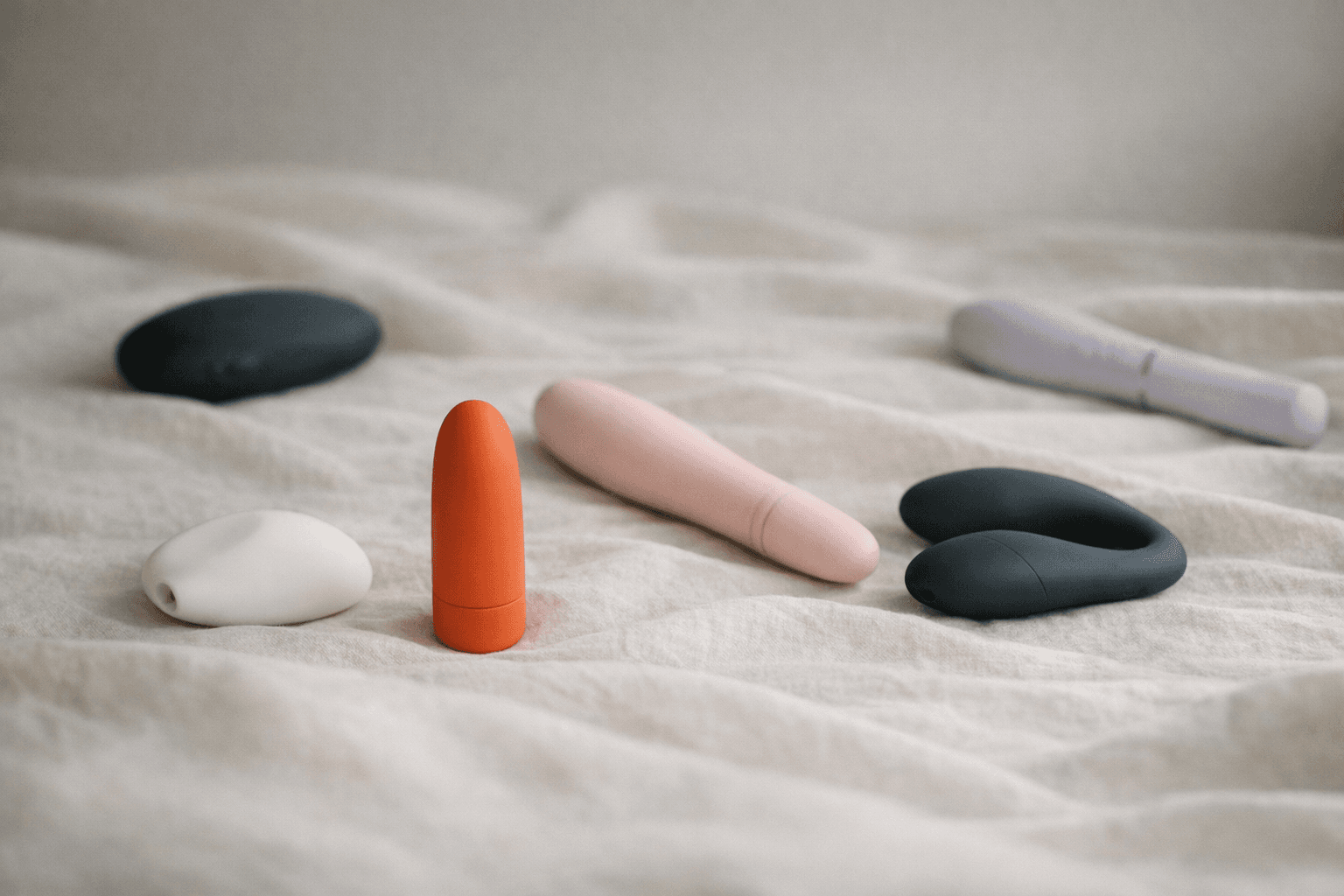
Why Quiet Vibrators Matter
Your vibrator shouldn't sound like a leaf blower. If you've ever tried to use a toy in a shared apartment, thin-walled hotel, or anywhere that isn't soundproofed, you know the problem — half your attention is on whether someone can hear it through the wall, and that's not the vibe.
A silent vibrator is measured in decibels, and the difference between 40 dB (library-quiet) and 60 dB (normal conversation volume) is bigger than you'd think. Most people want something under 50 dB for real discretion. The quietest picks on the market sit around 35–45 dB, which is roughly the sound of a whisper or light rain. That's the range where you stop worrying.
The thing most first-time buyers get wrong is assuming "quiet" means "less powerful." It doesn't. The best silent vibrators use better motors, thicker silicone, and smarter internal design to muffle sound without sacrificing strength. You're not trading off power for discretion — you're just buying a toy that was engineered to do both.
If you're trying to figure out which features actually matter when shopping for a quiet vibrator, decibel ratings are the most reliable spec to look for. Marketing copy will call everything "whisper-quiet," but a measured dB number tells you what you're actually getting. Anything claiming to be silent without a decibel spec is a gamble.
This guide walks through what makes a vibrator quiet, how to choose one that fits your situation, and the common mistakes that lead people to buy the wrong toy for their privacy needs. If you've ever second-guessed a purchase because you weren't sure it would actually be discreet, this is the breakdown you need.
Explore the quietest vibrators measured in decibels. Find the best silent vibrator for discreet pleasure without sacrificing power.
What is a Silent Vibrator?
A silent vibrator is exactly what it sounds like — a vibrator designed to operate at a lower decibel level than standard models. Most traditional vibrators clock in at 50–70 decibels, roughly the volume of normal conversation or background music. Silent vibrators, on the other hand, typically measure between 30–50 decibels — closer to a whisper or a quiet library.
The difference isn't just marketing. Manufacturers achieve lower noise levels through specific motor design, internal dampening materials, and enclosure engineering. The motor itself is often the culprit: cheaper motors with unbalanced weights create vibration that resonates through the toy's shell. Higher-quality motors use precision-balanced weights and tighter tolerances to reduce that rattle.
How Noise Reduction Actually Works
Most silent vibrators use one of three approaches. The first is motor isolation — suspending the motor in silicone or foam so vibrations don't transfer directly to the outer casing. The second is enclosure thickness — a thicker silicone shell absorbs more sound before it escapes. The third is motor type: brushless motors (common in premium toys) run quieter than traditional brushed motors because they have fewer moving parts and less friction.
Some toys also use air-pulse technology instead of traditional vibration. These toys — often marketed as clit suckers — create suction waves rather than mechanical vibration, which tends to be quieter by design. The trade-off is sensation type, not power. If you're looking for a clit stimulator that's both quiet and versatile, air-pulse models are worth considering.
What Decibel Levels Actually Mean
Decibels are logarithmic, not linear. A 40-decibel vibrator isn't twice as loud as a 20-decibel one — it's roughly four times louder. Here's the practical breakdown:
- 30–40 dB: Whisper-quiet. You won't hear it through a closed door or over a TV at normal volume.
- 40–50 dB: Library-quiet. Audible in a silent room, but easily masked by ambient noise.
- 50–60 dB: Normal conversation level. Noticeable if someone is listening, but not alarming.
- 60+ dB: Standard vibrator territory. Loud enough to hear through walls in quiet environments.
Most "quiet" claims fall in the 40–50 dB range. Anything below 40 dB is genuinely impressive and usually comes with a higher price tag.
The Trade-Offs You Should Know
Silent vibrators sometimes sacrifice features for discretion. Smaller motors mean less power variability — you might get fewer speed settings or a narrower intensity range. Thicker enclosures add bulk, so ultra-quiet toys can feel chunkier than their louder counterparts. And air-pulse toys, while quiet, don't feel like traditional vibration — some people love it, some don't.
The other trade-off is cost. Precision motors and dampening materials aren't cheap. Budget vibrators ($20–30) rarely hit true quiet levels because the engineering isn't there. The sweet spot for quiet performance is usually $50–100, where manufacturers can afford better motors without pricing out most buyers.
Why Choosing a Quiet Vibrator Matters
Discretion isn't about shame — it's about privacy. Whether you live with roommates, share a wall with your parents, or just don't want your neighbors knowing your business, a silent vibrator means you can use it without planning around other people's schedules. That's the actual value: spontaneity without the mental math of who's home and whether they can hear you.
The difference between a silent vibrator and a loud one isn't subtle. A typical bullet vibrator clocks in around 50–60 decibels — about the volume of a normal conversation. A truly quiet model sits closer to 40 decibels, which is library-level hush. That 10–20 decibel drop is the difference between "I think I heard something" and "I heard nothing at all."
Why Noise Matters More Than You Think
Loud toys create a mental barrier. You second-guess when to use them, you turn them down to lower settings than you actually want, or you skip them entirely when you're not home alone. A silent vibrator removes that friction — you use it when you want to use it, at the intensity that works, without the constant low-level anxiety about whether someone's going to knock on your door mid-session.
For people in shared living situations — dorms, apartments with thin walls, multigenerational homes — a quiet vibrator isn't a luxury pick, it's the baseline requirement. The "whisper-quiet" marketing copy is annoying, but the actual function — being able to use a toy without broadcasting it — is legitimate.
When Quiet Isn't Just About Volume
Some vibrators are technically quiet but still feel loud because they transfer vibration through surfaces. A 40-decibel toy pressed against a nightstand can rattle louder than a 50-decibel toy held in your hand. Motor placement, casing material, and whether the toy has a flared base all affect how much sound travels. Silicone-coated motors dampen noise better than hard plastic shells. Internal motors in wand-style or bullet designs tend to stay quieter than external motors in cheaper models.
The other factor: pitch. A low hum at 45 decibels is easier to mask with ambient noise than a high whine at the same volume. Cheaper motors often produce that dentist-drill frequency that cuts through walls. Quality motors — the kind in brands that actually measure decibel output — run at lower, more muffled frequencies that blend into background noise.
A silent vibrator isn't about hiding what you're doing — it's about not having to perform discretion as a separate task while you're trying to relax.
If discretion matters to you, prioritize decibel specs over everything else. A powerful motor is useless if you're too self-conscious to turn it past the first setting.
How to Choose the Right Silent Vibrator
The quietest vibrator isn't always the best one — it's the one that's quiet enough for your situation and still does what you need it to do. Most people over-index on decibel specs and end up with something that's whisper-quiet but also weak as hell. Here's what actually matters.
Look for Decibel Ratings Under 50 dB
Anything below 50 dB is roughly the volume of a quiet conversation. That's the threshold where most vibrators become genuinely discreet — you won't hear it through a closed door, and it won't cut through ambient noise like a TV or a fan. If a product lists a rating above 55 dB, it's not a silent vibrator — it's just a regular one with good marketing.
Motor Type Matters More Than You Think
Brushed motors are cheap and buzzy. Brushless motors are quieter and deliver deeper vibration without the surface-level rattle. Air-pulse toys (the ones that use suction instead of vibration) tend to be the quietest category overall, but they're also the most polarizing — some people love them, some people find them too intense or too numb.
If you're choosing between a bullet vibrator and a wand, the bullet will almost always be quieter. Wands have bigger motors, and bigger motors make more noise. That's physics.
Material and Build Quality Reduce Rattling
A well-made toy with body-safe silicone and a solid internal structure won't rattle when it's on high. Cheaper toys — especially ones with hard plastic shells or loose battery compartments — amplify motor noise. If you're shopping budget picks, read reviews specifically for mentions of rattling or buzzing sounds. That's the giveaway.
Rechargeable Beats Battery-Powered for Noise Control
Rechargeable vibrators tend to have better-engineered motors and tighter builds. Battery-powered toys (the ones that take AA or AAA batteries) are noisier on average because the battery compartment creates extra space for vibration to echo. If discretion is the priority, skip the battery compartment entirely.
For more help narrowing down the field, check out How to Choose Quiet Vibrators Without the Guesswork — it walks through the decision tree most first-time buyers miss.
Size Doesn't Always Predict Volume
Smaller toys tend to be quieter, but it's not a rule. Some compact bullets are loud as hell because they pack a strong motor into a tiny shell with no sound dampening. Some larger toys — especially air-pulse models — are near-silent because the motor is insulated inside a bigger housing. Don't assume small equals quiet.
The quietest vibrator is the one that's quiet enough for your situation and still does what you need it to do.
Test It Before You Need It
This sounds obvious, but most people don't do it: turn the toy on in the room where you'll actually use it, with the door closed, and listen from the hallway. That's the real test. What sounds quiet in your hand might carry through walls more than you expect, especially in older buildings or apartments with thin doors.
Best Practices for Using a Silent Vibrator
A silent vibrator only stays quiet if you use it right. Most people skip the basics — they crank it to max power immediately, use it on a hard surface, or forget that sound travels differently depending on where you are. Here's what actually works.
Start Low and Build Up
The quietest setting is always the literal quietest setting. Start there. Most silent vibrators are designed to deliver satisfying stimulation at lower intensities — you don't need to jump to the highest speed to feel anything. Gradual escalation also gives you better control over your experience and keeps the motor from working harder than it needs to.
If you're in a shared space, staying in the lower half of the intensity range keeps you well under the threshold where sound becomes noticeable through walls or doors.
Use a Soft Surface
Hard surfaces amplify vibration noise. If you're using your vibrator on a wooden headboard, a tile counter, or directly against a wall, you're broadcasting it. Use it on a bed, couch, or any padded surface that absorbs vibration instead of reflecting it.
If you're worried about sound traveling through a shared wall, add a pillow between you and the wall. It's low-effort and cuts transmission significantly.
Add a Barrier Layer
A blanket, towel, or even your hand between the toy and your body can muffle motor noise without reducing sensation. This is especially helpful with bullet vibrators or smaller toys where the motor sits close to the surface. The barrier dampens the sound without blocking the vibration you actually want.
For discreet use in shared living situations, this is one of the simplest ways to drop a few decibels without changing how the toy feels.
Keep It Clean and Maintained
A dirty motor or a toy with buildup around moving parts gets louder over time. Regular cleaning — especially around seams, buttons, and charging ports — keeps the motor running smoothly. If your toy is rechargeable, don't let the battery drain completely before recharging; a struggling battery can make the motor work harder and louder.
If your vibrator starts sounding louder than it did when new, check for debris or damage. Sometimes a quick wipe-down is all it takes to bring the noise level back down.
Use Background Noise Strategically
If you're in a situation where even a whisper-quiet toy feels too risky, add low-level background noise. A fan, white noise machine, or even a podcast playing at normal volume is enough to mask the hum of a well-designed silent vibrator. You're not trying to drown it out — you're just giving ambient sound something else to carry.
This is especially useful in apartments, dorms, or anywhere with thin walls. For more tips on choosing the right toy for your situation, check out How to Choose Quiet Vibrators Without the Guesswork.
Store It Properly
Keeping your vibrator in a padded pouch or case protects it from dust and damage, which can affect motor performance over time. It also keeps it discreet if someone happens to open a drawer. Most quality vibrators come with a storage bag; use it.
Proper storage also prevents accidental activation, which is both embarrassing and a battery drain.
Common Mistakes to Avoid with Silent Vibrators
Buying a silent vibrator sounds straightforward — find the one that doesn't sound like a lawnmower, done. But most first-time buyers make the same handful of mistakes, and they usually don't realize it until the toy arrives.
Assuming "Quiet" Means "Weak"
The biggest misconception is that a silent vibrator must be underpowered. That's not how motors work anymore. Modern quiet toys use brushless motors or air-pulse mechanisms that deliver serious intensity without the mechanical rattle of older designs. If you're skipping a toy because the listing says "whisper-quiet," you're probably leaving the best options on the table.
Quiet doesn't mean weak — it means the engineering team did their job.
Buying Based on Marketing Claims Alone
Every product page claims their toy is "whisper-quiet" or "nearly silent." Most of those claims are nonsense. Without actual decibel measurements or third-party confirmation, you're trusting a copywriter who has never held the product. Look for reviews that mention specific noise levels, user reports on Reddit or community forums, or retailers that publish decibel ranges. If the listing doesn't back up the claim, assume it's louder than they're saying.
Ignoring Material and Build Quality
Cheap plastic housings amplify motor noise. A poorly assembled toy rattles. If you want a genuinely silent vibrator, the material and construction matter as much as the motor itself. Body-safe silicone dampens vibration better than hard plastic, and toys with seamless, single-piece bodies tend to stay quieter over time. Budget picks can be quiet, but if the seams are loose or the casing feels flimsy, it's going to get louder with use.
Overlooking Vibration Transfer
A toy can be mechanically quiet but still broadcast vibrations through your bed frame, nightstand, or whatever surface it's resting on. If discretion matters, consider where and how you're using it. A toy that's silent in your hand might rattle against a wooden headboard. Soft surfaces, a folded towel, or simply holding the toy instead of letting it rest on furniture makes a real difference.
Not Testing Before a High-Stakes Situation
Don't wait until you have roommates, thin walls, or overnight guests to find out your "quiet" toy isn't actually quiet. Test it the day it arrives — turn it on at full power, close the door, and walk into the next room. If you can hear it through the wall, it's not quiet enough for shared living spaces. Better to know that now than mid-use when it's too late to return it.
Choosing the Wrong Toy Type for Your Noise Priorities
Not all toy categories are equally quiet. Bullet vibes and wand massagers are usually louder than air-pulse toys or internal vibrators. If noise is your top priority, a clit sucker or a compact internal toy will almost always be quieter than a traditional bullet. Picking the wrong category because it's popular or heavily marketed is a common mistake — match the toy type to your actual noise constraints, not just what's trending on TikTok.
Skipping Maintenance That Keeps Toys Quiet
Toys get louder over time if you don't maintain them. Dust in the charging port, dried lube in the seams, or a motor that's been dropped a few times — all of that adds noise. Clean your toy after every use, store it properly, and don't let it rattle around loose in a drawer. A toy that was quiet out of the box can turn into a buzzing nuisance if you treat it like it's indestructible.
Frequently asked questions
How quiet is quiet enough for a silent vibrator?
Most silent vibrators measure between 40-50 decibels — about the volume of a whisper or a quiet library. Anything under 50 dB is hard to hear through a closed door. If you live with roommates or thin walls, aim for toys advertised under 45 dB.
The catch: manufacturers don't always publish decibel ratings. Look for words like "whisper-quiet," "near-silent," or "library-quiet" in the description. Community reviews on r/SexToys or Reddit threads often mention noise levels when the brand doesn't.
Do silent vibrators sacrifice power?
Not anymore. Early quiet motors were weak, but modern designs use precision engineering to dampen sound without killing vibration strength. Air-pulse toys (like the rose toy) are naturally quieter than traditional vibrators because they don't rely on a spinning motor.
The trade-off is usually in the rumblier, deeper vibrations — those tend to be louder. If you want both whisper-quiet and deep rumble, you're shopping in a narrow category. Most quiet picks lean toward surface-level or focused stimulation.
Can I make a loud vibrator quieter?
Sort of. A thick blanket or pillow muffles sound, and using the toy under water (if it's waterproof) cuts noise significantly. But if the motor itself is loud, you're working around the problem, not solving it.
The better move: buy a silent vibrator from the start. Trying to silence a loud toy is like trying to make a sports car fuel-efficient — you're fighting the design.
How do I clean a silent vibrator?
The same way you'd clean any other toy. If it's waterproof, rinse it with warm water and mild soap or use a dedicated toy cleaner. If it's not waterproof, wipe it down with a damp cloth and cleaner, avoiding the charging port or battery compartment.
Quiet motors don't require special care. The "quiet" part is internal engineering, not a fragile feature. Just follow the manufacturer's cleaning instructions and you're fine.
Are air-pulse toys quieter than traditional vibrators?
Usually, yes. Air-pulse toys use pressure waves instead of a spinning motor, which makes them naturally quieter. Most measure between 40-45 dB. Traditional vibrators with spinning motors tend to hit 50-60 dB, especially at higher speeds.
That said, not all air-pulse toys are silent — some cheaper models buzz or hum. If you're shopping for an air-pulse toy specifically for the quiet factor, check reviews that mention noise levels. The rose toy, for example, is quieter than most bullet vibrators but not completely silent.
For more help narrowing down your options, check out How to Choose Quiet Vibrators Without the Guesswork.
Do I need to charge silent vibrators more often?
No. Battery life depends on motor efficiency and battery size, not noise level. A quiet motor isn't working harder — it's just designed to vibrate without the rattle. Most rechargeable silent vibrators last 1-2 hours per charge, same as their louder counterparts.
If a toy dies fast, that's a battery or build-quality issue, not a quiet-motor issue.
Can my partner hear a silent vibrator during sex?
Probably not, especially if there's any background noise — music, a fan, or just the usual sounds of sex. Most silent vibrators measure under 50 dB, which is hard to hear over conversation or movement.
If you're using it during partnered play and you're worried about discretion, test it beforehand. Turn it on in the bedroom with the door closed and have your partner stand in the hallway. If they can't hear it, you're good.
Final Thoughts on Silent Vibrators
Silent vibrators aren't a niche — they're the default for anyone who lives with roommates, travels, or just doesn't want their toy drawer to sound like a construction site. The good news: most modern vibrators are already quieter than the marketing suggests, and the truly silent ones don't cost more than the loud ones.
The decibel range that matters is 40–50 dB. Anything below 45 dB is genuinely discreet under a blanket or through a closed door. Above 50 dB, you're dealing with a toy that might work fine in a private space but won't disappear into the background. Motors matter more than marketing claims — air-pulse toys and bullet vibrators with quality motors consistently outperform larger toys with cheap rumble motors.
If you're buying your first silent vibrator, start with a bullet or a compact air-pulse toy. Both categories punch above their price point, and both are easy to store, clean, and use without overthinking it. If you already own a loud toy, the fix isn't always buying a new one — sometimes it's just using lube, tightening a battery cap, or switching to a lower speed.
The quietest vibrator is the one you'll actually use. Don't overthink the decibel chart — pick something that fits your body, your budget, and your living situation, and you'll be fine.