
How to Choose Quiet Vibrators Without the Guesswork
Learn how to choose quiet vibrators without relying on guesswork. Understand manufacturer claims, decibel ratings, and make informed decisions.
 Zoe Clarke
Ask what was measured
Before comparing two decibel ratings, ask the manufacturer for the measurement distance, the operating setting, the room conditions and whether the device was held or resting on a surface. Ask whether the figure is a maximum, an average or a reading from one particular mode. Without comparable methods, treat the figures as separate manufacturer claims rather than a reliable league table.
A published number also does not establish audibility through your walls or door. For a shared home, the decision should account for the uncertainty rather than rely on a promise of silence.
A real example: LELO SONA 2 Cruise

The official SONA 2 Cruise specification lists a maximum noise level of 60 dB. The specification table does not state the microphone distance, room conditions or measurement method. That makes it a manufacturer specification, not proof that this model is quieter or louder than another device tested differently.
LELO also lists twelve settings. A buyer can ask which settings the noise measurement covers. Neither the number of settings nor the sonic stimulation label establishes a noise advantage by itself. Our SILA versus SONA 2 Cruise comparison describes their documented feature differences without claiming an acoustic winner.
Build a shortlist around features you can verify
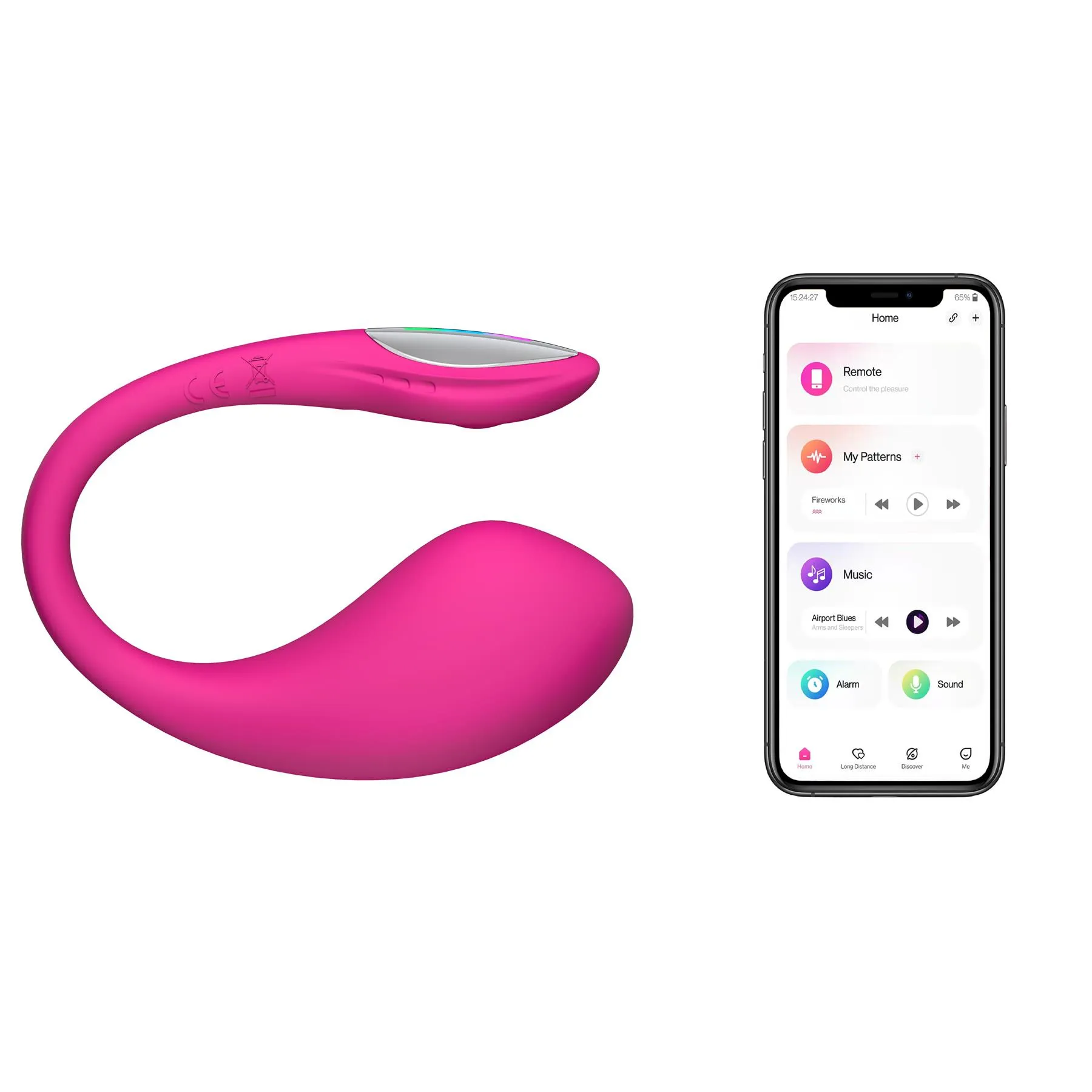
Start with the type of stimulation, size and controls you want. Then investigate noise for the exact model and generation. A review of an older generation should not automatically be treated as evidence for its replacement.
For example, the Lush 3 versus Lush 4 comparison can help you examine documented charging, battery and control differences. Those differences do not establish which model will be quieter in your room.
Avoid automatic rankings based on rechargeable versus replaceable batteries, silicone versus plastic, or air-pulse versus vibration. Those labels alone do not provide comparable acoustic measurements. A small device is not guaranteed quieter than a larger one.
Questions to send the seller
- Which exact model and generation was measured?
- How far was the microphone from the device?
- Which speeds and patterns were tested?
- What was the background noise level and room setup?
- Was the device held, on a surface or tested under another stated condition?
- Is a recording or full test method available?
A recording can provide context, but playback volume, microphone processing and your own speakers affect what you hear. Treat it as supporting information rather than a calibrated measurement.
Check the return policy before purchasing
Read the seller's current terms for your country and the exact product. Check whether opening the packaging changes eligibility, whether any satisfaction guarantee applies, and who pays return shipping. Do not assume that an ordinary return window permits trying an intimate product and sending it back.
If privacy is essential and the available evidence is insufficient, asking the manufacturer before ordering is a practical next step. There is no need to fill an evidence gap with an unsupported “quietest” recommendation.
After purchase
Use and maintain the device according to its own manual. If it develops an unfamiliar sound or appears damaged, consult the manufacturer's troubleshooting guidance rather than assuming that it is normal. Keep the model name and support information with your records; our storage guide includes a way to organize model-specific care information.
The useful buying decision is one you can explain: the product meets your feature needs, its noise evidence has clear limits, and its return terms are acceptable. A marketing label alone cannot settle those questions.
Source checked September 22, 2026: LELO's official SONA 2 Cruise product specification. No independent acoustic testing was performed for this guide.
Related reading
Beginner Sex Toys: 8 Best Vibrators for First-Timers