
Quiet Vibrator Guide: The Quietest Vibrators Measured in Decibels
Find the perfect quiet vibrator with our decibel-tested guide. We measured the quietest vibrators on the market for truly discreet pleasure.
 Zoe Clarke
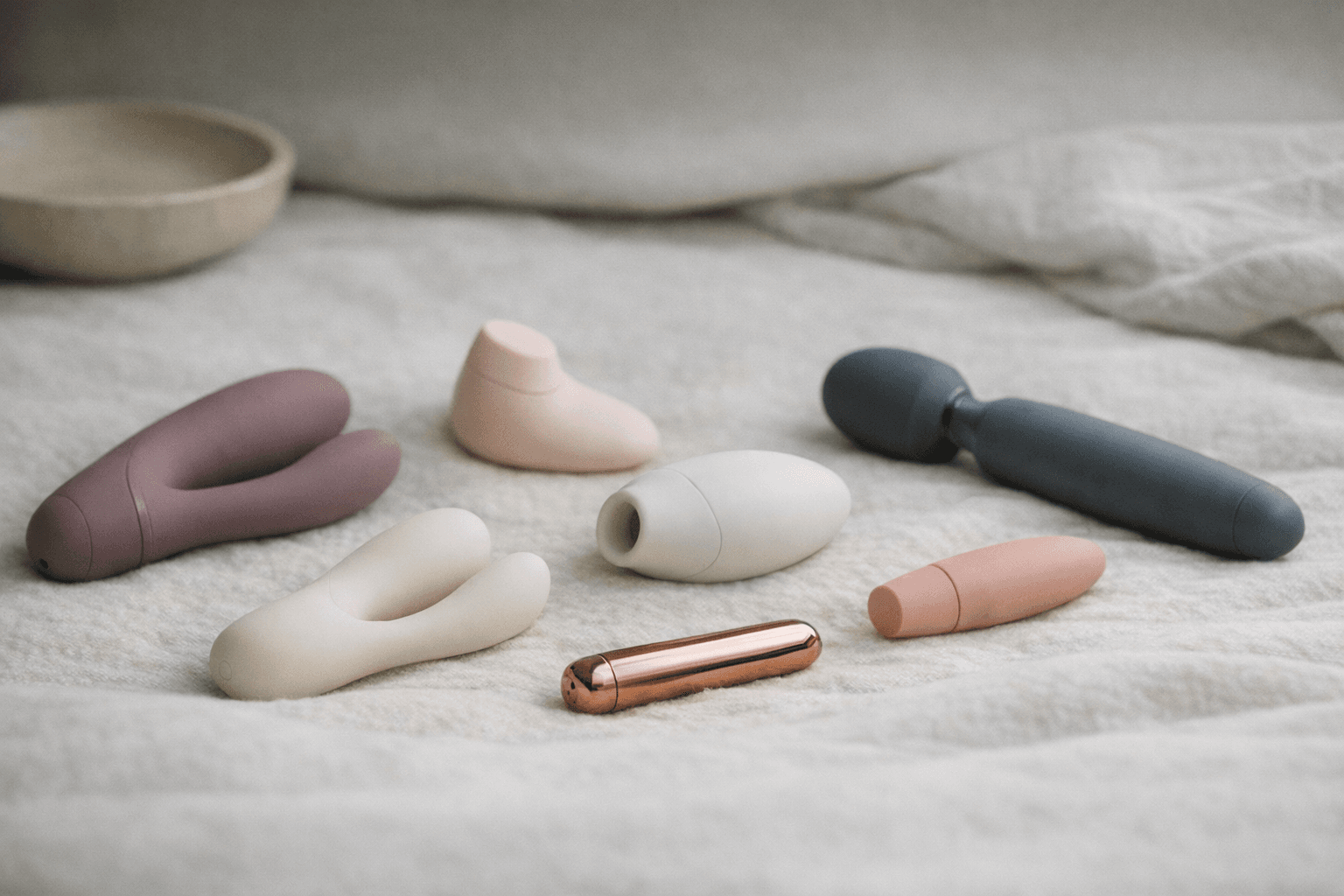
Why Noise Levels Matter in Vibrators
The first time someone in my group chat sent me a rose toy TikTok with the caption "is this real," I assumed it was a joke. The rose was sitting next to a salad dressing bottle on a kitchen counter and the angle was specifically chosen to be unreadable. Nobody mentioned whether it sounded like a lawnmower.
Here's the thing: most vibrator guides skip noise entirely. They'll tell you about motors, materials, and battery life — but not whether your roommate will hear it through the wall. That's a problem, because for a lot of people, discretion isn't optional. Thin apartment walls, shared bedrooms, family visits — the scenarios where a loud vibrator becomes a liability are endless.
A truly silent vibrator operates at the level of low conversation in a library. We-Vibe products, for example, are designed to stay whisper-quiet even at full power. That's not marketing speak — it's the difference between a toy you can use anytime and one that sits in a drawer until the house is empty.
The good news: quiet doesn't mean weak. The We-Vibe Sync delivers powerful, rumbly vibrations while staying surprisingly discreet. Motor quality and design matter more than raw power when it comes to noise. A cheap bullet with a buzzy motor will always be louder than a well-engineered wand, even if the wand is twice as strong.
This guide breaks down what makes a silent vibrator actually quiet, how to evaluate decibel claims, and which picks deliver on the promise. If you've ever passed on a toy because you weren't sure about the noise level, here's how to choose without the guesswork.
Explore the quietest vibrators ranked by decibels. Find your perfect discreet pleasure toy with our comprehensive guide.
What is a Silent Vibrator?
A silent vibrator is a personal pleasure device engineered to produce minimal noise during operation. The difference between a standard vibrator and a truly silent one comes down to motor design, internal dampening, and build quality — not just marketing promises.
Understanding Decibel Levels in Vibrators
Decibels (dB) measure sound intensity. For context: a whisper registers around 30 dB, normal conversation sits at 60 dB, and a vacuum cleaner hits 70 dB. Most vibrators fall somewhere between 40–70 dB depending on speed settings and motor type.
Here's the practical breakdown:
- Under 40 dB: Virtually silent — quieter than a library, often described as "whisper-quiet"
- 40–50 dB: Quiet enough for shared living spaces — comparable to a refrigerator hum
- 50–60 dB: Noticeable but not disruptive — similar to background conversation
- 60+ dB: Loud enough to hear through walls on higher settings
The catch: most manufacturers don't publish actual decibel measurements. When a product claims to be "whisper-quiet," that's subjective marketing unless backed by numbers.
What Makes a Vibrator Quiet?
A vibrator qualifies as quiet when it combines three engineering elements:
- Brushless DC motors: These produce less friction noise than traditional motors
- Internal dampening materials: Silicone housing and shock-absorbing layers reduce vibration transfer to the outer shell
- Sealed construction: Gaps between components amplify sound; premium designs eliminate them
The Womanizer Vibe, for example, uses what the manufacturer calls "UltraWave Vibration" — low-frequency rumbly vibrations paired with harmonic resonances that deliver intensity without the high-pitched whine most people associate with vibrators.
If you're comparing options and noise is your primary concern, our guide on how to choose quiet vibrators walks through the decision tree most first-time buyers skip. For premium air-pulse options, the Womanizer vs LELO comparison breaks down which models run quietest.
Why Choosing a Quiet Vibrator Matters
The noise level of a vibrator isn't some nice-to-have feature — it's the difference between using your toy whenever you want and waiting until your roommate leaves for the weekend. A quiet vibrator means you don't have to plan your entire schedule around privacy.
Most people shopping for their first vibrator don't think about decibels until they turn the thing on and realize their bedroom shares a wall with their sister's. By then, you've already spent the money. The good news: whisper-quiet motors exist, and they don't cost significantly more than the loud ones.
Discretion in Shared Spaces
If you live with roommates, family, or a partner who isn't involved, a silent vibrator is non-negotiable. The difference between a 40-decibel toy and a 60-decibel toy is massive — 40 decibels is about as loud as a library whisper, while 60 decibels is normal conversation volume. One you can use with a closed door; the other requires a white noise machine and crossed fingers.
Quiet operation also matters for travel. Hotel walls are thin, and TSA agents have seen it all, but you still don't want your vibrator announcing itself through your luggage during a security check. Discreet toys give you freedom to use them anywhere, not just at home when no one's around.
Comfort and Focus During Use
A loud motor is distracting. It pulls you out of the moment and makes you hyper-aware of whether someone might hear. Quiet vibrators let you focus on what you're doing instead of listening for footsteps in the hallway.
Some people assume quiet means weak, but that's not how motors work. Powerful, rumbly vibrations are often quieter than buzzy surface-level ones. The We-Vibe Sync, for example, delivers strong vibrations while staying surprisingly quiet — it's designed specifically for couples use, where noise would ruin the entire point.
For more guidance on choosing a vibrator that fits your needs without the noise, check out How to Choose Quiet Vibrators Without the Guesswork.
Health and Wellness Benefits
Beyond discretion, vibrators in general offer real health benefits. Research shows they help widen blood vessels and promote blood flow in the pelvic floor muscles and genital region. In one study of 500 women who had anorgasmia for an average of 12 years, 93% were able to orgasm with the use of a vibrator.
A quiet vibrator makes it easier to incorporate these benefits into your routine without stress. If you're worried about noise, you're less likely to use the toy regularly — and that defeats the purpose of owning one in the first place.
How to Choose the Right Silent Vibrator for You
Picking a silent vibrator isn't about finding the one with the lowest decibel rating on paper — it's about finding the one that actually works for your body while staying under the noise threshold that matters to you. Most buyers overthink the features and underthink the basics.
Start With the Type of Stimulation You Want
Quiet doesn't mean weak. The motor design matters more than the size of the toy. Clitoral vibrators with air-pulse technology (like the Womanizer or LELO Sona) tend to run quieter than traditional buzzy bullets because they're not spinning a weight inside a plastic shell — they're pulsing air. If you want penetration, look for G-spot vibrators with rumbly motors rather than high-pitched buzzers. The rumble feels stronger and sounds quieter through walls.
Bullet vibes are hit-or-miss. Some are whisper-quiet; others sound like a dental drill. If you're buying online, check whether the product page mentions "whisper-quiet" or lists a decibel rating under 50dB. If it doesn't say, assume it's loud.
Material and Build Quality Affect Noise
Soft silicone dampens vibration noise better than hard plastic. A toy with a silicone outer layer will muffle the motor hum that leaks out of cheaper ABS plastic shells. Multi-speed settings let you start soft and build intensity based on your mood — lower speeds are always quieter, and for many people, they're enough.
For a deeper dive into what makes a vibrator genuinely discreet, check out How to Choose Quiet Vibrators Without the Guesswork. If you're considering the rose toy trend, our comparison of rose toys with tongue features covers which models run quietest.
Rechargeable vs Battery-Powered
Rechargeable motors are almost always quieter. Battery-powered bullets are convenient, but the motor design is usually older and louder. If you're serious about keeping noise down, skip the AA-battery options and go USB-rechargeable.
What to Ignore
Don't get distracted by the number of vibration patterns. Twelve patterns don't make a toy better — they make it harder to find the one setting you'll actually use. Focus on whether the toy has at least three steady speeds (low, medium, high) and whether the lowest speed is quiet enough for your situation.
Best Practices for Using Quiet Vibrators
A quiet vibrator is only as good as how you use it. Most first-time buyers focus on decibel ratings and forget that placement, lube, and charging habits all affect the noise floor. Here's what actually matters.
Start With the Right Lube
Water-based lube is your default. It's compatible with every toy material and won't degrade silicone surfaces. Friction is one of the biggest noise contributors — a dry toy rattles and hums louder than a well-lubricated one. If you're using a clitoral vibrator, a small amount goes a long way. For penetrative toys, be generous.
Silicone lube feels slicker and lasts longer, but it's incompatible with silicone toys. If you're not sure what your toy is made of, stick to body-safe materials and use water-based options. The wrong lube can damage the surface and create texture changes that increase vibration noise. For more details, see best lube for silicone toys.
Charge It Fully Before First Use
Rechargeable vibrators perform quieter at full charge. A low battery forces the motor to work harder, which increases vibration noise and reduces power consistency. Most toys take 1–2 hours to charge fully — check the manual or LED indicator.
If your toy doubles as a travel case (common with discreet models), store it charged. USB charging means you can top it off anywhere, but leaving it plugged in for days can degrade the battery over time. Charge it, unplug it, store it.
Clean It Every Time
Toy hygiene isn't optional. Residue buildup affects motor performance and can create friction noise. Use a toy-safe cleaner or mild soap and warm water. Avoid submerging non-waterproof toys — if the charging port isn't sealed, water can short the motor.
Dry it completely before storing. Moisture trapped in seams or charging ports can corrode internal components and increase vibration rattle. If you're cleaning a toy with texture or ridges, use a soft brush to get into the grooves.
A clean toy is a quiet toy — residue and moisture both increase friction noise.
Store It in a Case or Pouch
Dust and lint can get into motor vents and charging ports. Store your vibrator in a fabric pouch or hard case — many rechargeable models come with one. If yours didn't, a drawstring bag works fine.
Don't store toys touching each other, especially if they're different materials. Silicone and jelly rubber can react and degrade. If you're stacking toys in a drawer, separate them with cloth or keep them in individual pouches.
Use It on a Soft Surface
Hard surfaces amplify vibration noise. If you're using a toy on a bed, the mattress absorbs most of the sound. On a tile floor or wooden desk, the vibrations echo. If discretion matters, stay on soft surfaces — beds, couches, carpeted floors.
Pillows and blankets can muffle sound further, but don't cover the toy's motor vents. Overheating reduces performance and can damage internal components.
Know When to Replace It
Quiet vibrators don't stay quiet forever. Motor wear, battery degradation, and seal damage all increase noise over time. If your toy is noticeably louder than when you bought it, check for loose parts or cracks in the casing. Most rechargeable toys are designed to last hundreds of charges, but that's not infinite.
If the motor sounds grinding or rattling instead of humming, it's time to replace it. Don't try to repair a vibrator yourself — internal components aren't user-serviceable, and opening the casing voids any warranty. For disposal guidance, see how to dispose of a vibrator safely.
Common Mistakes When Choosing Quiet Vibrators
Most people who buy a quiet vibrator make the same mistake: they assume the marketing is honest. A product labeled "whisper-quiet" or "ultra-discreet" doesn't mean much when the manufacturer never measured it. The noise claim is just copy, and copy lies.
Trusting "Quiet" Labels Without Checking Reviews
If a product page says it's quiet but the reviews say it sounds like a lawnmower, believe the reviews. Real users don't have a marketing incentive. Look for mentions of "loud," "buzzy," or "my roommate heard it" in the one-star and three-star reviews — those are the honest ones. A product can be strong and still be loud, which defeats the purpose if you're trying to stay discreet.
Assuming Expensive Means Quiet
Price doesn't guarantee silence. Some premium vibrators use powerful motors that prioritize strength over discretion, and the result is a $150 toy that sounds like a blender. Budget picks can be quieter if they use simpler motors or better dampening materials. The how to choose quiet vibrators without the guesswork guide breaks down what actually matters at different price tiers — it's not always what you'd expect.
Ignoring Motor Type
Brushed motors are louder than brushless motors. Dual-function toys (vibration plus suction, for example) are almost always louder than single-function toys because they're running two mechanisms at once. If you're prioritizing silence, skip the combo toys and go for a single-function vibrator with a brushless motor. The feature list might look less impressive, but your walls are thin and your priorities are clear.
Choosing the Wrong Material
Hard plastic amplifies motor noise. Silicone dampens it. If you're comparing two toys with similar specs, the silicone-coated one will be quieter. This is basic physics, but most buyers don't think about it until they've already made the purchase. Body-safe silicone also has other benefits, but the noise reduction alone makes it worth considering.
Not Testing Before the Real Moment
Don't wait until you're trying to be discreet to find out how loud your vibrator actually is. Test it in the room where you'll use it, at the time of day when noise matters most. Close the door. Turn it on. Walk into the hallway. If you can hear it through the door, your roommate can too. If it's too loud, return it — most reputable retailers have a return policy for unopened or lightly used items.
Frequently asked questions
How quiet is "whisper-quiet" actually?
When manufacturers say "whisper-quiet," they usually mean the toy operates at the noise level of a low conversation in a library — around 40-50 decibels at full power. That's quieter than most electric toothbrushes. If your roommate is in the next room with the door closed, they're not hearing it.
The catch: "whisper-quiet" isn't a regulated term. Some brands use it for anything under 60 decibels, which is closer to normal conversation volume. If actual decibel measurements aren't listed, assume it's marketing language and check user reviews for real-world noise reports.
Do quiet vibrators have weaker motors?
Not necessarily. Motor quality matters more than volume. A well-engineered motor with good vibration isolation can be both powerful and quiet. Cheap motors are usually loud because they're cheap — loose parts rattle, plastic housings amplify sound, and the vibration transfers to the casing instead of staying focused.
Premium picks like We-Vibe products are designed to deliver strong vibration while staying discreet. The difference is in the build: better materials, tighter tolerances, and internal dampening that keeps the noise inside the toy.
How long does the battery last on a quiet vibrator?
Most rechargeable vibrators give you 60-90 minutes per charge, depending on the intensity setting you use. Lower settings stretch battery life; full power drains it faster. A single charge of the We-Vibe Sync vibrator provides up to 90 minutes of pleasure depending on the vibration mode used.
If you're using it for 10-15 minutes at a time, one charge can last you a week or more. If battery life is shorter than that, either the toy is old and the battery is degrading, or you bought a dud.
Can I use a silent vibrator in shared living spaces?
Yes, that's the entire point. Silent vibrators are built for apartments, dorms, and anywhere you share walls. The best ones operate at library-conversation levels — under 50 decibels — which won't carry through a closed door.
That said, if you're in a paper-thin apartment where you can hear your neighbor's phone vibrate, even a quiet toy might be audible. In that case, add a layer: use it under a blanket, turn on a fan, or play music. You're not trying to drown it out; you're just giving yourself a noise buffer.
How do I clean and maintain a silent vibrator?
Clean it after every use with warm water and mild soap, or use a toy cleaner designed for the material. For silicone toys, avoid silicone-based lube — it can degrade the surface over time. Stick with water-based lube instead. (More on that: Can You Use Silicone Lube With Silicone Toys?)
For storage, keep it in a cool, dry place away from direct sunlight. If your toy came with a case, use it — dust and lint love to cling to silicone. Don't store it touching other toys, especially if they're made from different materials. Some materials react with each other and degrade faster.
What's the difference between a bullet vibrator and a wand in terms of noise?
Bullet vibrators are usually quieter because they have smaller motors and less surface area to vibrate. Wands have bigger motors and larger heads, which means more potential for noise — but a well-built wand can still be quiet if the motor is isolated properly.
The trade-off: bullets are discreet and portable, but they don't deliver the same broad, rumbly vibration that wands do. If you want deep, powerful stimulation and low noise, you're looking at premium wands with good engineering. Budget wands are almost always loud.
Are app-controlled vibrators quieter than manual ones?
Not inherently. App control is about features, not noise level. Some app-controlled toys are quiet because they're premium products with good motors; others are loud because the Bluetooth module and motor are both cheap.
The app itself doesn't make the toy quieter — it just lets you change settings without pressing buttons. If discretion is your priority, check decibel ratings and user reviews, not whether it has an app.
Final Thoughts on Quiet Vibrators
The right silent vibrator doesn't announce itself — it just works. Whether you're in a shared apartment, traveling, or just prefer discretion, a genuinely quiet toy changes the entire experience. The decibel numbers matter, but so does the motor design, the material, and whether the manufacturer actually tested for noise instead of just slapping "whisper-quiet" on the box.
The best quiet vibrators — the We-Vibe Sync, the LELO Sona 2, the Womanizer Premium 2 — all share the same core trait: they're engineered for silence from the ground up, not retrofitted with foam padding and marketing copy. If a product doesn't list decibel levels or give you a real-world comparison (library conversation, refrigerator hum, rustling paper), treat the "quiet" claim with suspicion.
When I first started researching the difference between bullet vibrators and discreet wands, the internet was useless. Every guide treated the categories as interchangeable. They aren't. Bullets are small and often loud; wands are powerful and sometimes quieter than you'd expect. The key is knowing what you're actually buying — not what the product name implies.
If you're still narrowing down your options, our guide on how to choose quiet vibrators without the guesswork walks through the decision framework in more detail. For most people, the sweet spot is a rechargeable vibrator in the 40–50 dB range with a motor designed for air-pulse or sonic-wave stimulation. Those technologies are inherently quieter than traditional vibration motors, and they deliver results that justify the price.
The final thing worth knowing: quiet doesn't mean weak. The quietest vibrators on the market are also some of the most powerful, because the companies that care about noise reduction also care about motor efficiency, material quality, and user experience. You're not compromising when you choose a silent vibrator — you're just being smart about what matters.