
Best Lube for Silicone Toys: What's Safe to Use
Discover the best lube for silicone toys that's safe and effective. Learn which lubricants work perfectly and what to avoid for toy longevity.
 Zoe Clarke

Introduction
The best lube for silicone toys is almost always water-based. Your silicone toy cost more than your last three lunches combined, and the last thing you want is to wreck it with the wrong lube. The internet is full of conflicting advice — some say silicone lube is fine, others treat it like battery acid. Most first-time buyers assume expensive toys come with foolproof instructions, but half the time the box just says "use with lubricant" and leaves you guessing.
Here's the thing: silicone lube can bond with silicone toys and create a tacky, degraded surface that's impossible to fix. It doesn't happen to every toy every time, but when it does, your $80 vibrator turns into a sticky mess you can't return.
This guide walks through what actually works, what to avoid, and how to patch-test if you're not sure. If you're new to toys in general, check out what is a clit for a primer on anatomy basics — knowing how your body works makes picking the right products a lot easier. Most of the confusion around lube compatibility comes from outdated advice or people repeating what they heard without testing it themselves. We're clearing that up.
The short version: if your toy is silicone, reach for water-based lube first. If you want to experiment with silicone or oil-based options, do a patch test on an inconspicuous spot and wait 24 hours. That's the entire safety protocol, and it works.
Problem Statement
Most people don't realize they're damaging their toys until it's too late. You buy a $60 silicone vibrator, grab whatever lube is in the drawer, and three months later the surface feels tacky or weird. That's silicone-on-silicone degradation — and it's the single most common mistake beginners make.
The issue is that silicone lubricant and silicone toys bond at a molecular level. They don't just mix poorly; they actively break each other down. The toy's surface gets sticky, loses its smooth finish, or develops a rough texture that won't wash off. Once that happens, the toy is done — you can't reverse it.
The Misconceptions That Make It Worse
A lot of people assume "silicone is body-safe, so silicone lube must be fine." That's true for your body, but not for your toys. The material compatibility issue has nothing to do with safety and everything to do with chemistry. Silicone toys are cured polymers; silicone lube is liquid silicone. When they meet, the liquid can break down the cured surface.
Another myth: "I'll just use a tiny bit of silicone lube and it'll be fine." Volume doesn't fix the problem. Even a small amount can cause surface degradation over repeated use. And because the damage is gradual, you won't notice it immediately — which is why people keep doing it until the toy is ruined.
Some manufacturers will tell you their silicone lube is "toy-safe" or formulated to work with silicone toys. That's marketing, not chemistry. The safest move is to avoid the combination entirely unless the toy manufacturer explicitly states their product is compatible with silicone lube — and even then, water-based is still the safer default.
What People Get Wrong About "Safe" Alternatives
On the flip side, people assume any water-based lube is automatically safe. Most of the time, that's true — but cheap water-based lubes with glycerin or parabens can still cause issues, not with the toy itself, but with your body. Glycerin-based formulas are known to trigger yeast infections in some users, and parabens are a common irritant.
Oil-based lubes get dismissed as universally bad, but the real rule is more specific: don't use oil-based lube with latex or certain rubbers. Pure silicone toys are fine with oil-based formulas, but if your toy has any mixed materials (like a silicone sleeve over an ABS plastic core), you're back in risky territory. And oil-based lubes are a pain to clean off, which creates its own hygiene problems.
The other thing nobody tells you: using the wrong lube doesn't just wreck the toy — it voids most warranties. If you contact customer service about a tacky surface or texture change, the first question they'll ask is what lube you used. If the answer is silicone, you're out of luck.
What Is the Best Lube for Silicone Toys?
Step 1: Default to Water-Based Lube
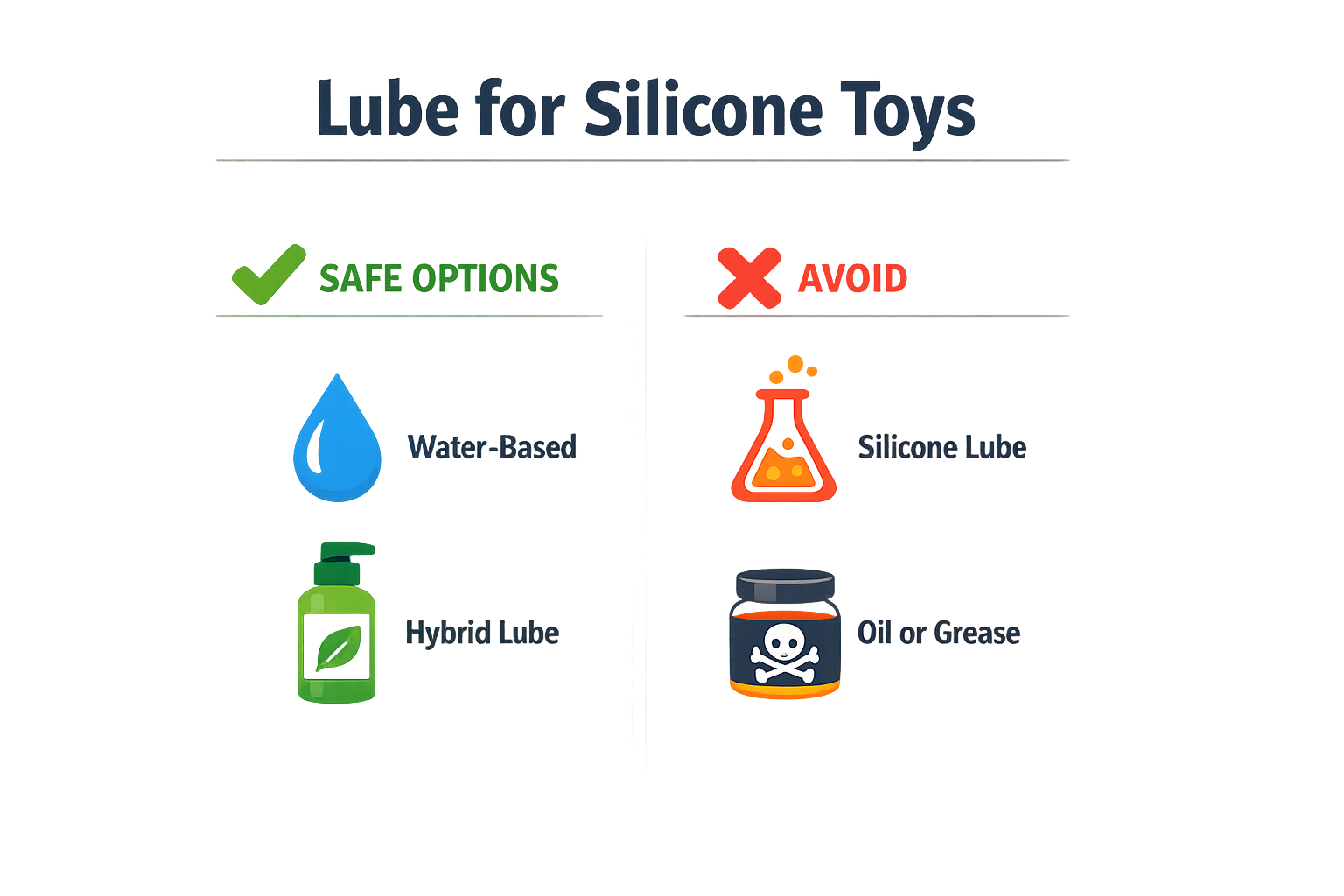
The short answer is water-based lube. That's the one that works with every silicone toy, every time, no patch test required. Water-based formulas don't interact with silicone surfaces — they stay slick, rinse clean, and won't degrade the material over time. Most manufacturers print "use with water-based lubricant" right on the box because it's the safest universal pick.
If you're shopping for your first toy or stocking up for a silicone collection, water-based is the default. It's not the fanciest option, but it's the one that won't cost you a $100 toy replacement.
Step 2: Avoid Silicone-Based Lube
Silicone-on-silicone is the combination that ruins toys. Silicone lube can bond with or degrade the silicone surface of your toy, leaving it sticky, tacky, or with a weird texture that doesn't wash off. Some people swear they've used silicone lube on silicone toys with no issue — and maybe they got lucky with a specific formula — but the risk isn't worth it when water-based works perfectly.
If you already own silicone lube and want to test it, do a patch test on a small spot near the base of the toy. Wait 24 hours. If the surface feels different, toss the combo. If it's fine, proceed carefully. But honestly, just skip the test and grab water-based.
Step 3: Check the Ingredient List
Not all water-based lubes are created equal. Some contain glycerin (which can cause yeast infections for some people), parabens (a preservative some prefer to avoid), or warming/cooling additives that feel great in theory but irritate in practice. If you have sensitive skin or a history of reactions, look for a formula labeled "glycerin-free" or "paraben-free."
You don't need a PhD in chemistry to pick a good lube — just read the back of the bottle. Fewer ingredients usually means fewer problems. If the list looks like a science experiment, put it back.
Step 4: Consider Hybrid Lubes (Water + Silicone)
Hybrid lubes combine water-based and silicone-based formulas — they're mostly water but include a small amount of silicone for extra glide. The silicone percentage is low enough that most hybrids are safe for silicone toys, but not all of them. Check the label. If it says "safe for silicone toys," you're good. If it doesn't say that, assume it's not.
Hybrids last longer than pure water-based lubes (you won't need to reapply as often), but they're also harder to wash off. If you want something that feels more luxurious than standard water-based without the silicone-toy risk, a hybrid is worth trying — just confirm compatibility first.
Step 5: Keep a Backup Bottle
Water-based lube dries out faster than silicone lube, especially during longer sessions. Keep a backup bottle nearby so you're not scrambling mid-use. Reapplication is normal — it's not a sign you picked the wrong lube, it's just how water-based formulas work.
If you're using clit suckers or other air-pulse toys, you might not need lube at all — those work through suction, not friction. But for insertable silicone toys or anything with a lot of surface contact, plan to reapply every 10-15 minutes. For more guidance on choosing the right stimulation type, check out our guide to clit stimulators.
Step 1
Start with water-based lube
This is the universal safe option for all silicone toys. No patch test, no risk, no second-guessing.
Step 2
Skip silicone-based lube
Silicone-on-silicone can degrade toy surfaces. If you want to test it anyway, do a 24-hour patch test on a hidden spot.
Step 3
Read the ingredient list
Avoid glycerin and parabens if you have sensitive skin. Fewer ingredients = fewer problems.
Step 4
Try a hybrid if you want longer glide
Hybrid lubes (water + silicone) work for most silicone toys, but confirm the label says "safe for silicone toys."
Step 5
Keep a backup bottle handy
Water-based lube dries out — reapplication is normal and expected.
Tips and Tricks
Once you've picked the right lube, the next step is keeping your silicone toys in good shape. Most people skip this part — they assume clean and dry is enough. It's not.
Store toys properly after cleaning
Cardboard and certain plastics harbor bacteria, so if you don't clean your toy before putting it away, it's going to get funky. The container your toy came in works fine as long as the toy is fully clean and dry first. If you're storing multiple toys together, keep them separated — silicone can react with other materials over time, especially if there's any residue left on the surface.
Use unscented soap for cleaning
Warm water and unscented soap is the default. Scented soaps can mess with your body's pH balance and cause irritation, which defeats the purpose of keeping things clean. If you're not sure whether your toy is waterproof, use a spray-on toy cleaner or mild soap on a damp cloth instead of submerging it.
Don't mix materials
Silicone lube and silicone toys don't mix. Oil-based lubes don't mix with latex or petroleum-based rubbers. Water-based lube is the safe default for everything. If you're using multiple toys in one session, clean between uses or use a fresh condom on each toy to avoid cross-contamination.
Clean before and after sharing
If you're sharing a non-porous toy with a partner, clean it thoroughly before use. You can sanitize waterproof silicone toys by boiling them (if they don't have a motor) or wiping them down with diluted rubbing alcohol, then rinsing super thoroughly. Most toys will tell you what cleaning method is safe — check the packaging or the manufacturer's site.
Frequently asked questions
Can I use silicone lube with silicone toys?
No. Silicone lube can degrade silicone toy surfaces over time, creating a sticky or tacky texture that won't wash off. The best lube for silicone toys is water-based — it's compatible with all toy materials and won't cause damage.
What happens if I accidentally use silicone lube on a silicone toy?
If it's a one-time use, wash the toy immediately with warm water and unscented soap. The damage is usually cumulative, so a single exposure might not ruin it. Going forward, switch to water-based lube to prevent surface degradation.
Are hybrid lubes safe for silicone toys?
Most hybrid lubes (water + silicone blends) are safe for silicone toys, but not all. Check the product label — if it says "safe for silicone toys," you're good. If it doesn't specify, assume it's not compatible and stick with pure water-based.
How often should I reapply water-based lube?
Water-based lube dries out faster than silicone or oil-based formulas. Plan to reapply every 10-15 minutes during longer sessions. Keep a backup bottle nearby so you don't have to pause mid-use.
Can I use oil-based lube with silicone toys?
Yes, but only if the toy is pure silicone with no motors or mixed materials. Oil-based lubes are incompatible with latex and certain rubbers, and they're harder to clean off. For most users, water-based lube is the simpler, safer choice.
Conclusion
The right lube makes all the difference — and when you're using silicone toys, the wrong one can wreck them. Water-based lube is the safe default: it works with every toy material, cleans up easily, and won't degrade silicone over time. If you want something longer-lasting, hybrid lubes (water-silicone blends) can work, but test them first on a small patch near the base of your toy. Oil-based lubes are fine for pure silicone, but they're messy and incompatible with latex barriers, so they're rarely worth the hassle.
Here's the thing nobody tells you: most silicone toy damage happens because people skip the patch test or assume "a little silicone lube won't hurt." It will. The surface goes tacky, then gummy, and there's no fixing it. Stick to water-based, and you'll never have that problem.
If you're exploring different types of stimulation, our guide to tongue vibrators covers another category worth considering. The best lube for silicone toys is the one that keeps them intact and your experience smooth. Water-based does both.