
DIY Sex Toy Cleaner: What's Safe and What Isn't
Learn what's safe and what's not when making your own DIY sex toy cleaner. Get the facts on homemade solutions that work and those that damage toys.
 Zoe Clarke
Introduction
The group chat is split on sex toy cleaners. Half swear by the $15 bottles with the clinical-sounding names. The other half rinse with hand soap and call it a day. Here's the thing: both camps are kind of right, and both are kind of overthinking it.
DIY sex toy cleaner isn't about cutting corners — it's about knowing what actually works and skipping the markup on products that do the same job as what's already under your sink. The internet is full of conflicting advice, from boiling silicone dildos to dunking everything in rubbing alcohol. Some of it's solid. Some of it will wreck your toy or irritate your body.
This guide covers what's safe, what isn't, and how to clean your toys without buying a dedicated product every time. If you're new to clit stimulators or any other toy category, understanding basic cleaning is part of the learning curve — it's not complicated, but it matters more than most first-time buyers realize.
Problem Statement
Commercial toy cleaners aren't the problem — the problem is that most people don't buy them. They're $12–$20 a bottle, they run out fast, and nobody remembers to reorder until they're mid-session and realize the toy they want to use has been sitting in a drawer for three weeks.
So people improvise. And that's where things get messy.
What Happens When You Skip Cleaning
The logic makes sense: it's your own body, your own bacteria, so what's the big deal? Here's the thing — when bacteria from your body sits on a toy for days, it doesn't just hang out politely. It mixes with dust, pet hair, and whatever else is in your nightstand drawer. If you leave dried bodily fluids on a toy and then use it again, you're reintroducing old bacteria into a fresh environment.
The risk goes up if you share toys with a partner. Unclean toys can transmit STIs between partners, even if you're both tested and monogamous. The toy becomes the vector.
The DIY Temptation (and Why It's Risky)
When you don't have a dedicated cleaner, the next move is usually whatever's under the sink. Hand soap. Dish soap. Rubbing alcohol. Bleach solution. Vinegar. Most of these won't wreck your toy, but some will — and more importantly, some will wreck you.
Perfumed soaps can upset your vaginal pH and cause irritation. Harsh chemicals can leave residue that burns or causes allergic reactions. And if you're using the wrong cleaner on the wrong material, you can degrade the toy itself — silicone can get sticky, porous materials can trap bacteria, and motors can corrode.
The appeal of DIY is obvious: it's cheap, it's immediate, and you already own the ingredients. The risk is that most people don't know which ingredients are safe for which toys, so they guess — and guessing with something that goes inside your body is a bad plan.
Solution Steps for Creating Your Own Cleaner
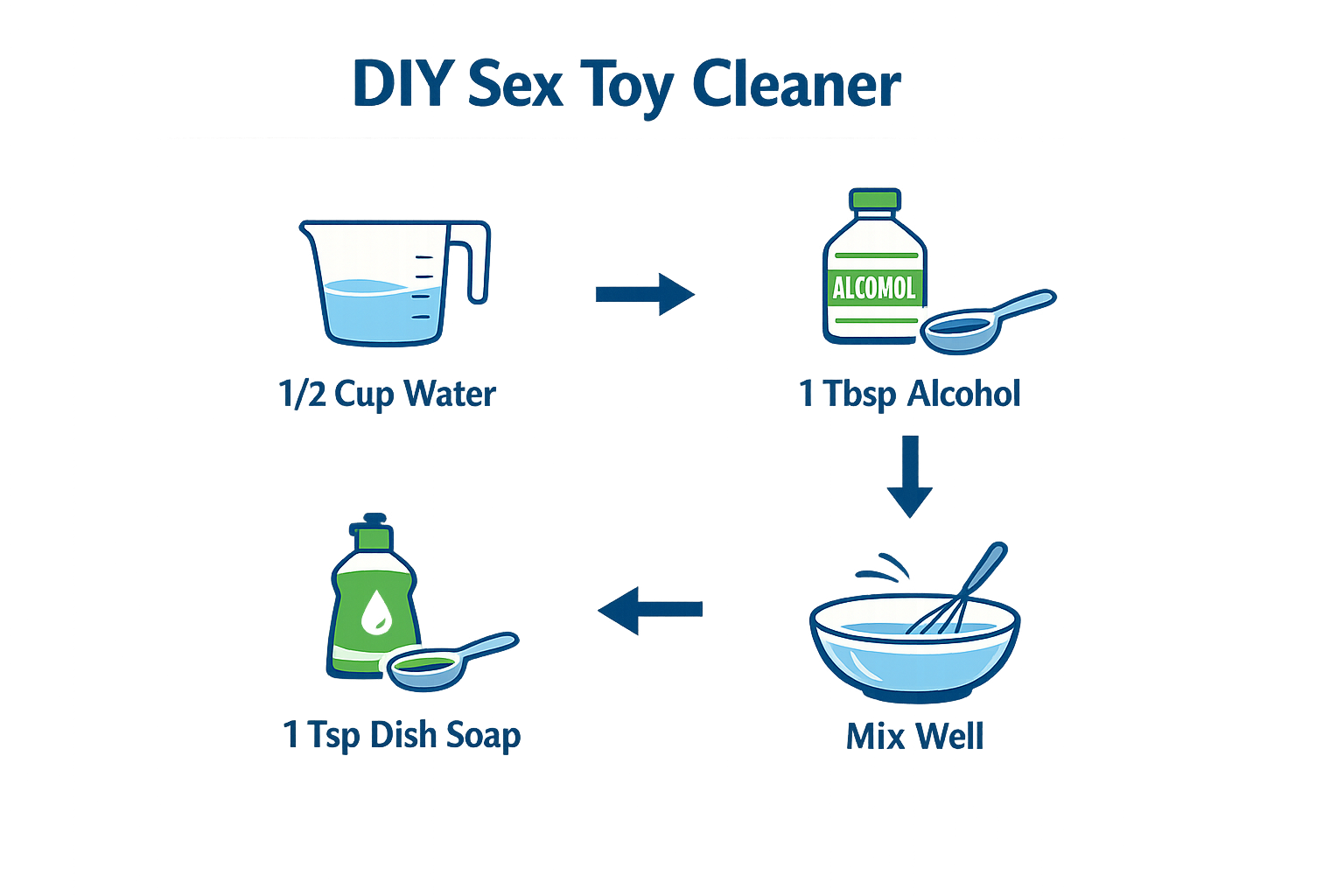
Most people overthink this. A safe DIY sex toy cleaner doesn't require a chemistry degree — just warm water, mild soap, and about thirty seconds of your time.
The Basic Formula: Warm Water and Mild Soap
The simplest and most effective DIY cleaner is warm water mixed with a few drops of unscented, gentle liquid soap. Think dish soap or hand soap without fragrance, dyes, or antibacterial additives. The mechanics of soap and water — the physical act of rubbing the toy to dislodge bacteria — matter more than the soap's active ingredients.
Step 1
Mix your solution
Fill a clean bowl or sink with warm (not hot) water. Add 2–3 drops of unscented liquid soap. Swirl to mix — you don't need bubbles, just a light soapy solution.
Step 2
Wash the toy
Submerge the toy (or wipe it down if it has a motor) and gently rub all surfaces with your hands or a soft cloth. Pay attention to textured areas, seams, and any ridges where fluids can collect.
Step 3
Rinse thoroughly
Rinse under warm running water until all soap residue is gone. Soap left on a toy can irritate skin or degrade certain materials over time.
Step 4
Dry completely
Pat dry with a clean towel or let air-dry on a clean surface. Don't store a damp toy — moisture invites bacteria and mold.
When to Use Diluted Rubbing Alcohol
For non-porous, waterproof toys (silicone, glass, stainless steel) that you're sharing or want to sanitize beyond a basic wash, you can use diluted rubbing alcohol. Mix one part 70% isopropyl alcohol with one part water. Wipe the toy down, then rinse thoroughly with warm water. This step is optional for solo use — warm soapy water handles routine cleaning just fine.
What About Boiling?
Boiling works for non-motorized, non-porous toys (solid silicone, glass, stainless steel). Submerge the toy in boiling water for 3–5 minutes. This sanitizes the surface and is the go-to method if you're sharing toys without a condom. It's overkill for solo use, but it's an option if you want that level of clean.
The One Rule That Overrides Everything Else
Don't mix materials and cleaning methods you're unsure about. If you're not certain whether your toy is silicone or TPE, or whether it's waterproof, default to warm soapy water and a gentle wipe-down. That method works on nearly everything and won't damage anything.
For more on keeping your toys in good shape, check out our guide on Clit Suckers: How Pleasure-Air Toys Work & Top Picks — those toys have similar cleaning requirements and benefit from the same simple routine.
Tips and Tricks for Safe Use
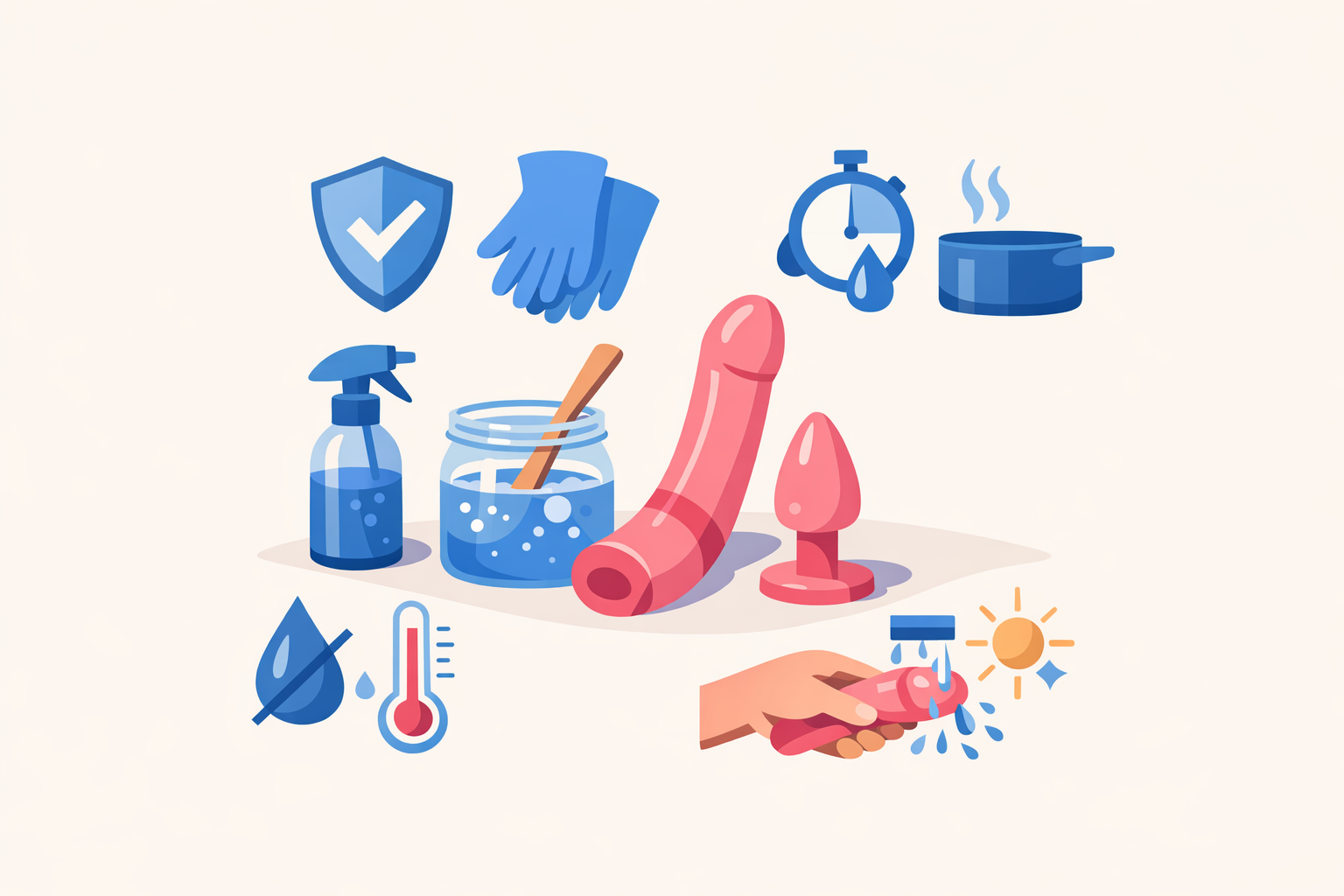
Once you've mixed your DIY cleaner, the actual cleaning process matters as much as the formula. Most people skip the drying step or use the wrong cloth — both mistakes that can leave residue or fibers behind.
Clean After Every Use
This one sounds obvious, but it's the rule most beginners skip. Clean your toy immediately after use with warm water and your DIY soap solution. Don't let it sit overnight — dried fluids are harder to remove and can degrade certain materials over time.
If you're sensitive to infections or irritation, some users on Reddit recommend using whatever unscented soap you already use on your own body. The logic: if it doesn't irritate your skin, it's less likely to cause problems on your toy.
Dry with the Right Material
After rinsing, dry your toy with a paper towel or a lint-free cloth. Regular towels can leave behind fibers that end up in places you don't want them — especially with textured toys or anything that goes internal.
Store Clean and Dry
Once your toy is completely dry, store it in a clean pouch or case — not loose in a drawer where it can pick up lint, dust, or contact other materials. Silicone toys stored against certain plastics can degrade over time, a process called material migration.
For toys with motors or charging ports, make sure no water got into the seams during cleaning. If you're unsure, let it air out for an extra hour before storing.
When to Skip DIY and Buy Commercial
If you're dealing with porous materials like jelly or TPE, or if you share toys between partners, a commercial toy cleaner with antimicrobial properties is the safer bet. DIY soap solutions work for most solo silicone use, but they're not formulated to handle higher-risk scenarios.
For more on choosing toys that are easier to clean in the first place, check out our guide on clit stimulators — material matters more than most beginners realize.
Conclusion
The thing about DIY sex toy cleaners is that most of them don't work better than what you already have — and some of them cause real damage. Mild, unscented soap and warm water is the baseline answer for most toys, and it's the one manufacturers actually recommend. If you're looking for something stronger, buy a commercial cleaner designed for the material you're working with — they're cheap, they're tested, and they don't leave residue that burns later.
The bigger takeaway: cleaning your toys matters more than what you clean them with. Bacteria doesn't care if you used dish soap or a $12 spray — it cares whether you actually washed the thing and let it dry before you put it away. If you're skipping the cleaning step entirely, switching to a fancier DIY recipe isn't going to fix the problem.
If you're new to toys in general and trying to figure out what's worth the effort, check out our guide on clit stimulators — it's a solid starting point for understanding what you're actually cleaning and why it matters. Most first-time buyers overthink the accessories and underthink the basics, and cleaning is one of those basics that actually protects your investment.
Bottom line: if your toy came with care instructions, follow those. If it didn't, default to mild soap and water, skip anything with fragrance or alcohol unless the manufacturer explicitly says it's safe, and store your toys dry. That's the whole playbook.
Learn what's safe and what's not when making your own DIY sex toy cleaner.