
Flavored Lube: What to Know Before You Buy
Learn what to know before you buy flavored lube, including types, ingredients, and tips for first-time users seeking safer oral sex products.
 Zoe Clarke
Introduction
Flavored lube is one of those products that sounds like a good idea until you're standing in front of a wall of strawberry, watermelon, and "birthday cake" bottles wondering what any of this actually tastes like — and whether it's safe to put anywhere near your body. Most first-time buyers assume flavored lube is just regular lube with a flavor added, which is technically true but misses the point entirely. The real question isn't what flavor to pick; it's whether the product you're buying is designed for oral sex, safe for your anatomy, and doesn't taste like you're licking a chemistry set.
The category has exploded in the past few years, partly because oral sex products went mainstream and partly because TikTok decided flavored lube was funny. A 2012 National Survey of Sexual Health and Behaviour found that 65.5% of women and 70% of men used lubricants to make sex more comfortable and pleasurable — and while that study didn't break out flavored specifically, the flavored segment has grown significantly since then. The problem is that most buyers treat it like buying candy: they pick a flavor, buy the cheapest bottle, and hope for the best.
Flavored lube is a type of personal lubricant that can be water-, silicone-, mineral oil-, or plant oil-based, and is formulated to add taste during oral activities. It's not a gimmick — when you find one that works, it genuinely makes oral sex more enjoyable for the giver, which is the whole point. But the category is full of products that taste terrible, leave a sticky residue, or contain ingredients that shouldn't go anywhere near mucous membranes. If you want something that actually works, you need to know what to look for before you buy.
This guide walks through the real considerations: what types of flavored lube exist, which ingredients to avoid, and how to pick one that won't give you a yeast infection or taste like expired cough syrup. For more foundational anatomy context, see our guide on What Is a Clit? Anatomy, Function, and Pleasure Guide. The goal here is simple: help you buy a flavored lube that does what it's supposed to do without making you regret the purchase three minutes into using it.
The Problem with Choosing Flavored Lube
The category is a mess. Walk into any drugstore or scroll through Amazon, and you'll see twenty different flavored lube options — strawberry, watermelon, mint chocolate, cake batter — with zero explanation of what actually matters. Most first-time buyers pick based on flavor name alone, then wonder why the experience didn't match the packaging.
The Real Issues Nobody Mentions
Here's what most product pages skip: flavored lube is marketed to enhance oral sex, which means the product goes in your mouth and on sensitive tissue. That dual-use creates a conflict most brands don't solve well. The same ingredients that make a lube taste like birthday cake — usually sweeteners and flavor compounds — can throw off vaginal pH, cause irritation, or leave a sticky film that's the opposite of what lube is supposed to do.
The other problem is that "flavored" doesn't mean "tastes good." It means "tastes like something other than silicone or glycerin." Some products taste vaguely like the fruit on the label. Others taste like you licked a scented candle. There's no regulatory standard for what counts as "strawberry flavored," so quality control is all over the place.
Why Ingredient Lists Are Useless to Beginners
Most flavored lubes list glycerin, propylene glycol, or sorbitol high on the ingredient panel. Those are humectants — they pull moisture and create slip. They also taste sweet, which is why they show up in flavored formulas. The problem: glycerin can feed yeast, and high-osmolality formulas (which many flavored lubes are) can irritate vaginal tissue.
But unless you already know what osmolality means or have a working knowledge of which preservatives are pH-friendly, the ingredient list tells you nothing useful. You're left guessing whether "natural flavors" means actual fruit extract or lab-synthesized vanillin, and whether parabens in this context are a dealbreaker or a non-issue.
The WHO recommends that personal lubricants stay under 1,200 mOsm/kg osmolality to minimize epithelial damage, but most commercial lubes — flavored ones especially — blow past that threshold. You won't find osmolality listed on the bottle, and most retailers don't publish it either.
The Expectation vs. Reality Gap
People buy flavored lube expecting it to make oral sex taste better and feel smoother. What they often get is a product that tastes artificial, gets sticky after 30 seconds, or causes a burning sensation that kills the mood. The gap between marketing ("Delicious strawberry flavor!") and experience ("This tastes like cough syrup and now I'm itchy") is wide, and most buyers don't know how to close it before they buy.
If you're trying to choose a clit stimulator or another toy for partnered play, adding flavored lube to the mix without understanding what you're actually buying just adds another variable that can go wrong.
Steps to Choose the Right Flavored Lube
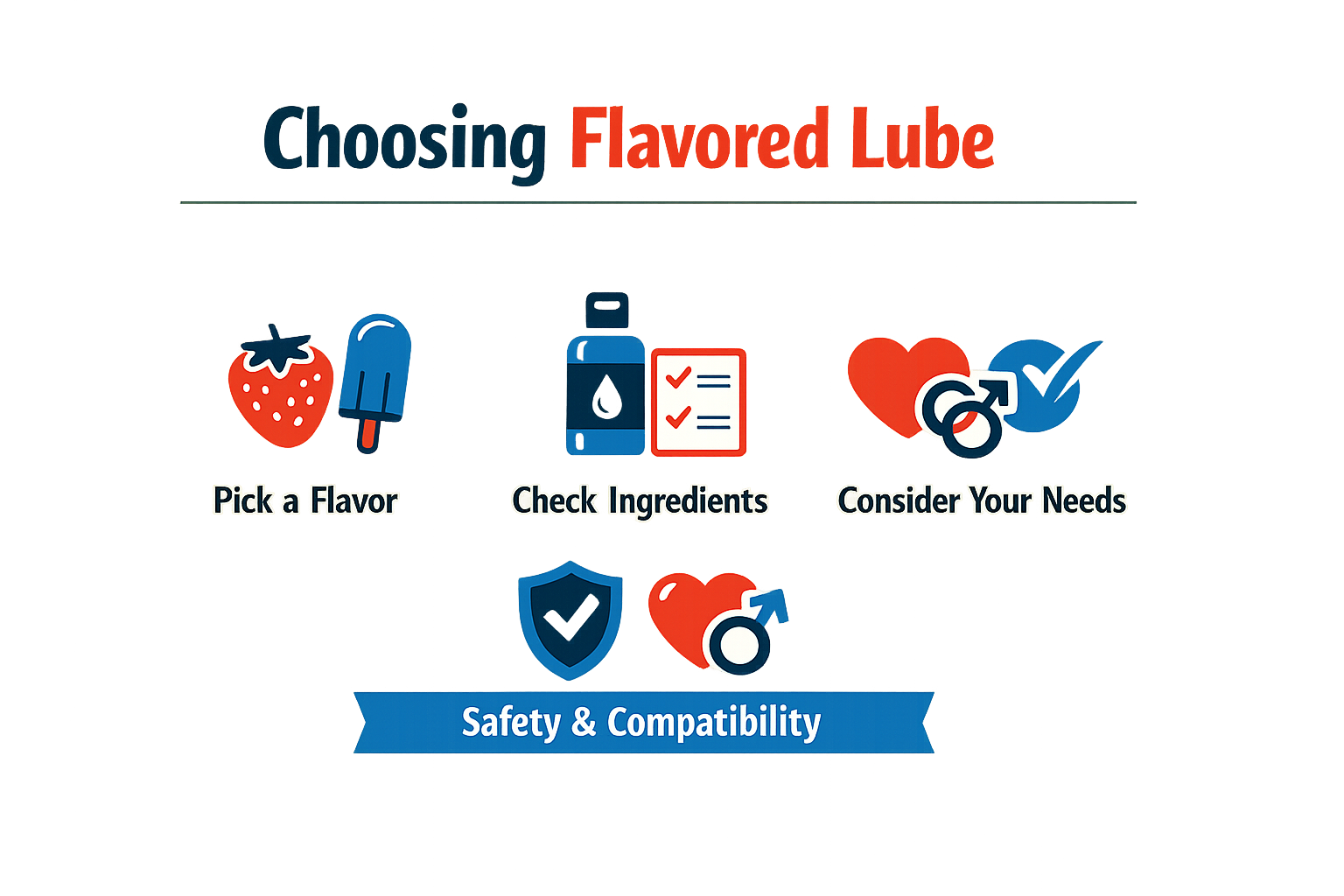
Choosing flavored lube doesn't need to be complicated. Most first-time buyers overthink it — you don't need a PhD in chemistry, just a few practical checkpoints. Here's what actually matters.
Step 1: Check the Ingredient List for Glycerin
Step 1
Look for glycerin on the label
Glycerin shows up in a lot of flavored lubes because it adds sweetness and texture. For some people, that's fine. For others — especially those prone to yeast infections — glycerin can be a problem. If you've had issues with glycerin-based products before, skip it. If you're not sure, start with a glycerin-free option.
Reddit's r/SexToys community flags this one constantly: "If it had glycerin there's a good chance that's the culprit" is the standard reply when someone reports irritation. It's not a universal dealbreaker, but it's worth knowing before you buy.
Step 2: Understand Water-Based vs. Silicone-Based
Most flavored lubes are water-based. They're compatible with condoms and toys, easy to clean up, and generally safe for oral use. Silicone-based lubes last longer and feel slicker, but they're harder to find in flavored versions — and they don't play well with silicone toys.
For oral sex specifically, water-based is the default pick. It's what most brands formulate for flavor, and it wonashes off without leaving a residue.
Step 3: Avoid High-Osmolality Formulas
Osmolality measures how concentrated a lube is compared to your body's natural fluids. High-osmolality lubes can pull moisture out of tissue, which increases irritation and — in some cases — the risk of infection. Most brands don't list osmolality on the bottle, but it's a useful filter if you're comparing clinical-grade options or shopping from brands that publish their specs.
For flavored lubes marketed to beginners, this usually isn't front-and-center info. If a product feels sticky, dries out fast, or causes stinging, osmolality is often the hidden culprit.
Step 4: Pick a Flavor You'll Actually Use
Strawberry, watermelon, mint — the options are endless, and most of them taste like candy more than the real thing. That's fine. The point isn't realism; it's making oral sex more enjoyable for the person doing it.
Start with one flavor. Don't buy a sampler pack until you know you like the base formula. A lot of first-time buyers end up with five half-used bottles because they bought variety before they figured out what worked.
If you want to explore options beyond lube, check out tongue vibrators — they pair well with flavored formulas and add another layer to oral play.
Step 5: Test for Sensitivity Before Full Use
Put a small amount on your inner wrist or forearm and wait 10–15 minutes. If you see redness, itching, or irritation, don't use it during sex. This is especially important for flavored lubes, which often include sweeteners, warming agents, or fragrance compounds that can trigger reactions.
Most people skip this step. Most people also end up with at least one "never again" product in their drawer.
Tips and Tricks for First-Time Buyers
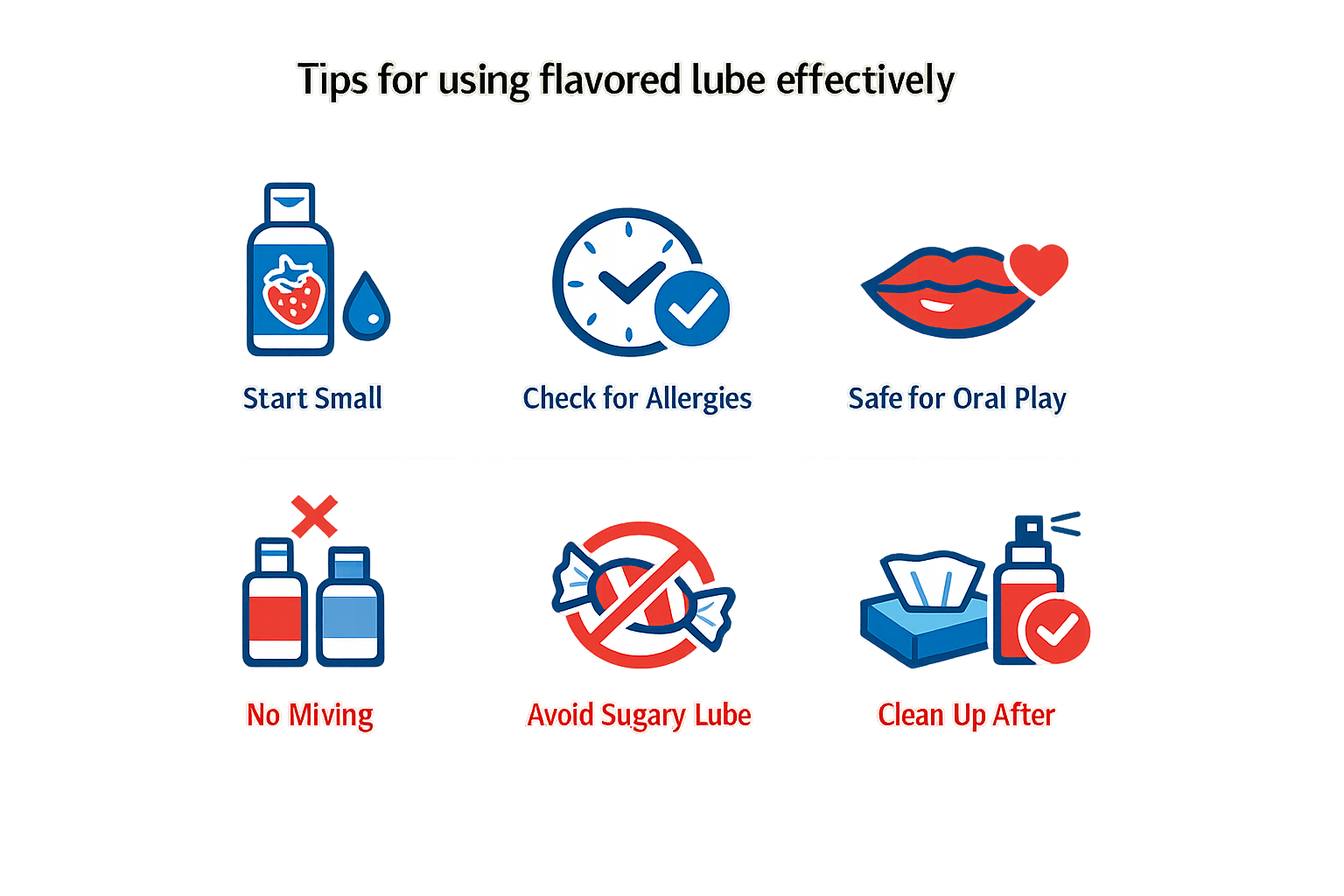
Most first-time buyers skip the boring stuff and regret it later. Here's what actually matters when you're trying flavored lube for the first time.
Start with a Small Amount
You don't need half the bottle. A dime-sized amount is plenty to start — you can always add more, but you can't take it back once it's everywhere. Water-based formulas in particular work better when you use less upfront and reapply as needed.
Test Before You Use It Where It Counts
Patch-test on a small area of skin first — inner wrist or forearm works. If you're using a silicone-based formula, test it on a less sensitive spot to make sure you don't have a reaction. Most people are fine, but the ones who aren't really wish they'd tested first.
Skip the Massage Oils and Hand Creams
This shouldn't need saying, but it does: don't use massage oils, hand creams, or anything not explicitly designed for intimate use. They're formulated for skin, not mucous membranes, and the ingredient list can cause irritation or worse. Stick to products labeled as personal lubricants.
Reapply as Needed
Water-based lubes dry out faster than silicone-based ones — that's normal. Keep the bottle nearby and reapply when things start to feel tacky. A quick dab of water can also reactivate water-based formulas without needing more product.
Know What You're Working With
Some flavored lubes contain glycerin or sweeteners, which can affect how they feel and how your body reacts. If you're prone to yeast infections or sensitivity, look for glycerin-free options. The ingredient list matters more than the flavor name on the front of the bottle.
If you're pairing flavored lube with toys, check out our guide to tongue vibrators for tips on combining oral-focused products.
Conclusion
Flavored lube isn't complicated once you strip away the marketing. Most of the category is water-based, most of it tastes better than it did five years ago, and most of the problems people run into come from buying the wrong base type or ignoring the ingredient list. If you're using it for oral sex, stick with water-based formulas that list ingredients you recognize. If you're using it with toys, check compatibility. If you have a history of yeast infections or sensitivity, skip anything with glycerin or a long list of sweeteners.
The biggest mistake first-time buyers make is overthinking it. You don't need to read clinical studies or compare osmolality charts — you need a product that tastes decent, doesn't cause irritation, and works with whatever else you're using. Start with a small bottle, test it on skin first, and don't assume expensive means better. Most of the time, the mid-tier pick from a reputable brand does exactly what you need it to do.
If you're exploring other beginner-friendly products, check out our guide to tongue vibrators for another oral-focused option that pairs well with flavored formulas.
Flavored lube is one of those categories where the hype doesn't match the complexity. Pick a water-based formula with a short ingredient list, buy it from a retailer that doesn't sell obvious knockoffs, and you're already ahead of most people who impulse-buy at checkout. The rest is just personal preference.