
How to Clean Sex Toys: Best Way to Clean Sex Toys
Learn how to clean sex toys properly based on their material. This guide covers silicone, glass, metal, and porous toys for safe, effective cleaning.
 Zoe Clarke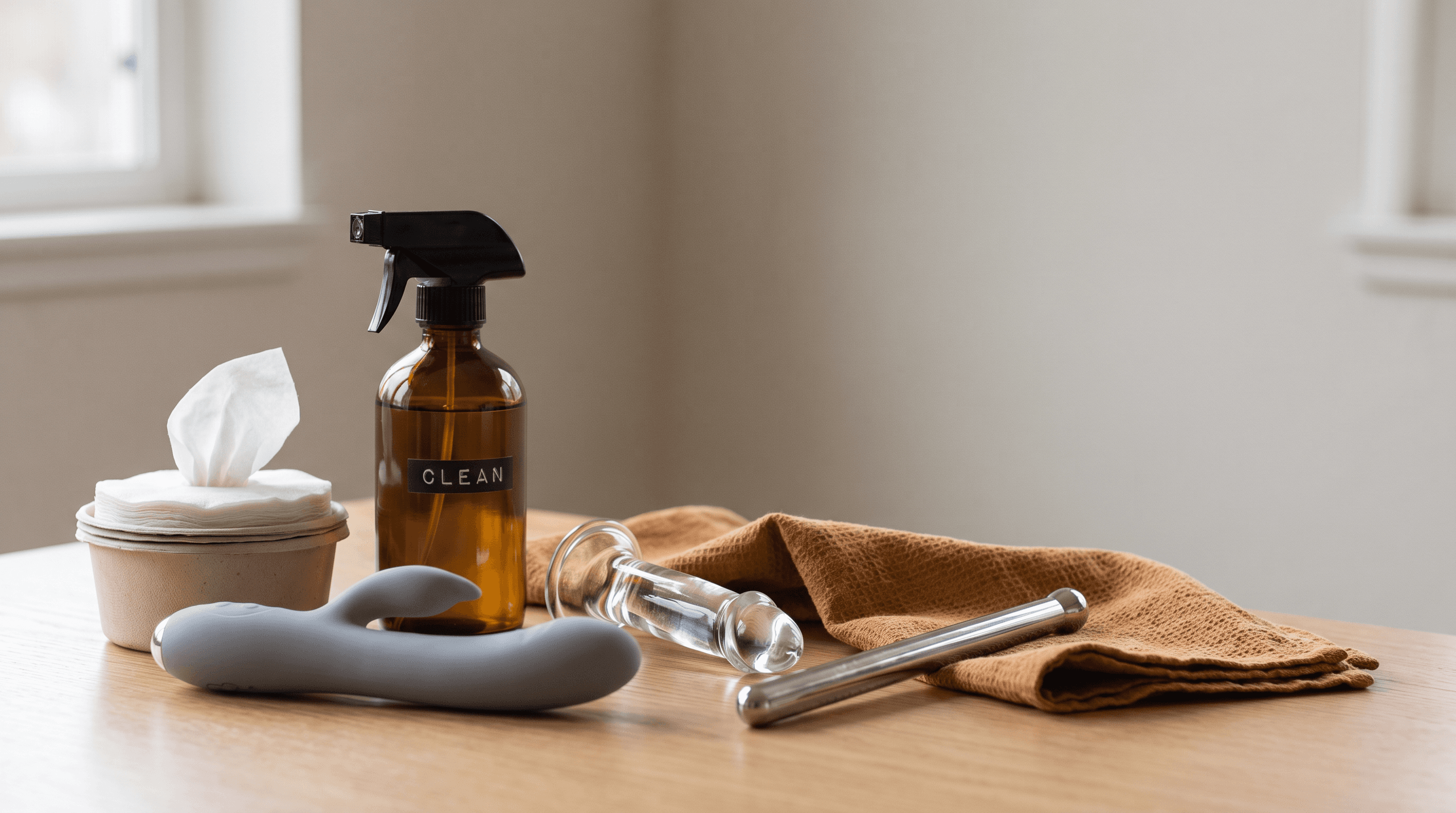
Introduction
The best way to clean sex toys starts with understanding one fact: your sex toy touches one of the most sensitive parts of your body. The idea that you can skip cleaning it — or that a quick rinse counts — is the kind of thing that sounds fine until it isn't. Infections from dirty toys are rare, but they're not zero-risk, and even if you're only using a toy on yourself, you're still dealing with bacteria, dust, pet hair, and whatever else is floating around your bedroom. Dried bodily fluids left on a toy for three days? That's not something you want anywhere near your vulva.
The thing most first-time buyers get wrong is assuming all toys clean the same way. They don't. Silicone can handle boiling water; jelly rubber will melt. Glass can go in the dishwasher; anything with a motor can't. The best clit stimulators and budget bullets alike need material-specific care, and this guide walks through exactly what that looks like for every common toy type.
This is the material-by-material breakdown you actually need: what to use, what to avoid, and how to keep your toys safe and functional for the long haul. No fluff, no vague "consult the manual" advice — just the specific steps that work.
Learn how to clean sex toys properly based on their material. This guide covers everything you need for safe and effective cleaning.
What Are Sex Toys?
Sex toys are objects designed for sexual pleasure — vibrators, dildos, plugs, strokers, rings, sleeves, wands, and everything in between. They come in every shape, size, and price point, from $10 bullet vibes to $200 rechargeable wands. What they all have in common: they touch your body, which means they need to be cleaned properly.
The material your toy is made from determines how you clean it, how long it lasts, and whether bacteria can actually live on it. Some materials are nonporous (safe, easy to sterilize), and some are porous (harder to clean, shorter lifespan). Knowing the difference is the entire point of this guide.
Common Sex Toy Materials
Most toys fall into one of these categories:
- Silicone — the gold standard. Medical-grade silicone is nonporous, hypoallergenic, and can be boiled or bleached. It's what you'll find in higher-end vibrators and most clit suckers.
- Glass and metal — also nonporous. Borosilicate glass and stainless steel are both body-safe and sterilizable. They're popular for dildos and plugs.
- Hard plastic and ABS — nonporous when the surface is intact. Common in budget vibrators and bullet vibes. Safe, but not boilable.
- TPE, TPR, jelly, and "skin-safe rubber" — porous materials. They can harbor bacteria even after washing. Found in cheaper toys and realistic strokers.
- Cyberskin, UR3, and other "realistic" materials — very porous. These require condoms for shared use and have a shorter safe lifespan.
The cleaning method that works for silicone will destroy a motorized vibrator. The soap that's fine for glass might degrade TPE. That's why the rest of this guide is organized by material — one size does not fit all.
Why Cleaning Your Sex Toys Matters
Most people treat cleaning sex toys like cleaning a coffee mug — rinse it, maybe use soap if you remember, call it done. That works for a mug. For something that goes in or on your body, it's not enough.
The short version: bacteria from your body stays on the toy after use. Leave it there, and you're giving dust, pet hair, and airborne bacteria a place to hang out. Use that toy again without cleaning it, and you're putting all of that back into your body. It's not a horror story — the risk of infection is low — but it's avoidable with thirty seconds of effort.
Hygiene Is the Baseline
Even if you're the only person using a toy, it still needs to be cleaned after every use. Your own bacteria is fine when it's on you — less fine when it's been sitting on a nightstand for three days. Dried bodily fluids, lube residue, and environmental dust create a surface that nobody should be putting back inside themselves.
If you share toys with a partner, the stakes go up. You can transmit STIs through shared toys, especially if you're moving a toy between bodies without cleaning or using a fresh condom. Non-porous toys (silicone, glass, metal) can be sanitized between partners. Porous toys (jelly rubber, TPE, some plastics) can't be fully sanitized — bacteria hides in the microscopic gaps — so those need a condom every time or shouldn't be shared at all.
Material Longevity
Cleaning also keeps your toys working longer. Residue buildup degrades certain materials over time — silicone can get tacky, motors can corrode if moisture seeps into seams, and some cheaper plastics will discolor or crack if you use the wrong cleaner.
Storing a toy dirty accelerates this. Cardboard boxes and some plastics harbor bacteria, so if you toss a toy back in its packaging without rinsing it first, you're creating a low-grade petri dish. Satin or cloth storage bags are better — they let the toy breathe and don't trap moisture.
Personal Health
The actual infection risk from a solo-use toy is low, but it's not zero. Yeast infections, bacterial vaginosis, and UTIs can all be triggered or worsened by reintroducing bacteria from an unwashed toy. If you're prone to any of those, cleaning becomes non-negotiable.
It's always a good idea to keep your toys clean for hygiene purposes — warm water and soap dislodge bacteria through friction, not antibacterial chemicals.
The best way to clean sex toys depends on the material, but the reason to clean them is universal: you're putting these things on mucous membranes, and mucous membranes are where infections start. Thirty seconds of soap and water after each use is the entire preventive protocol.
How to Clean Sex Toys: Step-by-Step Guide
Most toys follow the same basic cleaning routine — mild soap, warm water, done. The specifics change based on material (silicone handles more heat than TPE, glass can go in the dishwasher, etc.), but the general method works for everything from a $15 bullet to a $200 rabbit.
The Universal Cleaning Method
This works for any toy that isn't motorized or waterproof-rated below IPX7. If your toy has a motor, skip the submersion step.
Step 1
Rinse immediately after use
Warm water, no soap yet. Get the bulk of body fluids and lube off the surface before they dry. If you wait, water-based lube turns into a film that takes actual scrubbing to remove.
Step 2
Apply mild soap
Unscented hand soap or a dedicated toy cleaner. Use your hands — no sponges, no brushes. Work the soap into any textured areas, seams, or ridges where fluid can hide.
Step 3
Rinse thoroughly
Warm water again. Soap residue causes irritation, so rinse longer than you think you need to. If the toy is fully waterproof, hold it under running water for 20–30 seconds. If it has a motor, wipe it down with a damp cloth instead.
Step 4
Dry completely
Air-dry on a clean towel or pat dry with a lint-free cloth. Never store a toy while it's still damp — moisture trapped in storage grows mold, especially on porous materials.
When to Use Toy Cleaner vs. Soap
Toy cleaner isn't required, but it's faster. Dedicated toy cleaners dry quickly and skip the rinse step, which matters if you're cleaning a motorized toy that can't go under running water. Unscented hand soap works just as well for waterproof toys — the active cleaning agent is the same.
Some people clean before and after every use. It's overkill for solo toys stored in a clean case, but it's the safest routine if you're sharing toys between partners or using the same toy for different types of play.
What About Boiling or Dishwashers?
Those methods work — but only for specific materials. Boiling is for 100% silicone, glass, and stainless steel. The dishwasher is for glass and metal only, and even then, you need to run it without detergent (detergent leaves a residue). Save those methods for deep cleaning once a month; the soap-and-water routine handles daily maintenance.
The next section covers what not to do — because most cleaning mistakes happen when people assume all toys are the same.
Best Practices for Cleaning Sex Toys
Cleaning your toys isn't complicated, but a few habits make the difference between a toy that lasts two years and one that lasts ten. Most people get the basics right — soap, water, done — but skip the small steps that prevent buildup, protect motors, and keep storage from turning into a science experiment.
Clean After Every Use
This is the one rule that matters more than any other. Every single time. Even if you're tired, even if you're planning to use it again tomorrow, even if it "looks clean." Bacteria don't wait, and neither should you. Toys left unwashed become breeding grounds for irritation and infection — the kind that shows up as a low-grade annoyance you can't quite pin down.
Rinse immediately after use, then follow the material-specific cleaning method. If you can't do a full clean right away, at least rinse it off — that buys you time without letting anything set in.
Use the Right Soap
Unscented, mild soap is the default. Not "lightly scented lavender," not "refreshing citrus burst" — unscented. Perfumed soaps can upset your body's pH balance and cause irritation, especially if you're using the toy internally. Plain hand soap works. So does dish soap if it's the gentle kind. If you want to use a dedicated toy cleaner, fine — they dry fast and skip the fragrance — but they're not required.
Unscented soap is the safest bet for cleaning sex toys, as perfumed soaps can upset the body's pH balance and cause irritation.
Avoid anything labeled "antibacterial" unless it's specifically designed for toys. The additives in most antibacterial soaps aren't meant for mucous membranes, and they don't clean better than regular soap anyway.
Dry Completely Before Storing
Moisture is the enemy of long-term storage. Even a little bit of water trapped in a crevice or around a seam can turn into mold or mildew over time. After washing, pat the toy dry with a clean towel — preferably one that doesn't shed lint — and let it air-dry for a few minutes before putting it away.
For toys with textured surfaces or ridges, use a cotton swab to dry the grooves. For waterproof vibes with charging ports, make sure the port cover is completely dry before closing it.
Store in a Dust Bag or Dedicated Pouch
Dust bags aren't just fancy packaging — they actually do something. Storing your toys in a breathable fabric pouch keeps dust, lint, and pet hair off them, and prevents silicone toys from touching each other (which can cause them to degrade). If your toy didn't come with a bag, use a clean sock, a small drawstring pouch, or a dedicated storage box.
Don't store toys in sealed plastic bags long-term. They trap moisture and can cause bacterial growth. Breathable fabric is the goal.
Keep Toys Separated by Material
Silicone toys should never touch each other in storage — they can bond together or degrade at the contact point. Same goes for mixing silicone with jelly, TPE, or other soft materials. If you're storing multiple toys in one drawer, keep them in individual pouches or separated by dividers.
Glass, metal, and hard plastic can share space without issue, but anything soft or porous needs its own zone.
Check for Damage Before and After Cleaning
Run your fingers over the surface of the toy after washing. Look for nicks, tears, rough spots, or discoloration. Small tears in silicone can harbor bacteria even after cleaning, and rough spots on glass or hard plastic can scratch or irritate. If you find damage, retire the toy — it's not worth the risk.
For motorized toys, check that the charging port cover is intact and that the buttons still click properly. Water damage usually shows up as erratic motor behavior or buttons that stick.
Don't Skip the Pre-Use Rinse
Even if you cleaned your toy after the last use and stored it properly, give it a quick rinse before using it again. Dust happens. Lint happens. A 10-second rinse under warm water is cheap insurance.
Use Condoms for Shared Toys or Porous Materials
If you're sharing a toy with a partner, put a condom on it. Change the condom between uses. This applies to any toy that's going between bodies, even if you're fluid-bonded. For porous materials like jelly, TPE, or elastomer — which can't be fully sterilized — a condom is the only way to keep them hygienic.
Condoms also make cleanup easier. Peel it off, toss it, rinse the toy, done.
Replace Toys on a Schedule
Even well-maintained toys don't last forever. Silicone and glass can last a decade or more if cared for properly, but porous materials like jelly or TPE should be replaced every 6–12 months, even if they look fine. Motors wear out. Batteries degrade. If a toy starts smelling weird, feeling sticky, or behaving erratically, it's time.
For vibrating panties and other wearable toys with built-in electronics, pay extra attention to the seams and charging ports — those are the first places water damage shows up.
Common Mistakes When Cleaning Sex Toys
Most people clean their toys wrong — not because they're careless, but because the internet is full of bad advice that sounds plausible. The worst part? A lot of these mistakes don't show consequences immediately, so you keep doing them until the toy degrades or you get an infection.
Using the Wrong Products
The biggest mistake is reaching for whatever's under the sink. Household cleaners, rubbing alcohol, acetone-based nail polish remover, bleach — all of these will wreck your toys. They degrade silicone, cloud glass, and leave residues that are genuinely unsafe for mucous membranes.
Even "natural" alternatives can backfire. Vinegar is acidic enough to eat away at some finishes. Tea tree oil sounds body-safe but can irritate sensitive tissue. Stick to mild soap or a dedicated toy cleaner.
Skipping the Pre-Rinse
A lot of people soap up the toy first, then rinse. That traps bodily fluids under the soap, and you end up smearing bacteria around instead of removing it. Always rinse with warm water before you apply any cleaner — it's the difference between actually cleaning and just moving the problem around.
Boiling or Dishwashing Everything
Boiling works for 100% silicone, glass, and stainless steel — but only if the toy has no motor, no battery compartment, and no seams where water can get trapped. The advice to "just boil it" gets passed around like it's universal, and it's not.
If your toy vibrates, it doesn't go in boiling water. If it has a charging port, it doesn't go in the dishwasher. This shouldn't be controversial, but here we are.
Not Drying Toys Properly
Wiping a toy with a towel and tossing it in a drawer while it's still damp is how you grow mold. Porous materials like jelly rubber or TPE are especially bad for this — they hold moisture in ways you can't see.
Pat the toy dry with a clean lint-free cloth, then let it air-dry completely before you store it. If you're in a humid climate or the toy has texture (ridges, grooves, suction cups), give it extra time.
Storing Toys Together Without Protection
Silicone toys stored touching each other can react and degrade — it's called "silicone melting," and it leaves a tacky, damaged surface. The same thing happens when you store silicone next to jelly rubber or certain plastics.
Keep toys in individual cloth bags or separated in a storage box. It takes five extra seconds and saves you from finding your favorite clit sucker fused to a dildo.
Assuming "Waterproof" Means Submersible
Water-resistant means it can handle splashes and a quick rinse. Waterproof means you can submerge it. If the box says "splash-proof," don't dunk it in a bowl of soapy water — you'll flood the battery compartment and kill the motor.
Check the manual or the product page. If it doesn't explicitly say submersible or IPX7-rated, treat it like it'll break if you submerge it.
Using Silicone Lube on Silicone Toys
This isn't a cleaning mistake, but it causes cleaning problems. Silicone lube bonds to silicone toys and leaves a gummy residue that's hard to remove. It also degrades the surface over time, making the toy harder to clean and more likely to harbor bacteria.
Stick to water-based lube with silicone toys. If you must use silicone lube, do a patch test on the base of the toy first and clean it immediately after use.
Cleaning by Material: A Detailed Breakdown
Not all sex toys are created equal, and the best way to clean sex toys depends entirely on what they're made of. A silicone dildo can handle boiling water; a jelly rubber one will melt. Here's what actually works for each material.
Silicone: The Workhorse Material
Medical-grade silicone is non-porous, which means bacteria can't hide inside it. If your toy is 100% silicone with no motors or electronics, you can boil it for 3–5 minutes, run it through the dishwasher (top rack, no detergent), or soak it in a 10% bleach solution for ten minutes.
For motorized silicone toys, stick to warm water and mild soap. Scrub the surface, rinse thoroughly, and air-dry. Most silicone toys from reputable brands fall into this category — it's the safest material for beginners and the easiest to keep clean.
Glass and Stainless Steel: The Indestructible Ones
Borosilicate glass and stainless steel are both non-porous and can be sterilized completely. Boil them, bleach them, put them in the dishwasher — they'll survive. These materials are ideal if you're sharing toys between partners (sterilize between uses) or if you want zero risk of lingering bacteria.
One thing: check for chips or cracks in glass toys before every use. A damaged glass toy isn't safe, and it can't be repaired.
Hard Plastic and ABS: The Budget-Friendly Middle Ground
Hard plastic (ABS) is non-porous but less heat-tolerant than silicone or glass. Wash with warm water and mild soap, or use a toy cleaner. Don't boil it — the material can warp. Most bullet vibes and entry-level toys use ABS because it's cheap to manufacture and easy to mold into shapes.
If the toy has seams or battery compartments, dry those areas carefully. Water can seep in and corrode the motor.
TPE, TPR, and Jelly Rubber: The Porous Problem Children
Thermoplastic elastomer (TPE), thermoplastic rubber (TPR), and jelly rubber are all porous materials. That means bacteria, fungi, and mold can settle into microscopic holes in the surface — and no amount of scrubbing will get them out.
You can't sterilize porous toys. Wash them with warm water and mild soap after every use, let them air-dry completely, and replace them every few months. If you're using a porous toy for penetration, put a condom on it. Seriously.
Cyberskin, UR3, and Realistic Materials: High-Maintenance Luxury
Realistic skin-like materials (Cyberskin, UR3, Fanta Flesh) are porous and delicate. They require cornstarch or renewal powder after cleaning to maintain their texture, and they degrade faster than any other material. Wash with warm water and mild soap, pat dry with a lint-free towel, and dust with cornstarch before storage.
These materials are popular for realistic dildos, but they're a pain to maintain. If you go this route, commit to the upkeep or accept that the toy has a short lifespan.
| Material | Sterilizable? | Best Cleaning Method | Lifespan |
|---|---|---|---|
| Silicone (non-motorized) | Yes | Boil, dishwasher, or bleach soak | Years |
| Silicone (motorized) | No | Warm water + mild soap | Years |
| Glass / Stainless Steel | Yes | Boil, dishwasher, or bleach soak | Indefinite |
| Hard Plastic (ABS) | No | Warm water + mild soap | Years |
| TPE / TPR / Jelly | No | Warm water + mild soap, use condom | Months |
| Cyberskin / UR3 | No | Warm water + mild soap + cornstarch | Months |
Wood, Stone, and Other Specialty Materials
Sealed wood and polished stone (like jade or quartz) are non-porous if they're properly finished. Wash with warm water and mild soap, and check the sealant regularly — if the finish cracks, bacteria can get in. Unsealed wood is porous and should be treated like jelly rubber (condom required, replace often).
These materials are niche. Most people don't own them, and most manufacturers don't make them anymore.
When to Toss a Toy
If a toy smells funky even after cleaning, if the material feels sticky or degraded, or if you see visible mold or discoloration, throw it out. Porous toys should be replaced every 3–6 months regardless. Non-porous toys can last years if you take care of them, but motors eventually die — when a vibe stops working, it's done.
Frequently asked questions
How often should I clean my sex toys?
Every single time you use them — before and after. That's the baseline. If a toy sits in storage for a while, give it a quick rinse before you use it again. Dust and lint are real.
For toys you use with multiple partners or switch between orifices, clean between each use. Non-negotiable.
Can I use hand soap to clean my sex toys?
Mild, unscented hand soap works for most non-porous toys (silicone, glass, metal). The key word is mild — skip anything with fragrance, moisturizers, or antibacterial agents. Those can leave residue or irritate sensitive tissue.
For porous materials like TPE or jelly rubber, soap and water is your only real option anyway. Just know it won't sterilize them.
Can sex toys go in the dishwasher?
Non-porous, non-motorized toys can. Silicone dildos, glass toys, and stainless steel plugs are dishwasher-safe on the top rack, no detergent. If the toy has a motor, battery, or any electronic component, keep it out of the dishwasher entirely.
Boiling is usually a better bet for sterilization if you're going that route.
What's the difference between cleaning and sterilizing?
Cleaning removes visible dirt, bodily fluids, and most bacteria. Sterilizing kills everything — bacteria, viruses, fungi. You clean after every use. You sterilize when sharing toys between partners, switching orifices, or if someone had an infection.
Most people only need to clean. Sterilization is the extra step for specific situations.
Can I share sex toys with a partner?
Yes, but only if you sterilize between uses or use a condom and change it between partners. Non-porous toys (silicone, glass, metal) can be sterilized by boiling or using a 10% bleach solution. Porous toys can't be sterilized at all — don't share them, period.
If you're using clit suckers or other toys with intricate shapes, a condom makes cleanup faster and sharing safer.
How do I clean toys with textures or ridges?
Use a soft-bristle toothbrush (dedicated to toy cleaning, not your teeth) to get into grooves and textures. Warm water, mild soap, and gentle scrubbing works for most textured silicone toys. Rinse thoroughly — residue in ridges is harder to spot but just as problematic.
For sterilization, boiling is your friend. It gets into every crevice without requiring manual scrubbing.
What should I do if my toy smells weird after cleaning?
If it's silicone, glass, or metal and it smells after a proper wash, try boiling it for 3–5 minutes. If the smell persists, the material might be degrading — especially if it's older or was stored in a humid environment.
If it's a porous material like TPE or jelly rubber, the smell is probably bacteria you can't fully remove. That's the material's limitation, not your cleaning technique. Time to replace it.
Can I use rubbing alcohol to clean my sex toys?
You can, but it's not necessary for most materials and it can dry out certain finishes over time. A 70% isopropyl alcohol wipe works as a quick disinfectant for non-porous toys, but soap and water does the job just as well for regular cleaning.
Alcohol won't sterilize, and it's overkill unless you're in a situation where soap isn't available.
How do I store my toys after cleaning them?
Store toys separately — silicone can react with other materials and degrade. Use individual fabric pouches, the original packaging, or a dedicated storage box. Keep them in a cool, dry place away from direct sunlight.
Don't toss everything into one drawer. Materials touch, finishes stick, and you'll end up with a mess.
Do I need a special toy cleaner or is soap enough?
Soap is enough for most people. Dedicated toy cleaners are convenient — they're pre-formulated to be body-safe and often come in spray bottles for quick application — but they're not required. Mild soap and water will clean your toys just as effectively if you're thorough.
If you travel a lot or want something faster, a toy cleaner is worth keeping around. Otherwise, save your money.
Conclusion
Cleaning your sex toys isn't complicated — it just needs to happen. The best way to clean sex toys comes down to knowing what they're made of and matching the method to the material. Silicone, glass, and stainless steel can handle warm water and mild soap every time, plus occasional boiling if they're motorless. Porous toys like jelly rubber or realistic skin materials get soap and water only, and honestly, you're better off replacing them more often than you think.
The mistakes that trip people up are the ones that sound reasonable but aren't: skipping the pre-rinse, using scented soap, storing a toy while it's still damp, or assuming a quick wipe-down counts as cleaning. It doesn't. If a toy touched your body, it gets washed — before and after, every time, no exceptions.
Most people overthink this. You don't need a dedicated toy cleaner unless you want one. You don't need to boil silicone after every use. You don't need to panic if you forgot to clean something once. What you do need is a habit: rinse, soap, rinse again, dry completely, store somewhere clean. That's it. If you can wash a coffee mug, you can clean a vibrator.
If you're still figuring out what works for your body, start with something simple and non-porous — a basic clit stimulator in body-safe silicone is easy to clean and hard to mess up. The toys that require the least maintenance are usually the ones beginners should start with anyway.
The real takeaway: your toys last longer, work better, and stay body-safe when you treat cleaning like part of the routine, not an afterthought. It takes two minutes. It's worth it.