
Rabbit Vibrators and G-Spot Toys — The Dual-Stim Picks Worth Owning
What a rabbit does is simple to describe and hard to do well: clitoral and internal stimulation at the same time. That 'at the same time' is where cheap models fall apart.
 Maya Reeves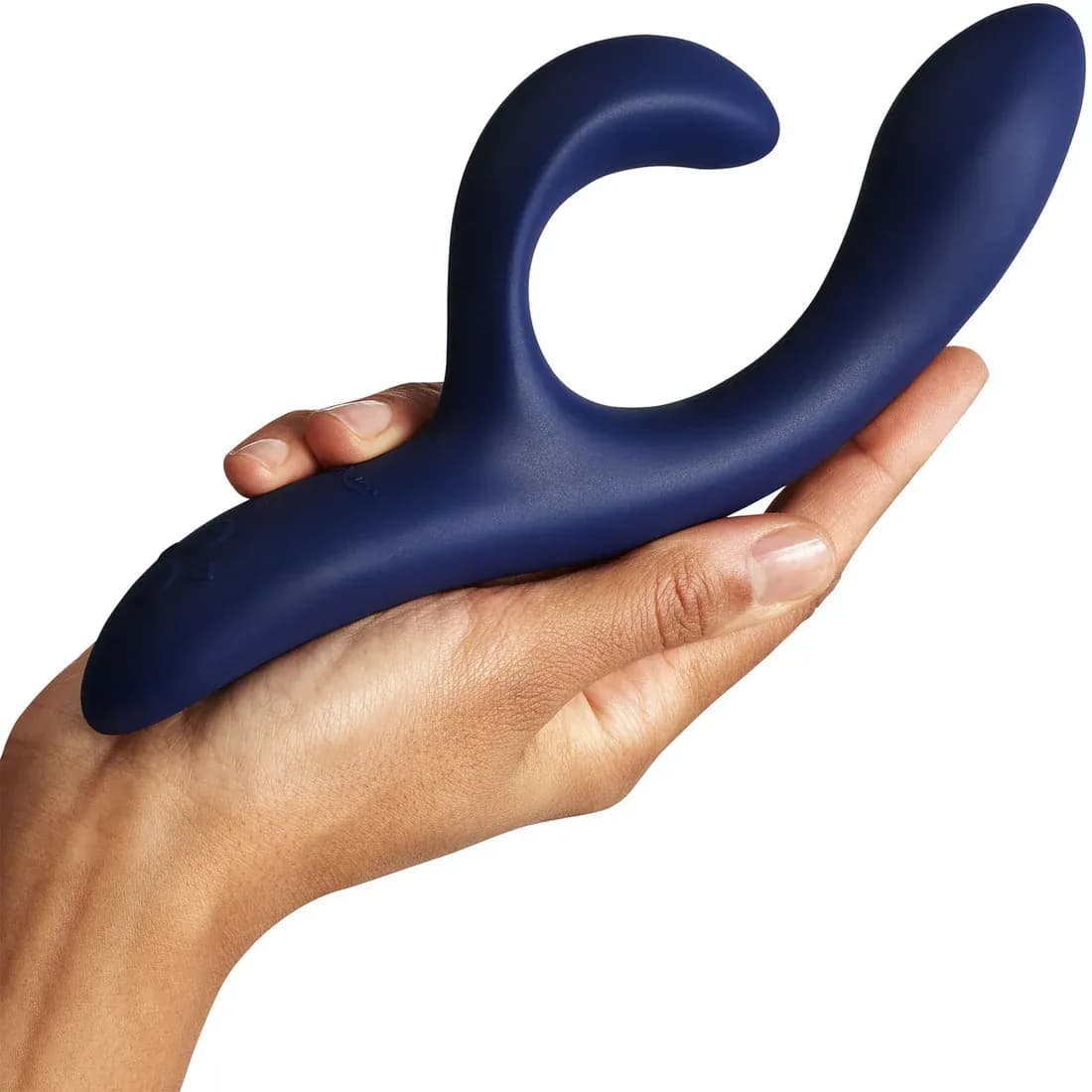
Most rabbit-vibrator content treats the category like it was invented for the Sex and the City episode that made it famous. The product is older and stranger than that, and the modern versions bear only a passing resemblance to the beaded, bunny-eared thing Charlotte wouldn't leave her apartment for. What a rabbit does is simple to describe and surprisingly hard to do well: stimulate the clitoris and the internal front wall at the same time, from one device, without either half feeling like an afterthought.
That "at the same time" is the whole pitch. It's also where cheap models fall apart. This guide covers what a rabbit actually is, how the newer thrusting generation differs from the classic buzz-and-beads design, and which specific models are worth your money. Some of the products people ask for by name aren't in our catalog, and where that's true we say so rather than inventing specs.
Quick Picks
| Product | Best for | Price | Key spec |
|---|---|---|---|
| We-Vibe Nova 2 | Best overall | — | App-connected, flexible clitoral arm |
| LELO SORAYA Wave | Best premium | — | Wave-motion internal arm |
| Happy Rabbit (Lovehoney) | Best for beginners | — | Dual independent motors, USB rechargeable |
Three of the five picks people commonly search for are covered in detail below. Two frequently requested models — a dedicated thrusting rabbit and a stainless-steel G-spot wand — aren't in our current catalog, so we describe what to look for generically rather than pretend we have specs we don't.
What a rabbit vibrator actually is
A rabbit vibrator is a dual-stimulation toy: an insertable shaft aimed at the internal front wall (the G-spot region) plus a smaller external arm — historically shaped like rabbit ears — that sits against the clitoris. The two parts fire together, which is the design's entire reason for existing.
How does a rabbit vibrator work in practice? Most models put a motor in each half so the internal and external stimulation can run independently. The Lovehoney Happy Rabbit is a clear example: per PinkCherry's product listing, "the bunny boasts its very own motor," and its clitoral arm and internal shaft are controlled separately from buttons near the base. That separation matters more than any feature spec. When both halves share a single motor — common on the cheapest units — you can't dial one up without the other, and the compromise is usually a weak clitoral buzz.
The classic design also included rotating beads inside the shaft and a wiggling "ears" motion on the clitoral arm. Newer premium models have largely dropped the beads in favor of smoother silicone shafts, broader clitoral contact, and — in the newest generation — thrusting or air-pulse technology instead of vibration alone.
Rabbit vs G-spot vs internal vibrator
These three terms get used interchangeably, and they shouldn't be.
A G-spot vibrator is single-purpose: a curved shaft designed to press against the front vaginal wall, with no external arm. It does one thing. A dedicated G-spot tool — the stainless-steel wand style, for instance — offers firm, precise pressure and often relies on manual movement rather than a motor. It's the most targeted internal option, and it does nothing at all for the clitoris.
An internal vibrator is a broader category — any insertable vibrating toy, curved or straight, with or without a clitoral component.
A rabbit is specifically the dual-stim version: internal and clitoral, simultaneously. If you already know you respond mostly to internal pressure, a G-spot-only tool may serve you better and cost less. If clitoral stimulation is your reliable route to orgasm and you want internal fullness alongside it, the rabbit's two-front approach is the point.
How to use a rabbit vibrator
The mechanics aren't complicated, but two things trip people up: alignment and lube. A rabbit only works if the clitoral arm actually lands on your clitoris while the shaft is seated, and body geometry varies enough that no single toy fits everyone. This is why flexible or independently adjustable arms — like the one on the We-Vibe Nova 2 — matter.
Step 3
Use water-based lube, generously
Every rabbit here is silicone, so use water-based lube — silicone lube can degrade silicone toys over time. Apply it to the shaft before insertion. Insufficient lube is the single most common reason internal stimulation feels like pressure instead of pleasure.
Step 4
Insert the shaft, then find the arm
Insert the internal shaft first and let it seat against the front wall. Then adjust the toy — angle, depth, rotation — until the external arm rests against your clitoris. Don't force the fit; reposition the whole device.
Step 5
Start the motors separately
If your rabbit has independent controls, start each half low and bring them up one at a time. This tells you which side is doing the work for you and lets you balance the two instead of getting blasted by both at once.
Step 6
Adjust pressure, not just speed
More intensity isn't always the answer. Small changes in how firmly you press the clitoral arm, or how deeply the shaft sits, often do more than clicking to a higher speed.
The five worth owning
Below are the three catalog picks in detail. For the thrusting rabbit and the stainless-steel G-spot wand many readers ask about, see the generic guidance in the sections that follow — we won't attach specs to models we can't verify.
We-Vibe Nova 2 — Best overall
The verdict: The Nova 2 solves the fit problem better than almost anything in the category, which is why it's the default recommendation.
Its clitoral arm is flexible and designed to stay in contact with the clitoris as the internal shaft moves — the failure point that sinks most rabbits. Per We-Vibe's product information, the Nova 2 is app-connected, so intensity and patterns can be controlled from a phone, which also makes it usable at a distance. That connectivity is a genuine feature for some users and irrelevant to others; buy it for the flexible arm, treat the app as a bonus.
Key spec: App-connected control; flexible clitoral arm engineered to maintain contact.
LELO SORAYA Wave — Best premium
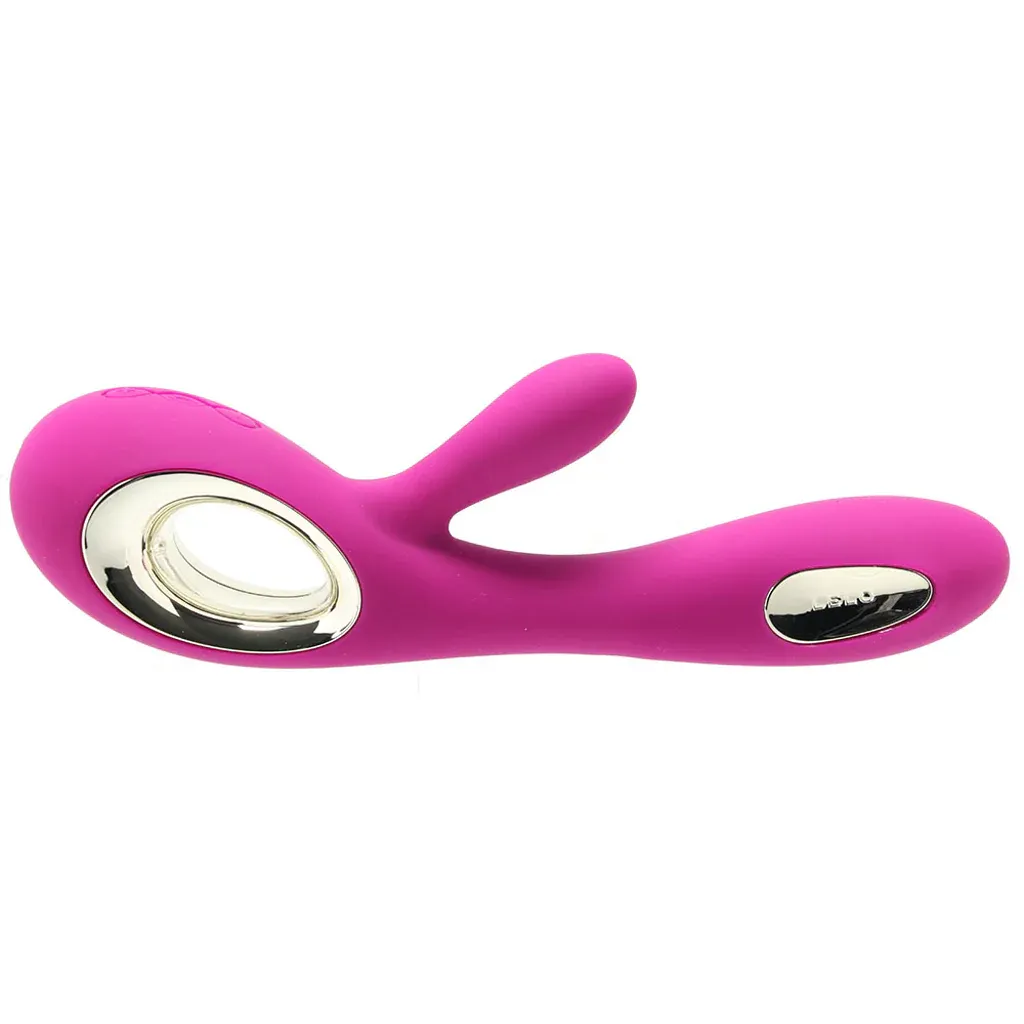
The verdict: LELO's step up from vibration into motion — the internal arm moves in a wave, mimicking a "come-hither" finger rather than just buzzing.
This is where the premium price goes: not a stronger motor, but a different kind of stimulation. The wave motion targets the front wall with a stroking action instead of vibration alone, which is a meaningfully different sensation and one that suits people who don't respond much to buzz. If you've tried standard rabbits and found the internal half underwhelming, the motion-based approach is worth the upgrade.
Key spec: Wave-motion internal arm plus clitoral stimulation.
Happy Rabbit (Lovehoney) — Best for beginners

The verdict: A well-built, no-nonsense dual-motor rabbit at a price that doesn't punish you for being new to the category.
Note this is the closest match to the "Lovehoney Happy Rabbit" many people search for; it's the Happy Rabbit line. Per PinkCherry's listing, the clitoral bunny "boasts its very own motor," and all functions run from simple base buttons — so you get true independent control, which is the feature I'd tell any beginner to prioritize. It's fully USB rechargeable and made from body-safe silicone. Nothing exotic, nothing to learn the hard way. That's the point.
Key spec: Two independent motors; USB rechargeable; body-safe silicone.
Best thrusting rabbit — what to look for (not in our catalog)
The dedicated thrusting rabbit many readers ask about by name isn't in our current catalog, so we won't attach a price or specs to it. Generically, a good thrusting rabbit gives you a shaft that physically pumps in and out — separately controlled from the clitoral arm. Adam & Eve's product listings describe the pattern across several models: a "3-speed tip [that] pumps in and out for a more natural and lifelike feeling," with the clitoral stimulator running its own set of vibration modes. Independent controls for thrust and buzz are the spec that separates a good one from a gimmick.
Best G-spot only — what to look for (not in our catalog)
A dedicated G-spot tool — the stainless-steel wand style people frequently request — isn't in our catalog either, so no specs from us. What defines the category: a curved, rigid shaft that delivers firm, precise pressure to the front wall through manual movement rather than a motor. There's no clitoral arm and usually no vibration. It's the most targeted internal option available and, because there's no electronics, effectively indestructible and easy to clean. If internal pressure is what you're after and you don't need the clitoral half, it's the purest tool for the job.
Thrusting rabbits — the new generation
The biggest shift in the category is mechanical. Instead of a shaft that only vibrates, newer rabbits move. Adam & Eve's Jack Rabbit Signature is built around "an intense thrusting tip" with a "3-speed tip [that] pumps in and out," and the broader thrusting Jack Rabbit line pairs that with "flickering rabbit ears [that] dance all over your clit with 7 intense vibration modes" — thrust and clitoral buzz on separate controls.
The variations multiply from there. SheVibe's BANG! Thrusting & Vibrating Rabbit offers "2 speeds and 8 patterns of thrusting and vibration" on the shaft plus "3 speeds and 7 patterns of clit-focused vibration" on the ears. Adam & Eve's Eve's Beaded Thrusting Rabbit combines thrusting with "a dozen beads along the main shaft [that] push outward in all directions." And a growing sub-genre bolts on air-suction clitoral stimulation instead of vibration — the Shegasm Pro-Thruster "thrusts, sucks, and vibrates," and the Bloomgasm swaps its clitoral half for "10 levels of thrumming suction."
The thrusting tip [was] redesigned to eliminate jamming.
That last line is worth pausing on. Early thrusting mechanisms were prone to stalling under pressure, and the fact that manufacturers now advertise anti-jamming redesigns tells you it was a real problem. If you buy a thrusting model, treat motor reliability — not pattern count — as the thing that matters. More patterns are easy to add; a motor that keeps thrusting when you're actually using it is harder.
The Jack Rabbit problem
The Jack Rabbit is the toy that gave the category its name recognition, and it's worth being honest about what that legacy costs you. The original design leaned on rotating internal beads and stiff ears — a specific sensation that a lot of people find buzzy and imprecise by current standards. The name now spans a whole product family, from the classic beaded version to the thrusting upgrades described above, and the quality range within that family is wide.
The "Jack Rabbit problem," then, is that the brand recognition outpaces the design. People buy a Jack Rabbit because they've heard of it, get a cheaper beaded unit with a single shared motor, and conclude that rabbits aren't for them. Often the issue is that specific toy, not the category. If a classic beaded model left you cold, a flexible-arm design like the Nova 2 or a motion-based one like the SORAYA Wave is a different experience entirely — same category, different century of engineering.
G-spot vs clitoral — what does what
A rabbit is really two toys sharing a handle, and it helps to know which half is responsible for which sensation.
The internal shaft targets the front vaginal wall. The stimulation there tends to read as deep, full, pressure-based — a different quality than clitoral sensation, and one that a lot of people describe as building more slowly. Whether it comes from vibration, wave motion (as on the SORAYA Wave), or physical thrusting changes the character considerably.
The clitoral arm targets external, surface-level, densely nerved tissue. For most people this is the faster, more reliable route to orgasm, which is why the dual design exists at all — the internal half adds fullness and, for some, a blended sensation, but the clitoral arm frequently does the heavy lifting.
The "blended orgasm" language you'll see across the category — Womanizer's DUO 2, for instance, is marketed as combining a Pleasure Air clitoral stimulator and G-spot vibrator "to create advanced, blended orgasms" — describes stimulating both zones at once. Whether that produces a distinct kind of climax or simply two good things happening together is one of those questions where the marketing outruns the published science. What's clear is that many people prefer the combination, which is reason enough to want it.
Charging, care, and lifespan
Nearly every rabbit worth buying is now USB rechargeable and made from body-safe silicone — the Happy Rabbit fits both, per PinkCherry's listing. That combination sets the care rules.
Cleaning: Wash with mild soap and water after each use. Silicone is nonporous, which makes it easier to keep genuinely clean than porous materials. Pay attention to seams and, on thrusting or beaded models, the moving parts, where residue collects.
Lube: Water-based only. Silicone lube can react with and degrade silicone toys. This isn't optional maintenance — it protects the material.
Charging: Charge before first use and don't store a rechargeable toy fully depleted for long stretches; lithium batteries hold up better with a partial charge. A rechargeable toy also outlasts a battery-operated one, which is part of why the category moved away from AA cells.
Lifespan: The motor is the failure point, and moving-part designs — thrusting shafts especially — have more that can wear out or jam than a simple vibrating unit. That's the tradeoff for the more lifelike sensation. A well-made vibrating rabbit will typically outlive a cheap thrusting one. If longevity is your priority, a simpler design or a motor-free G-spot tool is the safer bet.
Frequently asked questions
How do you use a rabbit vibrator for the first time?
Use plenty of water-based lube, insert the internal shaft first and let it seat against the front vaginal wall, then adjust the whole toy until the clitoral arm rests on your clitoris. Start each motor low and bring them up separately so you can feel which half works for you. If the arm won't reach, that's a fit issue — reposition the device rather than forcing it.
How does a rabbit vibrator work?
It combines two stimulators in one device: an insertable shaft for the internal front wall and an external arm for the clitoris. Most quality models put a separate motor in each half so they run independently. Newer versions add thrusting, wave motion, or air suction instead of relying on vibration alone.
What's the difference between a rabbit and a G-spot vibrator?
A G-spot vibrator is single-purpose — a curved shaft for internal front-wall pressure, with no clitoral component. A rabbit adds an external clitoral arm and stimulates both zones at once. If you respond mainly to internal pressure, a G-spot-only tool is simpler and often cheaper; if clitoral stimulation is your main route, the rabbit's dual design is the reason to buy one.
Are thrusting rabbit vibrators better than vibrating ones?
Different, not automatically better. Thrusting models pump the shaft in and out for a more lifelike sensation, but the mechanism has more moving parts that can wear out or jam — early designs were prone to it, which is why manufacturers now advertise anti-jamming redesigns. A simple vibrating rabbit is more durable; a thrusting one offers a distinct feel. Choose based on which sensation you want and how much you value longevity.
Do rabbit vibrators produce "blended orgasms"?
Some people report a distinct blended sensation from stimulating both zones at once, and it's a common marketing claim across the category. Whether that's a separate kind of orgasm or simply two pleasurable things happening together is unsettled in the research. What's clear is that many users prefer the dual stimulation, which is reason enough to try it.
Related reading
Beginner Sex Toys: 8 Best Vibrators for First-Timers
How to Use Sex Toys: A Beginner's Practical Guide
How to Choose the Best Finger Vibrators for Your Needs
Related reading
Remote-Control and App-Controlled Vibrators: The Picks for Couples, Long-Distance, and Going Out
Cock Rings, Plainly Explained — What They Do, How to Use One, and Which Ones Are Worth Buying
Bullet Vibrators: The Picks Worth Owning — From $20 plusOnes to the Premium Tier