
Sexual Orientation vs Sexual Identity: Understanding the Difference
Explore the key differences between sexual orientation vs sexual identity, and why understanding both matters for self-discovery and relationships.
 Zoe Clarke

Introduction
Sexual orientation vs sexual identity are terms that get tossed around interchangeably in group chats, on TikTok, and even in research papers — but they don't mean the same thing. Sexual orientation describes the pattern of who you're attracted to (physically, emotionally, romantically). Sexual identity is the label you choose to describe yourself, which may or may not align perfectly with your orientation.
Here's why that distinction matters: your orientation is about what you feel. Your identity is about what you call it. Someone might experience attraction to multiple genders (orientation) but identify as gay because that label fits their life and community better (identity). Another person might not experience sexual attraction at all (orientation) but not use the term "asexual" (identity) because it doesn't resonate.
The confusion isn't trivial. Studies on sexual behavior often conflate the two, asking participants to check a box for "sexual orientation" when they're really measuring identity — the label someone claims. One study tracking men who have sex with men found that out of 3,814 participants, 43.13% identified as gay, 45.67% as bisexual, and 0.7% as transgender, with about 10% selecting "other types of sexual orientation." The study treated identity and orientation as interchangeable, which is common but technically imprecise.
Understanding both concepts helps you figure out what you want, how to talk about it, and why sometimes the labels don't fit right. If you've ever felt like the standard categories don't capture your experience — or if you're trying to understand a partner's — knowing the difference between orientation and identity is the starting point. For more on navigating sexual preferences and communication with a partner, check out our guide on adult toys for couples.
Problem Statement

Most people use "sexual orientation" and "sexual identity" like they're the same thing — and then wonder why conversations about sexuality get confusing fast. The terms get tangled in casual conversation, in media, and even in research that should know better. One describes who you're attracted to; the other describes how you understand yourself. Mixing them up isn't just semantic nitpicking — it's the reason so many people struggle to articulate their own experiences or understand someone else's.
The confusion shows up everywhere. Someone might identify as bisexual (sexual identity) but primarily date women (sexual behavior). Another person experiences attraction to multiple genders (sexual orientation) but doesn't use any label at all (sexual identity). A third might use "gay" as their identity even though their attraction pattern doesn't fit the textbook definition. None of these scenarios are contradictions — but if you think orientation and identity are interchangeable, they look like math that doesn't add up.
Why the Mix-Up Happens
Part of the problem is that both terms live in the same conceptual neighborhood. They're both about sexuality, both involve who you're drawn to (or not), and both get discussed in the same conversations. But lumping them together flattens out the actual experience. Sexual orientation is about the pattern of attraction — who you're wired to be drawn to. Sexual identity is about the label you use to describe yourself, which may or may not align perfectly with that pattern.
Research on men who have sex with men (MSM) shows this disconnect clearly. In one study, 43.13% of MSM identified as gay, 45.67% identified as bisexual, and a smaller percentage identified as transgender or used other labels. The behavior (sex with men) stayed constant across all groups, but the identity varied widely. That's not confusion — that's people choosing labels that fit their lived experience, not just their attraction pattern.
The Real-World Fallout
When people conflate orientation and identity, it creates friction in places that matter. Someone exploring their sexuality might feel pressured to pick a label before they've figured out their attraction pattern. Friends and partners might misinterpret what someone means when they come out, assuming the label tells the whole story. And people whose orientation doesn't fit neatly into one category — or who don't want a label at all — get stuck explaining themselves over and over.
The affiliation hypothesis of homosexual behavior suggests that sexual pleasure and bonding aren't just about reproduction — they're tools for building social connections that improve survival and well-being. That framing helps explain why same-sex attraction and behavior exist across cultures and species, but it also underscores why identity is so personal. The way you bond, the way you experience attraction, and the way you describe yourself to the world are all separate threads. Treating them as one thing erases the nuance that makes human sexuality actually make sense.
If you're trying to figure out your own sexuality — or understand someone else's — the first step is recognizing that adult toys for couples and solo exploration both play a role in self-discovery, but neither one defines your orientation or your identity. What you're attracted to and how you label yourself are related, but they're not the same conversation.
Solution Steps
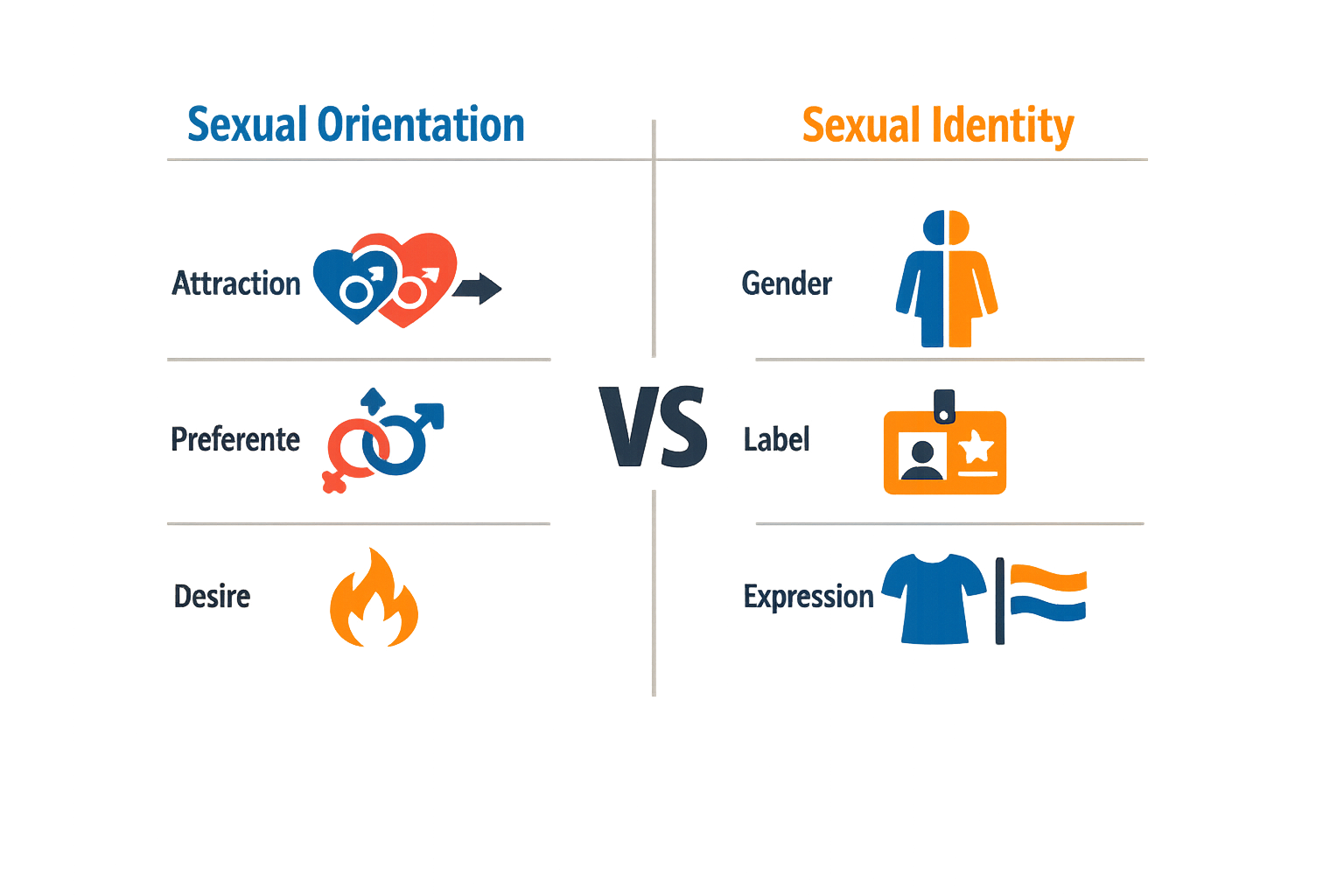
The confusion between sexual orientation and sexual identity comes down to one thing: most people treat them like synonyms when they're actually describing two different parts of who you are. Here's the breakdown that makes it click.
What Sexual Orientation Actually Means
Sexual orientation is about attraction — who you're drawn to, romantically or sexually. It's not a choice, it's not a phase, and it doesn't change based on who you're dating this month. The categories most people know (gay, straight, bisexual, pansexual, asexual) are all orientations.
Think of it this way: orientation is the "who" question. Who gets your attention when you walk into a room? Who shows up in your daydreams? That's orientation doing its thing, and it operates pretty independently of what you call yourself or how you present to the world.
What Sexual Identity Covers
Sexual identity is the label you choose, the way you describe yourself to others, and how you fit your internal experience into language that makes sense to you. It's personal, it can shift over time, and it doesn't have to match what someone else would assume about you.
Someone might experience attraction to multiple genders but identify as gay because that label feels right for their life and community. Someone else might feel the same attractions and call themselves queer, bisexual, or skip labels entirely. Both are valid — identity is about what fits, not what's technically correct by someone else's standards.
The overlap is real, but here's where it gets useful: you can have an orientation (the attractions you experience) that doesn't perfectly align with your identity (the label you use). A woman attracted to men and women might identify as bisexual, queer, or just "not straight" depending on what resonates. The orientation is consistent; the identity is the frame she puts around it.
Your orientation is what you feel. Your identity is what you call it — and those two things don't always use the same vocabulary.
Why the Distinction Matters
Understanding the difference helps in two big ways. First, it stops you from assuming someone's internal experience based on a label. A person who identifies as bisexual might experience attraction differently than another bisexual person — the label is a shorthand, not a specification sheet.
Second, it gives you room to figure yourself out without forcing a perfect match between what you feel and what you call it. If you're attracted to people across the gender spectrum but "pansexual" doesn't feel like your word, you're not doing it wrong. You're just using the identity that fits your life, and that's the whole point.
For more on navigating your own preferences and what actually works in practice, check out Adult Toys for Couples: How to Choose What Works for You — the same principle applies: what you feel and what you choose don't have to match someone else's expectations.
The Short Version
| Aspect | Sexual Orientation | Sexual Identity |
|---|---|---|
| What it describes | Who you're attracted to | How you label and understand yourself |
| Can it change? | Generally stable over time | Can evolve as you learn more about yourself |
| Chosen or innate? | Innate — not a choice | Chosen label, personal framing |
| Examples | Attraction to women, men, multiple genders, or no one | Gay, straight, bisexual, queer, pansexual, asexual, or no label |
The real takeaway: orientation is the map of who you're drawn to. Identity is the language you use to talk about it. They're related, but they're not the same thing — and understanding both gives you a clearer picture of yourself and the people around you.
Tips and Tricks
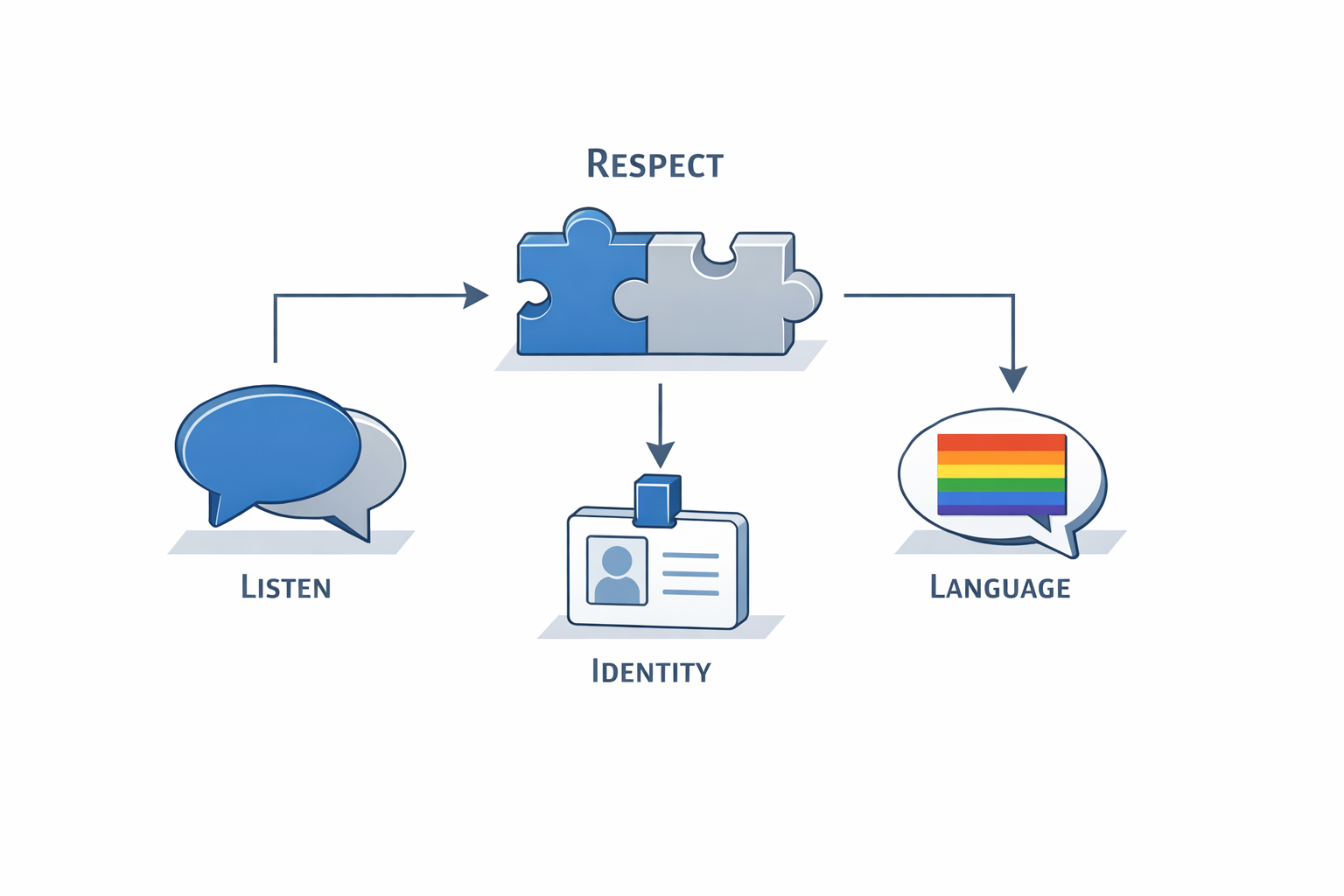
Talking about sexual orientation and identity can feel awkward — especially when you're not sure if you're using the right words or stepping on toes. Here's the thing: most people aren't trying to police your language. They just want to feel seen. The trick is to lead with curiosity instead of assumptions.
Start with Questions, Not Labels
Don't assume someone's orientation based on who they're dating or how they present. Ask open-ended questions like "How do you identify?" or "What pronouns do you use?" instead of leading with "So, are you...?" People will tell you what they want you to know. If they don't offer details, that's their call — not a gap you need to fill.
When someone shares their identity with you, the best response is usually just "Cool, thanks for telling me." No need to make it a moment. No need to ask follow-up questions unless they invite them. Treat it like any other piece of information someone shares about themselves.
Respect the Difference Between Private and Public
Someone's sexual orientation or identity isn't gossip. If a friend comes out to you, don't assume you can share that with others — even mutual friends. Ask first. "Is it okay if I mention this to [person]?" is a simple, respectful check-in.
This goes double in group settings. Don't out someone, even accidentally, by referencing their partner's gender or making assumptions about their dating life in front of people who might not know. Let them control their own narrative.
Avoid the "I Totally Get It" Trap
You don't need to relate to someone's experience to respect it. Saying "I totally understand" when you don't can come off as dismissive. Instead, try "I appreciate you sharing that with me" or "That makes sense." You're acknowledging what they said without pretending you've lived it.
If you're genuinely curious about something, frame it as a learning opportunity — not a challenge. "I'd love to understand more about that" is fine. "But how does that even work?" is not.
The goal isn't to become an expert overnight. It's to show up with enough respect to let people define themselves.
Know When to Redirect the Conversation
If someone's being invasive or disrespectful in a group conversation — asking inappropriate questions, making jokes, or treating someone's identity like a debate topic — you can step in. A simple "That's not really our business" or "Let's talk about something else" shuts it down without making it a big confrontation.
You don't need to deliver a lecture. Just redirect. Most people will take the hint.
Understand That Language Evolves
The terms people use to describe their orientation and identity shift over time. What felt right five years ago might not land the same way now. If someone corrects your language, don't get defensive — just adjust. It's not about you being wrong; it's about them telling you what works for them.
Some people use multiple labels. Some use none. Some switch depending on context. All of that is fine. Your job isn't to police consistency — it's to use the words they give you.
For more on navigating conversations about identity and intimacy, check out our guide on adult toys for couples.
When in Doubt, Ask
If you're not sure whether a question is appropriate, you can usually just ask if it's okay to ask. "Is it cool if I ask about...?" gives the other person an out. If they say no, drop it. If they say yes, keep it respectful and don't treat their answer like a teachable moment for the whole room.
The goal isn't to become an expert overnight. It's to show up with enough respect to let people define themselves — and to get comfortable with the fact that you won't always have all the answers.
Conclusion
Sexual orientation and sexual identity are not the same thing, and treating them like interchangeable terms misses the point entirely. Orientation describes who you're attracted to — it's about the pull, the pattern, the consistent direction of desire. Identity is how you name yourself in the world, and it can shift, expand, or stay rock-solid over time. Both matter. Both deserve space.
Understanding the difference isn't academic. It shows up in how we talk to partners, how we navigate our own self-discovery, and how we make room for other people's experiences without flattening them into categories that don't fit. The friend who identifies as queer but dates mostly men isn't confused — she's using the language that works for her. The person who experiences attraction to multiple genders but doesn't use the word bisexual isn't in denial — they're just not using your framework.
If you're still figuring out where you land, that's normal. Most people don't arrive at a final answer and never revisit it. Sexual identity especially can be fluid, contextual, or just plain hard to pin down when the available labels don't match your internal experience. Orientation tends to be more stable, but even that isn't a rule — it's a pattern, and patterns can surprise you.
The bigger takeaway: you don't owe anyone a neat explanation. You don't need to justify why your identity doesn't match someone else's expectations of your orientation, or why you're still workshopping the language. What you call yourself is your business. What matters is that you have the tools to think clearly about what you're experiencing, and the confidence to name it — or not name it — on your own terms.
For more on navigating self-discovery and sexual wellness, check out our guide on adult toys for couples — because understanding yourself is step one, and exploring what works for you comes next.