
Hands-Free Vibrators: Which Ones Actually Stay in Place?
Discover which hands-free vibrators actually stay in place during use. Expert testing reveals what works, what doesn't, and how to choose your first one.
 Zoe Clarke
Introduction
Hands-free vibrators promise one thing: you don't have to hold them. The reality is messier — most slip, shift, or fall out the second you move. The category is full of products that look great in product photos and work terribly in practice.
The staying-in-place problem isn't about user error. It's about anatomy, physics, and the fact that most hands-free designs were built around wishful thinking instead of how bodies actually work. Some designs solve it. Most don't.
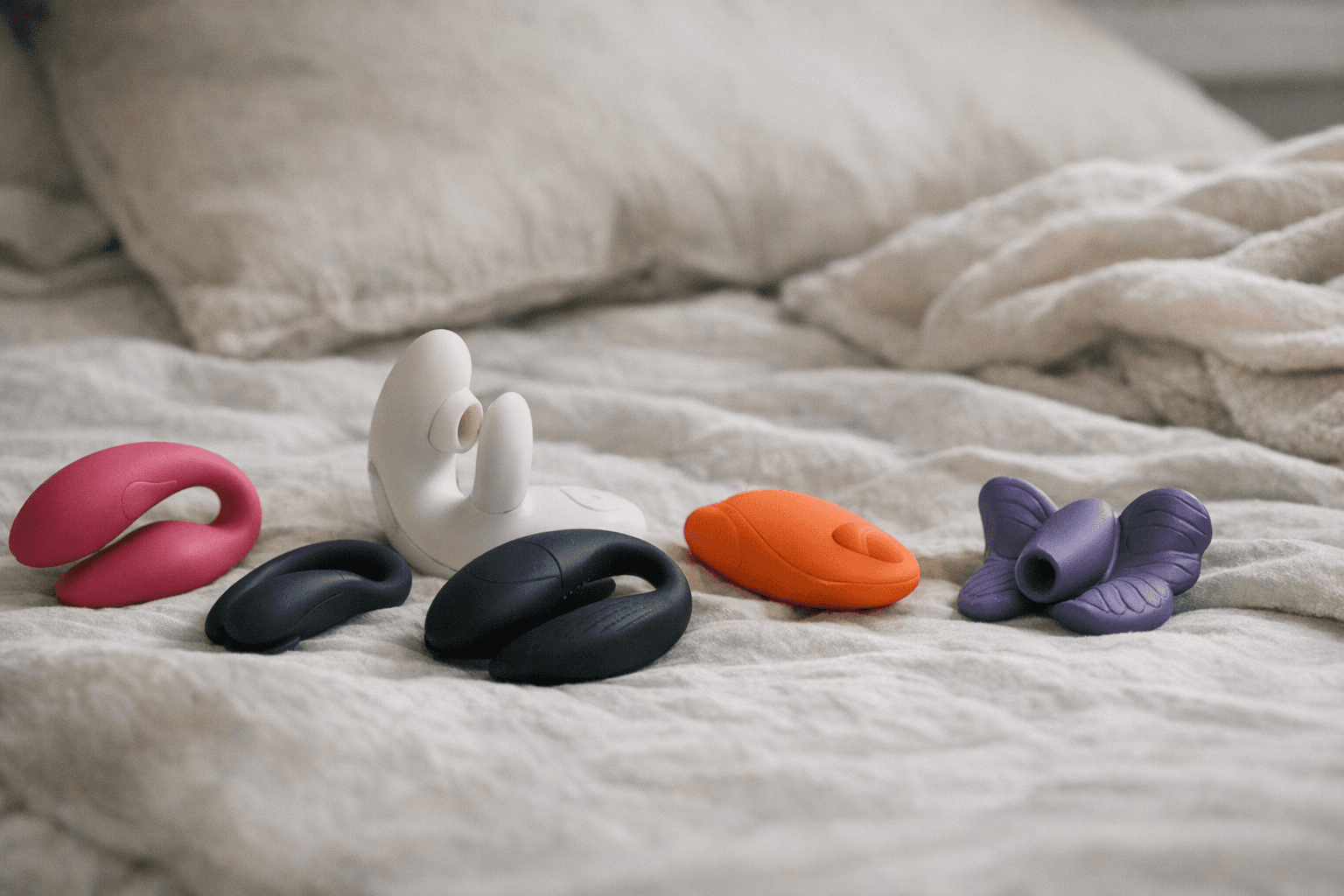
Hands-free vibrators fall into a few categories: butterfly vibrators that strap on, suction-based clitoral toys, insertable vibrators with external arms, and vibrating underwear. Each solves the hands-free problem differently. Each has a different failure mode.
The good news: when a hands-free vibrator actually works, it's worth the hunt. The bad news: you'll probably have to try more than one to find it.
The Problem with Hands-Free Vibrators
The promise of hands-free vibrators is simple: strap it on, do whatever you want, and let the toy do the work. The reality? Most of them slide out, shift around, or lose contact with the exact spot you need them to stay on. It's not you — it's the design.
Why Don't Most Hands-Free Vibrators Stay Put?
The core issue is anatomy. Bodies are curved, soft, and move when you breathe, shift weight, or — you know — actually use the toy. Most hands-free vibrators are shaped like they're meant to fit a mannequin, not a real person. They're either too rigid (so they poke instead of conform) or too flexible (so they collapse under any pressure).
The other problem: marketing photos show models standing perfectly still. In actual use, you're moving. Walking, sitting, lying down, shifting positions — all of that changes how the toy sits against your body. A vibrator that works great when you're standing might slide completely out of place the second you sit down.
The Fit Problem Nobody Talks About
Hands-free vibrators that rely on internal insertion to stay in place run into a different issue: pelvic floor strength. If your pelvic floor muscles are strong, the internal arm might hold the toy steady. If they're not, or if you're relaxed, the toy just… falls out. That's not a failure on your part — it's a design flaw. A good hands-free vibrator shouldn't require you to clench to keep it in place.
The external-only models (like butterfly vibrators) solve this by using straps or elastic bands, but then you're trading one problem for another: straps that dig in, slip down, or look like you're wearing a very specific kind of harness under your clothes.
The "Dual Stimulation" Myth
A lot of hands-free vibrators are sold as dual-stimulation toys — internal and external at the same time. The issue: getting both contact points to line up with your actual anatomy is nearly impossible unless the toy was custom-made for your body. The internal arm might hit the right spot, but then the external arm is hovering a full inch away from your clit. Or vice versa.
This is why so many people end up holding the toy in place with their hand anyway, which defeats the entire point of "hands-free."
A hands-free vibrator that requires you to hold it in place isn't hands-free — it's just a regular vibrator with extra straps.
The Movement Test Most Toys Fail
Here's the real test: put the toy on, walk across the room, sit down, and stand back up. If it shifted at all during that sequence, it's not actually hands-free. Most toys marketed as hands-free fail this test within the first ten seconds.
The ones that pass usually have one thing in common: they anchor to a stable part of your anatomy (like the pubic bone or the vaginal canal) and use flexible arms that move with you instead of against you. But finding those models requires knowing what to look for, which most first-time buyers don't.
How to Choose a Hands-Free Vibrator That Stays in Place
The right hands-free vibrator depends on your anatomy, what you're doing while wearing it, and how much contact pressure you actually need. Here's what to look for before you buy.
Match the Design to Your Anatomy
Hands-free vibrators come in three main shapes: wearable panty-style, insertable with external arms, and suction-based clitoral devices. Panty-style toys work best if you have a larger clitoral hood and don't need pinpoint pressure — they distribute sensation broadly but shift during movement. Insertable toys with external arms (think rabbit-style or butterfly vibrators) stay anchored by vaginal insertion, but the external arm has to land in the right spot, which is hit-or-miss depending on your pubic bone angle and clitoral position. Suction-based toys seal around the clitoris and stay put better than most other designs, but they're not truly hands-free during active movement — they work for stationary use.
Prioritize Adjustability Over Fixed Shapes
Fixed-shape toys assume your body matches the mold. Adjustable toys let you bend, rotate, or reposition the contact points after insertion. Look for:
- Flexible external arms that you can manually curve to match your anatomy
- Adjustable straps or wings on panty-style vibrators (elastic alone isn't enough — you need repositionable contact pads)
- Multiple size options for suction heads or insertable bulbs
The Magic Wand isn't marketed as hands-free, but its long handle and broad head make it one of the few wand vibrators you can prop or wedge into place during solo use. If you're looking at wand-style toys, prioritize handle length and head flexibility over motor power — a 10-inch handle gives you leverage a 6-inch one doesn't.
Step 1
Check the contact surface area
Narrow tips and pinpoint stimulators require exact placement. Broader contact surfaces (like a wand head or a wide suction cup) give you a margin of error. If this is your first hands-free toy, start with a broader surface — you can always add a pinpoint toy later.
Step 2
Test the grip mechanism
Panty-style vibrators rely on underwear tension to hold them in place. If you're wearing them during partnered sex or active movement, standard underwear won't cut it — you'll need compression shorts or a dedicated harness. Insertable toys rely on vaginal grip and pelvic floor tension, which means they work better if you're stationary or doing light activity (walking, sitting) rather than vigorous movement.
Step 3
Confirm waterproof ratings if you're using it in the shower
Most rechargeable vibrators are splash-resistant, not fully submersible. If you're buying a hands-free toy specifically for shower or bath use, check the IPX rating — IPX7 means submersible, IPX4 means splash-proof only. Waterproof toys also tend to have better-sealed buttons, which matters when you're trying to adjust settings without looking.
Don't Overbuy on Your First One
The hands-free category has a high return rate because people buy based on marketing photos, not their own anatomy. Your first hands-free vibrator should be under $60, adjustable, and from a retailer with a flexible return policy. If it works, you'll know within two uses. If it doesn't, you're not out $150 on a luxury model that also doesn't fit.
Rechargeable batteries and waterproof designs are nice-to-haves, not essentials. A $40 battery-powered toy that stays in place beats a $120 rechargeable one that slides out every three minutes.
Tips and Tricks for Maximizing Hands-Free Vibrator Use
Once you've picked a hands-free vibrator that actually stays put, the next step is figuring out how to use it in a way that doesn't feel like a physics experiment. Here's what most people get wrong — and what actually works.
Start Low and Build Up
Most hands-free vibrators have multiple intensity settings, and the temptation is to crank it to max right away. Don't. Start on the lowest setting and give your body a few minutes to adjust. The pressure from the toy being held in place can amplify sensation, so what feels mild at first can escalate fast. If you jump straight to high, you're more likely to overstimulate or shift the toy out of position trying to pull away.
Use Lube (Yes, Even for External Toys)
Lube isn't just for penetration. A small amount of water-based lube on the contact points — especially where the toy sits against your vulva or clitoris — reduces friction and helps the toy glide into the right spot instead of catching on skin. It also makes repositioning easier if the toy shifts mid-session. Skip silicone lube if your toy is silicone; it can degrade the material over time.
Adjust Your Position
Hands-free doesn't mean motionless. If you're lying flat and the toy keeps slipping, try bending your knees or shifting to your side. Some wearable vibrators work better when you're standing or sitting — the angle of your pelvis changes, and gravity can actually help keep the toy in place. Experiment with a few positions before you settle in.
The best position for a hands-free vibrator is the one where you forget you're wearing it.
Layer It with Other Activities
The whole point of hands-free is that your hands are, well, free. Use them. Whether that's touching other parts of your body, holding a book, or involving a partner, the toy is doing its job so you can do yours. If you're using it during partnered sex, communicate early — your partner should know it's there and how it's positioned so no one accidentally knocks it loose.
For more on toys designed specifically for hands-free clitoral stimulation, check out our guide to butterfly vibrators.
Clean It Immediately After Use
This isn't a pleasure tip, but it's a practical one that saves you headaches later. Hands-free vibrators often have multiple contact points, seams, or suction openings that can trap bodily fluids. Rinse it with warm water and mild soap right after use — before anything dries. If it's waterproof, a quick rinse in the sink works. If it's not, use a damp cloth and be careful around the charging port.
Conclusion
Hands-free vibrators promise a lot — solo pleasure without the hand cramp, partnered play that doesn't require you to hold anything, the fantasy of just lying there while it does the work. Some of them deliver on that. Most don't, at least not without adjustment, lube reapplication, or a backup hand when things shift mid-session.
The ones that stay in place share a few traits: they fit your anatomy (not the average user's anatomy, yours), they use enough tension without relying on suction alone, and they're designed with real-world movement in mind. U-shaped models work for penetration plus clitoral stimulation if the arm length matches your pubic bone. Wearable panty vibes work if the pocket actually holds the motor where you need it. Suction toys work if you're staying still and the seal is good. None of them work for everyone, and that's fine — the goal is to find the one that works for you.
If you're buying your first hands-free vibrator, start with something under $50 that you won't feel bad about if it ends up in a drawer. Try it at home, not during partnered sex, so you can figure out what adjustments it needs without an audience. And if it doesn't stay put the first time, that's not a you problem — it's a design problem, and most of the category has it.
For more on hands-free clitoral options that use a different approach, check out our guide to butterfly vibrators.
The right hands-free vibrator isn't the one with the best marketing or the most features — it's the one that stays where you put it and does what you bought it to do. Everything else is just noise.