
Wearable Vibrators: Panty, Insertable, and Clip-On Styles Compared
Explore the differences between panty, insertable, and clip-on wearable vibrators to find the perfect fit for your pleasure and lifestyle.
 Zoe Clarke
Introduction
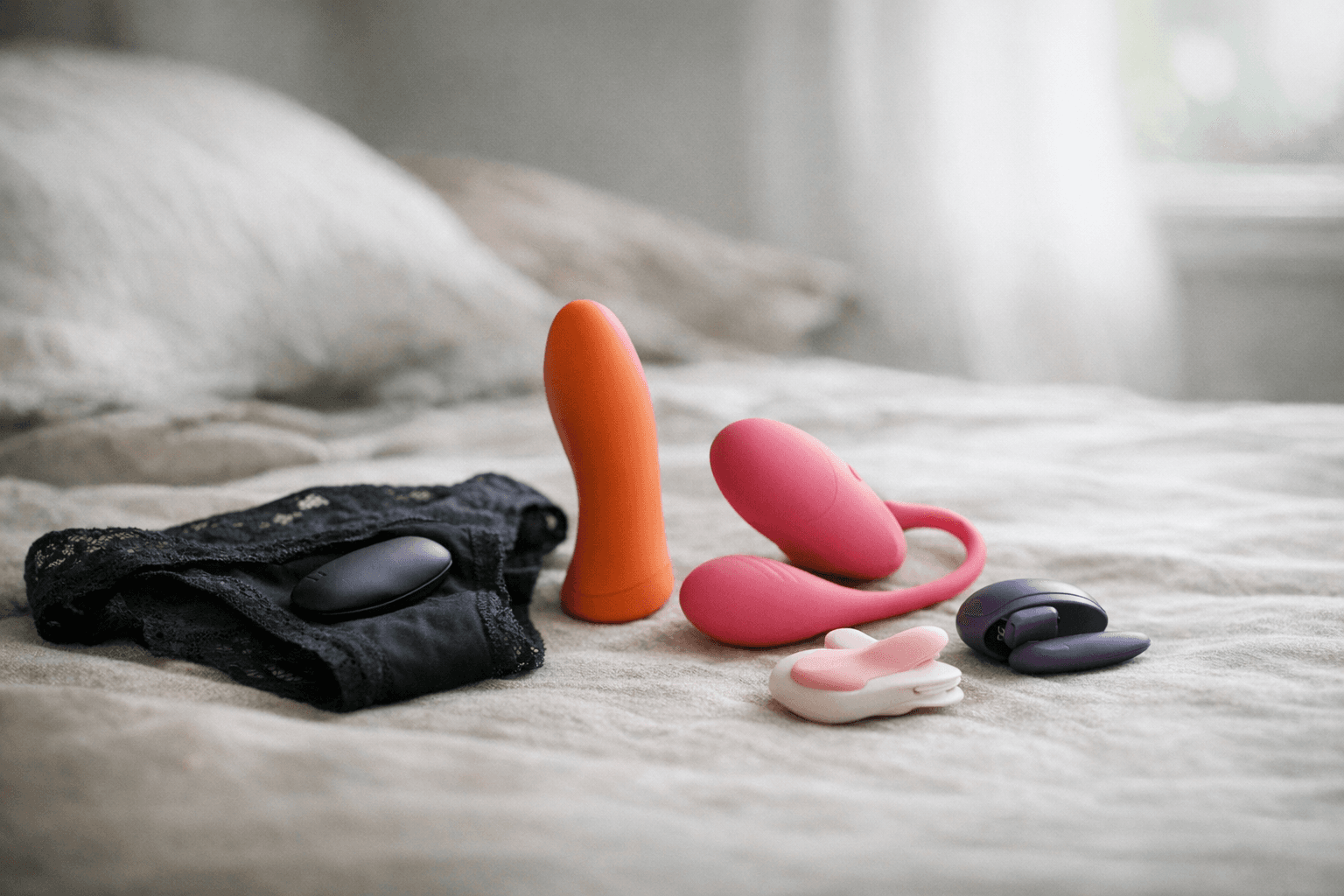
Wearable vibrators are the category that makes the most sense on paper and the least sense in practice until you figure out which style actually works for your body. The appeal is obvious: hands-free stimulation, partner control, the option to wear it under your clothes and pretend you're not having the time of your life at brunch. But the execution varies wildly depending on whether you're talking about a panty vibe, an insertable egg, or a clip-on butterfly.
Most guides treat these like they're interchangeable — they're not. A panty vibrator is designed for clitoral stimulation and stays put with a pocket or magnet. An insertable style goes inside and targets the G-spot or just provides internal pressure. A clip-on attaches to your underwear and usually focuses on external stimulation without the bulk of a full panty design. If you buy the wrong style for what you're actually trying to do, you end up with a $60 paperweight that slides around or doesn't hit the right spot.
The Vesper 2 necklace vibrator takes the concept in a different direction entirely — it's a piece of jewelry that doubles as a discreet vibrator with whisper-quiet modes, designed to be worn in public and used in private. The Wild Secrets Zest Wearable Egg, on the other hand, is an insertable option with 10 vibration modes and a remote control for G-spot-focused play. Both are wearable, but the experience and use case are completely different.
This guide breaks down the three main styles — panty, insertable, and clip-on — so you can figure out which one matches your anatomy, your plans, and your tolerance for adjusting things mid-use. No fluff, no "they're all amazing," just the practical differences that matter when you're deciding where to spend your money.
The Problem with Choosing the Right Wearable Vibrator
The category is a mess. You've got panty vibrators, insertable wearables, clip-on models, and remote-controlled options that all claim to do the same thing — hands-free stimulation. Most product pages don't explain the actual difference between a panty vibe that sits in a pocket versus one that magnetically clips to your underwear versus one you insert and hope stays put. They just show you a model wearing black lace and call it a day.
Here's what actually happens: you buy based on the photo, not the mechanics. A panty vibrator sounds discreet until you realize it requires specific underwear with a pocket, or it slides around because your anatomy doesn't line up with the toy's contact point. An insertable wearable sounds like the obvious pick for dual stimulation, but if you've never used an internal toy before, you're about to find out that "wearable" doesn't mean "stays in place without effort." And clip-on models? They're the most versatile on paper, but they're also the ones that fall off mid-date if you didn't test the grip strength beforehand.
Why the Marketing Doesn't Match the Reality
Most wearable vibrator listings treat all three styles like they're interchangeable. They're not. A butterfly vibrator that stays put with straps is a fundamentally different experience from a We-Vibe Moxie that clips to your underwear with a magnet. One requires dedicated harness-style underwear; the other works with whatever you're already wearing. But you won't know that from the product photo.
The other issue is that "wearable" has become a catch-all term for anything that's not a handheld wand. That includes toys designed for solo use, toys designed for partnered play, toys that work under clothing, and toys that technically could be worn under clothing but realistically shouldn't be. If you're buying for public wear, you need a specific subset of features — low noise, secure fit, discreet profile, reliable remote range. If you're buying for bedroom use with a partner, you need a completely different set of priorities. Most guides lump them all together and call it a buying guide.
What You Actually Need to Know Before You Buy
The real decision comes down to three things: where you want stimulation (clitoral only, internal only, or dual), what you're wearing it with (your regular underwear, specific pocket-style panties, or nothing), and whether it needs to stay put during movement or just during stationary use. Those three variables determine which style works and which one ends up in your drawer after one disappointing attempt.
If you don't know what kind of clitoral stimulation you prefer yet — broad, pinpoint, pressure-based, or vibration-based — a wearable is probably the wrong starting point. These toys assume you already know what works for your body. They don't have the adjustability of a handheld toy, and most of them can't be repositioned once they're in place. If your anatomy doesn't align with the toy's contact point, you're stuck.
Steps to Choosing the Right Wearable Vibrator
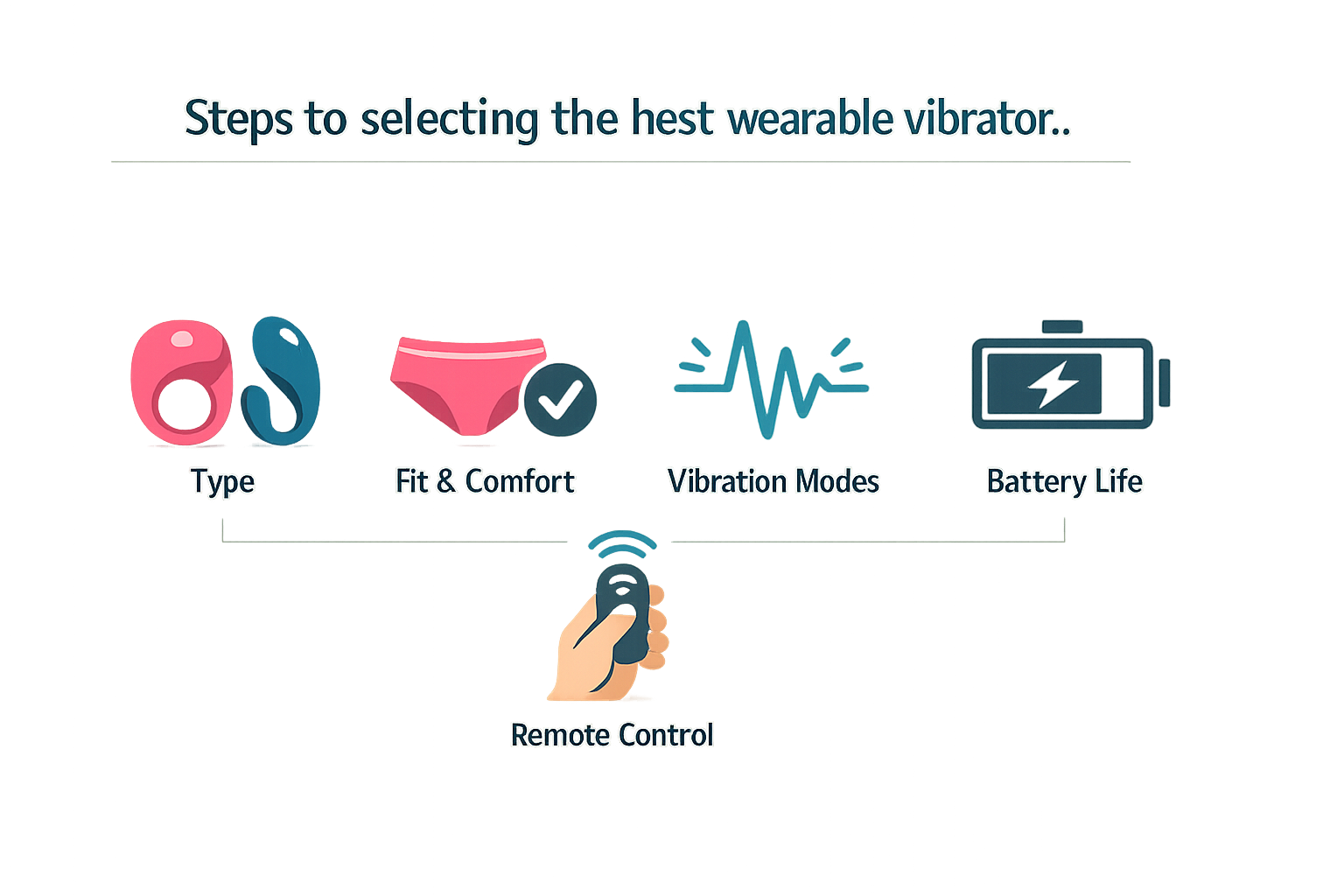
Here's the thing: most people skip the actual decision-making part and just buy the one that looks cute or has the most stars. That works sometimes. Other times you end up with a vibrator that slides around, dies mid-session, or feels like it was designed for someone else's body.
The good news? Narrowing down your pick takes about five minutes if you know what questions to ask yourself. Start here.
Figure Out What You're Stimulating
Step 1
Decide: clitoral, internal, or both
Panty vibrators and clip-ons are almost always clitoral-only — they sit against the vulva and deliver surface-level stimulation. Insertable wearables (the ones shaped like a U or C) target both the clitoris and the G-spot at the same time, which sounds great until you realize not everyone likes dual stimulation or finds the fit comfortable. If you're new to wearables, start with a single-focus toy. You can always add complexity later.
Most first-time buyers assume "more stimulation zones = better," but that's not how anatomy works. If you've never used an internal vibrator before, don't make your first one a hands-free model — you want something you can adjust easily while you're figuring out what works.
Match the Style to Your Use Case
Step 2
Pick based on when and where you'll use it
Clip-on wearables are the easiest to control and reposition, but they're also the least discreet — you're not wearing one of those under jeans to dinner. Panty vibrators are more stable and actually wearable in public, but most of them have mediocre battery life and limited power. Insertable wearables are the most secure (they don't shift around), but they also require the most prep and aren't subtle if you're moving around a lot.
If your goal is partner play at home, go insertable or clip-on. If you want something you can wear out, panty style is the only real option — and even then, expect to feel self-conscious the first time.
Check the Power Source and Battery Life
Rechargeable is the default now, but not all rechargeable batteries are equal. Panty vibrators tend to max out around 60–90 minutes of runtime, which is fine for a single session but not great if you forget to charge it. Insertable wearables usually last longer (2–3 hours) because they're bigger and can fit a larger battery.
If you're planning to use it during partnered sex, assume you'll need at least 30–45 minutes of strong, consistent power. Anything that dies or drops to a weak buzz halfway through isn't worth keeping.
Prioritize Fit Over Features
Step 3
Make sure it's actually going to stay put
This is where most wearables fail. A clip-on vibrator that slides off your underwear every time you move is useless. An insertable toy that doesn't match your anatomy will feel uncomfortable or just fall out. Panty vibrators are the most forgiving here because the fabric holds them in place, but even those can shift if the pocket isn't designed well.
Look for adjustable straps, magnetic clips, or designs that explicitly mention "stays in place during movement." If a product page doesn't address fit at all, that's usually a red flag.
| Style | Best For | Fit Consideration |
|---|---|---|
| Panty vibrator | Public wear, hands-free solo | Needs snug underwear; loose fabric = shifting |
| Insertable wearable | Dual stimulation, partner play | Anatomy-dependent; one size does NOT fit all |
| Clip-on | Flexible positioning, at-home use | Requires strong clip or strap; check reviews for "stays put" |
Don't Overthink the Remote vs. Manual Debate
Remote control (or app control) is a feature, not a necessity. If you're using it solo, you can reach the buttons yourself. If you're handing control to a partner in the same room, a physical remote is more reliable than an app. If you're doing long-distance, you're stuck with app control — and you should read recent reviews to see if the app actually works.
Most wearables under $50 have terrible apps. If app control matters to you, expect to spend $80+ for something that won't disconnect mid-session.
The best wearable vibrator is the one you'll actually use more than once — and that's almost always the one that fits your body and your routine, not the one with the most settings.
Tips and Tricks for Enjoying Wearable Vibrators
Wearable vibrators are designed to stay put, but that doesn't mean they all do. The difference between a toy that works and one that migrates halfway through dinner is usually about fit, prep, and knowing what actually keeps things discreet.
Start Low, Build Slowly
Most wearables have multiple intensity settings for a reason — the high setting in public is almost never the move. Start at the lowest level and let your body adjust. What feels like nothing at home can feel like a lot when you're walking around or sitting through a meeting. Build up slowly, and save the higher settings for when you're alone or in a controlled environment.
Secure the Fit Before You Go
Panty-style vibrators rely on your underwear to hold them in place — which means the underwear matters. Tighter, well-fitting underwear works better than loose or lacy pairs. For insertable wearables, make sure the external arm sits flush against your body and the internal portion is fully inserted. If it's shifting around when you walk, it's going to shift more once you're out.
Clip-on styles need a waistband or fabric edge to grip. Test the clip's tension before you commit — some are strong enough to stay put through movement, others aren't.
Use Lube (Even If You Think You Don't Need It)
Insertable wearables go in easier and stay more comfortable with a water-based lube. Silicone toys need water-based lube — silicone lube can degrade the material. A small amount on the insertable portion makes a noticeable difference in comfort, especially if you're wearing it for more than a few minutes.
The best wearable vibrator is the one you forget is there until you turn it on.
Keep It Quiet (Literally)
Not all wearables are as quiet as they claim. If discretion matters, test the noise level at home first. Hold it against your body in the position it'll be in, turn it on, and listen. Fabric muffles some sound, but not all of it. If you can hear it clearly through your clothes in a quiet room, other people will hear it in a quiet restaurant.
For truly silent operation, look for toys with enclosed motors and fewer moving parts. Panty vibes with a single smooth surface tend to be quieter than insertable styles with flexible arms.
Plan Your Clothing
Tight jeans or leggings can press a wearable harder against your body, which intensifies sensation but can also make it more obvious if the toy shifts. Looser clothing gives you more room to adjust without drawing attention. Dresses and skirts offer the easiest access if you need to reposition or turn the toy off quickly.
Avoid anything with a visible panty line if you're wearing a panty-style vibe — the outline of the toy can show through thin or tight fabric.
Charge It Fully
Nothing kills the vibe faster than a dead battery. Wearables drain faster when used at higher settings, and Bluetooth connectivity pulls extra power. Charge your toy completely before you plan to use it, and if it's been sitting unused for a while, top it off even if it was charged last time. Rechargeable batteries lose charge over time.
Know Your Exit Strategy
If you're wearing a vibrator in public or at an event, have a plan for turning it off or removing it quickly if needed. App-controlled toys should have a manual button as a backup. Insertable styles take longer to remove than clip-ons, so factor that in if you're somewhere without easy bathroom access.
For more guidance on hands-free clitoral stimulation, check out our breakdown of butterfly vibrators and how they compare to other wearable styles.
Clean It Right After
Wearables sit against your body longer than most toys, which means they pick up more sweat, oil, and bacteria. Wash your toy with mild soap and water (or a toy cleaner) as soon as you take it off. Let it dry completely before storing it, and keep it in a clean, dry place — not a bathroom drawer where moisture can build up.
Conclusion
Wearable vibrators come down to three decisions: panty-style if you want hands-free clitoral focus, insertable if you want G-spot coverage, and clip-on if you need flexibility or don't want to commit to a specific underwear setup. None of them are complicated once you know which problem you're solving.
The biggest mistake first-time buyers make is overthinking the tech — app control, multiple motors, adjustable straps. Most of that stuff matters less than whether the vibrator actually stays where you need it and whether the stimulation pattern works for your body. Start with the style that matches your anatomy and your actual use case (solo at home, out in public, partnered play), then worry about features.
If you're still not sure where to start, vibrating panties are the easiest entry point — they're self-contained, they don't require insertion, and most of them work fine even if you've never used a wearable before. From there, you can always add an insertable or try a clip-on if you want more targeted stimulation.
The deal is this: wearable vibrators aren't a gimmick category anymore. The good ones stay put, deliver real stimulation, and don't feel like a science experiment. Pick the style that fits your body and your situation, skip the ones with fifty modes you'll never use, and you're set.