
Battery-Operated vs Rechargeable Vibrators: Which to Choose?
Explore the key differences between battery-operated vs rechargeable vibrators to find the best option for your needs and preferences.
 Zoe Clarke
Introduction
The battery-operated vs rechargeable vibrators debate is one of the first real decisions you make when shopping for a toy. Most beginner guides bury this choice under fifty other specs, but here's the thing — power source affects everything from how strong the vibrations feel to how much you'll spend over the next year.
Battery-operated vs rechargeable vibrators differ in one fundamental way: battery-operated vibrators run on disposable batteries (usually AA or AAA), while rechargeable vibrators have built-in batteries you charge via USB, similar to your phone. The difference sounds simple, but it shapes the entire experience — from the strength of the motor to whether you're hunting for batteries at 11 p.m.
Vibrators as a category have real health benefits. A systematic literature review identified 17 studies on the health benefits of vibrators for female subjects, with eight studies showing that vibrators enhance sexual desire, arousal, and satisfaction. The power source doesn't change those benefits, but it does change how accessible and consistent the experience is.
Rechargeable models deliver more power and longer-lasting charge compared to battery-operated options. That's not marketing spin — it's physics. Rechargeable lithium-ion batteries hold more energy and discharge it more evenly than disposable alkalines, which means stronger vibrations that don't fade halfway through.
For first-time buyers, battery-operated vibrators often feel like the safer bet — lower price, no commitment, easy to replace if you don't like it. For anyone who knows they'll use a toy regularly, rechargeable models save money and deliver better performance. If you're exploring clit stimulators, the power source is one of the first filters that narrows the field.
The rest of this guide breaks down the real differences — cost over time, power and performance, convenience, and which type makes sense for your situation. No fluff, no fifty-option comparison charts, just the decision points that actually matter.
Understanding Battery-Operated vs Rechargeable Vibrators
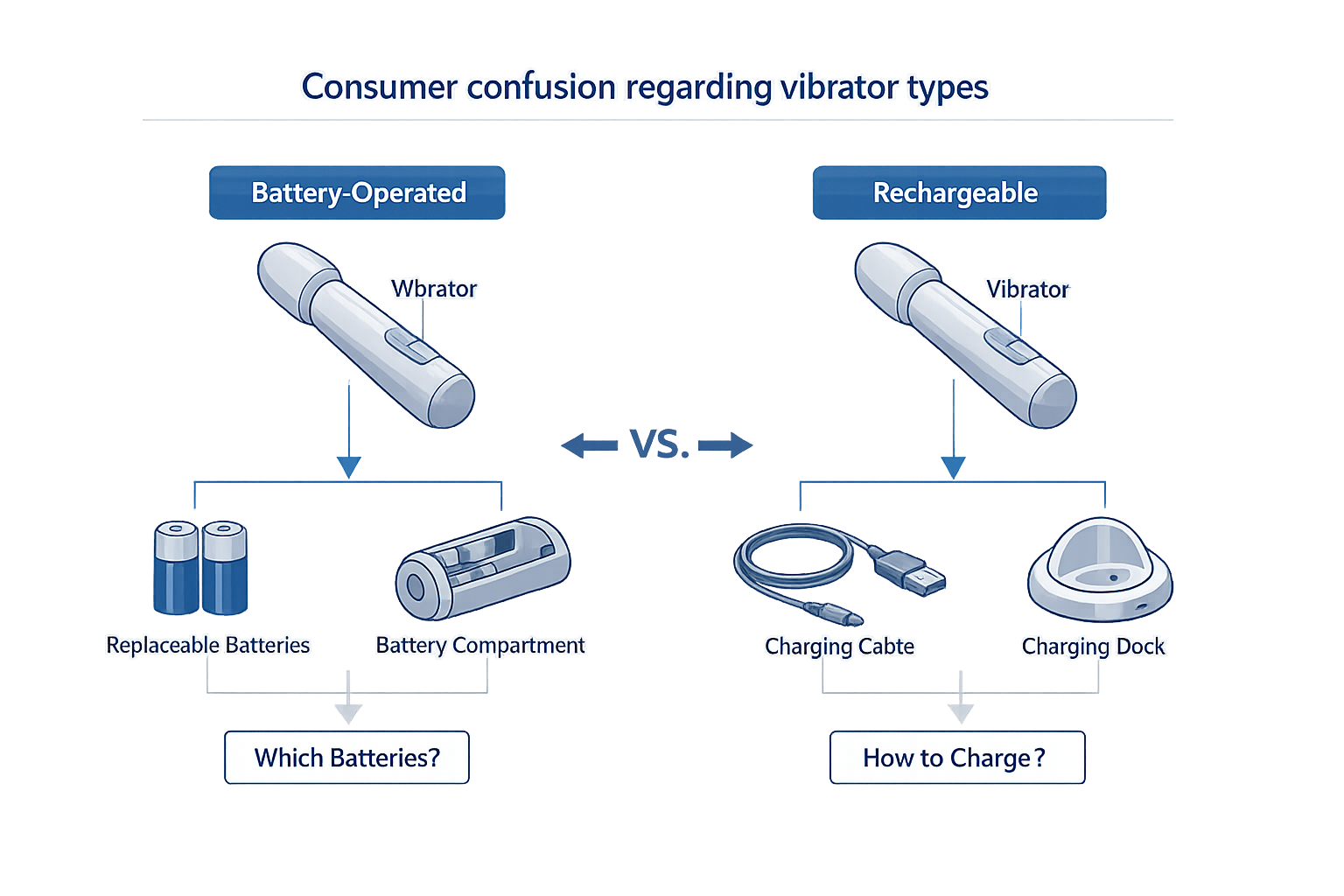
Most people walk into the vibrator decision thinking it's simple — battery or rechargeable, pick one, done. Then they hit the product page and realize nobody actually explains what that choice means for how the thing works in real life. The spec sheets talk about USB ports and AA batteries, but they skip the part where one option dies mid-session and the other costs three times as much upfront.
Here's the thing: the battery-versus-rechargeable question isn't about which technology is "better." It's about which trade-offs you're willing to live with. Rechargeable vibrators deliver more power and typically last longer before the motor burns out — cheaper clitoral vibrators with disposable batteries tend to have motors that quit in a few months, while rechargeable options often come with two-year warranties. But battery-operated picks are cheaper upfront, easier to replace if they break, and don't require you to remember to plug anything in.
What Battery-Operated Actually Means
Battery-operated vibrators run on disposable batteries — usually AA or AAA, sometimes watch batteries for smaller bullet vibes. The motor pulls power directly from the battery, which means performance drops as the battery drains. You'll notice it: the vibrations start strong, then get weaker over a session or two, then you're swapping batteries mid-use because the thing barely buzzes.
The upside is cost and convenience. A decent bullet vibrator runs $15–30, and if it dies in six months, you're not out much. You don't need to plan ahead — if the batteries die, you grab new ones from the drawer. No charging cables, no waiting two hours for a full charge, no "I forgot to plug it in last night" problem.
The downside is everything else. Battery-operated motors are weaker — they can't pull the same wattage as a rechargeable lithium-ion setup, so the vibrations feel buzzier and less rumbly. The toys themselves are often made with cheaper materials (hard plastic instead of silicone), and the motors burn out faster. You're also buying batteries forever, which adds up if you use the thing regularly.
What Rechargeable Actually Means
Rechargeable vibrators use internal lithium-ion batteries — the same tech that powers your phone. You charge them via USB (or sometimes a magnetic dock), and they hold a charge for one to three hours of use depending on the model. A two-hour runtime means you'll rarely need to recharge unless you're going for a real marathon.
The power difference is real. Rechargeable motors can pull more wattage, which translates to deeper, rumblier vibrations. The toys are also built to last — better materials (body-safe silicone, waterproof seals), sturdier construction, and warranties that actually mean something. A rechargeable vibrator with a two-year warranty will get replaced for free if the motor dies, which makes the higher upfront cost less of a gamble.
The downside is the upfront cost ($50–150 for a decent rechargeable versus $15–30 for battery-operated) and the charging requirement. If the battery dies mid-session, you're waiting at least an hour for enough charge to keep going. And if the internal battery degrades after a few years (like all lithium-ion batteries do), you can't just swap it out — the whole toy is done.
The Real Trade-Off Nobody Talks About
The actual decision isn't about features — it's about how you use toys and what annoys you more. If you hate the idea of a toy dying mid-session and you use vibrators regularly, rechargeable is the right answer. If you're a first-time buyer who doesn't know what you like yet, or you want something cheap to try before committing, battery-operated makes more sense. If you travel a lot and don't want to pack a charging cable, battery-operated wins. If you care about power and build quality, rechargeable wins.
Most people end up owning both — a rechargeable as the daily driver and a cheap battery-operated backup for travel or when the rechargeable is charging. That's not a cop-out answer; it's the actual pattern that works.
Navigating Your Choice
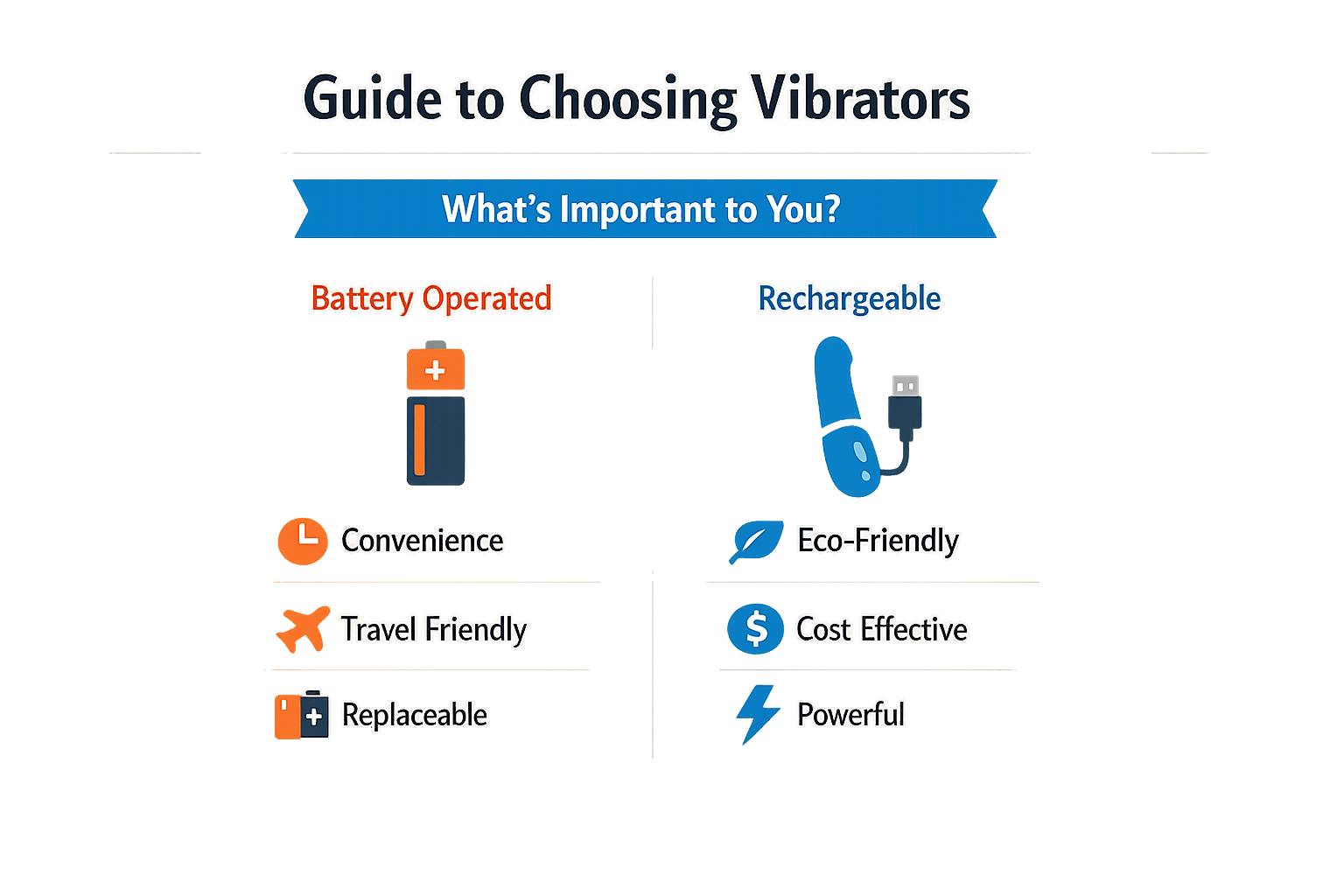
The choice between battery-operated and rechargeable vibrators isn't about which one is objectively better — it's about which one fits your actual life. Here's how to figure that out without overthinking it.
How Often Will You Use Battery-Operated vs Rechargeable Vibrators?
Start with the honest question: how often will you actually use this thing? If you're reaching for it multiple times a week, a rechargeable makes sense — you'll blow through batteries fast, and the cost adds up. If it's more of an occasional pick, battery-operated keeps things simpler. No charging anxiety, no "wait, did I plug this in?" moments.
First-time buyers often assume they'll use a toy constantly and then... don't. If you're not sure yet, battery-operated gives you a lower-stakes entry point.
Step 1
Calculate your realistic frequency
Be honest about how often you'll use it. Daily or several times a week? Rechargeable pays off. Once or twice a month? Battery-operated is fine and saves you from maintaining another device that needs charging.
Consider Your Travel Needs
If you travel frequently, rechargeable vibrators are usually the better call — USB charging works anywhere, and you're not hunting for AA batteries in a foreign pharmacy. The discreet charging cases that come with many rechargeable models double as travel storage, which is a nice bonus.
Battery-operated toys, though? They're easier to pack if you're worried about TSA or if you're somewhere without reliable power. Pop the batteries out, toss them in your bag separately, and you're good. Check out our guide to vibrating panties for more discreet travel-friendly options.
Step 2
Match the power source to your routine
Frequent traveler with access to USB ports? Rechargeable. Camping trip or unreliable power? Battery-operated. It's that straightforward.
Evaluate Your Budget — Upfront vs Long-Term
Battery-operated vibrators cost less upfront, usually $15–$40 for something decent. Rechargeable models start around $50 and go up from there. But if you're using it regularly, rechargeable pays for itself within a few months — you're not buying batteries every other week.
The real budget question isn't the sticker price; it's whether you want to front-load the cost or pay as you go. Both are valid.
Think About Maintenance Tolerance
Rechargeable vibrators need charging. That sounds obvious, but it's the thing people underestimate — you have to remember to plug it in, wait 90 minutes, and plan ahead. If you're the type who forgets to charge your phone, battery-operated might actually be less annoying.
On the flip side, battery-operated toys mean keeping spare batteries around and dealing with the little battery-door panel, which is fiddly and sometimes leaks if you store it long-term with batteries in.
Step 3
Pick based on your actual habits
Good at device maintenance and planning? Rechargeable. Prefer grab-and-go with zero prep? Battery-operated. Neither choice is wrong — it's about what you'll actually stick with.
Check for Low-Battery Indicators
One underrated feature: rechargeable models often include low-battery alerts — an LED that flashes when power is running out. Battery-operated toys just... die. Mid-session. With no warning.
If that sounds like a dealbreaker, rechargeable is the way to go. The alert gives you a heads-up so you're not stuck with a half-functional toy at the worst possible moment.
The best vibrator is the one you'll actually use — not the one that looks best on paper.
Tips and Tricks
Keeping your vibrator in good shape isn't rocket science, but a few basic habits make the difference between a toy that lasts two years and one that dies in six months.
Battery Care for Battery-Operated Vibrators
If you're using a battery-operated model, pull the batteries out when you're done. Leaving them in — especially cheap alkaline batteries — invites corrosion, which is how most battery compartments die. Store the batteries separately, and check the compartment every few months for any white crusty buildup. If you see it, clean it with a cotton swab dipped in vinegar or lemon juice, then dry it completely before reinserting batteries.
Don't mix old and new batteries in the same toy — the weaker cell drags down the stronger one, and you'll get uneven power or early burnout. Replace all batteries at once.
Charging Tips for Rechargeable Vibrators
Rechargeable toys are low-maintenance, but they still benefit from a few ground rules. Most rechargeable vibrators charge in 90 minutes and run for up to 2 hours, but that runtime drops if you let the battery fully drain every time. Lithium batteries last longer when you top them off before they hit zero — think of it like your phone.
When the LED light starts flashing every 10 seconds, that's your low-power alert. Plug it in. Don't wait until it's completely dead.
If you're not using the toy for a while, charge it to about 50% and store it. A full charge provides up to 2 hours of vibrations and maintains its charge when not in use for up to 1 year, so it's ready when you are — but that only applies if you start with a healthy battery.
Storage Suggestions
Store vibrators in a cool, dry place — not in direct sunlight, not in a steamy bathroom cabinet. Heat and humidity degrade silicone over time and can warp battery compartments.
If you're storing multiple toys together, keep them separated. Silicone can react with other materials (especially jelly or TPE), and you'll end up with a melted mess. Use individual fabric pouches or the original storage case if it came with one.
For rechargeable models with magnetic chargers, keep the charging contacts clean. Wipe them down with a damp cloth after every few uses to prevent buildup that blocks the connection. Don't use alcohol wipes on the charging contacts — they can leave residue that interferes with conductivity.
Cleaning Without Damage
Wash your vibrator with soap and water after every use. A 10% bleach solution can be used to clean if desired, but to avoid battery or motor damage, do not boil your vibrators, place them in the dishwasher, or subject them to temperatures higher than body temperature. That applies to both battery-operated and rechargeable models — the motor and wiring don't survive extreme heat.
For waterproof toys, rinse under running water. For non-waterproof battery-operated models, use a damp cloth and avoid getting water near the battery compartment.
Conclusion
The battery-operated vs rechargeable vibrators debate doesn't have a single winner — it has two different answers depending on what you actually need. If you're trying your first toy, traveling light, or keeping a backup in your nightstand, battery-operated makes sense. If you want more power, longer sessions, and you're willing to remember to plug it in, rechargeable is the move.
Most people end up with both. A rechargeable for home use, a battery-operated for the travel bag. The real mistake is overthinking it — pick the format that matches how you'll actually use it, not the one that sounds better on paper.
What matters more than the power source is whether the toy fits your body, your routine, and your budget. A $25 battery-operated clit stimulator that you use three times a week beats a $150 rechargeable that sits in a drawer because you forgot to charge it. Start with what makes sense now. You can always upgrade later — and you probably will.
FAQ
Which lasts longer, battery-operated or rechargeable vibrators?Rechargeable vibrators typically last longer in terms of motor lifespan (often 2+ years with warranties) because they're built with higher-quality components. Battery-operated models with disposable batteries tend to have motors that fail within months, especially cheaper models under $30.
Are rechargeable vibrators more powerful than battery-operated ones?Yes. Rechargeable lithium-ion batteries deliver more consistent power and higher wattage to the motor, producing deeper, rumblier vibrations. Battery-operated motors pull less power and produce buzzier sensations that weaken as the batteries drain.
How much do replacement batteries cost over time?If you use a battery-operated vibrator several times a week, you'll spend roughly $5–$10 monthly on replacement batteries. Over a year, that's $60–$120 — often more than the cost difference between a budget battery model and a mid-tier rechargeable.
Can I travel with rechargeable vibrators?Yes. Rechargeable vibrators are TSA-friendly and charge via USB, making them convenient for travel. Many come with discreet storage cases. Battery-operated models are also travel-friendly if you remove the batteries before packing.
Do rechargeable vibrators lose charging capacity over time?Yes. Like all lithium-ion batteries, rechargeable vibrators degrade after 2–3 years of regular use. The battery holds less charge over time, but most quality models still function adequately for their warranty period (typically 1–2 years).