
What Does a Female Orgasm Feel Like? A Beginner's Guide
Curious about what does a female orgasm feel like? Discover what it feels like, how to recognize it, and what to expect in this honest beginner's guide.
 Zoe Clarke
Introduction
The female orgasm is one of those topics that gets talked about everywhere — movies, group chats, Reddit threads — but rarely with the kind of honest, practical detail that actually helps. Most of what you've heard is either vague ("it's like fireworks!"), clinical to the point of uselessness, or just flat-out wrong.
Here's the thing: a female orgasm is a temporary peak of pleasant sexual sensation that comes with real physiological changes in your body. But unlike male orgasm, which typically accompanies ejaculation and is pretty hard to miss, the female version doesn't come with a built-in confirmation signal. For some women, it's difficult to know if orgasm has occurred or not — and that uncertainty is more common than most people admit.
The inability to achieve orgasm is also reported more frequently by women than men, often tied to stress, partner-related issues, or just not having the right information. That's not a failure on your part — it's a gap in the conversation. If you're wondering what a clit is and how it works, you're already ahead of most beginner guides that skip straight to technique without covering the basics.
This guide walks through what a female orgasm actually feels like, how to recognize it, and what to expect — no fireworks metaphors, no wellness-speak, just the real deal.
Understanding the Mystery of Female Orgasms
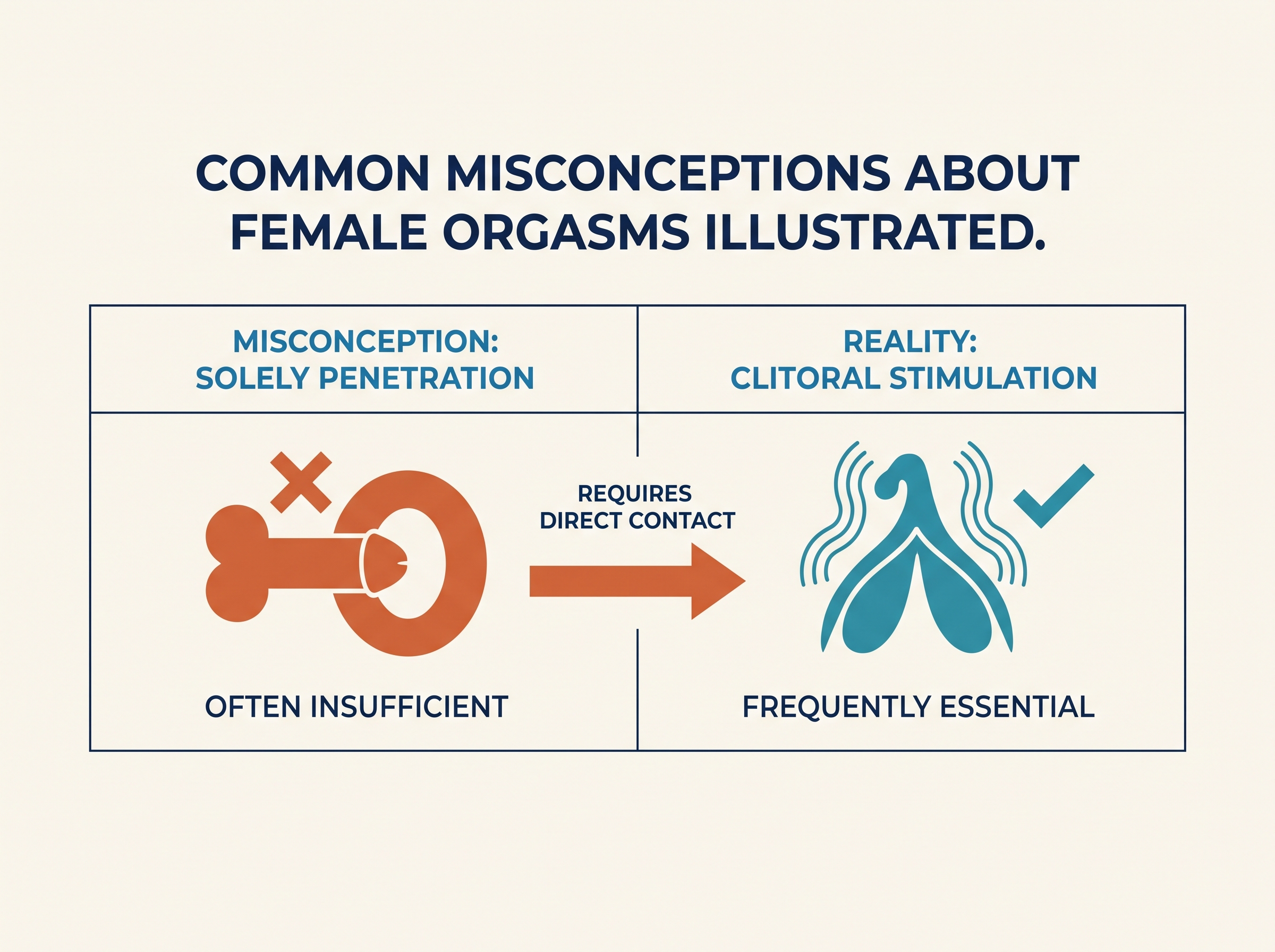
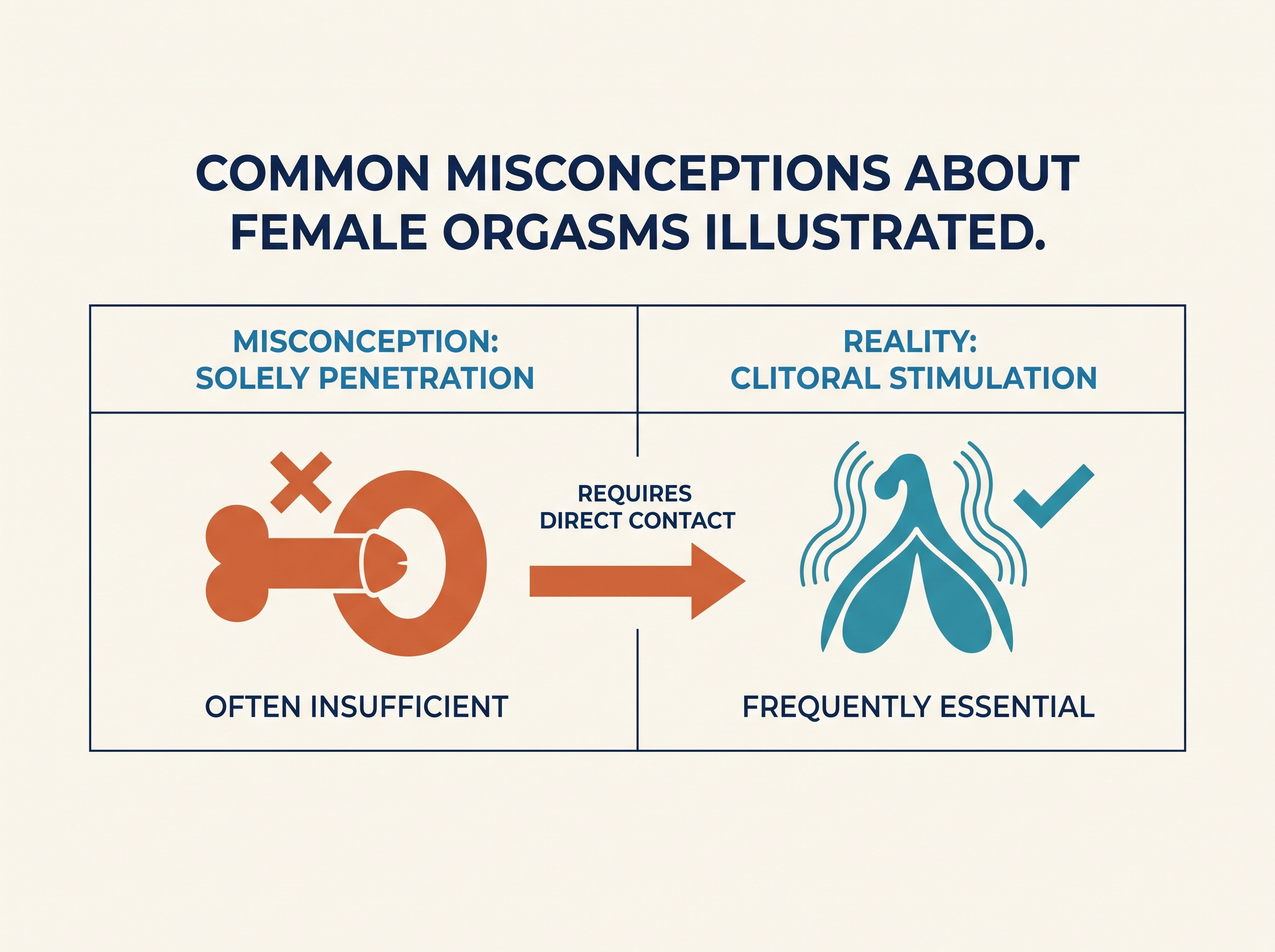
Here's the thing nobody tells you: the female orgasm is one of the most studied and least understood parts of human sexuality. Not because the science isn't there — it is — but because most of what you've absorbed about it comes from sources that have zero interest in accuracy.
Porn gets it wrong. Your health class probably skipped it. And the cultural script around female orgasms is so tangled up in myths, performance anxiety, and outdated gender norms that most people — including the people having them — struggle to recognize or describe what's actually happening.
Why Female Orgasms Are So Misunderstood
The orgasmic experience in women is highly variable. What works for one person might do nothing for another, and factors like stimulation technique, self-image, relationship quality, and even cultural messaging all shape the experience. That variability isn't a bug — it's how the system works. But it makes orgasm harder to pin down than the more predictable male version, which is why so many guides treat it like a mystery instead of just explaining the mechanics.
Add to that the fact that most mainstream sex education focuses on reproduction, not pleasure, and you get a generation of people who know more about preventing pregnancy than they do about what a clit actually does.
The Biopsychosocial Reality
Orgasm isn't just a physical event — it's a neuromuscular phenomenon triggered by sexual stimuli (both physical and mental) and accompanied by physiological responses like vasocongestion, lubrication, and pelvic contractions. But it's also shaped by psychological factors (your headspace, your comfort level, your expectations) and social factors (the myths you've internalized, the quality of communication with a partner, the cultural scripts you're working against).
That's the biopsychosocial model in action: biology, psychology, and social context all influence whether orgasm happens and what it feels like when it does. Most beginner guides skip the psychology and social parts entirely, which is why they feel so disconnected from real experience.
The female orgasm isn't a mystery because it's complicated — it's a mystery because most of the information out there is wrong.
What Gets in the Way
Cultural and social factors — including sexual myths, performance pressure, and the idea that orgasm should happen a certain way or on a certain timeline — create obstacles that have nothing to do with anatomy. If you've ever felt like you're "doing it wrong" or that your body isn't responding the way it's supposed to, the problem isn't you. The problem is the script.
The good news: once you understand what's actually happening (and what's not), the experience becomes a lot less mysterious and a lot more accessible.
Steps to Understand What a Female Orgasm Feels Like
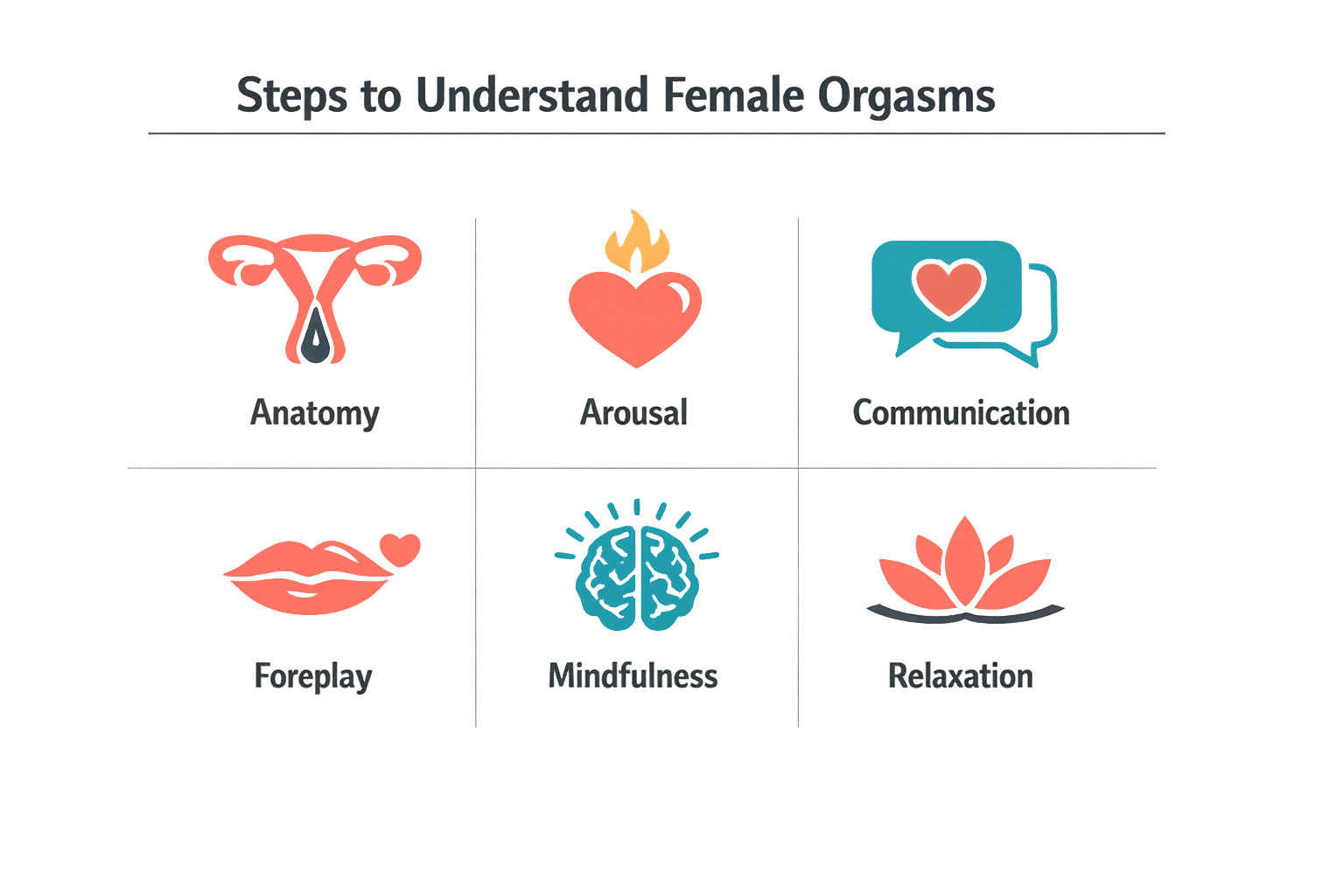
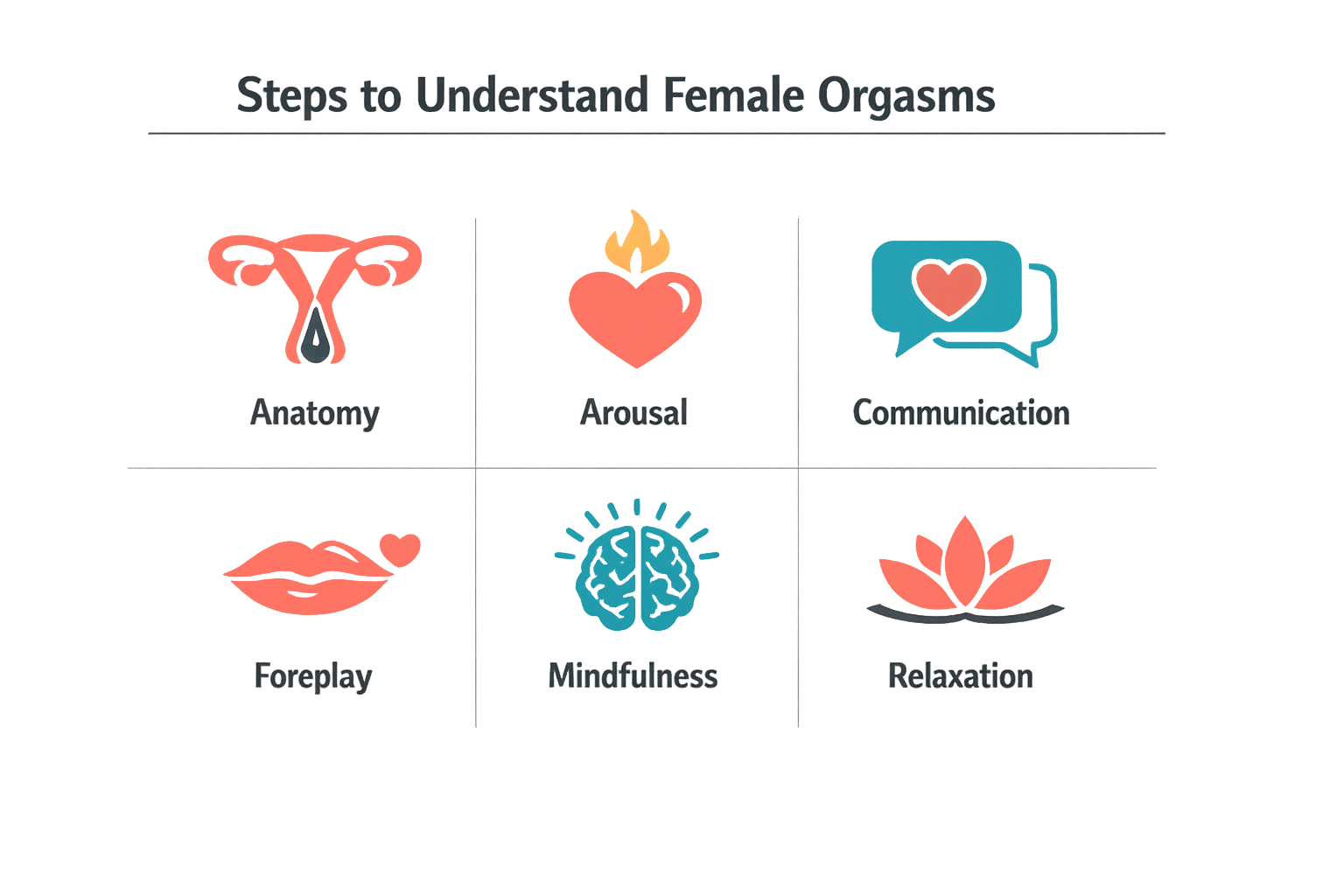
The actual sensation is hard to pin down because it's different for everyone — but there are patterns. Most people describe it as a buildup of tension that releases all at once, with rhythmic muscle contractions around the vagina and pelvic floor. Some feel it as waves of pleasure that radiate outward; others describe a sharp peak followed by a warm, full-body flush. The key is that it's unmistakable when it happens — you won't be wondering if you had one.
Recognize the Physical Signals
Your body gives you clues before and during orgasm. Blood flow increases to the genitals (that's the swelling and warmth you might notice), lubrication ramps up, and your breathing gets faster. Right at the moment of orgasm, you'll feel involuntary contractions — usually 3 to 15 rhythmic pulses in the pelvic muscles. Some people also experience a release of fluid (not urine, though it can include some — it's a mix of secretions from the Skene's glands). After, there's usually a sense of deep relaxation, sometimes called the "resolution phase."
Experiment with Different Types of Stimulation
Most women reach orgasm through clitoral stimulation — either direct or indirect. Penetration alone works for some, but it's less common; the odds go up significantly when you add clitoral stimulation to the mix. That's because the clitoris has thousands of nerve endings and extends internally around the vaginal opening, so different types of touch activate different parts of the same structure.
Step 1
Start with external clitoral stimulation
Use your fingers, a partner's hand, or a toy designed for clitoral contact. Start with light, indirect pressure and build intensity slowly. The goal is to find the rhythm and pressure that feels good to you — not what you think it "should" feel like.
Step 2
Try internal stimulation if you're curious
Some people respond to G-spot or cervical stimulation, which can produce a different kind of orgasm — often described as deeper or more full-body. Use fingers or a curved toy and apply firm, consistent pressure to the front vaginal wall (about 2–3 inches in). Not everyone finds this works, and that's fine.
Step 3
Combine stimulation types
The most reliable path for many is clitoral stimulation plus penetration — either with fingers, a toy, or a partner. The combination activates more nerve pathways and increases the likelihood of orgasm. Experiment with what feels right; there's no single "correct" method.
Pay Attention to Arousal, Not Just Technique
Orgasm isn't a mechanical process — it's as much about your mental state as your body. If you're distracted, stressed, or trying to force it, it's harder to get there. Let yourself relax, focus on what feels good (not on "achieving" anything), and give it time. Arousal builds in stages, and skipping straight to intense stimulation often backfires. Start slow, let the sensations build, and follow what your body is telling you.
The distinction between different orgasms isn't about which body part you're stimulating — it's about how much of the whole experience you're tuned into.
Tips and Tricks for Enhancing the Experience
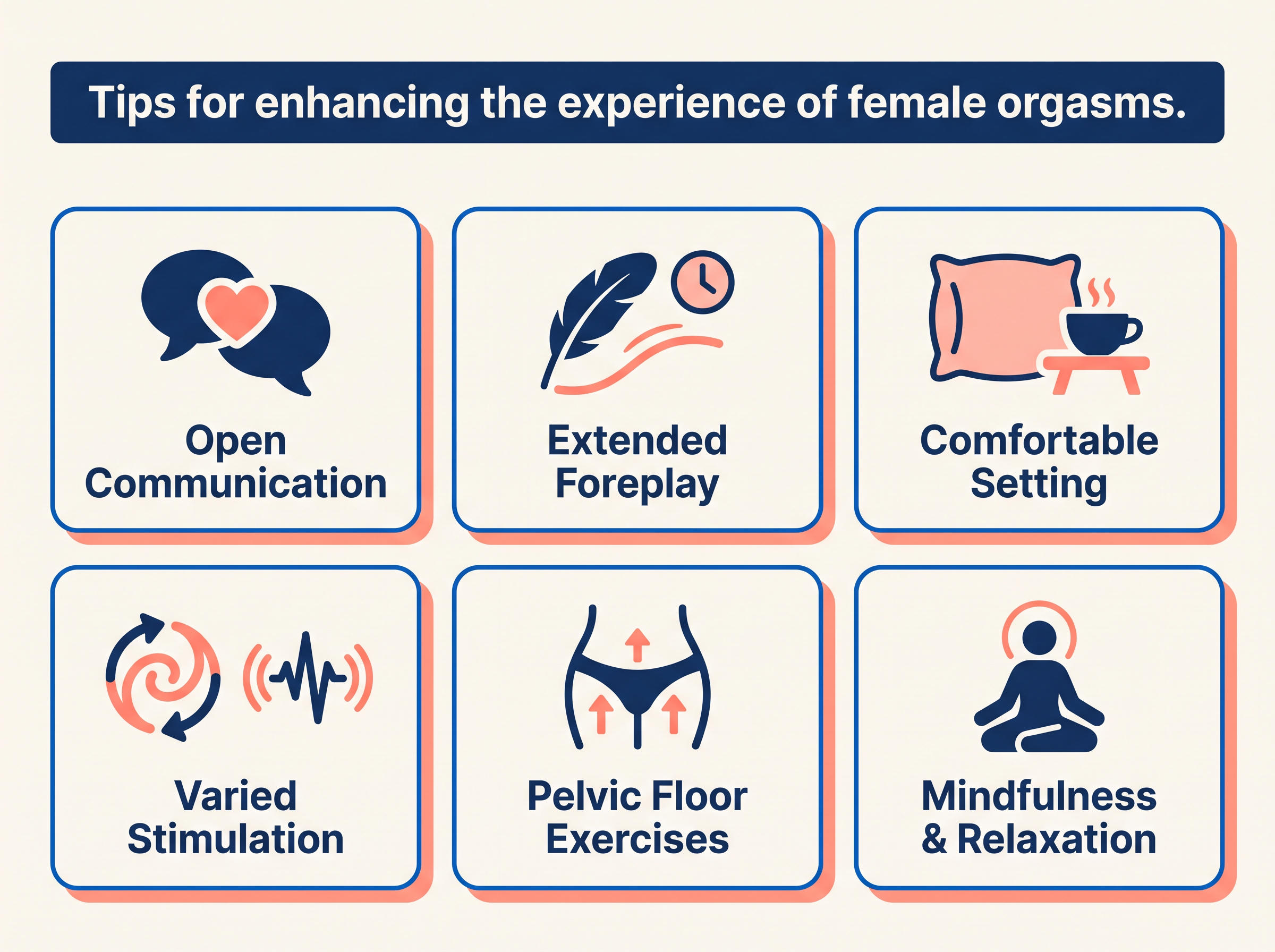
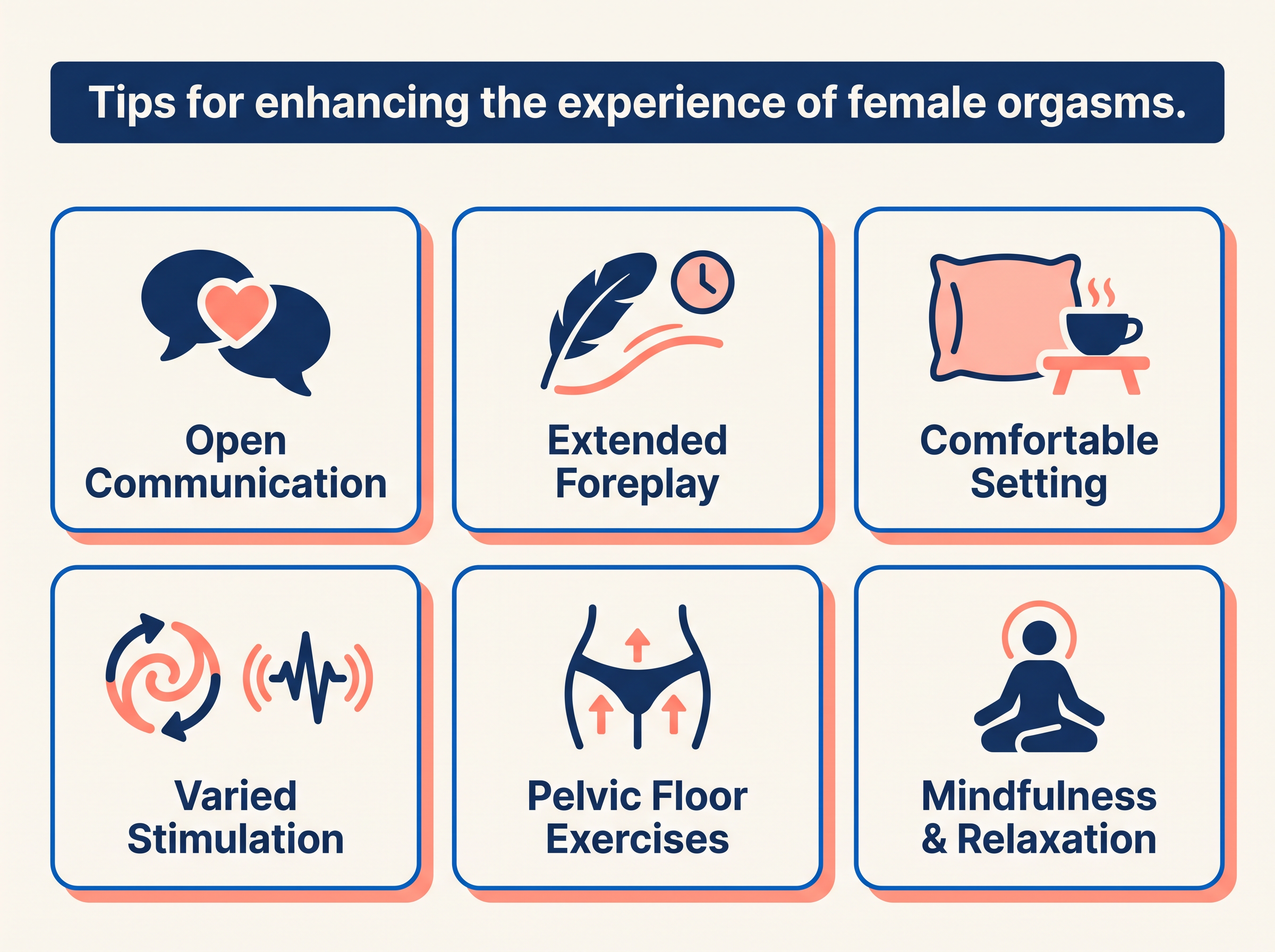
Knowing what a female orgasm feels like is one thing — actually getting there is another. Most beginner guides skip the practical stuff, so here's what actually helps.
Focus on What Works for You
Orgasm isn't one-size-fits-all. Some people respond to direct clitoral stimulation, others need internal pressure, and some need both. The distinction isn't about "clitoral vs. vaginal" orgasms — it's about understanding what combination of touch, pressure, and context works for your body. That takes experimentation, and it's not always fast.
If you're not sure where to start, clit stimulators are a solid entry point — they're designed to deliver consistent, focused sensation without requiring perfect technique.
Give Yourself Time (and Lower the Pressure)
Rushing kills arousal. The refractory period between orgasms varies widely — some people can have multiple orgasms with short breaks, others need longer recovery. That's normal. Trying to force it or hitting a mental countdown timer is the fastest way to shut everything down.
If you're someone who struggles to recognize when orgasm has happened, that's also common. Not every orgasm is a full-body event. Some are subtle, some are intense, and some feel more like a release than a peak. You're not doing it wrong if it doesn't match what you've seen in movies.
Use Tools That Make Sense
Vibrators aren't required, but they help a lot of people get consistent results. The key is finding one that delivers the right kind of stimulation — broad and gentle, or focused and intense. If a vibrator "does basically nothing" for you, it's probably the wrong type, not a sign that toys don't work for you.
Internal toys work for some people, especially those who respond to pressure or fullness. External toys work for others. Most people end up using a mix depending on the day.
The best tool is the one that gets you where you're going without making you work harder than you need to.
Address What's Getting in the Way
Stress, distraction, and past trauma all affect arousal and orgasm frequency. If you're dealing with any of those, the issue isn't your body — it's everything else competing for your attention. That's not something a toy or a technique fixes on its own.
The biopsychosocial model (biological, psychological, and social factors) applies here. Orgasm isn't just a physical response — it's shaped by your mental state, your environment, and your history. If something's blocking you, it's worth figuring out what it is instead of just trying harder.
Conclusion
The female orgasm isn't one single sensation — it's a spectrum. Some people feel it as a full-body wave, others as a sharp concentrated pulse, and plenty describe it as something in between. What matters most is that you know what you're looking for, and that you give yourself permission to figure it out at your own pace.
Here's the thing: roughly 20% of people with vulvas experience orgasmic dysfunction at some point, and the inability to orgasm is reported more frequently by women than men. That statistic isn't there to scare you — it's there to remind you that if orgasm feels elusive, you're not broken. Stress, partner dynamics, lack of knowledge about your own body, and unrealistic expectations all play a role. The solution isn't to force it; it's to explore what actually works for you, whether that's solo or with a partner.
If you're still figuring out what kind of stimulation gets you there, start with the basics. Understanding what a clit is and how it responds to different types of touch is the foundation most first-time guides skip. From there, it's about experimenting with pressure, rhythm, and context until something clicks.
The female orgasm doesn't need to be a mystery. It just needs time, curiosity, and the willingness to treat it like something you're learning — not something you're supposed to already know.