
Why Can't I Cum? Understanding Difficulty Reaching Orgasm
Explore the physical, psychological, and relationship factors behind difficulty reaching orgasm, plus practical solutions to help you climax.
 Zoe Clarke
Introduction
If you've ever found yourself asking "why can't I cum?" mid-session or lying awake afterward wondering what's wrong with you — here's the thing: nothing is wrong with you. Difficulty reaching orgasm, clinically called anorgasmia, is more common than most people realize. It's the kind of thing nobody talks about in group chats, but plenty of people Google at 2 a.m.
Anorgasmia isn't just "taking a while" — it's when orgasm is consistently absent, delayed, less intense than it used to be, or requires specific conditions that feel increasingly narrow. It causes real distress and often affects how you feel about sex and your partner. The reasons behind it range from straightforward (a medication side effect, not enough clitoral stimulation) to layered (anxiety, past trauma, relationship tension).
What most sites miss: this isn't a problem you solve by buying a better vibrator or watching more porn. Sometimes those help, but the actual fix usually lives in one of three places — your body, your head, or your relationship. This guide breaks down all three, plus the practical steps that actually move the needle.
The good news: once you identify what's getting in the way, most of these barriers are fixable. Let's walk through what's actually happening and what you can do about it.
Understanding the Problem: Why Can't I Cum?
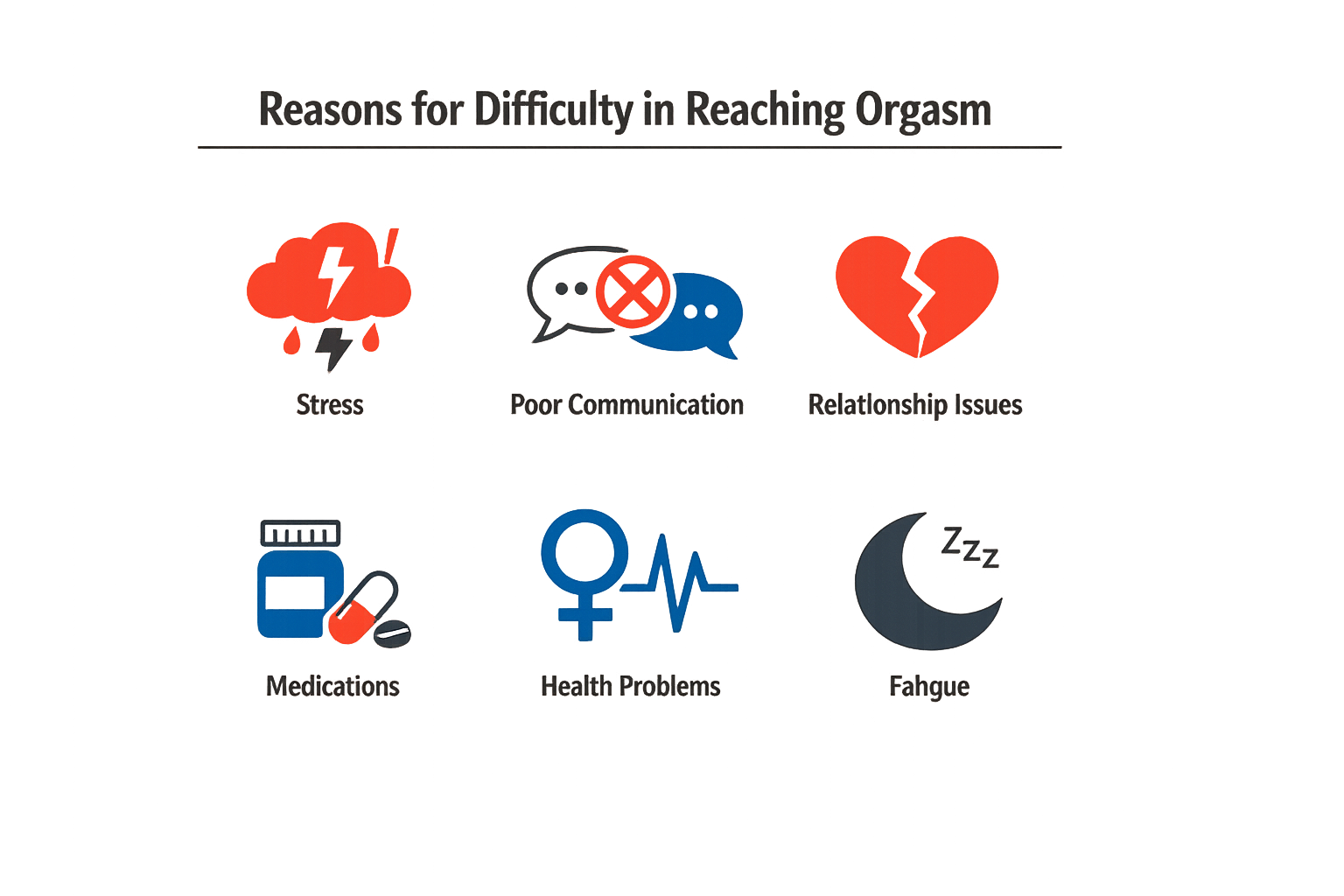
Difficulty reaching orgasm — clinically called anorgasmia — affects roughly 20% of people in the U.S., making it one of the most common forms of sexual dysfunction. The condition isn't rare, and it's not something you caused. It just means your body's climax response is delayed, infrequent, or absent even when you're aroused.
The reasons fall into three buckets: physical, psychological, and relational. Most people dealing with this have a mix of factors at play, not just one clean cause.
Physical Causes
Hormonal shifts, medications, and underlying health conditions can all interfere with orgasm. Low testosterone affects climax in people with penises. Antidepressants — especially SSRIs — are notorious for delaying or blocking orgasm entirely. Chronic conditions like diabetes or neurological issues can disrupt the nerve pathways that trigger climax.
If you've recently started a new medication or noticed changes after a health diagnosis, that's worth flagging with your doctor.
Psychological Factors
Stress and anxiety are the most frequently reported causes of orgasm difficulty during partnered sex. Depression, past sexual trauma, and cultural or religious messaging about sex can all create mental blocks. If you're stuck in your head during sex — worrying about how long it's taking, whether your partner is bored, or whether you're "doing it right" — your body can't fully let go.
Shame and lack of confidence feed the cycle. The more you worry about not climaxing, the harder it becomes to actually get there.
Relationship and Communication Issues
Some people can orgasm solo but not with a partner. That gap often points to trust, intimacy, or communication problems. If you're not comfortable asking for what you need, or if your partner doesn't know what works for you, orgasm becomes a guessing game.
Poor sexual technique — a partner who doesn't understand what a clit is or how it works, for example — is fixable. But it requires actual conversation, not hoping they'll figure it out.
The most common theme in online discussions about orgasm difficulty is the inability to climax with a partner, even when solo orgasms happen easily.
When It's Not Just One Thing
Most people dealing with orgasm difficulty don't have a single root cause. It's stress plus medication side effects. It's relationship tension plus a lack of anatomical knowledge. It's cultural shame plus a partner who doesn't ask questions.
That's why the fix isn't one-size-fits-all. You're not broken — you're just working with a system that has a few friction points.
Solution Steps: How to Address Orgasm Difficulties
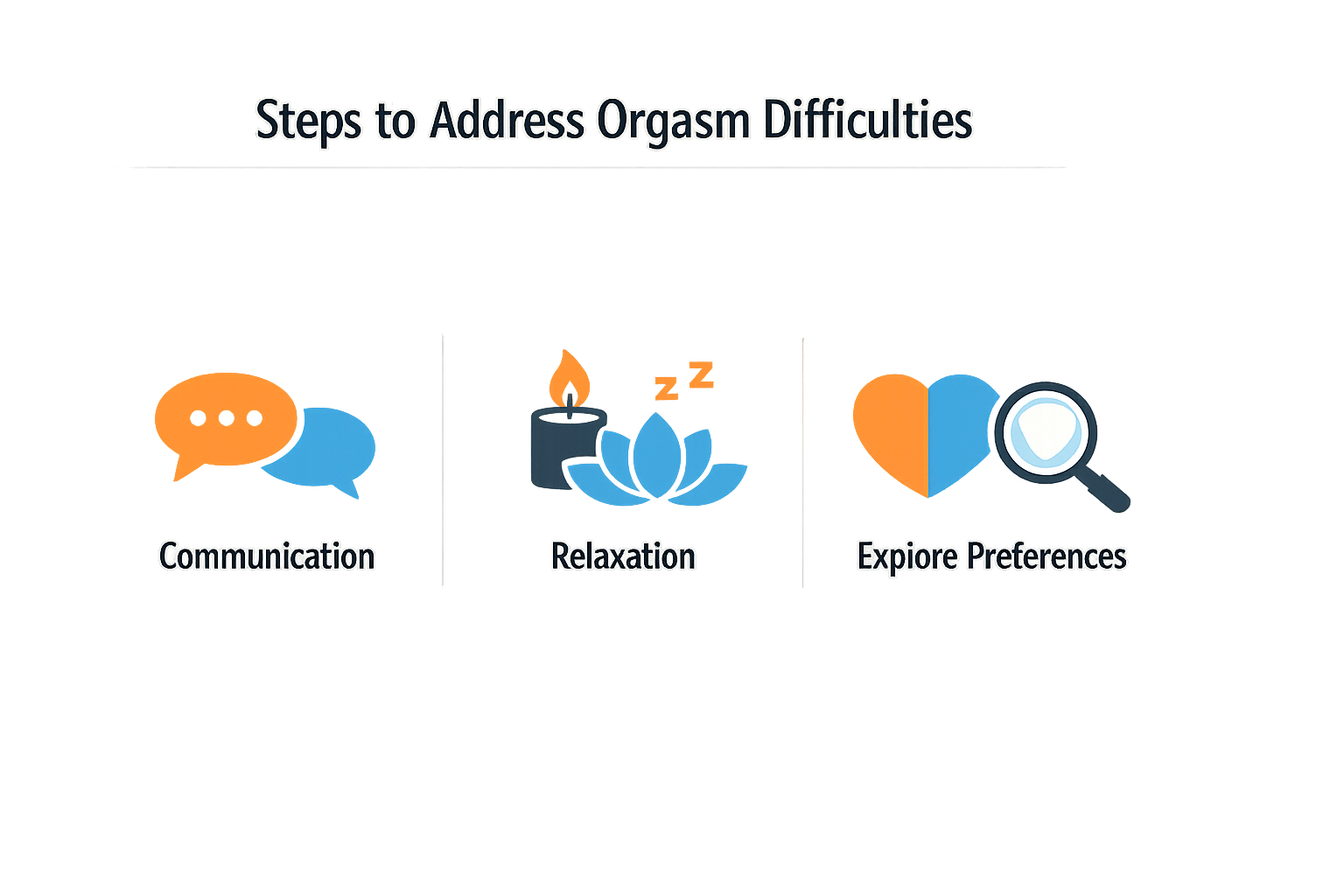
Most people who struggle to orgasm aren't broken — they're just missing one or two pieces of the puzzle. The fix isn't always fast, but it's almost always findable if you're willing to try a few things and rule out what doesn't work.
Talk to a Healthcare Provider First
If orgasm has always been hard or if it suddenly changed, start with your doctor. They can check whether medications, hormone levels, or underlying conditions are getting in the way. Low testosterone in men, for example, often shows up as delayed or absent orgasm alongside erectile issues. Your provider can also rule out nerve damage, chronic pain conditions, or side effects from antidepressants — all fixable or manageable once you know what you're dealing with.
This isn't about admitting defeat. It's about not wasting six months on breathing exercises when the real issue is a medication that needs adjusting.
Try Therapy or Counseling
If the physical side checks out, the next step is often therapy — either solo or with a partner. A sex therapist can help you work through psychological blocks like performance anxiety, past trauma, or shame around sex. They can also teach you how to communicate what you need, which matters more than most people think.
Couples counseling works when the issue is relational — trust problems, mismatched desire, or just not knowing how to talk about what feels good. The goal isn't to fix your partner or fix yourself; it's to figure out what's actually happening and address it directly.
Sex therapists help people focus, fantasize, and enhance stimulation while addressing the psychological and social barriers that interfere with orgasm.
Learn What Works for Your Body
Most people who can't orgasm with a partner can orgasm alone — or could, if they tried. Spend time figuring out what actually works: pressure, rhythm, vibration, clitoral stimulation, internal stimulation, or some combination. This isn't selfish; it's research. You can't tell someone what you need if you don't know yet.
Once you know, bring that information into partnered sex. Show them. Guide their hand. Use a toy during sex if that's what gets you there. There's no rule that says orgasm has to happen from penetration alone or without assistance.
Manage Stress and Mental Load
Stress kills arousal, and arousal is required for orgasm. If your brain is running a to-do list during sex, your body isn't going to cooperate. Try basic stress management first: deep breathing, yoga, a hot bath, or just asking someone else to handle dinner and bedtime for once.
Relaxation and mindfulness techniques have been shown to improve women's ability to reach orgasm. That doesn't mean you need to meditate for an hour — it means giving yourself permission to be present instead of mentally elsewhere.
Step 1
Start with 5 minutes of intentional breathing
Before sex or solo exploration, sit quietly and focus on slow, deep breaths for five minutes. Let your mind settle. If it wanders to your inbox or your kid's permission slip, notice it and bring it back. This isn't woo — it's giving your nervous system a chance to shift out of fight-or-flight mode.
Step 2
Remove distractions from the environment
Lock the door. Silence your phone. If you're worried about being interrupted, you won't relax enough to finish. Create a space where you can actually focus on sensation instead of listening for footsteps.
Step 3
Focus on what feels good, not the outcome
Stop aiming for orgasm as the goal. Aim for pleasure. Notice what feels good, do more of that, and let your body respond without a deadline. Paradoxically, this is often what finally gets people over the line.
Consider Medication or Hormone Adjustments
If a medication is the culprit — antidepressants are a common one — ask your doctor about alternatives or dosage changes. Sometimes switching from one SSRI to another makes the difference. Sometimes adding a second medication counteracts the sexual side effects of the first.
For hormone-related issues, testosterone therapy (in men) or estrogen therapy (in postmenopausal women) can help. Your provider will need bloodwork to confirm levels before prescribing anything, but if that's the missing piece, it's worth knowing.
When to Escalate
If you've tried the basics — ruled out medical causes, worked on communication, managed stress, experimented solo — and nothing has shifted in three to six months, it's time to see a specialist. Sexual medicine physicians and certified sex therapists have tools and frameworks that general practitioners don't. They can also refer you to pelvic floor therapists if muscle tension or pain is part of the picture.
You're not overreacting by asking for help. Orgasm matters to quality of life, and difficulty reaching it is a recognized medical issue with real treatment pathways.
Tips and Tricks for Enhancing Sexual Pleasure
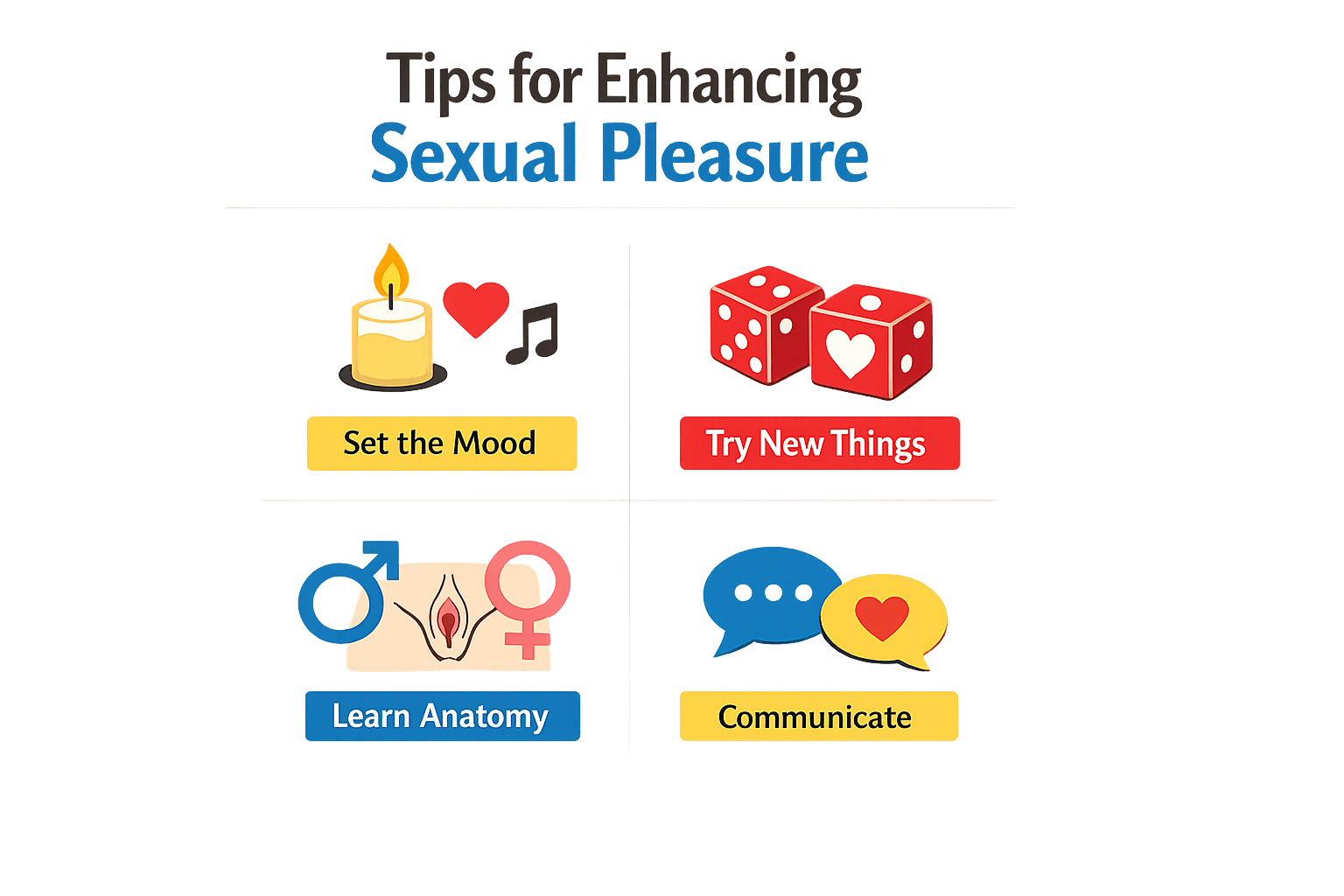
Once you've identified what's in your way, the next step is figuring out what actually works. Most advice here is going to sound basic — because it is. But basic doesn't mean ineffective, and most people skip the basics entirely.
Try Clitoral Stimulation (Seriously)
The majority of women need direct clitoral stimulation to reach orgasm. Vaginal stimulation alone doesn't cut it for most people, which is why the "just relax and it'll happen" advice is so useless. If you're not getting enough clitoral contact during partnered sex, add it yourself — your hand, a toy, whatever gets the job done.
Clit suckers are a solid option if traditional vibrators aren't doing it for you. They use air-pulse technology instead of vibration, and a lot of first-timers find them easier to use than wand-style vibes.
Experiment With Different Types of Stimulation
Orgasm doesn't have one formula. Some people respond to external clitoral stimulation, others prefer internal vaginal pressure, and some need both at the same time. There's no hierarchy here — whatever gets you there is the right answer.
Try varying:
- Pressure: light touch vs. firm pressure
- Speed: slow and steady vs. quick and rhythmic
- Position: different angles change which parts get stimulated
- Combination: clitoral + vaginal stimulation together
The goal isn't to find the "correct" method — it's to find your method.
Reduce Performance Pressure
The fastest way to kill an orgasm is to treat it like a test you're failing. If you're lying there thinking "why isn't this working yet," your brain is busy problem-solving instead of actually feeling anything.
Difficulty reaching orgasm can affect mental health, partnerships, and overall quality of life — but the pressure to perform makes it worse, not better.
Some people find it helpful to take orgasm off the table entirely for a few sessions. Focus on what feels good without the expectation of a specific outcome. It sounds counterintuitive, but removing the goal often makes it easier to get there.
Communicate With Your Partner
If you're having trouble during partnered sex, your partner needs to know what's going on. Most people can't read minds, and they definitely can't feel what you're feeling. If something isn't working, say so. If you need more of something, ask for it.
This doesn't have to be a formal sit-down conversation. A quick "can you move a little to the left" or "keep doing that" works fine. The point is to stop pretending everything's great when it's not.
Use Lube
Dryness makes everything harder — literally. Even if you don't think you need lube, try it anyway. A lot of people assume they're "wet enough," but adding lube can make stimulation feel completely different (in a good way).
Water-based lubes are the safe default. They work with all toy materials and condoms, and they don't leave a residue. Silicone-based lubes last longer but can degrade silicone toys, so check compatibility first.
Consider Professional Support
If you've tried the basics and you're still stuck, it might be time to talk to someone who actually knows what they're doing. A sex therapist can help you work through psychological blocks, and a pelvic floor physical therapist can address muscle tension or pain that's getting in the way.
This isn't a failure — it's just recognizing that some problems need more than a listicle to solve.
Conclusion
Difficulty reaching orgasm isn't rare, and it's not something you need to solve alone. The physical, psychological, and relationship factors we've covered here — from hormonal shifts and medication side effects to stress, past trauma, and communication gaps — can all play a role. The good news: most of these are addressable once you know what you're working with.
Start with the basics. If you haven't explored what works for your body, that's step one — and clit stimulators are a solid, low-pressure place to begin. If you've tried the solo route and it's still not happening, talk to your healthcare provider. They can rule out medical causes, review your medications, and connect you with a therapist who specializes in sexual health if needed. Anorgasmia is a recognized condition with real treatment options — counseling, medication adjustments, hormone therapy, or a combination — and most providers have seen it before.
The friend-group version of this advice: if something isn't working, don't just live with it. You're allowed to want orgasms, you're allowed to ask for help getting there, and you're allowed to try things that feel awkward at first. Your sexual health is part of your overall health — treat it that way.
Related reading
How to Charge a Vibrator Without Its Charger: Can You Charge