
Water-Based vs Silicone Lube: Which to Use With Toys?
Water-Based vs Silicone Lube compared: discover which lubricant works best with your sex toys, compatibility rules, and when to use each type.
 Zoe Clarke

Introduction
Water-Based vs Silicone Lube is the compatibility question every toy buyer faces — and most get it backward. You've got the vibrator in your cart, you know you need lube, and then you're staring at twelve bottles that all claim to be "the best" without explaining what they're best for. Water-based or silicone? Does it actually matter?
It matters. Use the wrong one with the wrong toy and you'll either ruin the toy's surface or spend the entire session reapplying. The good news: the rules are simple once you know them, and most of the confusion comes from brands burying the actual compatibility info three paragraphs deep.
This guide breaks down Water-Based vs Silicone Lube in plain terms — what each type does, which toys they work with, and when to pick one over the other. No fluff, no twelve-step decision trees, just the info you need to grab the right bottle and move on. If you're new to clit stimulators or any other toy category, getting the lube right makes everything else easier.
The short version: water-based works with everything, silicone works with most things but lasts longer. The longer version explains why that matters and what "works with" actually means in practice.
Understanding the Problem

Most first-time buyers walk into the lube aisle thinking it's a simple choice — grab a bottle, move on. Then they see the labels: water-based, silicone-based, hybrid, warming, cooling, organic. The packaging doesn't help. Half the bottles say "safe for all toys," the other half say nothing at all, and your $60 silicone vibrator is sitting in your cart with zero guidance on what won't wreck it.
The confusion gets worse when you start reading. Some sources say silicone lube is fine with everything. Others say it'll destroy silicone toys. Water-based lube sounds safe, but then you hear it dries out fast and needs constant reapplication. Nobody tells you which rule actually matters, so you either buy both and hope for the best, or you skip lube entirely and wonder why everything feels like sandpaper.
The Core Compatibility Problem
Here's the thing nobody puts on the front of the bottle: silicone lube and silicone toys don't mix. The chemical reaction between them can degrade the toy's surface — it gets tacky, discolored, or straight-up melted in spots. Water-based lube doesn't have that problem. It's compatible with every toy material, every condom type, and every body part. The tradeoff is texture and longevity — water-based formulas absorb into skin faster, so you're reaching for the bottle more often.
Most people don't know their toy is silicone until they've already bought the wrong lube. Packaging rarely shouts "THIS IS SILICONE" in a way that registers when you're standing in the aisle. And cheap toys — the ones first-timers usually start with — are often blends or coated plastics that don't behave the way pure silicone does, so the rule feels inconsistent. You follow the advice, it works once, then it doesn't, and now you don't trust any of it.
The other half of the problem is that water-based lube has a reputation for being "the safe boring option." It is safe — that part's true — but it's not boring if you pick a decent formula. The budget-bin stuff at the drugstore is usually thin, sticky, or both. The good versions feel as smooth as silicone and last almost as long. But first-time buyers don't know which brands are good, so they grab the $5 bottle, hate the experience, and assume all water-based lube is like that.
If you're trying to figure out what kind of stimulation you even like, the last thing you need is a lube decision that feels like a chemistry exam. The industry could fix this with clearer labeling and fewer misleading claims, but until that happens, the confusion sits squarely on your shoulders — and it's one more reason people put off buying toys in the first place.
How Do You Choose Between Water-Based vs Silicone Lube?
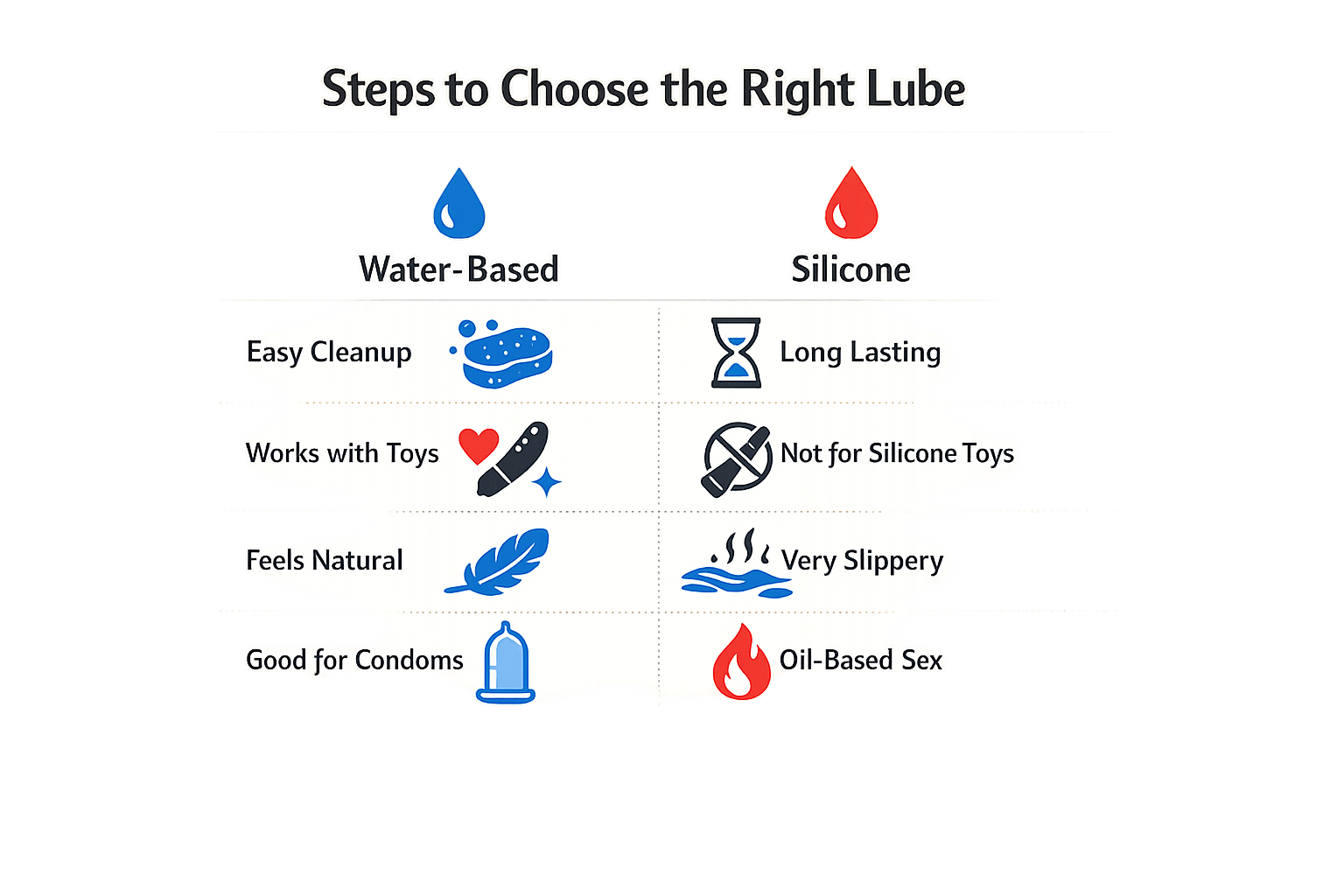
The actual decision isn't complicated — it's just that most guides make it sound like you need a chemistry degree. You don't. Here's the framework that works.
Step 1: Check Your Toy's Material
Look at the box or the product page. If it says "silicone," you're using water-based lube with it. End of story. Water-based works with silicone toys without causing any damage or weird texture changes.
Step 1
Identify the toy material
Check the packaging or product description. Silicone toys are the most common premium material — they're body-safe, non-porous, and easy to clean. If your toy is silicone, write down "water-based only" and move to the next step.
If your toy is made of glass, metal, or hard plastic, you can use either water-based or silicone lube. Those materials don't react with silicone lubricants the way silicone toys do.
What's the Difference in Performance?
Water-based lubes dry out faster. They absorb into skin, they evaporate a bit, and you'll reapply more often during longer sessions. The upside? They rinse off with water, they don't stain sheets, and they're compatible with literally everything.
Silicone lubes last much longer — they don't dry out or absorb, so one application can carry you through an entire session. The tradeoff is cleanup: silicone lube needs soap and warm water to fully remove, and it can leave a slick residue on non-porous surfaces.
Step 2
Match lube type to your session style
For quick solo sessions with a silicone toy: water-based, always. For longer sessions with glass or metal toys where you don't want to reapply: silicone lube works. For anything involving fabric (sheets, harnesses, clothing): stick with water-based to avoid staining.
Step 3: Know the One Rule That Overrides Everything Else
Never use silicone lube with silicone toys. It degrades the toy's surface — the silicone becomes tacky, sticky, and sometimes permanently damaged. Manufacturers are consistent on this: water-based lubricants are the only safe option for high-end silicone products.
If you're not sure what your toy is made of and you can't find the packaging, default to water-based. It's the universal-safe pick.
Step 4: Buy a Small Bottle First
Lube preferences are weirdly personal — thickness, feel, how fast it dries, whether it leaves any residue. Start with a small bottle of a basic water-based formula (most brands have a 2 oz or 4 oz size). If you hate it, you're out ten bucks, not thirty.
Once you know what you like, buy the bigger bottle. Most people end up with one water-based for everyday use and one silicone lube for specific longer sessions with non-silicone toys.
Tips and Tricks for Using Lube with Toys

The actual use part is where most people mess up — not because lube is complicated, but because nobody tells you the boring maintenance stuff that keeps your toys working.
How Much Lube to Use
Start with less than you think you need. You can always add more mid-session, but too much lube turns everything into a slip-and-slide situation where you lose all the friction that makes a toy feel good. A dime-sized amount is a solid baseline for most toys — if you're using a larger toy or going for extended play, add more as needed.
Water-based lube dries out faster, so keep the bottle nearby for quick reapplication. Silicone lube lasts longer, which means you won't need to pause and reload as often.
Cleaning Your Toys After Lube Use
This is the part nobody wants to talk about, but it's the one that actually matters. Lube residue left on a toy creates a breeding ground for bacteria, and yes, that can lead to infections or worse.
Warm soapy water works for most toys. Use a mild, unscented soap and rinse completely — leftover soap can irritate sensitive skin. For waterproof silicone toys, you can also use a dedicated toy cleaner if you prefer, but soap does the job just fine.
Avoid cleansers with alcohol, petrol, or acetone — they'll degrade silicone over time and leave your toy feeling tacky or damaged.
Storage Tips
Don't toss your toys into a drawer together. Silicone toys stored in direct contact with each other can bond or degrade, especially if there's any leftover lube residue. Store each toy in its own pouch or case — most toys come with one, and if yours didn't, a clean sock works.
Keep lube bottles sealed and stored in a cool, dry place. Water-based lubes can separate or get watery if exposed to heat; silicone lubes are more stable but still benefit from consistent storage conditions.
Reapplication During Use
Water-based lube needs refreshing more often than silicone. If things start to feel dry or draggy, add a small amount — you don't need to stop completely, just pause long enough to squeeze out a bit more. Some people keep a small spray bottle of water nearby to reactivate water-based lube instead of adding more product, which works if you're trying to avoid the goopy buildup.
Silicone lube rarely needs reapplication unless you're in water (shower, bath, pool). It stays slick through most sessions without needing a top-up.
What to Do If You Used the Wrong Lube
If you accidentally used silicone lube on a silicone toy, don't panic. Wash the toy immediately with warm soapy water and inspect the surface. If it feels tacky, sticky, or visibly damaged, the silicone may have started to degrade — in that case, replace the toy. If it looks and feels normal after cleaning, you're probably fine, but don't make it a habit.
For more guidance on choosing toys that work well with different types of stimulation, check out Clit Stimulators: How to Choose the Right Type for You or explore tongue vibrators for oral-simulation play.
Frequently asked questions
Can you use silicone lube with silicone toys?
No. Silicone lube can degrade silicone toys, causing tackiness, discoloration, or permanent surface damage. Always use water-based lube with silicone toys.
Which lube lasts longer during sex?
Silicone lube lasts significantly longer than water-based formulas. It doesn't absorb into skin or dry out, so one application usually covers an entire session.
Is water-based lube safe for all toy materials?
Yes. Water-based lube is compatible with silicone, glass, metal, plastic, and all other toy materials. It's the universal-safe option.
Why does water-based lube dry out so fast?
Water-based lubricants absorb into skin and evaporate over time. That's why they require more frequent reapplication compared to silicone-based formulas.
Can you use silicone lube in the shower?
Yes. Silicone lube is waterproof and won't wash away in the shower or bath, making it ideal for water play. Water-based lube rinses off immediately.
How do you remove silicone lube after use?
Silicone lube requires warm soapy water to fully remove. It won't rinse off with water alone and may leave a slick residue on non-porous surfaces.
Conclusion
The Water-Based vs Silicone Lube question doesn't have a one-size-fits-all answer — it has a what are you using it with answer. Water-based works with everything, cleans up fast, and costs less. Silicone lasts longer, feels slicker, and works in water. The choice comes down to your toy material and what kind of session you're planning.
If you're new to lube, start with water-based. It's the safe bet for every toy type, and you won't wreck anything expensive while you figure out what you like. Once you know your routine, silicone makes sense for longer sessions or shower use — just keep it away from silicone toys unless you're willing to test first.
Most people end up keeping both. Water-based for silicone toys and quick cleanup, silicone for everything else when you want something that actually stays put. The real trick is knowing which bottle to grab before you need it.
For more on toys that pair well with the right lube, check out our guide to clit suckers — they work best when friction isn't part of the equation.