
How to Use a G-Spot Vibrator: A Beginner's Guide on How to Use
Learn how to use a g-spot vibrator effectively with this beginner's guide, including tips on positioning, angles, and techniques for pleasure. Discover how to use
 Zoe Clarke
Introduction
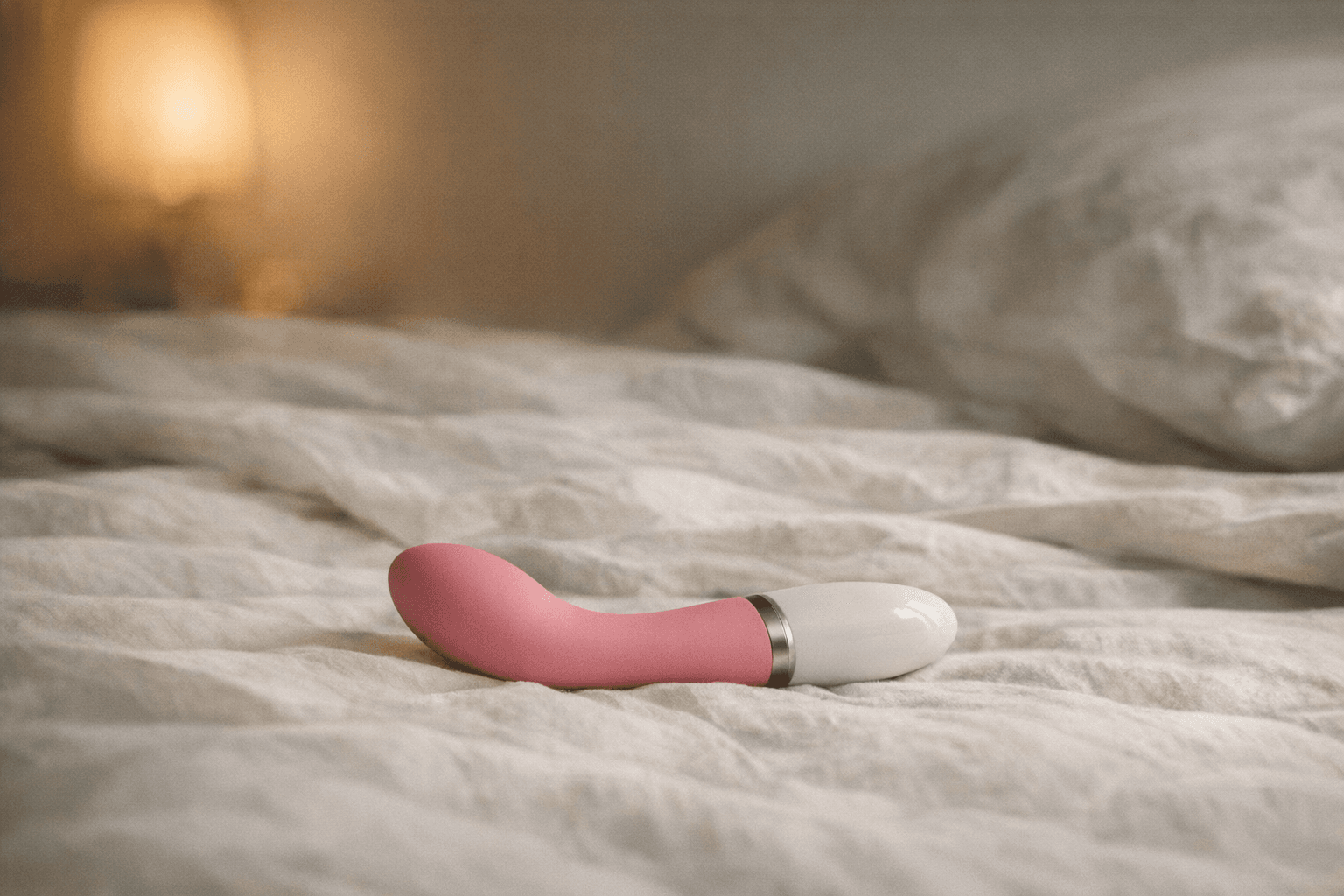
The G-spot vibrator is one of those toys that sounds more intimidating than it actually is. It's a curved vibrator designed to hit a specific spot inside the vagina — the G-spot — which for some people produces a different kind of orgasm than clitoral stimulation alone. The curve is the whole point: it angles the tip forward so you're not fumbling around trying to figure out where to aim.
Most beginner guides make this more complicated than it needs to be. You're not performing surgery. You're using a toy with a built-in roadmap. The curve does most of the work; your job is to find the right angle and pressure that feels good. If you've ever felt like internal stimulation was just "fine" with straight toys or fingers, a G-spot vibrator might be the version that actually clicks.
Here's the thing: not everyone loves G-spot stimulation, and that's fine. Some people find it intense in a good way, some find it uncomfortable, and some don't feel much at all. This guide walks through how to use one effectively so you can figure out which camp you're in. If you're new to internal toys in general, understanding what is a clit and how external stimulation works can help you compare the two sensations.
The appeal is straightforward: G-spot vibrators are designed to reach a spot that's hard to hit with your fingers or a straight toy. The curved tip targets the front vaginal wall, where the G-spot sits. For people who respond to that kind of stimulation, it's a different sensation than clitoral orgasms — deeper, sometimes more full-body, sometimes described as more intense. For others, it's just another type of stimulation to try.
This guide covers the basics: what the G-spot actually is, how to position and use the vibrator, and what to adjust if it's not working. No overcomplicated techniques, no mystical build-up — just the practical steps that make the difference between "this does nothing" and "okay, I get it now."
Understanding the G-Spot
The G-spot is the one area everyone's heard of and half the internet still can't agree on — which is wild, because it's just a textured patch of tissue on the upper wall of the vagina. Not mythical. Not mystical. Just a spot that, when stimulated the right way, can feel really good for a lot of people.
Here's what you're looking for: about an inch inside the vaginal opening (sometimes a bit deeper at 2-3 inches), there's an area that feels slightly rougher or more ridged than the rest of the vaginal canal. When you press up toward your stomach, you're in the right neighborhood. As you stimulate it, you might notice some swelling through the vaginal wall — that's a good sign. It means blood flow is increasing and sensitivity is ramping up.
Why a G-Spot Vibrator Makes a Difference
Your fingers can reach the G-spot, sure. But a G-spot vibrator is specifically curved to hit that angle without requiring you to contort your wrist into a stress position. The curve does the work — it applies consistent pressure to the upper vaginal wall while the vibration adds a layer of stimulation that's hard to replicate manually.
Vibrators designed for G-spot stimulation are typically firmer than other toys, with a pronounced curve or bulbous tip. That firmness matters — the G-spot responds to pressure, not just light touch. A clit stimulator focuses on surface-level sensation; a G-spot vibrator is built to press in and stay put.
What Happens When You Stimulate It
For some people, G-spot stimulation feels like a deep, building pressure — not sharp or intense right away, but cumulative. Others describe it as a "need to pee" sensation at first, which is normal and usually fades as arousal increases. And some people feel very little at all, which is also fine. Anatomy varies. Sensitivity varies. What works for one person might do nothing for another.
The appeal of a vibrator is that it lets you experiment with pressure, angle, and vibration intensity without tiring out your hand. You can focus on what the sensation feels like rather than whether your arm is about to cramp.
Steps to Use a G-Spot Vibrator
Most guides skip the part where you're staring at the thing wondering which end goes where. Let's fix that.
Step 1: Pick Your Space and Get Comfortable
Find somewhere you won't be interrupted. Lock the door if you need to. Lie on your back with a pillow under your hips — this tilts your pelvis forward and makes the angle way easier to work with. You can also try sitting up or lying on your side, but back-and-pillow is the beginner default for a reason.
Step 1
Set up your space
Lie on your back with a pillow under your hips to tilt your pelvis forward. This makes the G-spot angle easier to reach and keeps your wrist from cramping halfway through.
Step 2: Use Lube (Not Optional)
Water-based lube makes everything better — less friction, better glide, and the vibrations transmit more smoothly. Put a generous amount on the curved tip of the vibrator. If it feels like too much, it's probably the right amount.
Step 3: Insert the Curved End First
The smaller, curved end goes in — that's the part designed to target the G-spot, which sits along the inner front wall of the vagina. Insert it slowly, angled toward your belly button, not straight up. The G-spot is about two inches in, on the anterior wall — the side closer to your stomach, not your spine.
If your vibrator has a larger external arm (like dual-stimulation models), that part stays outside and rests against your clitoris. For more on how clitoral and internal stimulation work together, check our anatomy guide.
Step 2
Insert at the right angle
Insert the curved tip slowly, aiming toward your belly button. The G-spot is on the front wall of the vagina, about two inches in — not deep, just angled forward.
Step 4: Find the Right Spot
Once the toy is in, press the curved tip gently upward against the front vaginal wall. You're looking for a slightly textured or spongy area — that's the G-spot. It can take a minute to locate, and it might not feel like much at first. That's normal. Move the toy in small circles or rock it gently back and forth while maintaining that upward pressure.
The G-spot isn't a button — it's more like a zone that responds to sustained, firm pressure rather than light touch.
Step 5: Turn It On and Adjust Intensity
Start on the lowest setting. G-spot vibrators are designed for internal use, and what feels mild externally can feel intense internally. Increase the intensity gradually as you figure out what works. Most people find they need more pressure and less speed than they expect.
Step 3
Start low, go slow
Begin on the lowest vibration setting and increase gradually. Internal vibrations feel more intense than external ones, so what seems weak at first might be exactly right once it's in place.
Step 6: Experiment With Movement
Try rocking the toy gently in a "come hither" motion — pulling the curved tip toward your belly button in small strokes. You can also hold it steady and let the vibrations do the work, or combine movement with different vibration patterns if your toy has them. There's no single right technique; it's about what your body responds to.
Tips and Tricks for Maximum Pleasure
Once you've got the basic motion down, here's where you make it actually good — not just functional, but the kind of session you'd want to repeat.
Experiment with angles and pressure
The G-spot isn't a button you press once and call it done. Most people find it responds better to firm, sustained pressure than to jackhammering. Try angling the curved tip toward your belly button and holding it there while the vibration does its thing — that steady contact often works better than thrusting in and out like you're following some porn script.
If the angle feels off, adjust your hips. Lie on your back with a pillow under your lower back, or try being on your knees with your chest down. The G-spot's location shifts slightly depending on your position, so what worked last time might need tweaking this time.
Cycle through vibration modes (and actually pay attention)
Most G-spot vibrators come with multiple settings — steady buzz, pulsing, escalating patterns. Don't just leave it on the first setting because you're too impatient to click through. The pulsing modes, especially, can feel more intense on internal tissue than a constant vibration. If your toy has 8 modes, try at least half of them before you decide what works.
Add clitoral stimulation
Fewer than 20% of vulva-owners can climax solely with vaginal stimulation or intercourse. That stat isn't a failure on your part — it's just anatomy. If you want a more reliable finish, add a clit stimulator or use your free hand. The G-spot and clitoris are part of the same nerve network anyway, so layering both types of stimulation often makes each one feel stronger.
Use more lube than you think you need
Internal toys create friction in a way external ones don't. Even if you're plenty aroused, add lube — silicone-based if your toy is hard plastic, water-based if it's silicone. Reapply halfway through if things start to feel draggy. There's no award for doing this dry.
Vibrators can be used on almost any erogenous zone — don't limit yourself to the obvious spots.
Take your time (and lower your expectations the first time)
If this is your first G-spot session, it might feel like nothing, or weird, or like you need to pee. That's normal. The G-spot often needs a few tries before your body figures out what's happening. Don't force it, don't perform for an imaginary audience, and don't decide after one attempt that "G-spot toys aren't for me." Give it three tries minimum before you write it off.
Conclusion
G-spot vibrators aren't complicated — they're just curved toys designed to reach a specific spot. Most of the confusion comes from overthinking it. The steps are straightforward: use water-based lube, insert the toy with the curve pointing up, angle it toward your stomach, and adjust the pressure and vibration until something clicks. If it doesn't work the first time, that's normal. The G-spot isn't a magic button, and not everyone responds to it the same way.
The real trick is treating this like exploration, not a checklist. Fewer than 20% of vulva-owners can climax solely with vaginal stimulation or intercourse, so if you need clitoral stimulation too, that's not a failure — it's just how your body works. Combine your G-spot vibrator with a clit stimulator if that's what feels good. The goal is pleasure, not proving a point.
Clean your toy after every use, store it properly, and don't stress if it takes a few tries to figure out your rhythm. The learning curve is part of it — and honestly, that's the fun part.