
How to Make a Vibrator Quiet: Tips and Tricks
Learn effective tips on how to make a vibrator quieter for discreet use without sacrificing pleasure. Practical solutions for noise reduction.
 Zoe Clarke
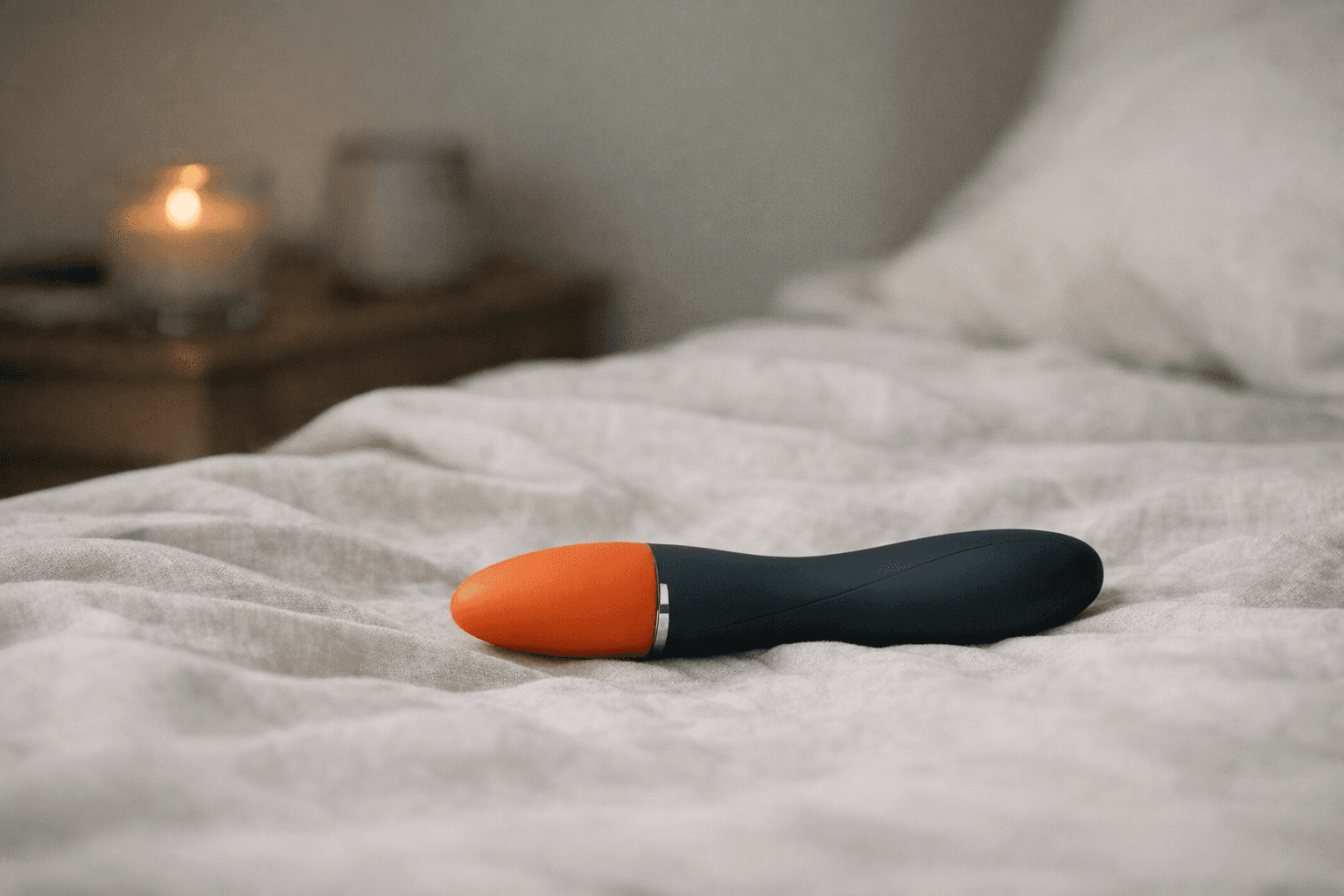
Introduction
How to make a vibrator quieter starts with understanding that the noise your vibrator makes isn't just about the motor — it's about where you use it, what it's touching, and how the toy is built. Most people assume a loud vibrator means they're stuck with it, but that's not true. Small changes to how and where you use your toy can drop the noise level enough that it stops being a distraction or a privacy concern.
Vibrators can enhance sexual desire, arousal, and overall satisfaction, so the goal here isn't to avoid using them — it's to make them work better in your actual living situation. Whether you're in a shared apartment, visiting family, or just want less mechanical noise during solo time, the fixes are straightforward.
This guide walks through the real reasons vibrators get loud, the practical steps that actually reduce noise, and what to look for if you're buying a new toy with discretion in mind. No fluff, no product pitches — just the tactics that work when you need a vibrator to cooperate with your living situation.
Why Noise Matters
Privacy is the obvious reason, but it's not the only one. A loud vibrator pulls you out of the moment. It makes you hyper-aware of who might hear, what time it is, whether the person in the next room is awake. That mental distraction is the opposite of what a vibrator is supposed to do.
For people in shared housing, dorms, or multi-generational homes, vibrator noise isn't a minor inconvenience — it's the difference between using the toy or not using it. And if the alternative is skipping it entirely, that's a loss. The benefits of vibrators — better arousal, stronger orgasms, improved genital sensation — don't require a silent motor, but they do require a setup where you're not constantly listening for footsteps in the hallway.
Why Vibrators Get Loud
The noise thing is real — and it's not just paranoia. Most vibrators use small, high-RPM motors that hum, buzz, or rattle loud enough to carry through walls, doors, or thin apartment floors. If you live with roommates, family, or in a building where sound travels, that's a problem.
Here's the thing: motor noise isn't a design flaw — it's a byproduct of how the motor delivers vibration. Cheaper motors tend to be louder because they use simpler mechanisms with more mechanical friction. Higher-end motors can be quieter, but even premium toys aren't silent. The vibration itself creates sound, and the plastic or silicone housing amplifies it.
Surface Contact Amplifies Sound
Privacy is the obvious reason, but it's not the only one. Loud toys can break focus — if you're worried about being overheard, you're not relaxed enough to enjoy yourself. For people in shared living situations, the anxiety around noise can make using a vibrator feel more stressful than it's worth.
Some toys are designed with noise reduction in mind. Features like Smart Silence (available on certain air-pulse models) prevent the motor from running until the toy makes contact with your body, which cuts down on unnecessary noise during prep or between sessions. But most vibrators don't have that tech, and even the ones that do still make sound when they're actually in use.
The other issue: surface contact. When a vibrator touches a hard surface — a bed frame, a nightstand, a wall — it transmits vibration into that surface, which acts like a speaker. That's why a toy that seems quiet in your hand can suddenly sound like a construction site when it's pressed against something solid.
Bottom line: if your vibrator is louder than you'd like, you're not stuck with it. There are real, practical ways to reduce the noise without replacing the toy or sacrificing what makes it work.
How to Make a Vibrator Quieter: Step-by-Step Methods
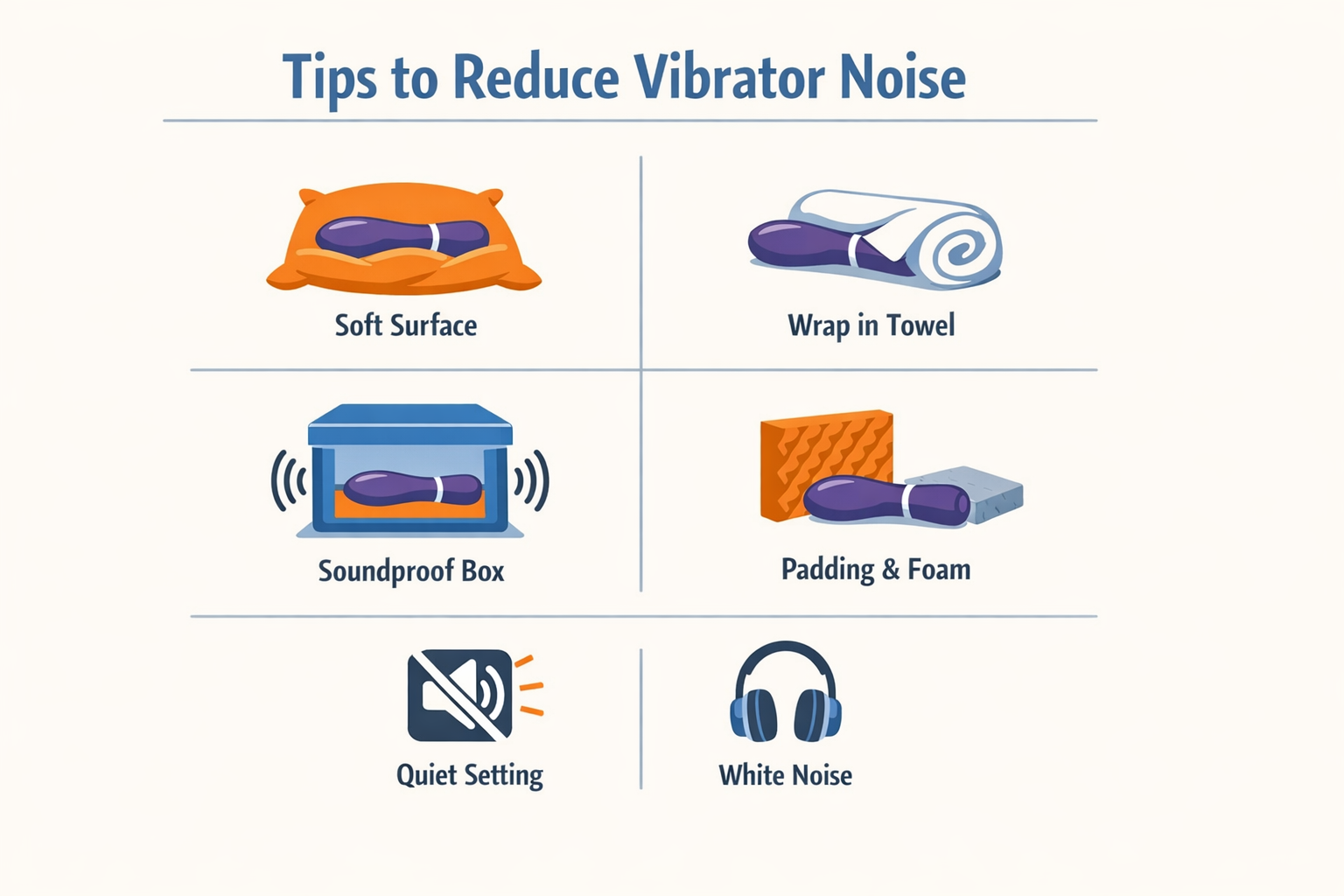
Here's the thing: most vibrator noise comes from where the toy touches a surface, not from the motor itself. Fix the contact points, and you fix most of the problem.
Step 1: Use It Under a Pillow or Blanket
Step 1
Muffle with fabric
Place the vibrator under a pillow or fold it into a blanket while you're using it. The fabric absorbs motor vibrations and dampens the sound before it travels. This works best with smaller toys like bullet vibrators or clit stimulators — bigger wand-style vibes are harder to muffle without losing contact.
Don't wrap it so tight you can't reach the controls. You want sound reduction, not a wrestling match.
Step 2: Run Water or Background Noise
Turn on a fan, play music, or run the shower. White noise doesn't make your vibrator quieter — it just makes everything else louder. If you live with roommates or family, this is the easiest fix that doesn't require buying anything new.
Some people leave a bathroom fan running. Others put on a podcast. Both work.
Step 3: Try It in Water (If It's Waterproof)
Step 3
Submerge for sound dampening
If your vibrator is fully waterproof, use it in the bathtub. Water muffles vibrations better than air does, and the sound of running water covers what's left. Check the product specs first — "splash-proof" and "waterproof" are not the same thing.
This method works well for toys with IPX7 ratings or higher. Don't try it with battery-powered toys unless the manual explicitly says it's safe.
Step 4: Hold It Away from Hard Surfaces
Vibrators get louder when they touch nightstands, headboards, or walls. The surface acts like a speaker cone and amplifies the motor hum. Hold the toy in your hand or press it against your body instead of letting it rest on furniture.
If you need both hands free, put a folded towel between the toy and whatever it's touching.
Step 5: Check for Loose Parts or Low Battery
Sometimes a vibrator gets noisier because something's rattling inside, or the battery is dying. Rechargeable toys can hum louder when the charge drops below 20%. If your toy suddenly sounds like a lawnmower, plug it in and see if that fixes it.
Loose battery caps or poorly seated attachments also create extra noise. Tighten everything before you start.
Tips and Tricks

Here's what nobody tells you: the internet has a lot of opinions about quiet vibrators, and most of them are actually useful.
Buy Quiet From the Start
If you're shopping for a new vibrator and noise is a real concern, skip the guesswork. Some toys are engineered for whisper-quiet performance — the plusOne Rose Arouser and the BodyWand Mini both get called out for subdued sound levels. You're not sacrificing power for quiet; you're just buying a motor that doesn't announce itself.
Use It Under the Covers
This one's obvious but underrated. A comforter, blanket, or even a thick towel muffles sound better than most DIY hacks. If you're in a shared living space, run it under the covers — the fabric absorbs vibration noise without affecting what you feel.
Turn On Background Noise
A fan, white noise machine, or even a YouTube video playing on your phone does more than you'd think. You're not trying to drown out a jet engine; you're just masking the hum enough that it doesn't carry through walls. Most vibrators sit in the 40–60 decibel range — about the same as a quiet conversation — so light background noise is enough.
Check the Battery or Charge Level
Dying batteries make motors work harder, and harder motors get louder. If your vibrator sounds louder than usual, charge it or swap the batteries. A fully powered toy runs smoother and quieter.
Know When to Upgrade
If you've tried everything and your vibrator still sounds like a lawn mower, it might just be a loud toy. Budget picks under $20 often use cheaper motors that rattle. If discretion matters to you, it's worth spending $30–50 on a clit stimulator that's designed to stay quiet.
The cheapest vibrator isn't always the one you can use without worrying who hears it.
What Makes Some Vibrators Quieter Than Others?
Motor type matters. Traditional eccentric rotating mass (ERM) motors — the kind in most bullet vibes — create more mechanical noise than linear resonant actuators (LRAs) or air-pulse motors. Clit suckers that use air pressure instead of vibration tend to run quieter because they don't rely on a spinning weight.
Build quality also plays a role. Toys with reinforced motor housings, tighter tolerances, and better insulation dampen sound before it escapes. That's why two toys at the same price point can have wildly different noise profiles — one manufacturer invested in acoustic engineering, the other didn't.
Size doesn't predict noise. Some compact butterfly vibrators are whisper-quiet, while certain full-size wands sound like power tools. Check reviews that specifically mention noise levels, and look for terms like "subdued," "whisper-quiet," or "library-safe."
Conclusion
Noise doesn't have to be the thing that keeps you from using a toy you like. Most of the fixes here — wrapping it in a towel, running a fan, switching to a lower setting — don't cost anything and take about ten seconds to set up. The ones that do cost something (buying a quieter toy) are worth it if discretion actually matters to you.
Here's the thing: if you're living with roommates, family, or anyone who might hear through a wall, the combination approach works best. Pick a toy that's already on the quieter end (air-pulse or bullet), use it on a medium setting instead of maxing it out, and throw in some white noise. That's the stack most people land on once they stop overthinking it.
If you're still figuring out what kind of stimulation you even like, check out our guide to clit stimulators — it covers the full range of options and which ones tend to run quieter. For more on air-pulse technology specifically, see our breakdown of how clit suckers work. The right toy is the one you'll actually use, and if noise is the thing stopping you, it's not the right toy.
Try one or two of these tips tonight. You'll know within five minutes whether it's enough, and if it's not, you know what to adjust next time.
Frequently asked questions
How do I make my vibrator quieter without buying a new one?
Use it under a pillow or blanket to muffle sound, hold it away from hard surfaces that amplify noise, and run background noise like a fan or music. Keeping the toy fully charged also helps — low batteries make motors louder.
What type of vibrator is the quietest?
Air-pulse toys like clit suckers tend to be quieter than traditional vibrators because they use pressure waves instead of a spinning motor. Linear resonant actuators (LRAs) are also quieter than eccentric rotating mass (ERM) motors.
Does using a vibrator in water make it quieter?
Yes, if the toy is fully waterproof (IPX7 or higher). Water dampens vibrations better than air, and running water adds background noise. Don't submerge splash-proof toys — check the manual first.
Why is my vibrator louder than it used to be?
Low battery charge, loose parts, or a worn motor can all increase noise. Try recharging it fully and checking that all components are tightened. If it's still loud, the motor may be wearing out.