
Vibrator Chargers: How to Find the Right One for Any Toy
Lost your charger for vibrator? Learn how to identify your toy's charging port, find compatible replacement cables, and keep your favorite vibe powered up.
 Zoe Clarke
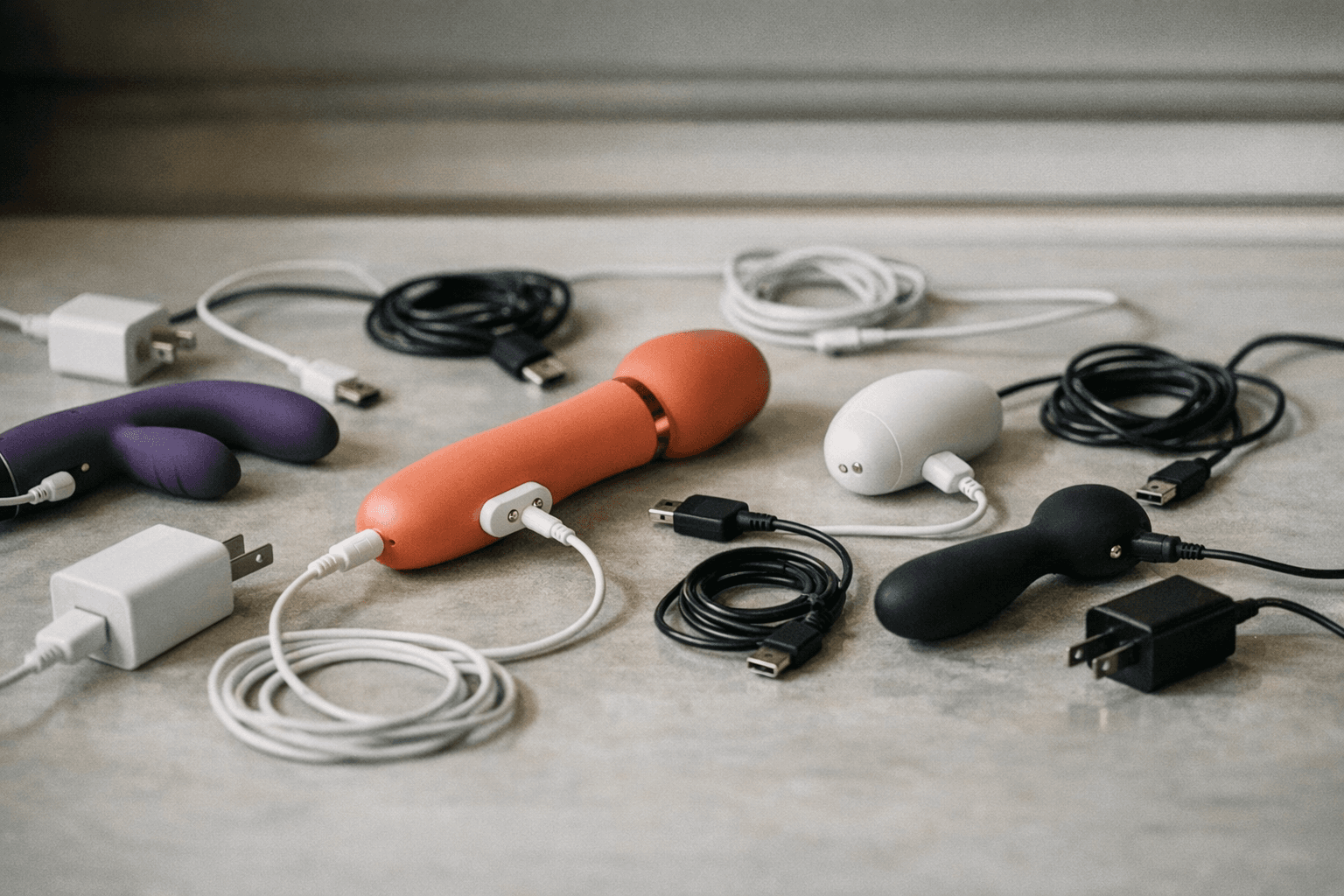
Finding the Right Charger for Vibrator
A charger for vibrator is the cable or charging dock that powers up your rechargeable sex toy. You lost the charger. It happens — the cable falls behind the nightstand, gets tossed in a move, or just vanishes into the drawer abyss where all the good stuff goes to hide. Now your favorite toy is dead, and you're staring at a charging port wondering what kind of cable even fits that thing.
Here's the deal: most rechargeable vibrators don't use standard charging cables. The rose toy that blew up on TikTok? Magnetic disc charger. That bullet vibe you bought three years ago? Probably a proprietary 2-pin connector. The newer wand you splurged on? Maybe USB-C, maybe not. And no, you can't just grab any cable from your junk drawer and hope it works — using the wrong charger can fry your toy's battery or damage the port.
This guide walks you through identifying your vibrator's charging port, finding a compatible replacement cable, and keeping your toys powered up without guesswork. We'll cover the most common port types, where to buy legit replacements, and what to do when the manufacturer doesn't sell spares. If you're trying to figure out what kind of stimulation your toy delivers, that's a separate question — this is purely about the charger.
Most people don't think about the charger until it's gone, but knowing what you're working with ahead of time makes replacement a five-minute fix instead of a three-day research project.
Learn how to find the right charger for vibrator for any toy in this comprehensive guide.
What is a Vibrator Charger?
A vibrator charger is the cable or charging dock that powers up your rechargeable sex toy. Most modern vibrators don't use batteries anymore — they come with a built-in rechargeable battery and a specific cable that connects to the toy's charging port. The charger transfers power from a USB port (or wall adapter) into the toy's battery, usually taking anywhere from 30 minutes to two hours for a full charge.
The tricky part: there's no universal standard. Some toys use magnetic charging cables that snap onto contact points on the toy's surface. Others have a small pin-style connector that plugs into a dedicated charging port. A few use USB-C or micro-USB ports directly on the toy. The cable that came with your vibrator is designed specifically for that toy's charging system — which is why losing it becomes a problem.
Why Vibrators Need Their Own Chargers
Unlike your phone, which probably uses USB-C or Lightning and works with any cable that fits, vibrators are waterproof (or at least water-resistant). That means their charging ports are sealed or covered to keep water out. The charging cable has to match that seal — whether it's a magnetic connector that sits flush against the toy's surface or a proprietary plug that fits into a specific port shape. Using the wrong cable won't just fail to charge the toy; it can damage the charging port or short out the battery.
Some higher-end toys (especially clit stimulators and wand vibrators) use standardized ports like USB-C, which makes replacement easier. But the majority of budget and mid-tier toys — the ones most people own — come with a unique cable that only works with that model. If you lose it, you're hunting for a replacement that matches your toy's exact charging system.
Why the Right Charger Matters
Using the wrong charger for vibrator isn't just inconvenient — it can actually damage your toy. Most rechargeable vibrators use lithium polymer batteries, and those batteries expect a specific voltage and current. Plug in the wrong cable, and you risk overcharging, undercharging, or frying the charging circuit entirely.
The most common mistake? Assuming any USB cable will work. It won't. Magnetic charging contacts need to align exactly with the pins on your toy, and proprietary plugs won't fit anything except the model they were designed for. If the charger doesn't snap into place or the LED doesn't blink when you connect it, you're using the wrong one.
What Happens When You Use the Wrong Charger
Most modern vibrators have some built-in protection, but it's not foolproof. Overcharging can degrade the battery faster, shortening the toy's lifespan. Undercharging means your toy dies mid-session, which is annoying at best. Worst case? You short the charging contacts and brick the toy entirely.
The LED light on your charger is the tell. A blinking light means it's charging; a solid light means it's done. If you see no light at all, either the charger is incompatible or the contacts need cleaning — wipe both the toy and the cable with a damp cloth and try again.
Why Compatibility Isn't Negotiable
Vibrator chargers aren't universal. Even if two toys look similar, their charging ports might be completely different. We-Vibe uses magnetic snap-on cables for most models, but the contact layout varies by product line. Other brands use barrel plugs, micro-USB, or USB-C — and even within USB types, the pinout can differ.
If you've lost your original charger, your best bet is to contact the manufacturer directly or buy from an authorized retailer. Generic "universal" chargers rarely work as advertised, and the ones that do often charge slower or less reliably than the original. For more on how different types of vibrating panties handle charging, check out our breakdown of wearable toy power systems.
The cheapest replacement charger is the one that actually works with your toy — not the one that's $5 cheaper and might fry it.
How to Choose the Right Charger for Vibrator
Most people lose their charger and panic-buy the first replacement they see on Amazon. Here's the thing: most of those cables won't work, and the ones that do work might fry your toy's battery if the voltage is wrong. The right charger for your vibrator depends on three things — the port type, the voltage, and whether your toy uses proprietary contacts.
Identify Your Toy's Charging Port
Flip your vibrator over and look for the charging port. Most rechargeable toys use one of three types: magnetic contact points (usually two small metal circles), a micro-USB or USB-C port (the same kind your phone uses), or a proprietary charging cradle that only fits one brand.
Magnetic chargers snap onto metal contacts on the toy's body. If you see two small metal dots — usually near the base or on a flat surface — that's a magnetic system. USB ports look like the ones on your phone or tablet. Proprietary cradles are the ones where the toy sits in a custom-shaped base; We-Vibe's charging bases are the most common example.
Check the Voltage and Amperage
Once you know the port type, check the voltage. Most vibrators charge at 5V (the USB standard), but some high-powered toys need more. The original charger usually has the specs printed on the cable or the USB plug — look for something like "Output: 5V 1A" or "5V 500mA."
If you can't find the original charger, check the manufacturer's website or the product manual. Using a charger with the wrong voltage can overheat the battery or fail to charge it at all. When in doubt, stick with 5V — it's the safest bet for most rechargeable toys.
Step 1
Find the voltage on your original charger
Look for text like "Output: 5V" printed on the USB plug or cable. If the charger is missing, check the product manual or the brand's FAQ page — most manufacturers list replacement charger specs there.
Step 2
Match the port type exactly
If your toy uses a magnetic charger, measure the distance between the two contact points with a ruler. Magnetic chargers aren't universal — a We-Vibe cable won't fit a Satisfyer toy even if both use two-pin magnets. For USB ports, confirm whether it's micro-USB (older standard, wider plug) or USB-C (newer, reversible plug).
Step 3
Buy from the manufacturer first
Most brands sell replacement chargers directly. We-Vibe, Lovense, and Satisfyer all stock OEM cables on their sites. Generic magnetic chargers exist, but they're hit-or-miss — the contact spacing might be slightly off, or the voltage might not match. If you're buying third-party, read reviews that mention your specific toy model.
When to Skip the Generic Cable
Generic USB cables work fine if your toy has a standard micro-USB or USB-C port. But magnetic chargers and proprietary cradles are a different story. A $6 generic magnetic cable might work for a few charges, then stop snapping into place or fail to deliver consistent power.
If your toy cost more than $50, buy the manufacturer's replacement. If it's a budget pick under $30 and the generic cable is half the price, it's worth the gamble — just don't leave it charging overnight until you've tested it a few times. For more guidance on choosing reliable toys that won't strand you with charging issues, check out our guide to clit stimulators.
Best Practices for Charging Your Vibrator
Most people treat charging their vibrator like charging their phone — plug it in when it's dead, unplug it when it's full, done. That works, but a few small habits make a real difference in how long your toy lasts and how reliably it performs.
Check Your Voltage Before First Use
If you're using a wall adapter (not just a USB cable into a computer), check that your local voltage matches what's printed on the charger. This matters more if you travel internationally or bought a toy from a non-US retailer. Most modern chargers auto-adjust, but older or budget models don't always — and plugging a 110V-only charger into a 220V outlet will fry it immediately.
Charge Regularly, Even When You're Not Using It
Rechargeable batteries degrade faster when they sit empty for long periods. If you're not using a toy for a few weeks, give it a quick charge anyway — you don't need to run it to full, just enough to keep the battery active. This is especially true for lithium-ion batteries, which most rechargeable vibrators use.
Don't Let It Overheat While Charging
Some toys — especially higher-powered models — generate heat while charging. If your vibrator feels hot to the touch (above body temperature), unplug it and let it cool. Most modern toys have thermal cutoffs that stop charging above a certain temperature, but not all budget models do. If your toy won't charge and feels warm, let it sit for 20 minutes and try again.
Use the Right USB Port
If you're charging via USB, use a wall adapter or a powered USB hub — not a laptop that's asleep or in standby mode. Computers in sleep mode often cut power to USB ports, which means your toy won't charge even though the cable's plugged in. If your toy has a low-battery indicator that blinks every few seconds, it needs a full charge cycle — not just a quick 20-minute plug-in.
Keep the Charging Port Clean and Dry
Magnetic and pin-style charging ports collect lint, dust, and body oil over time. Before you plug in, wipe the port with a dry cloth or a cotton swab. If the port is damp (from cleaning or storage), let it air-dry completely before charging — moisture in the port can short the connection or corrode the pins.
Don't Store It Plugged In
Once your toy is fully charged, unplug it. Leaving it plugged in 24/7 doesn't ruin the battery overnight, but it does shorten its lifespan over months. Most rechargeable vibrators don't have the same overcharge protection that phones do, so the battery keeps cycling even when it's full.
If you want a deeper dive into how different charging systems work, check out our guide to clit suckers — most air-pulse toys use magnetic charging, and the same best practices apply.
Common Mistakes When Using Vibrator Chargers
Most vibrator charging problems aren't actually charger problems — they're user error. Here's what trips people up.
Using the Wrong Power Source
Plugging your vibrator charger into a fast-charging phone adapter or a random USB hub sounds convenient, but it's the number-one way to fry a toy's battery. Most rechargeable vibrators are designed for standard 5V USB power — the kind you get from a computer port or a basic wall adapter. Fast chargers push higher voltage, and cheap multi-port hubs deliver inconsistent current. Stick to the adapter that came with the toy, or use a plain 5V USB wall plug.
Ignoring Dirty Charging Contacts
Magnetic charging contacts pick up lint, lube residue, and dust. If your toy won't charge, the problem is usually a dirty contact point — not a dead battery. Wipe both the toy's charging contacts and the charger's pins with a damp cloth before you plug in. If the LED light on the charger isn't blinking when you connect it, misaligned or dirty contacts are the likely culprit.
Leaving It Plugged In for Days
Overcharging isn't as catastrophic as it used to be — most modern toys have built-in protections — but leaving a vibrator on the charger for weeks at a time still degrades the battery faster. Once the LED light switches from blinking to solid, unplug it. Rechargeable lithium polymer batteries last longest when you charge them to full and then disconnect.
Storing It Dead
The opposite mistake: letting a rechargeable toy sit unused and uncharged for months. Lithium polymer batteries degrade faster when stored at zero charge. If you're not using a toy regularly, charge it to about 50–70% and store it in a cool, dry place. Check it every few months and top it off if needed.
Forcing Misaligned Magnetic Chargers
Magnetic chargers snap into place when aligned correctly. If you're forcing it or the connection feels loose, you've got the polarity wrong or the contacts aren't lined up. Rotate the charger 180 degrees and let the magnets do the work — they'll pull into position if it's right. Forcing a misaligned charger can bend the pins or damage the toy's charging port.
Assuming All USB Cables Are Interchangeable
They're not. A standard USB-A to micro-USB cable might fit your toy's port, but that doesn't mean it's delivering the right current or that the pinout matches. Proprietary magnetic chargers and two-prong charging cables are brand-specific for a reason. If you lose the original charger, contact the manufacturer or buy a verified replacement — don't assume a similar-looking cable will work. For more on hands-free options that avoid charging hassles altogether, check out our guide to butterfly vibrators.
Not Checking the Charging Port for Water
Waterproof toys are great, but water in the charging port isn't. If you've just washed your vibrator and immediately plug it in, any moisture in the charging contacts can cause a short or corrosion. Dry the toy completely — especially around the charging port — before you connect the charger. A quick wipe with a towel and a few minutes of air-drying does the job.
Frequently asked questions
Can I use any USB cable to charge my vibrator?
No — most rechargeable vibrators use proprietary magnetic charging contacts that only work with the cable that came in the box. The connector shape, pin layout, and contact spacing are manufacturer-specific. A standard USB cable won't physically attach to the charging port on your toy.
If you lost the original cable, you need to buy a replacement from the manufacturer or an authorized retailer. Generic "universal" vibrator chargers rarely work across brands.
What if my vibrator won't charge at all?
Start with the basics: make sure the magnetic charging contacts on both the toy and the cable are clean. Wipe them with a damp cloth — lint, lube residue, and dust all block the connection.
If the LED light on the toy doesn't blink when you plug it in, check that the cable is fully seated in a working USB port. Try a different port or wall adapter. If the toy has been dead for months, it may need 10–15 minutes on the charger before the indicator light turns on.
How long does it take to fully charge a vibrator?
Most rechargeable vibrators take 1–2 hours to reach a full charge. The LED indicator will stop blinking and stay solid when charging is complete. Some toys charge faster — around 60 minutes — while larger or dual-motor models can take closer to 2.5 hours.
Don't leave your toy on the charger for days at a time. Unplug it once the light goes solid.
Can I charge my vibrator with a phone charger or laptop USB port?
Yes — as long as you're using the toy's original magnetic charging cable. The USB end plugs into any standard USB port: phone chargers, laptops, power banks, or car adapters all work. The toy draws the power it needs; a 2-amp phone charger won't overcharge a vibrator that only pulls 0.5 amps.
Just don't use a damaged or frayed cable, and avoid charging in extreme heat.
Why does my charger get warm while charging?
Some warmth is normal — lithium polymer batteries generate heat as they charge. The cable and the toy's charging contacts may feel slightly warm to the touch. If the cable or toy gets hot enough that you can't comfortably hold it, unplug immediately. That's a sign of a short circuit or a failing battery.
The charger will not function if the temperature exceeds 45 degrees Celsius — a built-in safety feature to prevent overheating.
Do I need to let the battery drain completely before recharging?
No. Modern rechargeable vibrators use lithium polymer batteries, which don't have a "memory effect." You can top off the charge whenever it's convenient. In fact, letting the battery drain to zero repeatedly can shorten its lifespan. Charge it when it gets low, and don't stress about running it all the way down.
Where can I buy a replacement charger if I lost mine?
Contact the manufacturer first. Most brands sell replacement chargers directly on their website or through customer service. You can also check the retailer where you bought the toy — some stock spare cables for popular models.
Avoid third-party "universal" chargers on Amazon unless the product page explicitly lists your toy's model number as compatible. The wrong connector can damage the charging contacts.
Can I use my vibrator while it's charging?
No. Most vibrators disable the motor while plugged in, and using a toy with the charging cable attached is a safety risk. The magnetic connector isn't designed to handle movement or pressure during use. Let it charge fully, unplug it, and then turn it on.
How do I store my vibrator and charger when not in use?
Store the toy in a cool, dry place — ideally in the storage pouch it came with or on its charging base if it has one. Keep the charging cable coiled loosely; tight wraps around your hand or the toy can fray the wire over time. Don't leave the toy plugged in for weeks at a stretch.
Wrapping It Up: The Right Charger for Vibrator
Losing a charger for vibrator doesn't have to mean retiring your favorite toy. Most charging issues come down to identifying the right port type — magnetic, pin, or USB — and matching it to a compatible cable. Check your manual first, contact the manufacturer second, and only then start hunting for third-party replacements.
The right charger keeps your toy working as intended. The wrong one can damage the battery, corrode the charging port, or turn a $70 vibrator into a paperweight. It's not dramatic — it's just how lithium-ion batteries and waterproof seals work.
If you're still figuring out which toys are worth the investment in the first place, our guide to clit stimulators breaks down the categories that matter most for beginners. Once you've found the one, keeping it charged is the easy part — as long as you're using the cable it was designed for.
Store your charger with your toy. Label it if you own multiples. And if a manufacturer discontinues support for your model, that's usually the signal to upgrade, not to rig a workaround that might wreck the device.