
Best Couples Vibrators: Our Top Picks for 2025
Explore the best couples vibrators of 2025, reviewed and tested for shared pleasure. Find your perfect match from our expert-tested recommendations.
 Zoe Clarke
Introduction
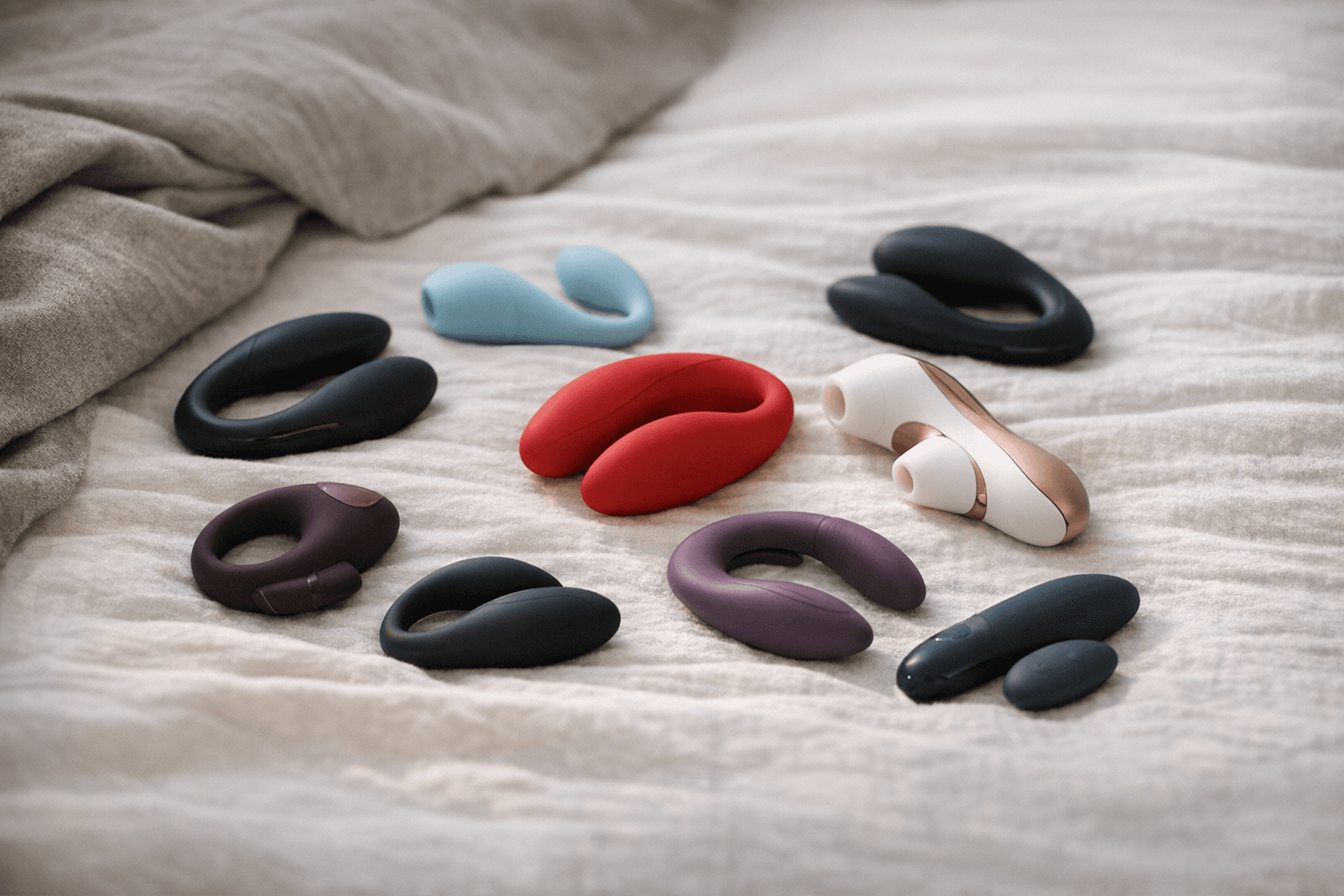
The best couples vibrators are devices designed to enhance intimacy by providing shared pleasure for both partners during penetrative sex. These aren't your standard solo toys — they're specifically engineered to stay in place during penetration while delivering clitoral stimulation at the same time. The result? Simultaneous pleasure for both partners without anyone needing to hold anything or coordinate hand placement mid-action.
Couples vibrators get a lot of hype, and most of it is deserved. The category has come a long way from the clunky, one-size-fits-nobody designs that dominated a decade ago. Modern couples vibrators are adjustable, app-enabled, and actually account for the fact that bodies are different. The We-Vibe Sync, for example, became a bestseller because it solved the biggest complaint about earlier models: fit. An adjustable hinge means it works for more body types instead of popping out or feeling uncomfortable halfway through.
That said, not every couples vibrator works for every couple. Some prioritize internal stimulation, others focus heavily on the clitoris, and a few try to do both equally (with mixed results). The trick is figuring out what kind of stimulation matters most to you, then matching that to a design that won't shift around or require constant readjustment.
This guide breaks down the top picks for 2025 — the ones that actually deliver on the promise of hands-free, simultaneous pleasure. We've focused on adjustability, motor strength, and real-world usability, because those are the factors that separate the toys people use once from the ones that become go-to favorites.
Explore the best couples vibrators of 2025, reviewed and evaluated for your pleasure.
Best Couples Vibrators: Detailed Reviews
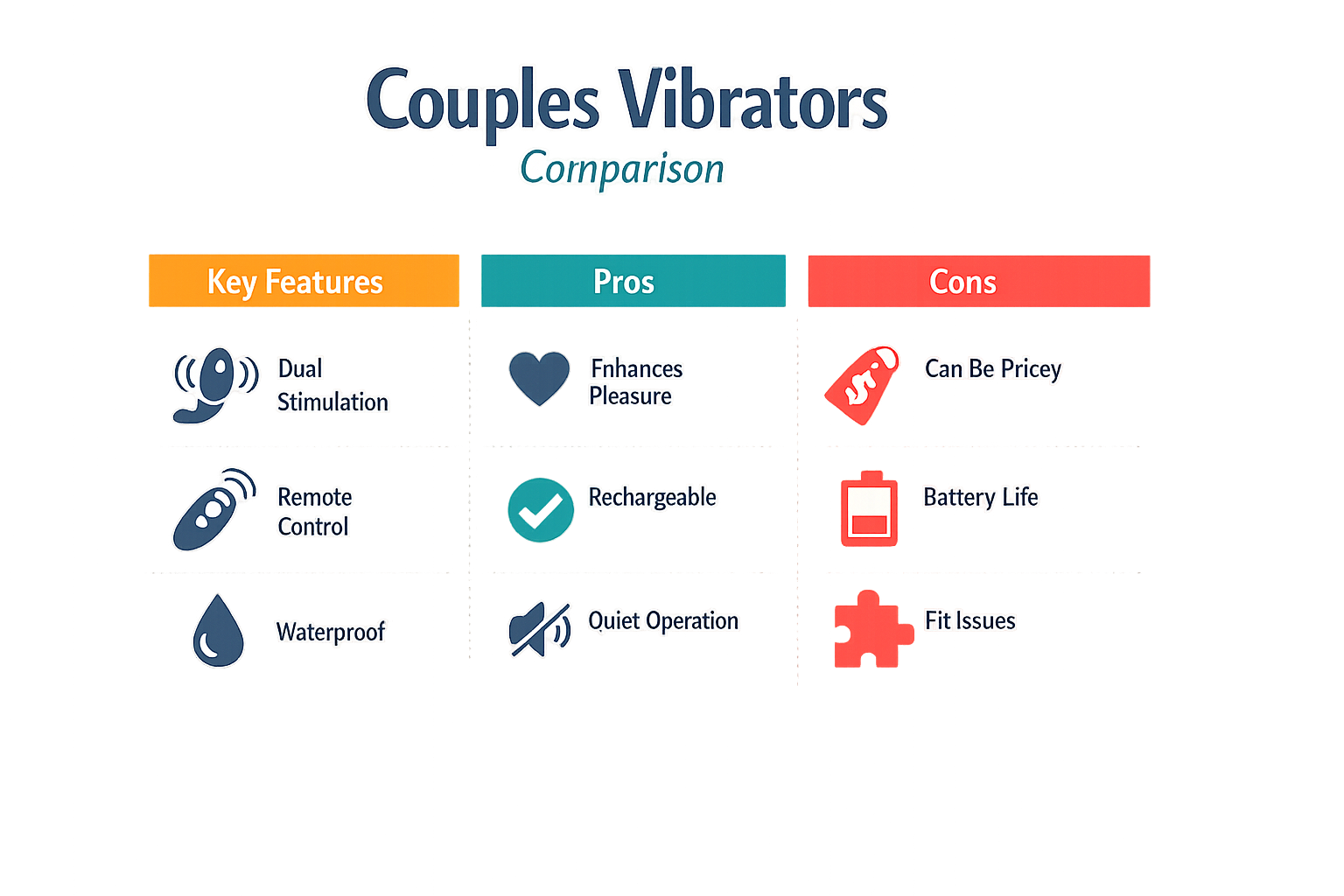
Here's the thing about couples vibrators — most of them promise simultaneous stimulation and deliver a product that's either too rigid to stay in place or so flexible it loses all power. The picks below actually work, meaning they stay where they're supposed to and deliver enough stimulation to matter.
We-Vibe Sync: The Adjustable Standard
The We-Vibe Sync is the one that shows up in every conversation about couples vibrators because it solved the fit problem most other products ignore. The adjustable design targets both the clitoris and G-spot simultaneously during partnered play, and the ergonomic shape flexes to fit different body types instead of forcing you to contort around a fixed angle.
The app control is optional but useful — you can hand off control to a partner or adjust intensity mid-session without breaking rhythm. The motor is strong enough to feel through penetration, which is where most wearable vibes fail. It's rechargeable, body-safe silicone, and doesn't feel like a gadget project.
Pros:
- Adjustable fit accommodates different anatomies
- Dual stimulation that actually reaches both targets
- App-enabled remote control
- Strong motor that delivers through penetration
Cons:
- Higher price point than entry-level options
- App setup can be finicky for some users
- Bulkier than some prefer for discreet wear
Why it's a top pick: It's the benchmark for wearable couples vibrators because it prioritizes fit and function over gimmicks. If you're buying one couples vibrator and want it to work reliably, this is the default recommendation.
Womanizer DUO 2: The Dual-Tech Pick
The DUO 2 combines Pleasure Air clitoral stimulation with internal G-spot vibration — two different sensation types in one product. The Pleasure Air technology uses suction-like pulsations around the clitoris rather than direct vibration, which some people find more intense and others find more comfortable. The flexible inner arm curves to target the G-spot with rumbly vibrations while the external portion handles clitoral stimulation.
It offers 10 vibration patterns, so you're not locked into a single rhythm. The ergonomic shape is designed for solo use but works during partnered play if positioning allows. It's not as wearable as the Sync — this is more of a "use it together" toy than a "wear it during sex" toy.
Pros:
- Dual stimulation with two distinct sensation types
- Pleasure Air tech offers suction-style clitoral stimulation
- 10 vibration patterns for variety
- Flexible design adjusts to anatomy
Cons:
- Less wearable during penetration than dedicated wearable vibes
- Pleasure Air sensation isn't for everyone
- Higher learning curve for first-time users
Why it's a top pick: If you want blended orgasms and prefer suction-style clitoral stimulation over standard vibration, the DUO 2 delivers both in one package. It's the pick for people who already know they like Pleasure Air tech and want to add internal stimulation.
Buying Guide

Couples vibrators aren't complicated, but the marketing around them makes them feel that way. Most first-time buyers overthink it — you don't need app control, twelve vibration patterns, or a toy that does everything. You need something that stays put, doesn't kill the mood with noise, and actually stimulates the right anatomy.
Here's what actually matters when you're picking one.
Types of Couples Vibrators
There are three main categories, and they do different things:
Wearable vibrators sit between partners during penetrative sex. They're usually C-shaped or U-shaped — one end goes inside, the other rests against the clitoris. These work best for penis-in-vagina sex and require a snug fit to stay in place. If the fit is wrong, they shift around or fall out entirely.
Vibrating cock rings sit at the base of the penis and add vibration to the clitoral area during penetration. They're the simplest option and the easiest to use for first-timers. Most are stretchy, disposable, or adjustable — skip the rigid ones unless you know your exact sizing.
Remote-controlled vibrators are designed for one partner to wear while the other controls the settings. Some are app-enabled for long-distance play. These lean more into the tease-and-control dynamic than the shared-sensation category. If you're curious about wearable options beyond penetration, vibrating panties offer hands-free stimulation during everyday activities.
Key Features to Consider
Motor placement determines what gets stimulated. For wearable vibrators, you want a motor in the external arm — that's the part doing clitoral work during penetration. If the motor is only in the internal portion, the wearer might feel it but the partner on the outside won't.
Noise level matters more than most people think. We-Vibe products are known for being no louder than low-level library conversation at full power — that's the benchmark. If a toy is loud enough to hear through a closed door, it's going to pull you out of the moment.
Battery life and charging separate the toys that last from the ones that die mid-session. Rechargeable models with at least 90 minutes of runtime are the standard. Disposable battery-powered rings are fine for trying the category, but they're not built to last.
Waterproofing isn't just for shower sex — it makes cleaning easier and means you're not paranoid about getting lube in the charging port. Look for IPX7 rating or higher.
Materials That Matter
Body-safe silicone is the default material for any toy touching genitals. It's non-porous, hypoallergenic, and easy to clean. If a product listing doesn't explicitly say "medical-grade silicone" or "body-safe silicone," assume it's not.
Avoid anything labeled "jelly," "rubber," or "TPE/TPR" unless it's a budget disposable you're using once. These materials are porous, can't be fully sanitized, and often contain phthalates.
Fit and Comfort
Wearable vibrators only work if they fit the wearer's anatomy. The internal arm needs to sit comfortably inside without feeling like it's being pushed out, and the external arm has to reach the clitoris without gaps. Most brands offer one universal size, which works for some people and not others — there's no way to know until you try it.
Cock rings need to be snug enough to stay in place but not so tight they restrict blood flow. Adjustable rings with snaps or stretchy silicone are more forgiving than rigid metal or plastic.
Vibration Patterns and Intensity
Most couples vibrators come with 5–10 vibration modes. You'll use two of them — a steady low and a steady high. The patterns (pulse, wave, escalate) are fine for solo play but distracting during partnered sex.
What matters more is whether the toy has enough power at the external motor. Weak vibration at the clitoral contact point is the most common complaint in this category. If reviews mention "not enough buzz" or "had to press it harder to feel anything," that's a toy with an underpowered external motor.
Lubrication and Care
Using a water-based lubricant makes insertion easier and reduces friction during use. Silicone-based lube can degrade silicone toys, so stick with water-based unless the manufacturer explicitly says otherwise.
After use, wash the toy with warm water and mild soap or a dedicated toy cleaner. Let it air-dry completely before storing it in a pouch or case — silicone attracts dust and lint if left exposed.
The best couples vibrator is the one that doesn't make you stop mid-session to adjust it.
How We Evaluated
There isn't a lab coat situation here. What is present is a framework that separates the toys that work from the ones that look good in a photo and disappoint in practice.
The evaluation process starts with the basics: does it turn on reliably, does it hold a charge, does the motor pattern feel intentional or like someone threw darts at a settings menu. Then we move to the real questions — can you actually use this during sex without it sliding off, pinching skin, or requiring three hands to operate. Most couples vibrators fail here. The ones that don't make the list.
What We Evaluate
Every toy goes through the same checklist. Motor strength matters, but so does whether the vibration is buzzy or rumbly — rumbly wins almost every time. We check if the toy stays in place during movement, whether the remote or app actually responds when you need it to, and if the shape makes anatomical sense for more than one body type.
We also look at the stuff that breaks the mood: charge time, noise level, whether the buttons are easy to hit mid-action or require you to stop and squint at tiny icons. If a toy has an app, we test whether it's actually useful or just a gimmick that drains your phone battery.
Attention is paid to what gets recommended in places like r/SexToys, where people post honest reviews after the honeymoon phase wears off. If a toy has a pattern of complaints about a specific failure point — motor dying after two months, silicone that attracts lint like a magnet, a shape that only works in one position — it doesn't make the cut.
Real-World Use
Evaluation happens in context, not in isolation. A vibrator that works great solo might be a disaster when you add a partner, movement, and the reality of human anatomy. Testing occurs during actual partnered sex, not just holding the toy in hand and guessing.
That means checking if it stays put during thrusting, whether it's comfortable for both people, and if the controls are accessible without breaking rhythm. Testing also occurs across different positions — what works in missionary might be useless in other configurations.
For clit stimulators, placement is everything. If the toy requires constant readjustment, it's not a couples toy — it's a solo toy you're trying to use with a partner.
The Stuff That Actually Matters
After years of evaluation, the pattern is clear: the toys that make the list are the ones that solve a real problem without creating three new ones. They're intuitive enough that you don't need to read a manual mid-session, durable enough that they last longer than a few uses, and shaped in a way that works with bodies instead of against them.
Price is also factored in. A $200 toy isn't automatically better than a $60 one — sometimes you're paying for features you'll never use, or a brand name that doesn't translate to better performance. The picks on this list punch above their weight class, or they justify their price with features that actually matter.
Frequently asked questions
Are couples vibrators actually comfortable during sex?
Depends on the design. Wearable C-shaped vibrators (like We-Vibe styles) can shift or pinch during penetration — some people love them, others find them distracting. External-only options like butterfly vibrators tend to stay put better because they're not wedged between two bodies. If comfort is your main concern, start with something that sits outside the action rather than inside it.
Do both partners actually feel the vibration?
Yes, but not equally. The wearer (usually the vulva-owner) gets direct clitoral stimulation. The penetrating partner feels ambient vibration through the toy's body or through their partner's pelvic floor contracting in response. It's not a 50/50 split — the design prioritizes one person's stimulation, and the other person gets a bonus sensory experience. If you want more balanced sensation, look for toys with dual motors or external placement that both bodies can press against.
Can you use a couples vibrator solo?
Absolutely. Most wearable vibrators work just fine on their own — the internal arm becomes a insertable vibrator, and the external arm handles clitoral stimulation. Some people buy them specifically for solo use and never bother with the "couples" part. If a toy markets itself as "for couples" but you like the shape, ignore the label and use it however you want.
What's the difference between a couples vibrator and a regular vibrator?
Marketing, mostly. A "couples vibrator" is designed to stay in place during penetrative sex — usually with a C-shape, strap-on harness, or hands-free mount. A "regular" vibrator is handheld and requires someone to hold it. The functional difference is whether you need your hands free during sex. If you don't mind holding a toy, a standard clit stimulator often delivers stronger, more focused vibration than a wearable design.
How do you clean a couples vibrator?
Same way you clean any other toy: warm water, mild soap, rinse thoroughly. If it's waterproof, you can submerge it. If it's only splash-proof, keep the charging port dry. Silicone toys can handle a quick wipe-down with 70% isopropyl alcohol if you want extra sterilization. Do this before and after every use — couples toys touch multiple bodies and fluids, so cleaning isn't optional.
Do app-controlled couples vibrators actually work well?
Sometimes. App control is great for long-distance situations or if you want your partner to adjust settings without reaching down mid-sex. The downside: apps lag, Bluetooth drops, and some interfaces are clunky enough to kill the mood. If you're buying primarily for app features, read recent reviews specifically about connectivity — a toy from 2022 might have firmware issues the manufacturer never fixed.
Are couples vibrators loud?
Most are quieter than you'd expect, but "whisper-quiet" marketing is usually exaggerated. At lower settings, many are bedroom-door-closed discreet. At higher settings, there's a noticeable hum. If noise is a dealbreaker (thin walls, roommates), look for toys specifically called out as quiet in user reviews, not just in the product description.
Can couples vibrators be used with condoms or lube?
Yes to both. Use water-based lube with silicone toys — silicone lube can degrade silicone surfaces over time. Condoms are fine as long as the toy is body-safe to begin with. If you're using a wearable vibrator during penetrative sex with a condom, add a little extra lube to the toy's external arm so it doesn't create friction against the condom.
Conclusion
The right couples vibrator is the one you'll actually use — not the one that looks the most impressive in a drawer. Most of the picks on this list work because they solve a real problem: they stay put during sex, they don't require constant repositioning, and they don't turn partnered play into a logistics puzzle.
If you're new to this category, start with something adjustable and app-controlled — the We-Vibe Sync is still the benchmark for a reason. If you already know what works for your body, the other picks here punch above their weight in specific scenarios: hands-free wear, targeted G-spot stimulation, or budget-friendly experimentation.
The biggest mistake most couples make is buying something that looks advanced but doesn't fit their actual routine. A $200 vibrator that sits in a drawer is a worse investment than a $60 one that gets used twice a week. Pick based on what you'll realistically do with it, not what the marketing promises.
For more guidance on clitoral anatomy and what actually works for external stimulation, check out our guide to clit stimulators — it breaks down the basics without the fluff. If you're interested in exploring suction-style stimulation specifically, our clit suckers guide covers Pleasure Air technology and similar options in detail.