
App-Controlled Vibrators: How They Work & What They Collect
Learn how app-controlled vibrators function, what data they collect, and how to protect your privacy while enjoying remote-controlled pleasure.
 Zoe Clarke
Introduction
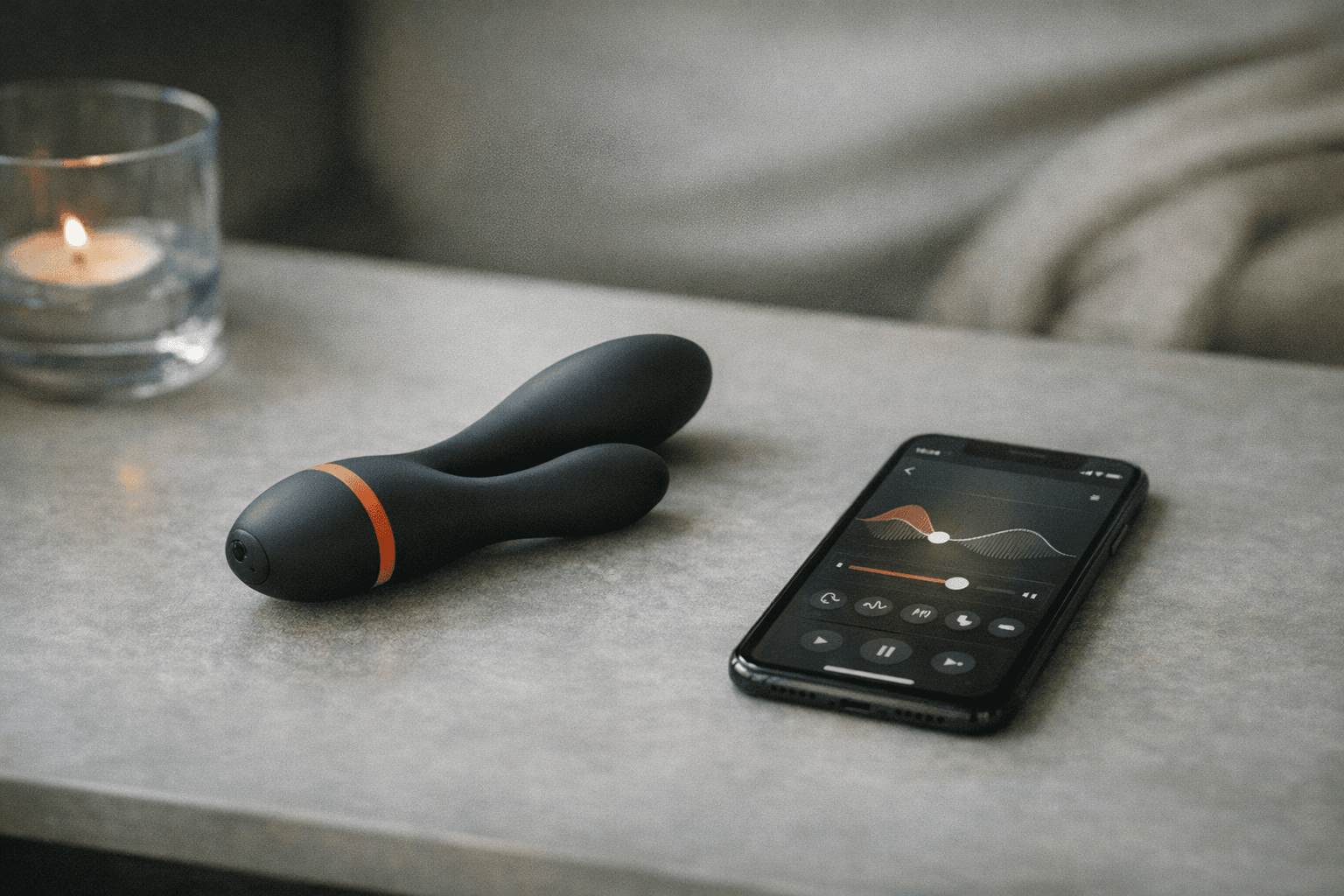
App-controlled vibrators are exactly what they sound like — vibrators you control with your phone instead of a button on the toy itself. The concept took off a few years ago when long-distance couples realized they could hand control to a partner anywhere in the world, and it's since become one of the fastest-growing categories in the toy space.
The appeal is obvious. You get hands-free control, customizable patterns you can save and replay, and the ability to let someone else drive without handing them the actual device. For people in long-distance relationships, app-controlled toys turned "being apart" into something that didn't mean putting intimacy on pause. For couples in the same room, it's a way to add spontaneity — your partner controls the toy while you're out to dinner, or you hand them the app mid-session and let them figure out what works.
But app-controlled also means connected, and connected means data. In 2017, the maker of the We-Vibe settled a class-action lawsuit for $3.75 million after users discovered the app was collecting detailed usage data — how often the toy was used, which settings, and crucially, linking that data to customer email addresses. The company didn't disclose this upfront, and the fallout made a lot of people rethink what "smart" really means when it comes to sex toys.
That doesn't mean app-controlled vibrators are inherently risky — it means you should know what you're agreeing to when you download the app. Most brands have tightened their privacy policies since the We-Vibe case, but the category still operates in a gray zone where regulation is light and transparency varies wildly by manufacturer. If you're considering an app-controlled vibrator, it's worth understanding how the tech works, what data typically gets collected, and how to protect yourself without giving up the features that make these toys worth using in the first place.
This guide walks through the mechanics — how app-controlled vibrators actually connect and communicate — and the privacy side, including what data most apps collect, what you can control, and what red flags to watch for when you're shopping.
Understanding the Concerns Around App-Controlled Vibrators
App-controlled vibrators sound great on paper — remote control from anywhere, custom vibration patterns, partner access across continents. The problem is that every feature requires data collection, and not every company is upfront about what they're collecting, where it goes, or who sees it.
The most public example is the We-Vibe lawsuit from 2017. Standard Innovations, the manufacturer, settled for $3.75 million after users discovered the app was collecting usage data — how often the toy was used, which settings, and crucially, linking that data to users' email addresses. An estimated 300,000 people bought Bluetooth-enabled We-Vibes, and about 100,000 of them used the app. None of them were told their vibrator was phoning home.
What Gets Collected (and Why It Matters)
Most app-controlled vibrators collect at least some of the following:
- Usage frequency and duration — when you use it, how long each session lasts
- Vibration patterns and intensity settings — which modes you prefer, how often you adjust them
- Device pairing data — which phones or accounts control the toy
- Account identifiers — email addresses, usernames, sometimes location data if the app requests it
The We-Vibe case showed that even anonymized usage data becomes personally identifiable when it's linked to an email address. If a company knows your email, your usage patterns, and the fact that you own their product, that's not anonymous anymore.
The Trust Problem
The real issue isn't that data collection happens — it's that most users don't know it's happening until a lawsuit surfaces. Privacy policies are written to satisfy lawyers, not to inform buyers. Even when a company claims data is encrypted or anonymized, you're trusting that their security holds and that they won't change the policy later.
For remote-control and app-controlled vibrators, the trade-off is convenience versus privacy. Some people are fine with that trade. Others aren't. The problem is that most buyers don't realize they're making the trade until it's too late.
How Do App-Controlled Vibrators Work?
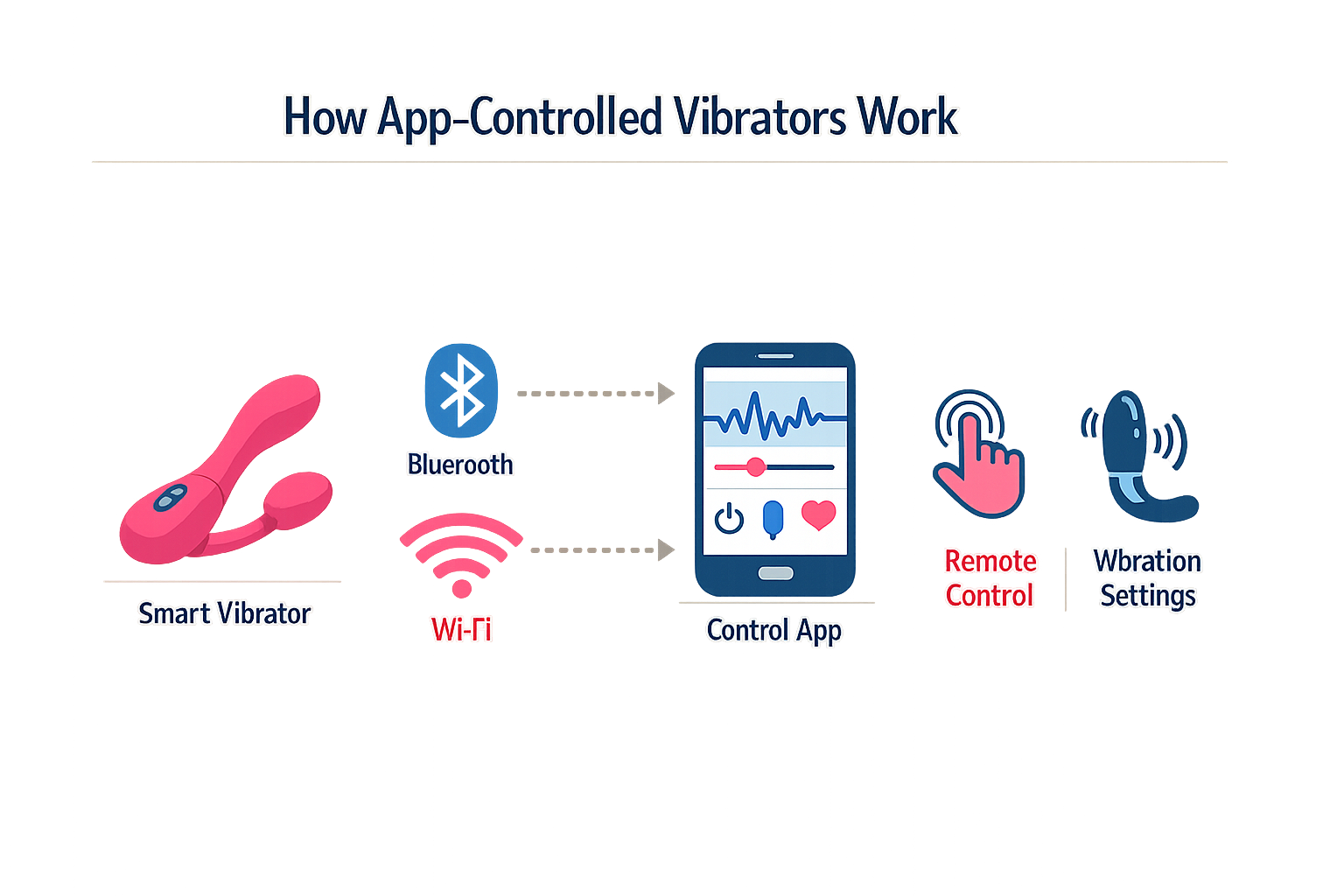
App-controlled vibrators connect to your phone via Bluetooth. That's the short version. The slightly longer version: the toy has a Bluetooth chip inside, your phone has Bluetooth, and the manufacturer's app acts as the remote control. Once paired, the app sends signals to the toy — intensity changes, pattern switches, whatever you tap on the screen.
Most toys stay connected within about 30 feet, though walls and other objects can interfere with the signal. If you're using it with a partner in the same room, Bluetooth is all you need. If you're trying to hand control over to someone across the country, the app routes the connection through the internet instead — your partner taps their screen, the signal goes to the company's server, then down to your phone, then to the toy. It's a longer trip, but it works.
What Does the App Actually Control?
The app interface varies by brand, but the basics are consistent. You get intensity sliders, preset vibration patterns, and usually a way to create custom patterns. Some apps let you sync vibrations to music playlists — Spotify or Apple Music, depending on the brand. Others include "touch mode," where you swipe or tap the screen to control the toy in real time.
For remote-control and app-controlled vibrators, the app also handles partner access. You send an invite link, they accept, and now they can control your toy from their own phone. Most apps require mutual consent before any remote control happens — you have to actively grant access, not just install the app and hope for the best.
How Does Data Move Through the System?
When you use the app, it logs what you're doing — which pattern you picked, how long the session lasted, what intensity level you preferred. Some of that data stays local on your phone. Some of it gets sent back to the company's servers, depending on the brand's privacy settings and whether you're using internet-based remote control.
The 2017 We-Vibe lawsuit made this part very public: the app was collecting usage data and linking it to customer email addresses without clear disclosure. The company settled for $3.75 million. Since then, most manufacturers have updated their privacy policies to be more explicit about what they collect and why. That doesn't mean they collect less — it just means they tell you about it up front.
The app logs what you're doing — which pattern, how long, what intensity — and some of that data leaves your phone.
What Is the Role of Firmware Updates?
App-controlled toys run on firmware, which means they can be updated remotely. When you open the app and it prompts you to update the toy, that's a firmware push. Updates can add new vibration patterns, fix bugs, or patch security vulnerabilities. They can also change how the toy collects or transmits data, which is why reading the update notes matters — even if most people skip them.
Some toys let you use basic functions without the app — a single button on the toy itself cycles through preset modes. But the app is where the full feature set lives, and once you pair the toy, the app becomes the default interface. If you want the custom patterns, the music sync, or the remote access, you're using the app. And if you're using the app, you're part of the data ecosystem the app creates.
Tips for Safe Use of App-Controlled Vibrators
App-controlled vibrators are straightforward once you know the basics, but a few smart habits make the experience better — and keep your privacy intact.
Start with the Physical Setup
Before you worry about app settings, get the toy itself right. Most app-controlled vibrators are designed to be easy to grip even with slippery hands, but you still want a comfortable, private space where you're not fumbling with buttons mid-session. If you're using lube (and you probably should), make sure it's compatible with your toy's material — silicone lube on silicone toys is a no-go.
Charge the toy fully before your first use. A dead battery mid-session is annoying, and Bluetooth connections drain faster than you'd think. Most toys take 1–2 hours to charge and run for 60–90 minutes, so plan accordingly.
Master the App Controls
The app is where most people get stuck, but it's not complicated once you know what you're looking at. Most apps offer a few control modes: single vibe (one steady pattern), multi vibe (mix different intensities), and playlist mode (pre-set sequences). If your toy has dual motors — one internal, one external — you can usually adjust each motor's intensity independently.
To change intensity, slide the control circle toward the edges of the screen for more power, back toward the center to dial it down. If you lose connection mid-use, check that nothing's blocking the Bluetooth signal and that the app hasn't been pushed to the background on your phone.
Keep Your Data Minimal
Most apps don't require much personal info to function, so don't give them more than they need. Use a burner email if the app allows it, skip optional profile fields, and turn off any "intimate inspiration" or tip-sharing features if you're not interested. These features often pull data you didn't sign up to share.
If the app asks for location permissions, deny it unless you're using a feature that genuinely requires it (like finding nearby users, which most people skip anyway). Same with camera and microphone access — unless you're video chatting through the app, there's no reason it needs those.
Manage Bluetooth and App Permissions
Bluetooth is how the app talks to the toy, but it's also a potential privacy leak if you're not careful. Turn off Bluetooth when you're not using the toy — it stops the app from pinging your location or trying to reconnect in the background. If you're in a shared living space, rename the toy in your phone's Bluetooth settings so it doesn't broadcast "Vibrator" to everyone nearby.
For remote-control and app-controlled vibrators used with a partner, make sure you both understand who has control at any given time. Most apps let you toggle control back and forth, but it's easy to get confused if you're not paying attention.
Clean and Store the Toy Properly
After use, clean the toy according to the manufacturer's instructions — usually warm water and mild soap for waterproof toys, or a damp cloth for non-waterproof ones. Don't submerge anything with a charging port unless it's explicitly rated for full submersion.
Store the toy in a cool, dry place, away from other silicone toys (they can react with each other and degrade). If the toy came with a storage pouch, use it — it keeps dust off and makes the toy easier to find when you want it.
Conclusion
App-controlled vibrators are what they sound like — vibrators you control with your phone. Most of them work fine, some of them sync to music or let a partner take over from across the room, and a handful collect more data than you'd expect. The good news: the actual privacy risks are smaller than the headlines suggest, and the steps to protect yourself are straightforward.
If you're curious about remote control or long-distance features, the category has come a long way. Most apps now let you create custom vibration patterns, hand off control to a partner, or sync to your Spotify playlist — features that used to feel gimmicky but actually work when the app is decent. The key is picking a brand that updates its software, uses Bluetooth when you don't need internet range, and doesn't require an account to use basic features. For a full breakdown of which models handle this well, check out Remote-Control and App-Controlled Vibrators: The Picks for Couples, Long-Distance, and Going Out.
The bottom line: app-controlled vibrators aren't inherently riskier than any other connected device in your house. They're just more personal, so the stakes feel higher. Read the app permissions before you install, turn off location access if you don't need it, and delete your account when you're done. That's it — the rest is just using a vibrator that happens to have Bluetooth.