
Sex Lube: Types, Uses, and How to Choose the Right One
Explore the types of sex lube, their uses, and tips for choosing the right one for your needs. Learn about water-based, silicone, and oil-based options.
 Zoe Clarke
Introduction to Sex Lube
The first time someone in my group chat sent me a TikTok about a 'must-have' lube, I couldn't help but chuckle. It was nestled between a video of a cat in a sombrero and a viral dance challenge. But the curiosity was real, and it got me thinking about how many people are still navigating the basics of sex lube.
Here's the thing: lube isn't some niche product for people with specific issues. Personal lubricants are any fluid, gel, cream, or liquid used to enhance the ease and comfort of intimate sexual activities — and honestly, most people could benefit from using them. Among adult women, 85.1% perceive that lubricant makes sex more comfortable, yet plenty of folks still skip it because they don't think they "need" it.
The internet can be surprisingly unhelpful when you're trying to figure out which lube to buy. Most guides treat all lubes as if they're interchangeable. They're not. Water-based lubes are versatile and safe for most toys, while silicone-based ones offer longer-lasting slickness but can damage silicone toys. Then there's the oil-based category, which is great for massages but not compatible with latex condoms.
It's easy to get overwhelmed by the options, especially with viral products popping up left and right. The good news? Once you understand the basic categories and what works with what, picking the right lube becomes straightforward. Whether you're looking to make sex more comfortable, reduce friction with body-safe sex toys, or just enhance pleasure, there's a lube that fits.
The best lube is the one that suits your needs and feels right for you. No group chat required.
Why Choosing the Right Sex Lube Matters
Most people treat sex lube like it's one-size-fits-all. It's not. Using the wrong type — or skipping it entirely when you need it — can cause real problems, from condom breakage to irritation to just plain uncomfortable friction.
The right lube reduces condom breakage and slippage, which matters if you're relying on latex for protection. Research shows that using lubricant during sex with condoms actually makes them more effective, not less — the friction is what causes tears, and lube solves that. But here's the catch: not all lubes work with all condoms. Oil-based lubes destroy latex. Silicone lubes can degrade silicone toys. Water-based is the safe default, but it dries out faster.
Then there's the irritation factor. Some lubes contain glycerin, parabens, or other additives that can cause reactions — burning, itching, or worse. If you've ever had a bad experience with lube, it was probably the formula, not the concept. People with sensitive skin or a history of yeast infections should look for glycerin-free, pH-balanced options. The packaging won't always make this obvious.
Compatibility Issues You Don't Think About
Lube choice also depends on what you're using it with. Silicone lube feels slicker and lasts longer than water-based, which is why it's popular — but if you're using it with a silicone toy, the two can bond and degrade the toy's surface. That expensive body-safe sex toy you just bought? Ruined.
Water-based lube is compatible with everything — condoms, toys, skin — but it dries out and needs reapplication. Silicone is long-lasting and waterproof, great for shower sex or marathon sessions, but incompatible with silicone toys. Oil-based feels luxurious and works for massage, but it's a hard no with latex condoms and can stain sheets.
The cheapest lube mistake is buying the wrong type and having to replace your toy.
If you're using lube for anal sex, the stakes are higher. The anus doesn't self-lubricate, so skipping lube or using one that dries out too fast can cause microtears. Thicker, longer-lasting formulas — usually silicone or hybrid — are the standard recommendation here.
The bottom line: the wrong lube can break condoms, irritate your skin, or damage your toys. The right one makes everything easier, safer, and more comfortable. It's not a luxury product — it's a basic part of the setup.
Types of Sex Lube and Their Uses
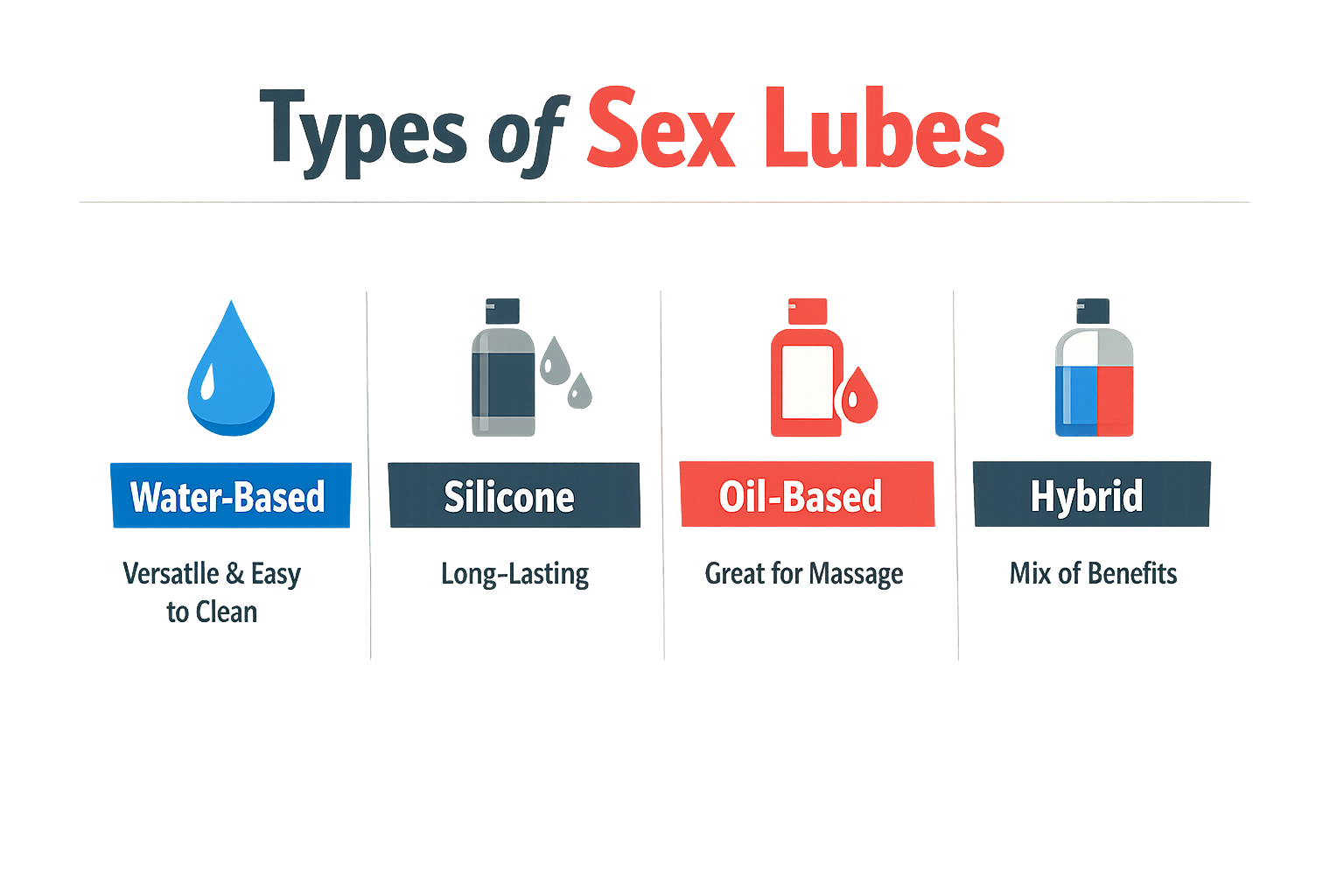
Personal lubricants come in a few main categories — water-based, silicone-based, and oil-based — and each one has specific strengths and trade-offs. The right pick depends on what you're using it for, what toys you're pairing it with, and how long you need it to last.
Water-Based Lube: The Safe Default
Water-based lube is the one most people start with, and for good reason. It's compatible with all toy materials, works with latex and polyisoprene condoms, and cleans up easily with water. If you're not sure what you need, this is the safe pick.
The downside? It dries out faster than other types, so you'll need to reapply during longer sessions. Some formulas can feel sticky as they dry, but a little water reactivates them. Research suggests water-based lubes are associated with fewer genital symptoms in women compared to silicone-based options, which makes them a solid choice for people with sensitive skin.
Silicone-Based Lube: The Long-Lasting Option
Silicone lube lasts longer than water-based formulas, which makes it ideal for marathon sessions or activities where reapplying isn't convenient. It's also waterproof, so it holds up in the shower or bath without washing away.
The catch: silicone lube can degrade silicone toys over time, so if you're using it with a body-safe silicone toy, you'll need to patch-test first or stick to water-based. It also requires soap and water to clean off — a wet wipe won't cut it.
Oil-Based Lube: The Niche Pick
Oil-based lubes — coconut oil, mineral oil, plant-based oils — are thick, long-lasting, and great for external massage or non-penetrative play. They're also fine for anal use if you're not using latex condoms.
The big limitation: oil-based lubes break down latex and polyisoprene condoms, which makes them unsafe for most barrier-protected sex. They're also harder to clean off and can stain sheets, so they're not the go-to for quick, low-mess sessions.
The best lube is the one that matches your activity — not the one with the fanciest packaging.
Tips for Choosing the Right Sex Lube
Here's the thing: most people overthink lube. You don't need a PhD in chemistry to pick the right one — you just need to know what you're using it with and what you're trying to do. Start with your toy material if you're using one. Silicone toys don't mix with silicone lube. It's not a maybe, it's a hard rule. The silicone in the lube can degrade the silicone in your toy, leaving you with a sticky mess and a ruined product. Water-based is the safe bet for nearly everything.
Match the Lube to the Activity
If you're using condoms, skip the oil-based options entirely — they break down latex and put you at risk. Water-based and silicone lubes are condom-safe. For solo play or partnered sex without barriers, you've got more freedom. Silicone lasts longer and doesn't dry out, which makes it the go-to for marathon sessions or body-safe sex toys that aren't silicone. Oil-based lubes work for massages or external play, but they're messy and harder to clean up.
Check the Ingredients
Not all lubes are created equal, even within the same category. Look for products that skip glycerin and parabens if you're prone to sensitivity or infections. Glycerin can feed yeast, which is the last thing you want. If the ingredient list looks like a science experiment, it probably is — simpler formulas tend to be gentler. When in doubt, test a small amount on your inner wrist before you use it anywhere more sensitive.
Start Small and Cheap
Your first lube shouldn't be a $30 bottle of something with a fancy label. Grab a basic water-based option under $15 and see how it feels. If it works, great. If it doesn't, you're not out much money. A 2012 National Survey of Sexual Health and Behaviour found that 65.5% of women and 70% of men used lubricants to make sex more comfortable and pleasurable — most of them didn't start with the premium stuff. You can always upgrade once you know what you like.
The best lube is the one that suits your needs and feels right for you — not the one with the flashiest packaging.
Conclusion
Here's the thing: lube isn't complicated, but the internet makes it feel that way. Water-based is your safe default — it works with everything, cleans up easy, and won't wreck your toys. Silicone lasts longer and feels slicker, but you'll need to check what your toys are made of first. Oil-based is fine for massages or solo sessions with non-latex barriers, but it's a hard pass if condoms are in the mix.
The best lube is the one that works for what you're actually doing. If you're dealing with pain during sex, body-safe materials matter just as much as the lube you pick — cheap toys with porous surfaces can make discomfort worse, no matter how much you use. Most people don't need the viral TikTok pick or the $30 boutique bottle. They need something that reduces friction, doesn't irritate, and gets the job done.
While researching this, I kept coming back to how many people still think lube is only for when something's wrong. It's not. It makes things better, period. The friend who swears by it isn't the outlier — they're just honest about what works. Skip the overthinking, grab a bottle, and see what actually feels right for you.